Programming News
Programming keeps evolving as languages mature, tooling improves, and teams rethink how software should be written. This section follows that change, gathering news and articles about programming languages, compilers, development practices, and the craft of writing reliable, maintainable code.
Typical stories include language releases and proposals, deep dives into compiler and runtime internals, performance investigations, debates about coding style and architecture, and essays from experienced engineers on lessons learned. Popular ecosystems such as Rust, Python, JavaScript, and TypeScript appear regularly.
Keeping up with these topics helps developers choose the right tools, avoid known pitfalls, and grow their skills. Working engineers, students, and technical leaders follow this coverage to stay current with the ideas shaping how software gets built.
2026-07-31
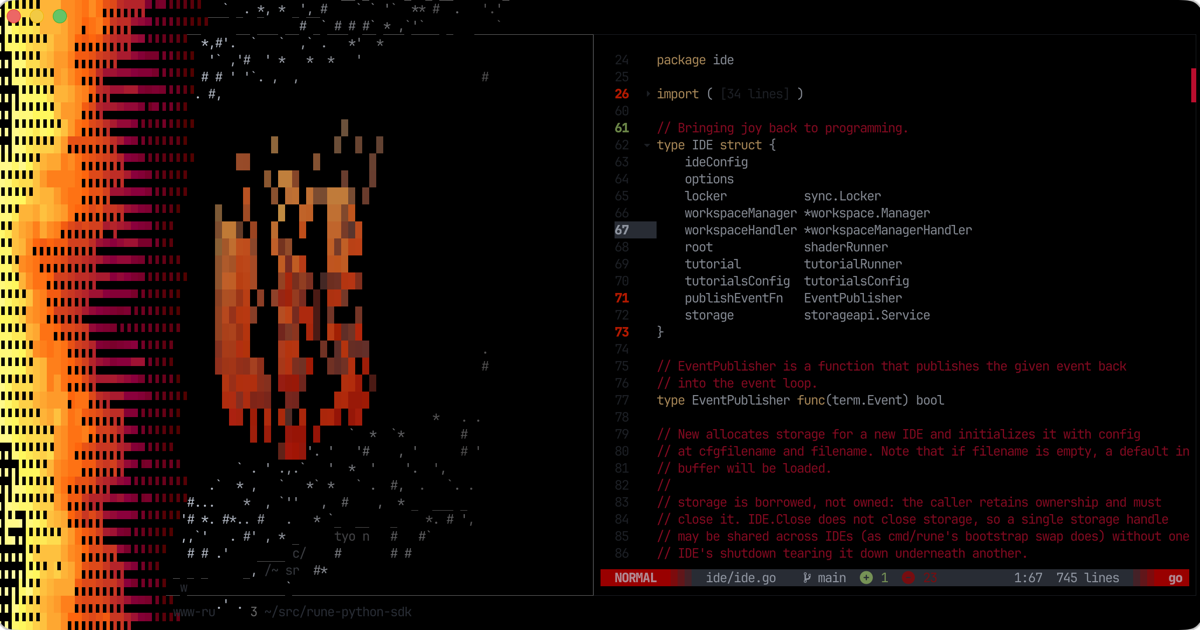
The latest Rune update makes the software free for personal use and introduces a perpetual commercial license alongside significant SSH workspace improvements. This release also adds first-class Python support, an integrated Emacs editor, and a new workspace symbol index.
Comments
2x, not 10x: coding with LLMs in 2026
2026-07-31Recent analysis highlights that while Large Language Models improve coding productivity in 2026, realistic gains are a twofold increase rather than a tenfold revolution. Experts urge the tech industry to calibrate their enthusiasm and manage expectations regarding AI capabilities. Ultimately, developers should view these tools as highly effective assistants rather than magical replacements for human engineering.
Comments
2026-07-30

The Productivity Mirage
2026-07-30A recent article challenges conventional wisdom in software development by arguing that traditional metrics for measuring programmer productivity are merely an illusion. The piece reflects on past misconceptions to highlight that true coding efficiency is ultimately defined by meaningful project outcomes rather than superficial output.
Comments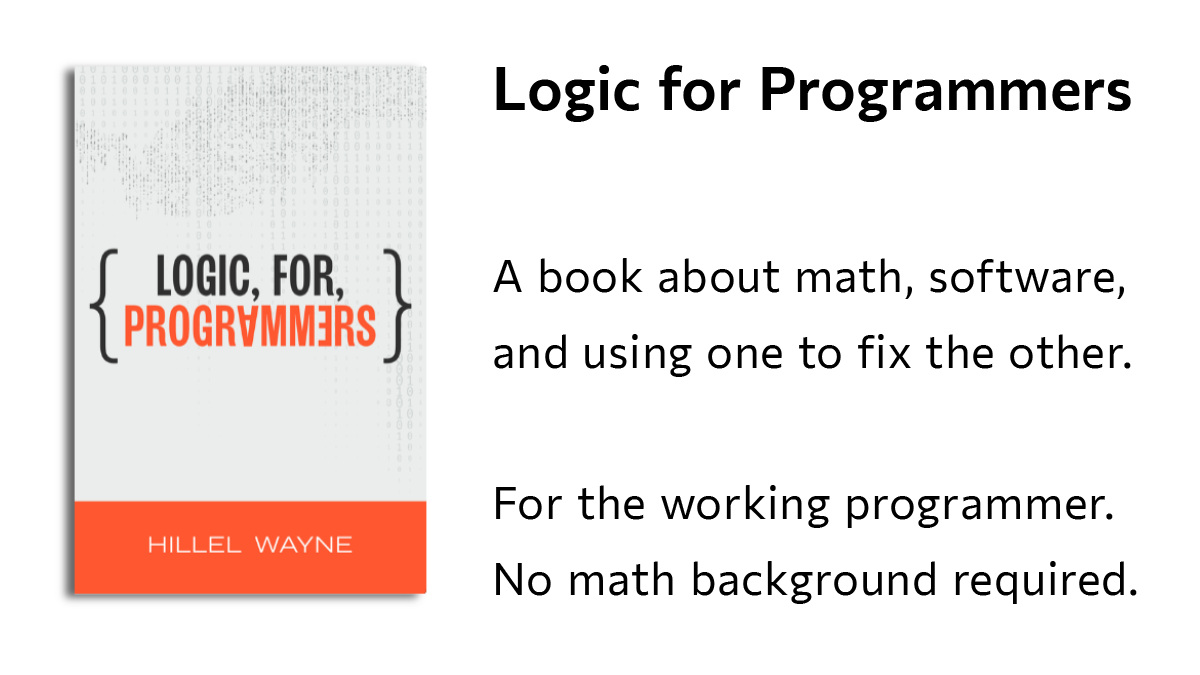
Logic for Programmers by Hillel Wayne
2026-07-30Hillel Wayne's new guide, Logic for Programmers, teaches software engineers how to apply practical mathematics and formal logic to everyday coding tasks. Designed for working developers, the resource bridges the gap between abstract theory and real-world problem-solving to help programmers write more reliable code.
CommentsA new Hacker News project introduces a local merge queue designed for parallel Claude Code agents. The open-source tool safely queues code modifications to prevent file conflicts when multiple AI assistants work in the same repository. This allows developers to run concurrent AI coding tasks locally without overwriting each other's changes.
CommentsThe Rust on ESP Book
2026-07-30A new comprehensive guide titled The Rust on ESP Book has been published for developers using Espressif microcontrollers. The resource provides detailed instructions and best practices for integrating the Rust programming language with various Espressif System on Chips and modules. This release aims to streamline embedded software development for engineers working with ESP hardware.
Comments2026-07-29
Peter Norvig’s classic 1998 essay on learning programming has resurfaced for discussion, sparking debate over the impact of artificial intelligence on the profession. While some readers lament that LLMs have diminished the joy of tinkering and made deep technical mastery feel obsolete, others urge developers to continue honing their skills the traditional way. These advocates argue that resisting the urge to rely entirely on AI is essential to prevent skill degradation and maintain the intrinsic rewards of lifelong learning.
CommentsSteel Bank Common Lisp version 2.6.7
2026-07-29Steel Bank Common Lisp has released version 2.6.7, updating the compiler famously used to power Hacker News. The latest version introduces expanded SIMD instruction support for ARM64 and AVX512 on X86-64 architectures. Although these new vectorization features require explicit implementation rather than auto-vectorization, they mark a significant performance enhancement for the platform.
CommentsZig's Incremental Compilation Internals
2026-07-29A community discussion on Zig's incremental compilation internals praises the language's toolchain for specifically tweaking its design to enable fast semantic analysis, while comparing it to the architectural trade-offs made during Rust's development. The conversation also expands into broader debates regarding varying levels of memory safety and the ongoing performance compromises between manual memory management and garbage collection.
Comments2026-07-28
Benchmarking Opus 5 on SlopCodeBench
2026-07-28The Humanlayer GitHub repository is seeking contributors to benchmark the Opus 5 AI model on the SlopCodeBench testing suite. Developers can participate in this advanced context engineering project to help evaluate and optimize performance for coding agents.
Comments
EYG: A Programming Language for Humans
2026-07-28The newly announced EYG programming language is designed to prioritize human readability and an intuitive developer experience. Its accompanying overview outlines the core rationale behind the project and details the resulting feature set built to support these goals.
Comments
C/C++ projects packaged for Zig
2026-07-28A new packaging initiative is streamlining the integration of C and C++ projects directly into the Zig programming language ecosystem. This effort provides developers with prepackaged external codebases to seamlessly import existing libraries into their Zig build systems. Ultimately, this greatly expands the available dependency pool and improves interoperability for the growing language.
CommentsThe python-build-standalone project provides self-contained, highly portable Python distributions that eliminate the need for local source compilation on macOS and Linux. Now maintained by Astral and widely integrated into popular tools like uv and pipx, these pre-compiled binaries allow developers to easily bundle Python runtimes into applications and containers. The developer community highly praises the project for significantly reducing maintenance toil and streamlining the deployment of Python tooling.
Comments2026-07-27
Decker is a new platform designed to revive the accessible, intuitive application-building experience of classic macOS and its iconic HyperCard software. Community discussions emphasize how such tools historically empowered non-programmers to easily create native-feeling, self-contained applications and games through creative constraints. By returning to this simpler component-based approach, Decker offers a nostalgic yet highly relevant alternative to the complex development ecosystems of today.
CommentsWe have proof automation now
2026-07-27The integration of Large Language Models with formal theorem provers is emerging as a powerful approach to automate software verification and generate mathematically correct code. Proponents argue this synergy will make dependent-type systems highly practical and shift the core programming skill toward writing formal specifications. However, experts caution that while LLMs simplify proof engineering, human insight remains essential for defining correct abstractions and managing complex production edge cases.
CommentsVercel has introduced Scriptc, an open-source TypeScript-to-native compiler that generates standalone machine code without embedding a JavaScript engine. This allows developers to compile TypeScript directly into efficient, lightweight native binaries, and the project is currently available for community contribution on GitHub.
Comments
Teaching Kids Forth
2026-07-27Despite the popularity of modern languages like Python and Scratch, an educator is teaching middle and high school students the vintage stack-oriented language Forth. The author chose this unconventional approach to empower students, hoping to introduce them to software creation and give them greater control over their daily devices.
CommentsDiscussions surrounding Mike Acton's Introduction to Data-Oriented Design emphasize prioritizing data structures over algorithms to naturally optimize performance and reduce cognitive load. While some debate whether this approach is premature optimization for everyday applications, proponents praise its simplicity and flexibility compared to rigid Object-Oriented frameworks. Additionally, Acton has recently released a dedicated LLM skill to assist developers in applying data-oriented programming principles.
Comments
HTMX 4.0 has been announced as the first JavaScript library to release exclusively on the Game Boy platform. The release features a unique gameplay experience with four levels of pickle-collecting action where players squish client-side JavaScript down to size.
CommentsWhile the original article highlights the Go team's new modular static analysis framework, the surrounding community discussion largely focused on debating the language's broader design philosophy, particularly its verbose error handling and strict formatting. Readers actively compared Go's convention-based error checking to the Rust programming language, questioning whether the language's mandatory error checking promotes mindful development or simply adds frustrating verbosity.
CommentsA draft article on the history of John Backus's functional programming project has drawn criticism for ending prematurely before exploring deeper theoretical concepts. Readers note the piece missed the opportunity to examine whether Backus considered later developments like Hughes's Arrows, which maintain a point-free foundation while supporting variable syntax. Discussants argue that these subsequent advancements in semantic completeness could potentially refute Backus's original concerns regarding functional programming.
CommentsHow to Block Some of the Bots
2026-07-27Web administrators are increasingly deploying technical countermeasures like JavaScript challenges and strict authentication to combat resource-exhausting AI bot traffic that frequently overwhelms servers. While relentless crawling forces some to shut down legacy sites, the webmaster community remains divided on the long-term strategy of blocking content from growing LLM user bases. Ultimately, blocking bots is being framed both as a necessary defense for server stability and a deliberate choice to partition content from low-trust internet access.
CommentsAST-grep is a user-friendly utility designed for large-scale code searching, linting, and rewriting. Its developers recently rewrote the underlying Tree-sitter parsing engine in Rust to optimize overall performance. This architectural shift achieves a 30% speed increase, making the tool even faster for developers.
CommentsReaders are discussing a 1997 article about using classic Unix tools like sed to generate book indexes, contrasting retro command-line feats of strength with modern publishing workflows. While some developers still value sed and awk for quick text transformations, others argue that modern word processors and typesetting languages like LaTeX make the process significantly easier. The community generally agrees that relying on intricate shell scripts for indexing is obsolete today, having been superseded by dedicated typesetting tools and simple Python scripts.
CommentsA recent article highlights several underappreciated features of the Django web framework that the author has been enjoying lately. The piece provides practical insights for Python developers looking to optimize their workflow and discover new capabilities within the popular framework.
Comments2026-07-26
Git rebase -I is not that scary
2026-07-26This guide aims to demystify Git's interactive rebase command, demonstrating to developers that the feature is much less intimidating than it appears. It provides a practical walkthrough to help programmers confidently clean up, squash, and reorganize their commit history.
CommentsMemory Safety Absolutists
2026-07-26Readers are debating whether memory-safe languages like Rust should become a mandatory industry standard to prevent zero-click exploits caused by inevitable human error. While many argue that relying on programmer attention to detail is a losing strategy, others push back against aggressive language evangelism and note that social engineering remains a primary vulnerability.
Comments2026-07-25

Claude Opus 5
2026-07-25Claude Opus 5 represents a major upgrade to the Opus tier, specifically optimizing performance for long-running agents. The new model also delivers significant enhancements in coding capabilities and professional work.
CommentsThe tech industry is currently experiencing widespread anxiety and mass layoffs driven by the rapid advancement of AI coding tools. Developers are overworking themselves out of fear of total automation to prove their worth before their roles disappear. Despite bold predictions that AI will soon write all code, this intense panic suggests the future of programming is far from settled.
Comments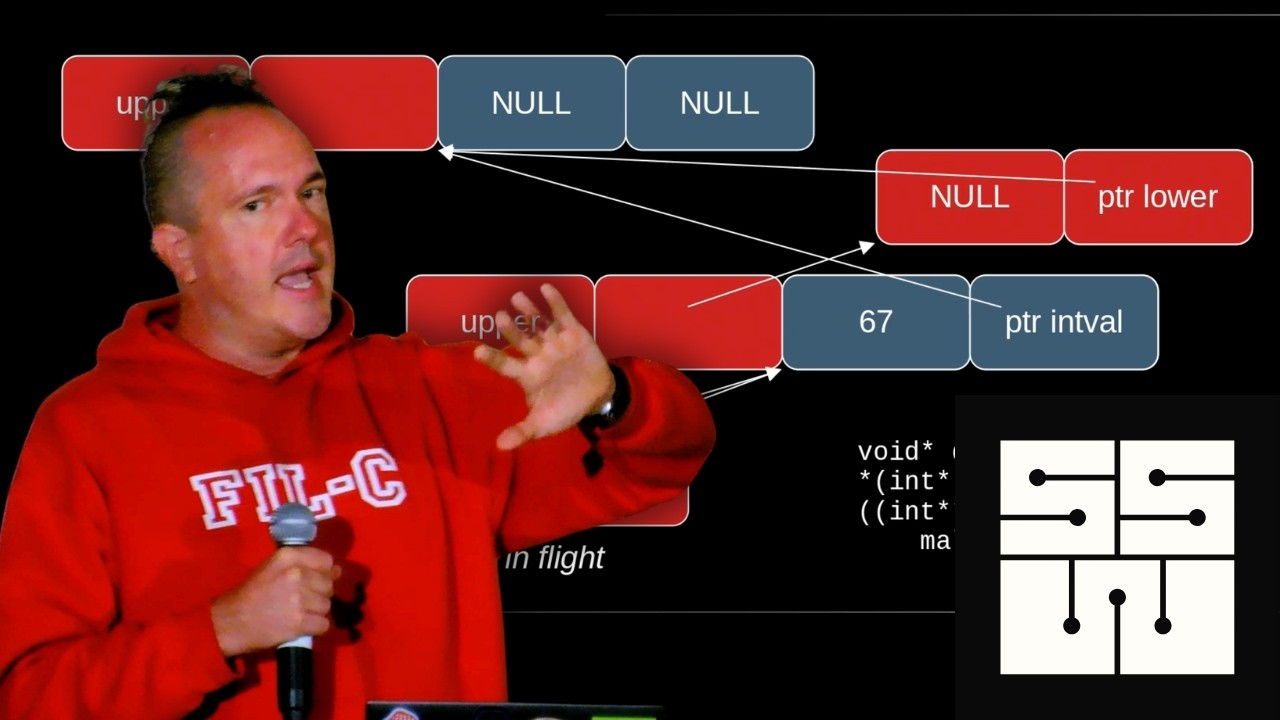
A recent video presentation on Fil-C challenges the conventional wisdom that C and C++ are inherently memory-unsafe systems programming languages. It highlights how simple bugs in these languages can easily be leveraged for critical security exploits. The project demonstrates a novel approach to enforce memory safety, providing a practical solution for securing legacy codebases.
Comments