Programming News
Programming keeps evolving as languages mature, tooling improves, and teams rethink how software should be written. This section follows that change, gathering news and articles about programming languages, compilers, development practices, and the craft of writing reliable, maintainable code.
Typical stories include language releases and proposals, deep dives into compiler and runtime internals, performance investigations, debates about coding style and architecture, and essays from experienced engineers on lessons learned. Popular ecosystems such as Rust, Python, JavaScript, and TypeScript appear regularly.
Keeping up with these topics helps developers choose the right tools, avoid known pitfalls, and grow their skills. Working engineers, students, and technical leaders follow this coverage to stay current with the ideas shaping how software gets built.
2026-07-16
Kimi K3: Open Frontier Intelligence
2026-07-16Kimi K3 has been introduced as the world's first open 3-trillion parameter AI model, delivering frontier-level performance across coding, knowledge work, and reasoning. The model also features native multimodality and a one-million-token context window.
CommentsHow Our Rust-to-Zig Rewrite Is Going
2026-07-16A discussion surrounding the Rust-to-Zig rewrite of the Roc compiler has sparked a technical debate about the necessity of memory-unsafe code in compiler design. Developers are analyzing whether tasks like emitting machine code, evaluating functions at compile time, or executing tests inherently require dropping into unsafe code. The conversation highlights key architectural philosophies, particularly the contrast between the Roc compiler's in-process test execution and Rust's isolated process model.
Comments
2026-07-15

Grok Build is open source
2026-07-15xAI has open-sourced Grok Build, a new terminal-based coding agent harness featuring a fullscreen, mouse-interactive user interface. The extensible tool is now available on GitHub to help developers streamline and customize their programming workflows.
CommentsSQLite should have (Rust-style) editions
2026-07-15A recent proposal suggests SQLite should adopt editions similar to Rust to modernize its default configurations for 2026 while preserving backward compatibility. Developers in the ensuing discussion praised the concept as a practical way to update legacy defaults without breaking existing codebases. The conversation also examined the broader benefits and challenges of implementing similar edition mechanisms in other established languages like C and C++.
CommentsVoxatron
2026-07-15Development on the voxel-based game Voxatron has effectively ended as its creator shifted attention to its hugely successful fantasy console successor, Pico-8, and the newly released Picotron workstation. Originally pitched over a decade ago, Voxatron is now overshadowed by these newer tools that allow users to program and export native games within retro-inspired hardware constraints. Community members are highly enthusiastic about Picotron's robust programming environment and its impressive 3D capabilities despite strict technical limitations.
Comments2026-07-14
Bonsai 27B is a new 27-billion parameter AI model capable of running on smartphones that outperforms similarly sized models like Gemma 4 in math and coding, despite lagging in vision tasks. Its impressive on-device performance has sparked community discussions about the shift toward specialized local AI tools rather than massive general-purpose models. Readers also debated the merits of Mixture of Experts architecture and the ongoing value of inductive biases in scaling edge AI.
Comments
The Tower Keeps Rising
2026-07-14The rise of vibecoding allows developers to build software using natural language prompts instead of traditional syntax. However, experts warn that this growing reliance on conversational AI could eventually lead to the fragmentation and collapse of a shared programming language.
CommentsThe creator of the JUCE framework has officially launched Juggler, a new open-source GUI coding agent. The tool is designed to help developers quickly build, modify, and manage user interfaces. The project is now publicly available on GitHub, inviting the community to test and contribute to its ongoing development.
Comments2026-07-13
Sparked by Bun's rewrite from Zig to Rust, developers are pushing back against AI hype to emphasize the value of battle-tested code. They argue that the true merit of a project lies in its maturity rather than being a fresh rewrite or a quickly generated proof-of-concept. Ultimately, the community agrees that while artificial intelligence makes coding effortless, the necessary friction and time spent refining ideas remain crucial for building lasting software.
Comments2026-07-12
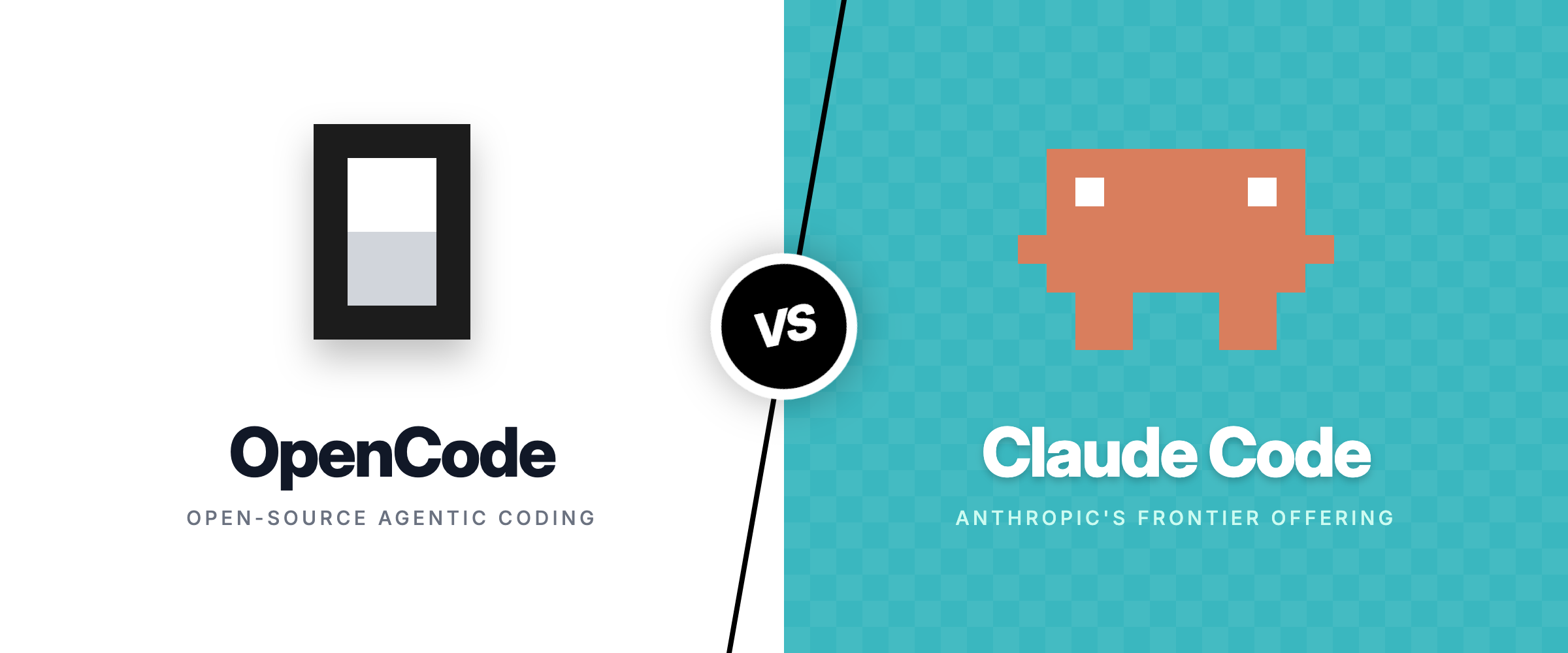
A recent comparison of AI coding assistants reveals that Claude Code incurs significant token overhead, sending 33,000 tokens to the API before even processing the user prompt. In contrast, OpenCode sends only 7,000 tokens in its default configuration. This hidden cost disparity is primarily driven by differences in instruction files, MCP schema weights, and subagent multipliers.
CommentsTiny Emulators
2026-07-12The updated Tiny Emulators project utilizes a unique cycle-stepped approach to emulate 8-bit CPUs and system chips, ticking the processors alongside other components rather than treating them as central controllers. Featuring stb-style C headers and an experimental Zig variant, the open-source library has been integrated into projects like the BizHawk emulator and inspired community discussions about the appeal of deep-hardware programming concepts reminiscent of the cancelled game 0x10c.
CommentsA developer recovering from health issues is leveraging AI coding tools to build a 2D roguelite game, prompting a broader Hacker News discussion on AI's role in game development. While participants praise AI for handling complex architecture and logic, they note it currently struggles with timing-based mechanics due to its inability to process real-time movement. However, commenters remain optimistic that rapid advancements in specialized inference hardware will soon overcome these temporal limitations.
Comments
Tracing a journey that began with Java 1.0 applets in 1999, this article explores the author's long-standing interest in machine-assisted mathematics education. It highlights how modern coding agents are now being utilized to revamp and recreate these legacy educational tools.
Comments
Why write code in 2026
2026-07-12This article explores the enduring value of programming in 2026, highlighting why writing code remains a crucial and rewarding pursuit for tech professionals. It outlines a variety of compelling reasons to continue building software, emphasizing the ongoing importance of technical skills and human problem-solving in the modern digital landscape.
CommentsI love LLMs, I hate hype
2026-07-12The author expresses profound enthusiasm for genuine artificial intelligence progress while actively rejecting the surrounding industry hype. Having dedicated their career to the field, they celebrate recent breakthroughs in large language models and coding agents. They highlight a seamlessly working local AI setup as proof that the long-awaited Year of the Linux Desktop has finally arrived.
Comments
Starting with Chromium 148, built-in JavaScript math, CSS trigonometric, and Web Audio functions now route through the host operating system's core math library. This routing causes the browser to exhibit unique rounding behaviors that inadvertently expose the user's specific operating system. As a result, these subtle calculation differences can now be exploited by developers for accurate OS fingerprinting.
CommentsMindwalk is a new visualization tool that allows developers to replay coding-agent sessions on an interactive 3D map of their codebase. This spatial interface helps engineering teams easily track, analyze, and debug automated coding workflows in a more intuitive way.
Comments
The newly announced protobuf-py introduces a fully conformant Protobuf runtime built specifically for Python. It delivers a native developer experience while matching the performance of Google's C engine on real-world workloads.
Comments2026-07-11
Ant is a new lightweight JavaScript runtime capable of running npm packages and TypeScript from a single 9 MB binary. Built from scratch on its own engine, it features a Node-compatible API, VM-isolated sandboxing, and built-in Wasm support.
CommentsA new Show HN project introduces an interactive platform for developers to learn programming by rebuilding complex systems from scratch. Users can choose to construct their own versions of foundational tools like Redis, Git, and databases. Each hands-on lesson follows a simple choose, write, and run approach to teach core software engineering concepts.
CommentsThe Biff web framework for solo Clojure developers has introduced a new utility called Biff.graph. This tool allows programmers to organize and query their codebases as interactive graphs.
CommentsThe Python library Otary for image processing and 2D geometry has launched a new tutorials section featuring step-by-step guides and interactive Jupyter notebook workflows. These resources aim to help developers practically apply the library's clean API to real-world computer vision tasks beyond standard documentation. Community members note the tool excels at solving niche problems in just a few lines of code, often succeeding where large language models fail.
CommentsIn a 2019 blog post, Paul Khuong draws a conceptual parallel between thread preemption and garbage collection to explain the complexities of memory reordering. He illustrates how preemption can inherently resolve concurrent memory ordering issues, offering a unique perspective on system optimization. This insight adds to his broader body of work exploring advanced computing concepts, mathematical theories, and compiler design.
Comments
Optimization Solver as a Service
2026-07-11Quicopt has launched a new optimization solver service designed to streamline complex mathematical modeling for developers. Programmers can easily install the package via pip to build models using Pyomo or OR-Tools MathOpt. The platform then solves these models through its API in a simple three-step process.
CommentsReflecting on the 1984 book Digital Deli, readers discussed the extreme hardware constraints of early personal computing, noting how one contributor hand-coded the bestselling Apple Writer word processor using just 8KB of memory. The discussion contrasted these tight historical limitations with modern software bloat and today's massive GPU memory requirements. Participants also observed a cyclical trend in the industry, suggesting that modern AI tools are ushering in a new era of independent cottage programmers reminiscent of the early PC days.
Comments
Amber is a new programming language designed to compile modern syntax directly into safe and readable Bash, Ksh, and Zsh shell scripts. It provides developers with a robust alternative to traditional shell scripting for automating system tasks. By catching errors at compile time, Amber significantly reduces the common pitfalls and debugging headaches associated with complex command-line environments.
Comments2026-07-10
An Indonesian solo developer named Rizky Nova has built a widely praised train simulation game using Unreal Engine on a low-spec machine with just 16GB of RAM. This impressive technical achievement has sparked extensive online discussions regarding how hardware limitations and resource constraints can foster creativity and drive innovative programming.
Comments
After seven years of utilizing Haskell in its production environment, the company Scarf is migrating its core infrastructure to a different programming language. Avi Press announced the shift, noting that the decision to move away from the functional language after such a long-term commitment was made reluctantly.
Comments2026-07-09
A new project called pgrust has successfully rewritten the PostgreSQL database engine using the Rust programming language. The Rust-based implementation recently achieved a major milestone by passing 100% of the standard Postgres regression tests. This accomplishment demonstrates the viability of leveraging Rust for complex, enterprise-grade database systems.
CommentsHy3
2026-07-09Simon Willison's recent blog post evaluates AI image generation using his pelican test, prompting readers to question the benchmark's validity as models may be over-trained on his specific SVG examples. The community discussion also reflects on the broader impact of AI on software development, with some developers expressing a preference for hand-coding despite the industry's rapid shifts. Additionally, readers debated the current capabilities of local models, noting that Gemma4 and Deepseek 4 currently outperform GPT-OSS for coding tasks.
Comments