Programming News
Programming keeps evolving as languages mature, tooling improves, and teams rethink how software should be written. This section follows that change, gathering news and articles about programming languages, compilers, development practices, and the craft of writing reliable, maintainable code.
Typical stories include language releases and proposals, deep dives into compiler and runtime internals, performance investigations, debates about coding style and architecture, and essays from experienced engineers on lessons learned. Popular ecosystems such as Rust, Python, JavaScript, and TypeScript appear regularly.
Keeping up with these topics helps developers choose the right tools, avoid known pitfalls, and grow their skills. Working engineers, students, and technical leaders follow this coverage to stay current with the ideas shaping how software gets built.
2026-05-06
Simon Willison recently joined the High Leverage podcast to discuss the evolving landscape of AI coding tools. He highlights the rapid convergence of informal vibe coding and autonomous agentic engineering, expressing concern that this shifting paradigm is merging faster than he would prefer.
Comments
The bottleneck was never the code
2026-05-06The team at .txt recently conducted an internal experiment that had been delayed for over a year to identify workflow inefficiencies. The study aimed to pinpoint what was truly slowing down their engineering projects. Ultimately, the experiment revealed that the software code was never the actual bottleneck.
Comments
A developer is searching for original server files from the late 1990s and early 2000s to accurately reverse-engineer the 1998 Ultima Online demo world, prompting readers to share archived backups. The discussion also touches on the game's enduring popularity, noting that hardcore third-party servers still host thousands of active players today. Furthermore, many fans reminisced about how their early involvement in coding for private community emulators ultimately launched their professional careers in software engineering.
CommentsA developer successfully ported Wolfenstein 3D to the Game Boy Color using a custom cartridge, demonstrating an impressive technical execution that pushes the classic console's hardware limits. Community discussions highlight the project's innovation while delving into the complex programming techniques, such as mid-frame tile switching and directly driving the LCD, required to overcome the system's original constraints. Fans also reminisced about early handheld first-person shooters like Faceball 2000 while debating the intricate memory and rendering optimizations necessary for such advanced ports.
Comments2026-05-05
Zig → Rust porting guide
2026-05-05The Bun team has published a Phase-A porting guide to assist developers in migrating its high-performance JavaScript runtime and package manager from Zig to Rust. This new documentation outlines the initial steps for contributors to help streamline the ongoing codebase transition.
Comments
Agent Skills
2026-05-05AI coding agents often prioritize rapid task completion by bypassing crucial software development practices like specifications, testing, and code reviews. This shortcut approach can severely compromise the reliability of scalable software. New methodologies centered on Agent Skills aim to correct this behavior by enforcing robust engineering standards in AI-driven development.
Comments
Async Rust never left the MVP state
2026-05-05A Rust contributor has submitted an official Project Goal to address the persistent async bloat that has kept the language's asynchronous implementation in a suboptimal MVP state. Seeking to resolve the inefficiencies directly within the compiler rather than relying on workarounds, the author is currently asking for funding and collaborator support to drive the effort forward.
CommentsTrain Your Own LLM from Scratch
2026-05-05A new open-source GitHub project by developer angelos-p provides the code and resources necessary to train an LLM entirely from scratch. The repository serves as a collaborative space for programmers to learn the foundational mechanics of AI architecture. Users are encouraged to create an account and contribute to the ongoing development of the codebase.
Comments
As AI agents make code generation virtually costless, software development is undergoing a fundamental paradigm shift. This piece outlines essential guidelines for developers navigating the era of agentic coding and adapting their workflows to this new reality. Ultimately, it emphasizes that programmers must shift their focus from writing code to effectively managing, reviewing, and directing abundant AI-generated outputs.
Comments
Hand Drawn QR Codes (2025)
2026-05-05A newly highlighted open-source Python project enables the generation and decoding of hand-drawn QR codes, blending analog artistry with digital data encoding. The tool leverages internet-driven community collaboration to demonstrate how physical, handcrafted visuals can seamlessly integrate with modern computational technologies.
Comments2026-05-04
Developer discussions regarding a Redis array project reveal that advanced AI-assisted coding relies on rigorous verification and adversarial prompting rather than the hands-off vibe coding trend. By utilizing techniques like persona-driven prompting and continuous model cross-examination, engineers maintain strict control over code quality while significantly speeding up the development cycle. Ultimately, practitioners emphasize that large language models serve as powerful accelerators for established software engineering workflows rather than ushering in a completely unsupervised paradigm.
CommentsI am worried about Bun
2026-05-04Anthropic's recent acquisition of the excellent developer tool Bun has sparked concerns about its future. Because Bun now sits under Claude Code, observers fear it could suffer from the same quality decline recently experienced by Anthropic's AI coding assistant.
CommentsPyInfra 3.8.0
2026-05-04PyInfra version 3.8.0 has been released, updating the infrastructure tool that translates Python code into executable shell commands. The release continues to support fast, highly scalable ad-hoc and declarative operations across SSH servers, local machines, and Docker containers.
Comments
Formatting a 25M-line codebase overnight
2026-05-04A developer productivity team successfully deployed rubyfmt, an ultra-fast Rust-based autoformatter, across the world's largest Ruby codebase. The zero-config tool was specifically extended to handle massive scales, enabling the team to format the entire 25-million-line repository overnight.
Comments
Texico is a new educational program that teaches fundamental programming principles without requiring students to use a computer. The platform uses engaging animated characters to introduce five core computational processes in a fun and accessible way.
Comments
Agentic Coding Is a Trap
2026-05-04While agentic coding tools offer significant productivity benefits, a new article warns that over-reliance on AI agents can lead to severe cognitive debt and skill atrophy among developers. To avoid this technological trap, engineers must remain vigilant and actively maintain a fundamental understanding of their own codebases.
Comments2026-05-03

Fintech company Mercury recently shared insights into its production engineering practices, revealing that it now operates a massive codebase of two million lines of Haskell. This extensive use of the functional programming language successfully supports the backend infrastructure for approximately 300,000 business customers. The update provides a rare look into the scalability and reliability of running functional languages in large-scale enterprise environments.
Comments
This Month in Ladybird – April 2026
2026-05-03The April 2026 update for the Ladybird web browser introduces a new inline PDF viewer powered by pdf.js alongside a newly implemented GTK4 frontend. The release also delivers significant performance and feature enhancements, including browsing history, speculative HTML parsing, off-thread JavaScript compilation, and asynchronous DNS resolution. Additionally, the update improves styling capabilities with CSS anchor positioning and includes various other under-the-hood optimizations.
Comments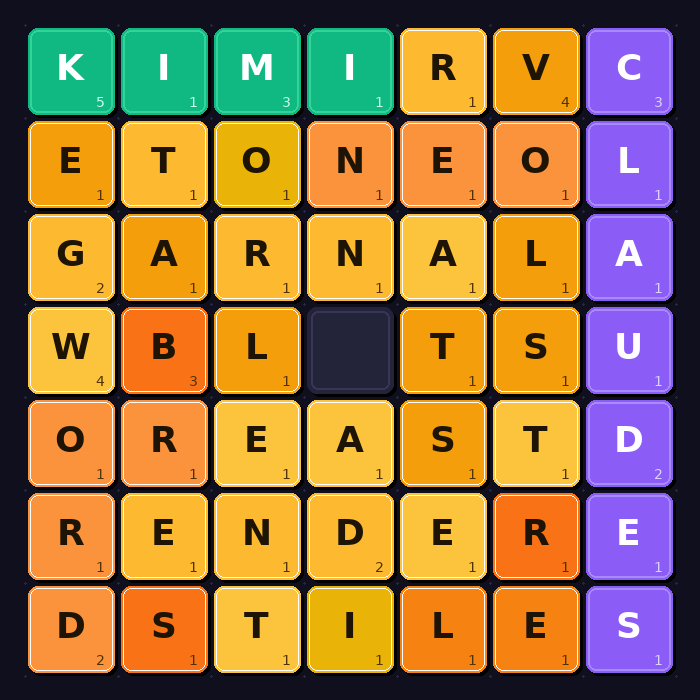
Kimi K2.6, an open-weights model from Chinese startup Moonshot, defeated major competitors like Claude, GPT-5.5, and Gemini in an ongoing AI coding contest. The unexpected victory took place during a real-time programming puzzle that evaluated ten language models using objective scoring.
Comments
The author discusses techniques for preventing AI psychosis during coding sessions by structuring project specifications in YAML. They have also open-sourced a new toolkit to help developers easily implement this structured approach in their own workflows.
Comments2026-05-02
Visual Studio Code is incorrectly appending a Co-Authored-by Copilot tag to git commits even when developers are not actively using the AI coding assistant. This unintended behavior results in inaccurate code attribution and has raised concerns among developers who want to accurately reflect their use of AI tools.
CommentsMicrosoft has introduced lib0xc, an open-source C library featuring standard library-adjacent APIs designed to facilitate safer systems programming. The project aims to help developers reduce common vulnerabilities and build more robust software without abandoning the C language. The source code is now available for public use and contribution on GitHub.
Comments
Clojurists Together has announced its Q2 2026 open source funding, awarding a total of $31,000 to five selected projects. This quarterly investment is designed to sustain the development and maintenance of essential tools within the Clojure programming ecosystem.
CommentsA new project analyzes Hacker News discussions to determine the popularity and sentiment of Large Language Models among developers. The tool works by automatically detecting models from the OpenRouter catalog and scoring community sentiment within the comment threads. Ultimately, it provides a data-driven look at which coding AI tools are currently considered state-of-the-art by the tech community.
CommentsOpen Design is a new open-source, local-first desktop application that transforms AI coding agents like Claude Code and Cursor into powerful design engines. By utilizing a bring-your-own-key model, developers can seamlessly generate and export prototypes, landing pages, and multimedia assets without relying on proprietary alternatives.
CommentsDotcl is a new open-source project that brings the Common Lisp programming language to the .NET framework. The development team is hosting the code on GitHub and actively encouraging community contributions to help expand the project.
Comments2026-05-01
A new browser-based project allows users to run Adobe's 1991 PostScript interpreter directly on the web, prompting developers to share classic documentation and troubleshoot the tool. The release has also sparked widespread nostalgia for the language, with users reminiscing about its programming elegance and historical significance in early computing. Additionally, the community debated Apple's decision to remove native PostScript support from recent macOS versions, weighing the pros and cons of the company's transition to PDF-based rendering.
CommentsUnderstand Anything
2026-05-01Egonex-AI has introduced Understand Anything, a tool that transforms codebases into interactive, searchable knowledge graphs that developers can easily explore and query. Prioritizing practical comprehension over visual flair, the platform seamlessly integrates with major AI coding assistants like Cursor, Copilot, and Claude Code.
CommentsA new tutorial helps machine learning engineers master neural network fundamentals by explaining how to mathematically derive the Jacobian for the softmax function. The resource emphasizes practical learning by offering hands-on coding challenges to implement essential components like backpropagation entirely from scratch. This targeted practice ensures developers build a robust foundational understanding of the mechanics driving deep learning models.
Comments2026-04-30

I built a Game Boy emulator in F#
2026-04-30A developer has dedicated hundreds of hours to building a fully functional Game Boy emulator using the F# programming language. The project features working sound and can run on both desktop and web platforms.
Comments