Programming News
Programming keeps evolving as languages mature, tooling improves, and teams rethink how software should be written. This section follows that change, gathering news and articles about programming languages, compilers, development practices, and the craft of writing reliable, maintainable code.
Typical stories include language releases and proposals, deep dives into compiler and runtime internals, performance investigations, debates about coding style and architecture, and essays from experienced engineers on lessons learned. Popular ecosystems such as Rust, Python, JavaScript, and TypeScript appear regularly.
Keeping up with these topics helps developers choose the right tools, avoid known pitfalls, and grow their skills. Working engineers, students, and technical leaders follow this coverage to stay current with the ideas shaping how software gets built.
2026-04-24
Spinel: Ruby AOT Native Compiler
2026-04-24Ruby creator Yukihiro Matsumoto has introduced Spinel, a new Ahead-of-Time native compiler designed to improve the execution speed of Ruby applications by compiling code directly into native machine code. The open-source project is now live on GitHub, where developers can explore the codebase and contribute to its ongoing development.
CommentsA new open-source project named Gova was recently introduced on Hacker News as a declarative graphical user interface framework for the Go programming language. It aims to streamline the process of building applications for Go developers. The source code is publicly available on GitHub for the community to explore and contribute to.
Comments
Hear your agent suffer through your code
2026-04-24Developer AndrewVos has released a new GitHub project named endless-toil that lets programmers hear their AI coding agent audibly suffer while reviewing their code. The tool adds a humorous auditory element to software development by broadcasting the automated assistant's digital frustration.
Comments2026-04-23

GPT-5.5
2026-04-23GPT-5.5 has been introduced as the smartest and fastest model to date. The newly released AI features enhanced capabilities specifically optimized to handle complex, multi-step workflows. These improvements make it highly effective for demanding tasks such as advanced coding, research, and data analysis across various tools.
Comments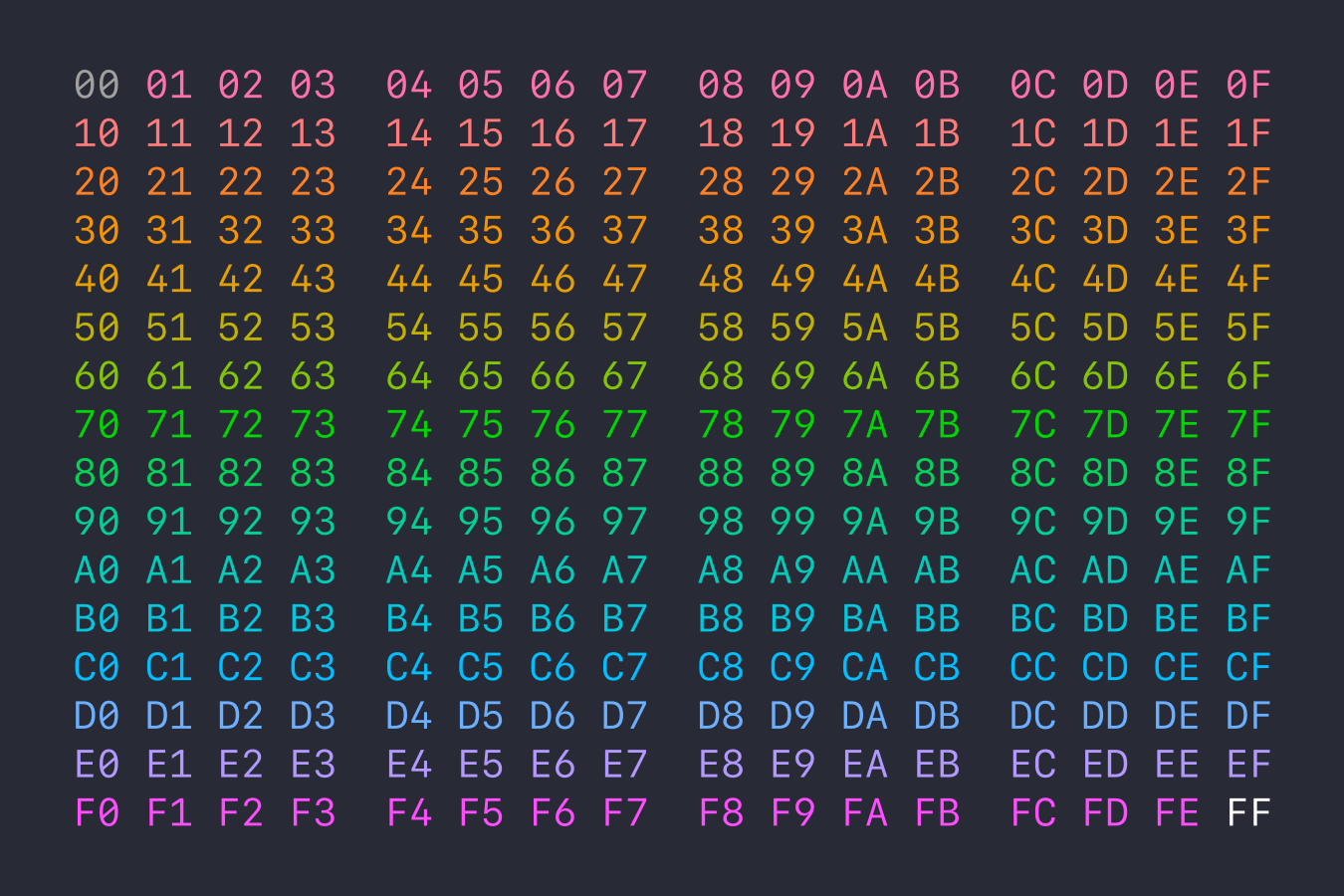
Your hex editor should color-code bytes
2026-04-23A recent discussion advocates for hex editors to implement basic color-coding to improve byte readability without overwhelming the user interface. While a subtle splash of color helps differentiate data, developers must ensure the feature is fully customizable for colorblind users. Additionally, all visual enhancements must be additive, ensuring no critical meaning is lost when using screen readers.
Comments
Writing a C Compiler, in Zig (2025)
2026-04-23A developer is building a C compiler from scratch as their first major project in the Zig programming language. This 2025 endeavor serves as a practical introduction to the systems language while tackling the complex challenge of compiler design.
Comments2026-04-22

Qwen has introduced the Qwen3.6-27B, a 27-billion parameter dense model that delivers flagship-level coding performance. Complementing this release, the Qwen Studio platform offers a comprehensive suite of multimodal features, ranging from image and video generation to document processing and web search integration.
Comments
SpaceX has reportedly agreed to acquire AI coding platform Cursor for $60 billion to build the world's leading software engineering and knowledge work AI. The deal will combine Cursor's popular developer tools with SpaceX's massive Colossus supercomputer, which features a million H100-equivalent chips.
CommentsDevelopers are increasingly relying on AI coding agents like Claude Code to write the majority of their software, overcoming issues like model over-editing through clear, iterative feedback. While some users create project-specific skill files to guide the AI, the consensus is that simply providing detailed instructions and treating the tool as an iterative collaborator yields the best results. This straightforward approach has drastically increased productivity, allowing users to commit significantly more code with fewer tokens than traditional methods.
Comments
A recent tech piece explores the enduring programming idiom of using the XOR instruction to zero out a register instead of relying on subtraction. It investigates the technical and historical factors that ultimately made XOR the overwhelmingly popular and preferred method for this operation.
CommentsGarbage collection without unsafe code
2026-04-22A recent article explores the implementation of garbage collection in Rust using exclusively safe code, building upon previous surveys of the language's memory management ecosystem. By demonstrating that robust garbage collection is achievable without relying on unsafe features, this approach provides developers with a highly secure alternative for automatic memory management.
Comments2026-04-21
The MNT Reform is an open hardware laptop designed and assembled in Germany that has earned high praise from programmers and tinkerers. Users love its modular, highly repairable design and unique mechanical ortholinear keyboard, though they note a slight learning curve and some minor rough edges. Thanks to its extensive upgradeability and supportive community, it remains a beloved device for those willing to embrace a customizable, hands-on computing experience.
CommentsDiscussions on optimizing dynamic language interpreters highlight how inherent language design choices heavily dictate performance and JIT optimization potential. While languages like Lua and Wren achieve high speeds by limiting extreme runtime dynamism, Python's complex features and extension compatibility have historically hindered its default CPython implementation. However, driven by AI workloads and modern hardware, new JIT efforts and alternative runtimes like PyPy are steadily improving the execution speed of highly dynamic languages.
CommentsCodemix has released an open-source TypeScript property graph database that leverages CRDTs for type-safe, realtime collaboration. This new tool enables developers to seamlessly manage and edit complex graph data concurrently without encountering merge conflicts. It offers a robust solution for building modern applications that require reliably synchronized, multi-user data environments.
Comments
Anthropic appears to have removed Claude Code from its $20 monthly Pro subscription based on recent updates to its pricing page. Users are currently investigating whether this change affects existing subscribers or if the coding tool remains accessible on that tier.
Comments2026-04-20
Kimi K2.6: Advancing open-source coding
2026-04-20Kimi K2.6 advances open-source coding by introducing innovative features such as long-horizon coding and coding-driven design. The release also enhances collaborative AI capabilities through proactive agents, agent swarms, and the newly introduced Claw Groups research preview.
CommentsKefir C17/C23 Compiler
2026-04-20Kefir is an independent C17/C23 compiler developed by a single programmer to provide a simple, maintainable alternative to industry standards like GCC and Clang. By introducing a third compiler implementation, the project helps developers vet code portability and catch hidden bugs stemming from compiler-specific extensions and preprocessor defines. The tech community has praised the solo project for its impressive test suite and its value in diversifying the C language ecosystem.
CommentsDevelopers behind the Soul Player C64 project have successfully run a 25,000-parameter transformer AI model on an original 1 MHz Commodore 64. This remarkable feat showcases extreme software optimization by fitting modern machine learning architecture onto severely limited retro hardware. The project highlights the ongoing creativity of programmers pushing vintage machines far beyond their original design capabilities.
Comments2026-04-19
A recent discussion on the seven fundamental programming ur-languages highlights academic initiatives like a Tufts university course that builds practical mini versions of core language paradigms. Readers also debate language taxonomy, specifically arguing that Ruby is deeply rooted in Smalltalk's object-oriented model rather than the traditional Algol lineage. Additionally, the conversation explores the fuzzy boundaries and varying definitions of object-oriented programming across modern languages like Python, Rust, and Common Lisp.
CommentsReader discussions surrounding the Nanopass Framework debate the merits of using numerous small compiler passes versus fewer, larger ones. While some developers praise the framework's domain-specific language for simplifying transformations and pass reordering, others warn of significant performance overhead, redundancy, and debugging difficulties. The conversation highlights that the ideal pass architecture ultimately depends on specific language design choices and the careful balance between separation of concerns and complex inter-pass interactions.
Comments
Six Levels of Dark Mode (2024)
2026-04-19This guide explores six distinct levels of dark mode implementation for modern web projects, ranging from simple HTML-only attributes to complex JavaScript-driven solutions. By examining the various CSS techniques in between, it helps developers choose the most effective dark mode strategy for their applications.
CommentsA developer has built a CHIP-8 emulator entirely in a custom programming language they designed from scratch. The open-source project is now available on GitHub under the navid-m/chip8emu repository for the community to explore and contribute to.
Comments
Shader Lab is a new toolkit launched on Hacker News that provides a visual, Photoshop-like interface for shader development. The platform allows users to easily create, stack, and animate complex shaders without relying solely on manual coding.
Comments
I learned Unity the wrong way
2026-04-19A developer shares a cautionary tale about spending three years building Unity games by blindly copying tutorials and forum scripts. Their lack of foundational programming knowledge was exposed during a technical interview when they failed to explain basic data structures. The story highlights the long-term pitfalls of prioritizing quick results over understanding core computer science concepts.
Comments2026-04-18

A developer has introduced Brunost, a new programming language that uses the Nynorsk written standard of Norwegian for its syntax. The creator humorously apologized to the tech community for adding yet another language to the already crowded programming landscape.
CommentsA developer has showcased a novel calculator that utilizes interval and union arithmetic to overcome floating-point precision issues and compute true inverses of mathematical functions. Originally built to test a custom TypeScript library for handling disjoint sets of intervals, the project has sparked community discussions regarding interval math standards, notation, and related graphical applications.
CommentsFuzix OS
2026-04-18FUZIX is a micro-Unix operating system designed for retrocomputing on old and resource-constrained hardware like 8-bit microcontrollers and the Raspberry Pi Pico. Although the project supports standard Unix-style processes and is making steady progress, poor documentation remains a notable issue for hobbyists. The development team is currently working on a portable C compiler to help alleviate the steep learning curve associated with the cross-compilation toolchain.
Comments
A presentation at the Onward! 2025 conference explores the concept of treating Unix executables as native Smalltalk methods to bridge the gap between the operating system and the programming environment. Joel Jakubovic from Charles University details this technical approach and discusses the broader implications for unifying Unix and Smalltalk.
Comments2026-04-17

I’m spending months coding the old way
2026-04-17Despite the widespread integration of artificial intelligence in software development, one developer is deliberately spending the next three months coding without any AI assistance. This self-imposed return to traditional programming aims to reinforce fundamental skills and establish a baseline for evaluating the true impact of AI tools on the industry.
CommentsCadQuery is an open-source Python library that allows developers to build parametric 3D CAD models entirely through code. This scripting approach replaces traditional graphical interfaces to enable highly automated, customizable, and version-controlled design workflows.
Comments