Privacy Regulation Tech News Today
SubmitHow companies collect and use personal data is under constant legal scrutiny. This section tracks privacy regulation news, including GDPR enforcement and major fines, new state and national privacy laws, rules around AI and biometric data, and the compliance challenges facing the tech industry.
Stories here cover data protection authorities issuing fines and corrective orders, new privacy statutes taking effect in US states and countries worldwide, disputes over cross-border data transfers, and emerging rules on biometric identification and the personal data used to train AI systems.
Privacy rules now influence product design directly, determining what data apps can gather, how consent works, and where information can be stored. Compliance officers, product teams, and privacy-conscious users follow this coverage to understand rights and obligations that keep expanding year after year.
2026-09-01

Researchers at KAIST have developed SweepLED, an affordable technology that uses a smartphone's LED and artificial intelligence to detect hidden cameras with a 94% accuracy rate. By utilizing a low-cost LED device, this innovation provides users with a highly effective and accessible tool for protecting their everyday privacy.
CommentsReverse engineering my ADHD test
2026-09-01A user reverse engineered their online ADHD evaluation by capturing the page source and analyzing outbound network requests to expose the platform's underlying scoring logic. This technical deep dive highlights the hidden mechanics and potential privacy vulnerabilities inherent in at-home medical testing.
Comments
2026-08-31
The controversial CEO of surveillance technology firm Flock Safety recently experienced a personal encounter with the very tracking and privacy issues his company's automated license plate readers generate. Tech community discussions on platforms like Hacker News highlight the irony of the executive facing the consequences of widespread public surveillance. This incident adds fuel to ongoing debates about the ethics and risks of deploying such extensive monitoring networks.
Comments2026-08-27
A new tool called Twitter Viewer enables users to browse public X profiles and tweets without logging in. The service allows for the anonymous viewing of text, photos, and videos without requiring an account. This provides a convenient workaround for individuals who want to access social media content while maintaining their privacy.
Comments2026-08-23

Hister is a private, self-hosted search engine that allows users to index and query their own visited web pages and local files. It offers versatile access across the web, terminal, command line, and MCP, ensuring complete privacy and user control over personal data.
Comments2026-08-22
A US citizen is facing felony charges for deleting phone data at the border, sparking debate over digital privacy and the legality of device searches. While some observers view the individual's actions as a deliberate act of activism to challenge these policies, others see it as an unplanned legal escalation. Many hope the case will result in an acquittal to establish a strong legal precedent protecting citizens' personal data.
Comments
A researcher accidentally intercepted and logged hundreds of thousands of phone calls to military bases by taking over expired e164.arpa nameserver zones for multiple territories. The misconfiguration allowed the author to route sensitive telecommunications traffic through their own systems without initially realizing the extent of the data collection. This incident highlights the critical privacy and security risks associated with unmaintained DNS infrastructure.
Comments2026-08-19

OpenLogi
2026-08-19OpenLogi is a new privacy-focused, Rust-based alternative to Logitech Options+ that allows users to manage their peripherals locally without requiring an account or telemetry. The application supports essential device customizations like button remapping, DPI adjustments, and SmartShift control via the HID++ protocol.
Comments2026-08-17
Reticulum – Decentralized Mesh Network
2026-08-17Reticulum is a decentralized mesh network that prioritizes privacy by omitting source addresses from transmitted packets across various mediums like LoRa, Bluetooth, and standard internet connections. Although the protocol prevents direct tracking, observers can still potentially estimate a sender's physical location by analyzing the initial network repeaters. Despite its innovative design, the platform is currently struggling to combat a growing influx of spam and automated botnet traffic.
CommentsA quick look at zero-knowledge proofs
2026-08-17This article provides a foundational overview of zero-knowledge proofs, explicitly focusing on their utility outside of cryptocurrency and blockchain applications. It explores the mechanics of this cryptographic concept and its broader applications in enhancing general data privacy and secure authentication.
Comments2026-08-14

SparrowMap is a public camera network designed to track the movements of government vehicles. The system is entirely operated by volunteers who host the cameras. To protect citizen privacy, private license plates are automatically destroyed on the camera hardware before any footage is transmitted to the public map.
Comments
The Discovery of Designated Resolvers protocol allows devices to automatically find and connect to the encrypted DNS endpoints of the resolver they are already using. This seamless upgrade enhances network security and user privacy by encrypting DNS traffic without requiring any manual configuration.
Comments2026-08-13
uBlock Origin is ending its ongoing battle to block advertisements on Facebook as the technical arms race between ad blockers and the platform intensifies. In response, users highlighted the severe privacy risks, malware threats, and system resource drains caused by modern advertising, arguing that the industry needs to shift toward subscription models to fully protect user data and device performance.
Comments2026-08-12

New Bedford police officer Emily Pacheco is under internal affairs investigation for allegedly misusing Flock surveillance cameras to track her ex-partner. A judge issued an abuse prevention order against Pacheco on Monday following the allegations. The case highlights the privacy risks and potential for abuse associated with widespread law enforcement adoption of automated surveillance networks.
Comments2026-08-11
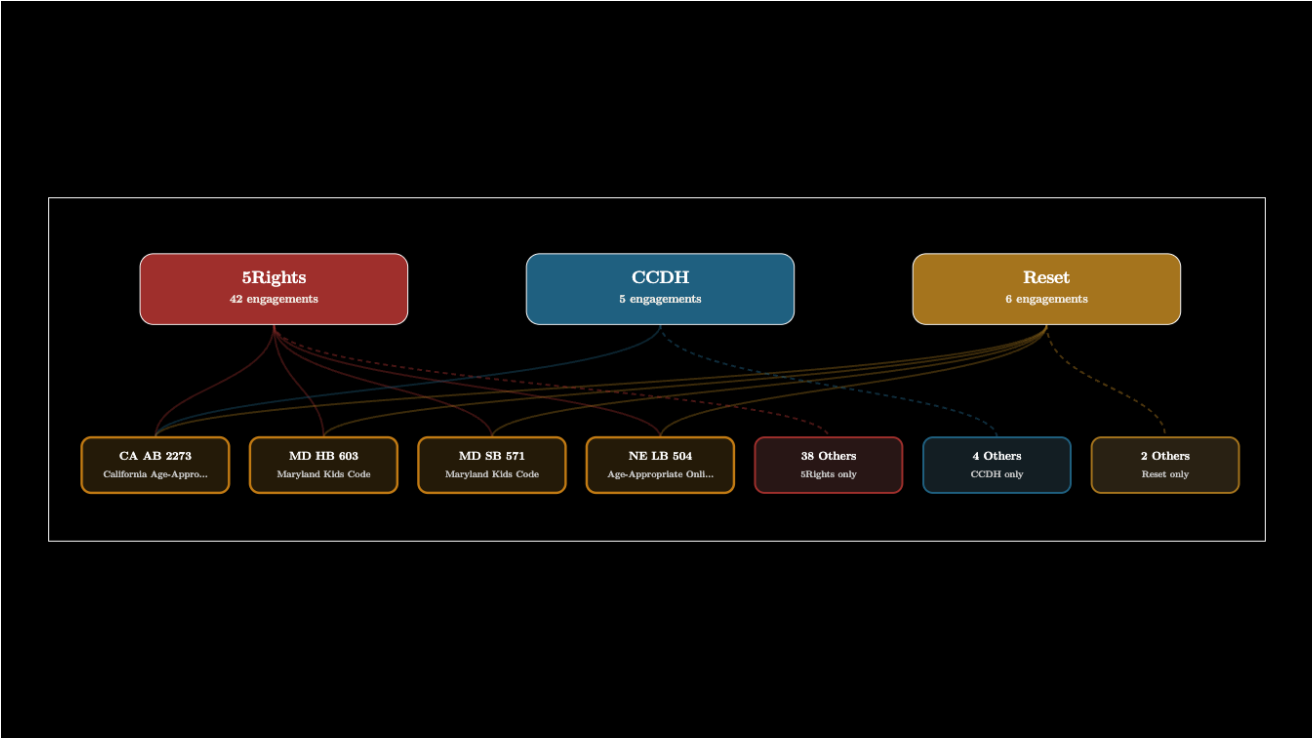
Non-governmental organizations that successfully championed strict digital ID and anti-anonymity laws in the UK are now actively lobbying American statehouses to adopt similar legislation. This coordinated push aims to replicate Britain's restrictive digital policies in the United States. Consequently, these efforts threaten to significantly compromise online privacy and anonymity for everyday American internet users.
Comments2026-08-10

Everything you do is being recorded
2026-08-10As modern technology enables the continuous tracking and recording of our daily activities, concerns over digital privacy are reaching a boiling point. This piece examines the extent of this pervasive surveillance and explores actionable strategies for consumers looking to protect their data and fight back against invasive monitoring.
Comments2026-08-07

Security researchers successfully tracked and eavesdropped on a WIRED reporter by exploiting vulnerabilities in a children's GPS smartwatch. This incident highlights the severe privacy risks and deeply insecure supply chains surrounding GPS-enabled wearable gadgets designed for kids.
Comments
News of the Nepalese government's reported involvement with the breach notification service Have I Been Pwned has drawn heavy skepticism from the tech community, who point to the country's notoriously insecure IT infrastructure. Commenters expressed significant privacy concerns regarding government access to leaked data and potential law enforcement misuse, with some even labeling the announcement as misleading.
Comments2026-08-05

Researchers have discovered three WebKit features that bypass proxy configurations on iOS and macOS, resulting in IP and DNS leaks. These vulnerabilities expose users' real network addresses and compromise the privacy of proxy-based browsers like Tor and Apple's iCloud Private Relay. Patches for these issues have already been implemented in the Psylo browser.
Comments2026-07-31

Security experts warn against purchasing cheap, generic TV streaming sticks that promise unlimited content for a single upfront fee. These unauthorized devices secretly hijack and rent out the user's internet connection to strangers, creating significant privacy and bandwidth risks.
Comments2026-07-27

A US citizen named Tunick has been charged after their smartphone wiped its data during an airport search due to a privacy feature in GrapheneOS. The open-source operating system, which runs on Google Pixel devices, includes a mechanism that erases all information when a specific passcode is entered. Authorities are pursuing charges against the individual following the loss of digital evidence during the inspection.
CommentsKill The Cookie Banner
2026-07-27Readers argue that current cookie banners fail to achieve genuine informed consent, as users routinely accept the tracking simply to dismiss the annoying screens. Many commenters suggest shifting cookie management to a global browser setting would be a far more effective solution than the current frustrating interfaces. Ultimately, the discussion concludes that existing privacy legislation has been undermined by corporate lobbying, resulting in a useless system that prioritizes corporate tracking over actual user protection.
Comments2026-07-26

A persistent Windows tracking mechanism known as GDID can uniquely identify users even when they route their traffic through a VPN, recently helping to get a hacker caught. Researchers have since investigated the tracker in a virtual environment, releasing specific scripts and techniques to neutralize it and protect user privacy.
CommentsAndroid May Soon Restrict On-Device ADB
2026-07-26Proposed changes to Android's on-device ADB could severely restrict access for power users and developers. These new limitations threaten to eliminate a growing ecosystem of open-source applications, mobile development environments, and rootless privacy tools like Shizuku. The potential crackdown has sparked significant concern within the tech community regarding the future of advanced device management and customization.
Comments2026-07-24
Screenpipe is a newly launched YC-backed tool that continuously captures local screen and audio data to provide persistent, searchable context for AI agents. It prioritizes user privacy by offering customizable recording schedules, app filtering, and support for local or encrypted LLM processing. Developers are already utilizing its optimized performance to build personalized AI assistants and privacy-first enterprise workflow alternatives.
Comments2026-07-23
Developers have added experimental Linux support for the Fairphone 6 wide camera, successfully navigating complex hardware register and pixel data bugs. Community discussions surrounding the update debated the technical patches while also questioning Fairphone's ongoing incompatibility with privacy-focused operating systems like GrapheneOS due to the use of older processor hardware.
Comments2026-07-22
During a recent security incident, Hugging Face discovered that commercial frontier APIs blocked the malicious payloads necessary for forensic log analysis because their safety guardrails could not distinguish incident responders from attackers. To bypass these restrictions and maintain data privacy, the company shifted its investigation to a locally hosted open-weight model. The situation, addressed jointly by Hugging Face and OpenAI, highlights ongoing industry debates regarding the limitations of AI alignment and the necessity of uncensored models for cybersecurity research.
Comments
The Court of Justice of the European Union has issued a landmark ruling declaring that virtual private networks are lawful technical tools. The decision establishes that neither publishers nor VPN providers can be held liable for copyright infringement committed by their users.
Comments
A hidden encrypted vault on a USB drive can protect sensitive data from being accessed under coercion. By keeping the secondary encrypted partition completely undetectable, this setup offers a crucial layer of privacy for users navigating regions with intrusive data laws.
Comments2026-07-21
The Court of Justice of the European Union has ruled in a landmark case that virtual private networks are lawful technical tools. The decision explicitly states that neither publishers nor VPN providers can be held liable for copyright infringement. This ruling provides significant legal protection and clarity for privacy technology services operating within the region.
Comments