Mental Health Tech News
Technology is playing a growing and sometimes controversial role in mental health care. Read news here about therapy and meditation apps, AI-powered support tools, digital health startups and their funding, and the research and regulatory debates around treating minds with software.
Stories in this section cover teletherapy platforms expanding or consolidating, AI chatbots being tested as support tools and the safety questions they raise, clinical trials of digital therapeutics, and employer and insurer moves to cover mental health apps. Privacy concerns around sensitive health data come up often.
Demand for mental health care far exceeds the supply of clinicians, which makes the promise and the risks of these tools significant. Clinicians, health systems, investors, and people seeking care themselves follow this coverage to see which digital approaches earn evidence and trust.

How Gödel's Proof Works (2020)
2026-08-14Kurt Gödel's incompleteness theorems fundamentally shattered the quest for a complete mathematical theory of everything by proving that certain logical truths cannot be formally demonstrated. This article breaks down how his groundbreaking proof works and explores why its implications continue to shape mathematics and theoretical computer science nearly a century later.

Thanks to social media, canned sardines are a scarcity on the supermarket shelf
2026-08-13A viral TikTok diet trend has collided with the environmental impact of warming oceans to create a severe canned sardine shortage in supermarkets. This unexpected combination of social media influence and climate change has significantly depleted the global supply. Consequently, experts warn that the scarcity is not expected to be resolved anytime soon.
Compression is prediction
2026-08-12This article explores the shared underlying objective of data compression and large language models, which is to accurately predict subsequent data sequences. It breaks down the fundamentals of compression to demonstrate how improved predictive accuracy directly translates to more efficient data reduction.
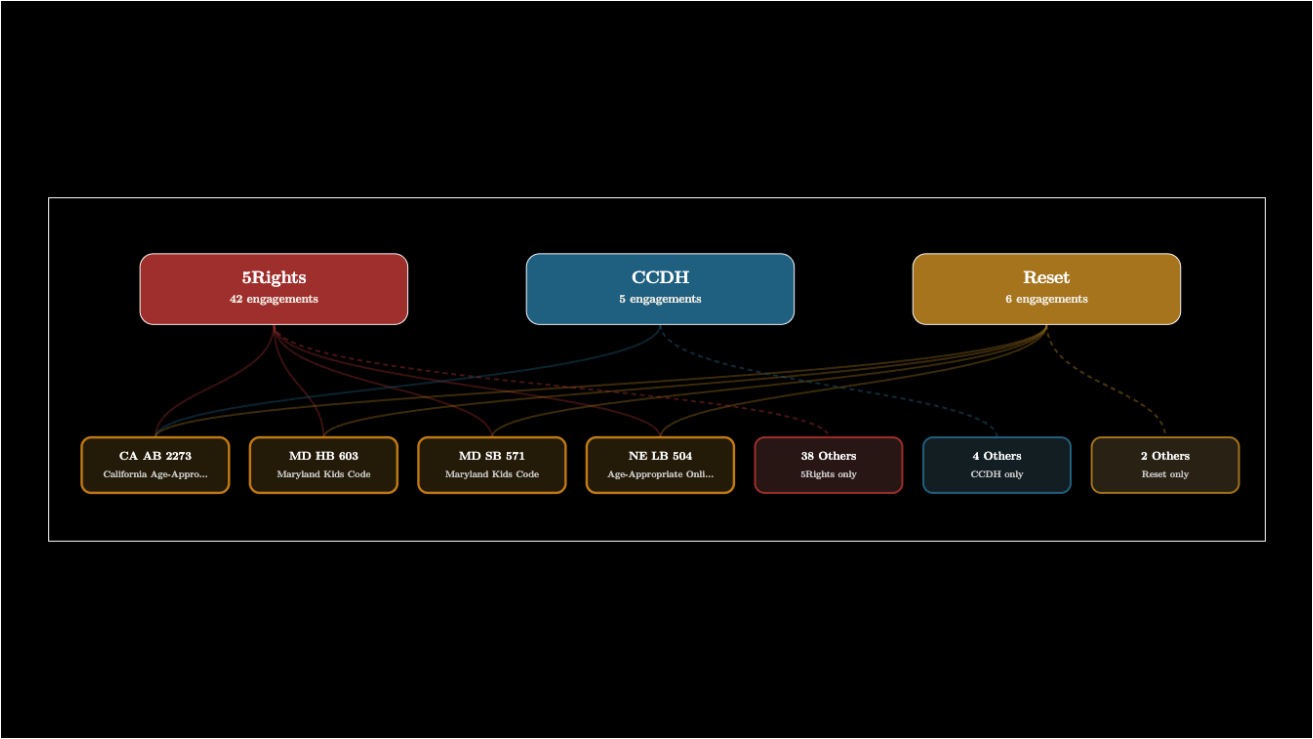
The UK's War on Anonymity Has Come to America
2026-08-11Non-governmental organizations that successfully championed strict digital ID and anti-anonymity laws in the UK are now actively lobbying American statehouses to adopt similar legislation. This coordinated push aims to replicate Britain's restrictive digital policies in the United States. Consequently, these efforts threaten to significantly compromise online privacy and anonymity for everyday American internet users.

Parametron: 50s Japanese computer that uses neither transistors nor vacuum tubes
2026-08-11Completed in 1958, NEC's NEAC-1101 was Japan's first digital computer to feature floating-point operations and uniquely utilized parametron technology instead of traditional vacuum tubes or transistors. The machine relied on these specialized components for its calculations, representing one of many experimental computing technologies explored during the 1950s. Ultimately, alternative technologies like parametrons and magnetic amplifiers were rendered obsolete by the rapid, exponential advancement and massive financial investment in transistors.

Taxi drivers rarely die of Alzheimer's
2026-08-10Studies suggest that taxi drivers have lower rates of Alzheimer's disease because navigating complex spatial environments may help delay cognitive decline. Although this points to potential neuroprotective benefits from mentally demanding work, researchers caution that more studies are needed to fully confirm these findings.

New Mexico court orders Meta to pay $567m over harms to children’s mental health
2026-08-08A New Mexico court has ordered Meta to pay $567 million in damages for harms caused to children's mental health. The ruling follows the second phase of a landmark trial that previously found the social media company enabled harm against its users.
Taste Is All That's Left
2026-08-07As machines become capable of creating and manufacturing virtually anything, the traditional role of human creators is fundamentally shifting. This article explores the future of human endeavor in an automated world, arguing that subjective taste and aesthetic curation will remain the last truly valuable human craft.
The Sylvester–Gallai Theorem
2026-08-07The Sylvester–Gallai theorem states that any finite, non-collinear set of points in a Euclidean plane contains a line passing through exactly two of those points. Michigan State University mathematician Leroy Milton Kelly developed a notable proof for this principle using a point-line distance minimization approach. By identifying the closest point-line pair in the set, his method elegantly demonstrates this fundamental geometric property.
Discovery Loop
2026-08-06Discovery Loop is developing artificial intelligence systems designed to automate the experimental loops used in science and engineering. By utilizing a continuous exploration approach, the company aims to streamline complex research processes. Ultimately, this technology is expected to significantly accelerate the pace of breakthroughs in both fields.
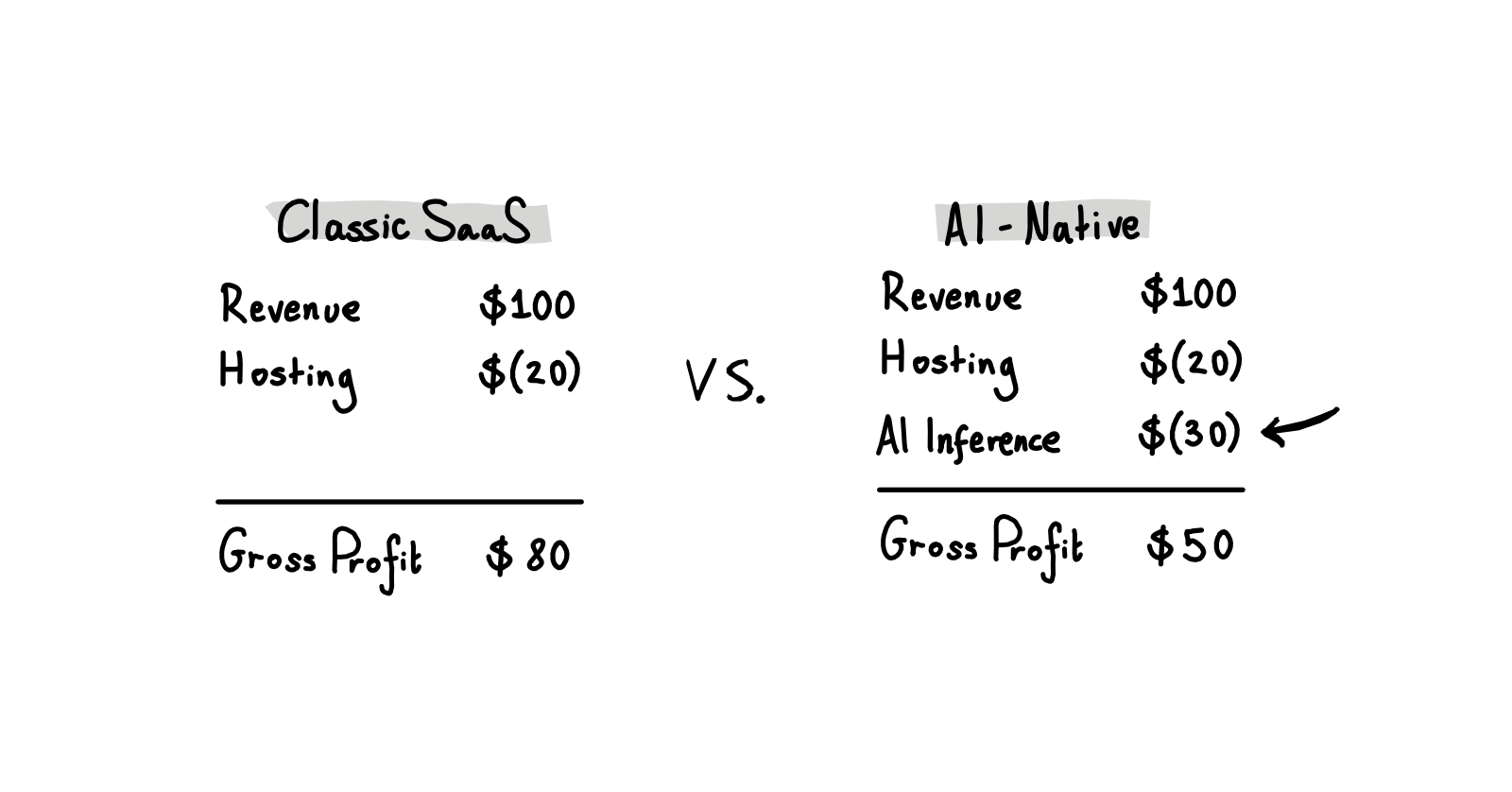
Something is changing in the unit economics of software
2026-08-06Artificial intelligence is compressing profit margins and fundamentally altering the unit economics of the software industry. This rapid shift is forcing traditional Software-as-a-Service companies to rethink their established business playbooks to maintain long-term profitability.
Position: LLMs Can't Jump
2026-08-06A recent discussion highlights the limitations of large language models, arguing that AI is inherently constrained because human language is a fundamentally lossy encoding of the human experience. While LLMs excel at low-ambiguity tasks like coding, they lack physical qualia and true contextual understanding. Consequently, the actual significance of their outputs ultimately relies on the human receiver to bridge the semantic gaps.
Ten advances in mathematics and theoretical computer science
2026-08-04Although the original article highlights ten recent advances in mathematics and theoretical computer science, reader discussions primarily focus on the societal and political implications of exponential technological growth driven by large language models. Commenters express concern over the unprecedented ability of AI to scalably manipulate individuals through highly personalized, real-time conversational engagement. The debate also explores how these computational breakthroughs will impact experimental fields like biology and potentially exacerbate political polarization through advanced digital manipulation.

How Hollywood stopped making movies in Hollywood
2026-08-04Driven by favorable tax incentives and lower production costs, the film industry has increasingly relocated its major productions away from Los Angeles to other global locations. This economic shift has fundamentally altered the traditional Hollywood landscape, leaving audiences largely unaware of the geographic substitutions on screen.
Show HN: Kakehashi – Experimental userspace to run macOS binaries on Linux ARM
2026-08-03A new project called Kakehashi introduces an experimental userspace translation layer designed to run macOS binaries on Linux ARM64 systems. The code is currently hosted on GitHub, where developers are invited to contribute to its ongoing development.
The Computational Theory of Mind (2015)
2026-08-03A 2015 article on the Computational Theory of Mind has sparked reader debate over whether digital systems like LLMs can truly think or if human cognition strictly requires continuous temporal and physical embodiment. While some readers argue that artificial neural networks represent a simplified form of cognition that could eventually blur the lines of machine thought, others emphasize the fundamental differences between emergent AI and traditional computational models. Ultimately, the discourse highlights the ongoing philosophical and scientific challenge of defining both consciousness and computation in the age of advanced artificial intelligence.

How Google helped destroy adoption of RSS feeds (2023)
2026-08-02A 2023 analysis examines how Google's strategic decisions, including the discontinuation of Google Reader and the push toward algorithmic feeds, significantly accelerated the decline of RSS adoption. By prioritizing proprietary, walled-garden platforms over open web standards, the tech giant fundamentally shifted user behavior away from decentralized content syndication.

How to Exist
2026-08-01This piece challenges readers to undertake a three-minute mindfulness experiment requiring absolute physical and mental stillness. Participants must sit without moving, fidgeting, or daydreaming, focusing only on breathing and blinking to experience the simple act of existing.

The Absurdity of Albert Camus
2026-08-01This piece explores the philosophical perspective of Albert Camus, highlighting his belief that history is fundamentally absurd. It argues that acknowledging this inherent absurdity is essential for making sense of past events and accurately predicting future outcomes.

Demystifying DRAM Read Disturbance: RowHammer and RowPress Phenomena
2026-08-01A newly published paper investigates the underlying mechanisms of DRAM read disturbance phenomena, specifically focusing on the RowHammer and RowPress vulnerabilities. By bridging the gap between experimental characterization and device-level modeling, the study provides a deeper understanding of how these critical memory errors occur. These insights are essential for developing more robust hardware designs and improved security mitigations against memory-based attacks.