Mental Health Tech News Today
SubmitDigital tools are playing a growing role in mental health care. This section covers therapy and meditation apps, teletherapy services, AI-based support tools, and the research, funding, and regulatory questions surrounding technology built for psychological wellbeing.
Stories include clinical trials testing whether apps deliver measurable outcomes, teletherapy platforms expanding or facing scrutiny, AI chatbots being used for emotional support and the safety debates that follow, and employer and insurer moves to cover digital mental health benefits.
Demand for mental health care far exceeds the supply of clinicians, which is why technology's role here draws such intense interest. Therapists, health systems, investors, and people seeking help all follow this coverage, where questions of evidence, ethics, and access carry unusual weight.
2026-10-01
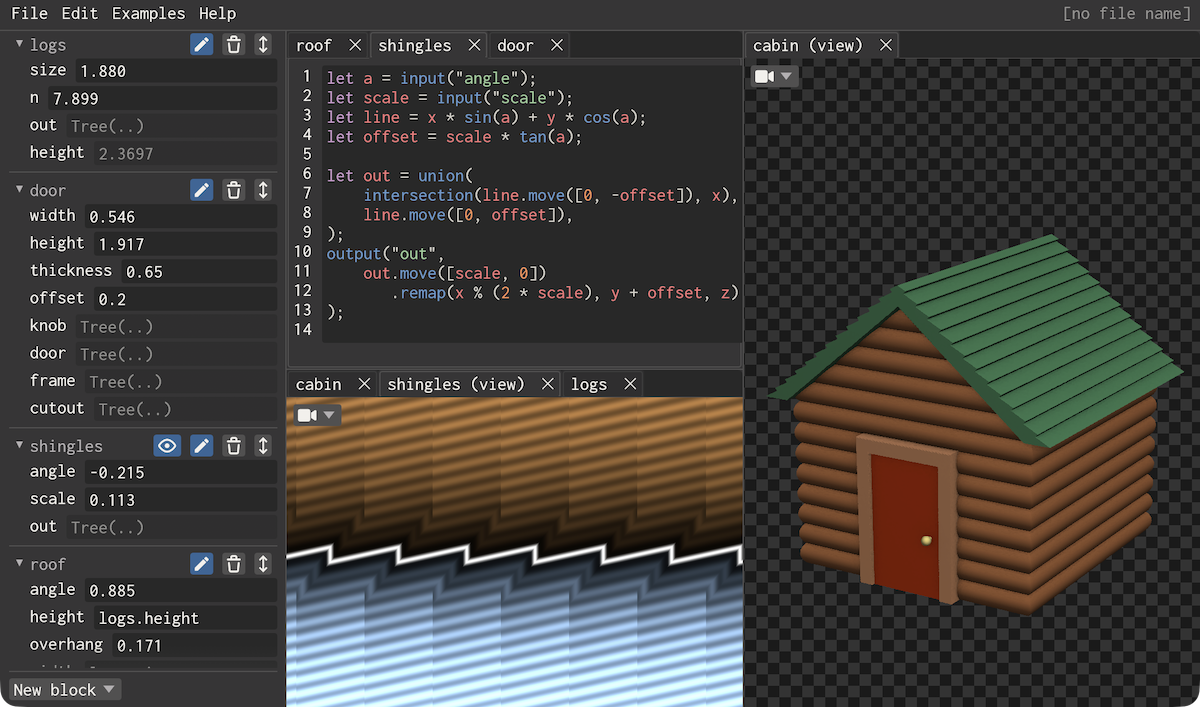
Halfspace is a new experimental integrated development environment designed specifically for solid modeling using distance fields. This specialized tool provides a dedicated workspace for creating complex 3D models through advanced mathematical representations.
Comments2026-09-30

As artificial light pollution continues to erase natural darkness, experts are urging cities to implement stricter regulations on outdoor lighting infrastructure. Reducing excessive nighttime illumination could significantly improve environmental conditions and protect local ecosystems for all living creatures.
Comments
2026-09-29

Archaeologists have uncovered two intact burials at the 12,000-year-old Göbeklitepe site, shedding new light on ancient burial practices. This discovery finally explains the long-standing mystery of how human bones became scattered throughout the site's monumental buildings.
Comments2026-09-28
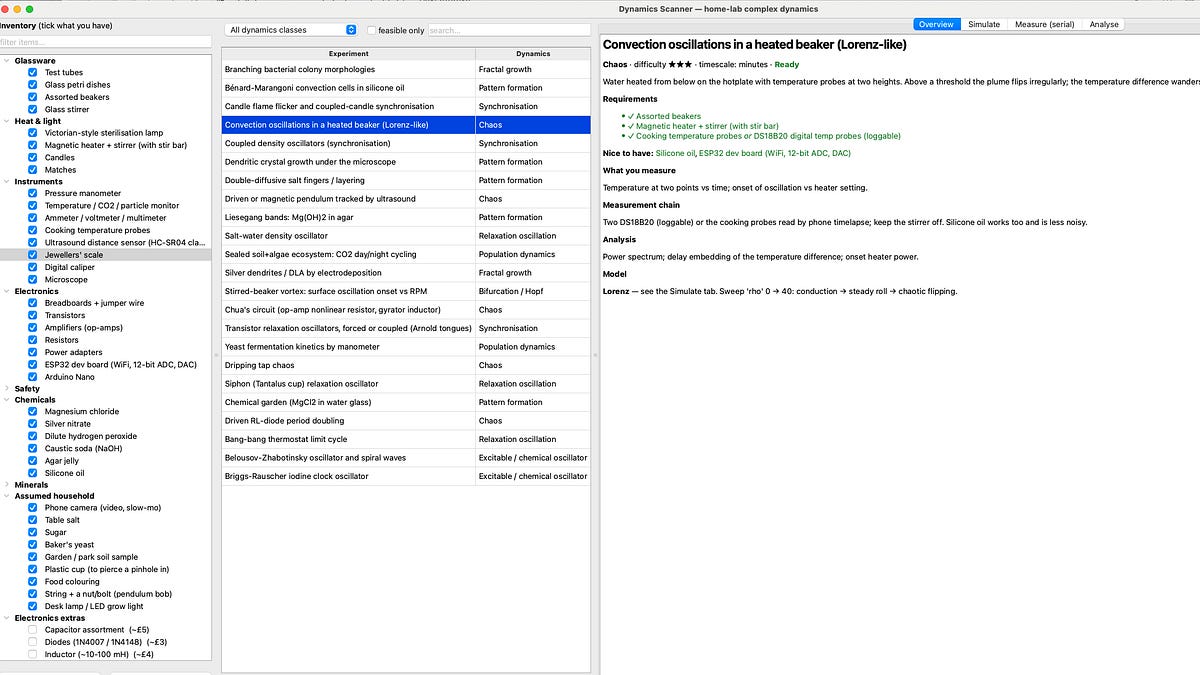
A New Experiment Meta-Strategy
2026-09-28A researcher has introduced a novel meta-strategy aimed at optimizing experimental workflows and development methodologies. The announcement also showcases their newly established laboratory space, which will serve as the central hub for these upcoming experiments.
Comments2026-09-27
The rise of AI-driven code generation is prompting a fundamental reevaluation of how programming languages are designed. As machines become the primary writers of code, future languages will likely evolve to prioritize machine efficiency and optimization over human readability. This transition will ultimately reshape the entire landscape of software development.
CommentsReaders discussing an article about modifying programming languages criticized the recurring trend of dismissing fundamental concepts just because LLMs can process them faster. However, the discussion highlights that the fear of language macros is largely overblown. While macro abuse can occur, features like the core.async library in Clojure show that macros often improve code readability and understanding when used properly.
Comments2026-09-26
Plan mode is dead
2026-09-26The author of a recent piece argues that plan mode is dead, reversing their earlier belief that planning would be the most critical aspect of building software with AI. This shift suggests a fundamental change in how developers should approach AI-assisted coding and software creation.
Comments
Platform-independent SIMD in Go
2026-09-26Go 1.27 introduces an experimental, platform-agnostic API to bring SIMD capabilities directly into the language. This addition allows developers to write high-performance, vectorized code that runs consistently across diverse hardware architectures without relying on platform-specific implementations.
Comments
A major breakthrough in theoretical physics suggests that gravity operates holographically by collapsing the dimensions of space. While this discovery fundamentally challenges our current understanding of the universe, physicists are still working to uncover its full implications for reality.
Comments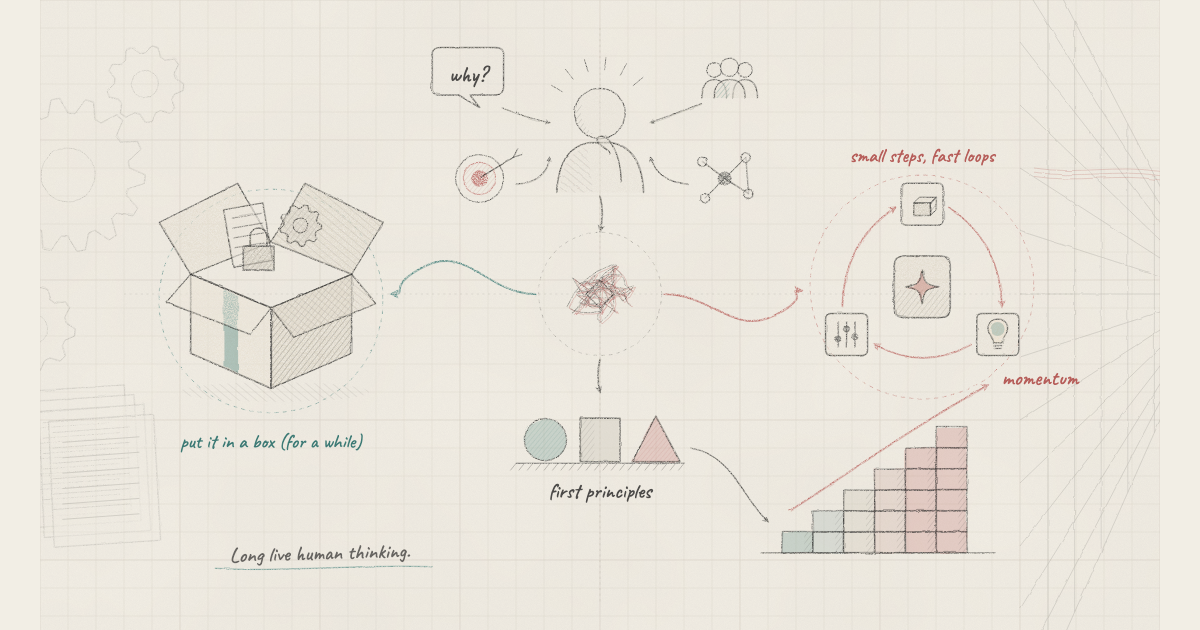
First Principles Thinking
2026-09-26This piece explores the application of first principles thinking to the development and integration of AI agents. It emphasizes the importance of setting aside past experiences and preconceived notions to clearly understand complex problems. By breaking challenges down to their fundamental truths, tech professionals can more effectively collaborate with and build autonomous systems.
Comments
Researchers are developing a smart contact lens that functions as a microscopic lab to monitor stress by measuring serotonin concentrations in tears. This non-invasive wearable technology could provide continuous, real-time insights into a user's mental health and emotional well-being.
Comments
An airport cooled by natural ventilation
2026-09-26The Roland Garros airport on Réunion island utilizes an innovative passive cooling system where a specialized ceiling design naturally funnels light tropical breezes into the terminal. This sustainable architectural approach provides an energy-efficient alternative to traditional air conditioning by leveraging local environmental conditions.
Comments2026-09-25
A new minimalist web project featured on Hacker News provides a virtual koi pond for users to relax and unwind. The site, called Koi.rest, is designed as a digital space to do absolutely nothing and help people regain their mental balance.
Comments2026-09-24
Nestrilabs has released an experimental virtio device called virtio-nvgpu to provide near-native NVIDIA GPU access inside KVM virtual machines. This new tool aims to significantly improve hardware acceleration and graphics performance for virtualized workloads. By bridging the gap between host and guest environments, it offers a promising solution for developers requiring high-end GPU capabilities in VMs.
CommentsTokens too cheap to meter
2026-09-24Industry projections indicate that the cost of AI tokens will plummet over the next decade, eventually becoming as inexpensive as electricity. This dramatic price reduction will fundamentally alter the economics of artificial intelligence by making advanced computational resources virtually limitless and widely accessible.
Comments2026-09-23

SAML: A fractal of bad design
2026-09-23The XML-based SAML authentication protocol suffers from fundamental design flaws that leave it vulnerable to persistent security exploits like signature wrapping attacks. These vulnerabilities stem from inherent XML complexity and design ossification that have persisted for decades. To mitigate these ongoing risks, organizations are advised to migrate to the simpler, JSON-based OpenID Connect protocol.
Comments2026-09-22
More Floating Point Alternatives
2026-09-22Reader discussions on floating-point alternatives suggest that developers who truly understand their algorithms can simply fix their standard float code rather than seeking replacements, as many proposed options like symbolic computation are fundamentally different paradigms. Instead, commenters argue that practical solutions like fixed-point numbers, unums, and logarithmic storage are the true alternatives frequently overlooked in these debates.
Comments
First Shader from Zero in Godot 4
2026-09-22A new Godot 4 tutorial teaches developers how to build their first shader from scratch. The guide covers fundamental techniques such as texture sampling, UV coordinate shifting, and region masking. It concludes by demonstrating how to use noise to generate random shapes for a dynamic portal effect.
Comments2026-09-21

Why MCP Was Always a Bad Idea?
2026-09-21A new opinion piece argues that MCP has been fundamentally flawed since its inception and questions its ongoing relevance. The author expresses frustration with the tech industry's continued embrace of the technology, urging the community to stop pretending it is a viable long-term solution.
Comments2026-09-19
Science Is Open Software
2026-09-19A recent article argues that the principles and practices of modern scientific research are fundamentally synonymous with open-source software development. The author explores the reasons behind this equivalence and explains why this parallel is crucial for the future of innovation. The piece concludes by outlining actionable steps for readers to actively support and engage with open science.
Comments2026-09-17

This 2008 article examines Monsanto's aggressive monopolization of the American agricultural sector and its overwhelming dominance over the national food supply. The piece highlights the company's ruthless business tactics used to control independent farmers. Additionally, it outlines Monsanto's decades-long history of toxic environmental contamination.
Comments
Why Does the Universe Expand?
2026-09-17A new theoretical article suggests that the universe expands because collapsed matter must continue its evolution as an expanding cosmology, essentially viewing the collapse from the opposite side. In this model, the rate of cosmic expansion is determined solely by the cosmological constant, offering a novel framework for understanding the fundamental mechanics of our universe.
Comments2026-09-16

This article explores the fundamental concepts of data races and explains how race detection tools like ThreadSanitizer operate in C and Go. It also examines the inherent limitations of these tools and investigates the possibility of bugs existing within the race detectors themselves.
Comments
The AI inference hardware revolution expected in 2026 is fundamentally transforming data center architectures. This shift is driven by the adoption of memory-centric chips and the distribution of workloads across multiple specialized processors.
Comments2026-09-15
Distributed Systems Classics (2017)
2026-09-15A curated resource titled Distributed Systems Classics highlights a selection of timeless and influential papers that have fundamentally shaped distributed systems research. This collection serves as an essential foundational reading guide for engineers and researchers looking to master the core concepts of distributed computing.
CommentsA developer showcased Bonsai, a custom voxel game engine built entirely from scratch over the past decade using signed distance fields and a proprietary metaprogramming language. After years of foundational work, the creator is now shifting focus to developing a closed-source environmental puzzle game that leverages the engine's impressive draw distances and terrain manipulation capabilities. The community highly praised the project's technical achievements and expressed strong interest in the upcoming game release.
Comments
Scientists studying individuals who lack the ability to visualize mental images are overturning long-held theories about human cognition. By examining the brains of these individuals, researchers are uncovering new insights that are fundamentally rewriting the science of imagination.
Comments2026-09-14
Recent archaeological insights highlight the crucial role of rope, twine, and thread as foundational Stone Age technologies. Although these early fiber innovations rarely survive in the physical record, they were essential for early tool-making and daily survival. This research sheds new light on how these overlooked ancient advancements fundamentally shaped human civilization.
Comments2026-09-13

Twenty-five Fields Medalists have signed an open letter warning of a severe misalignment between the objectives of AI companies and the mathematical community. The prominent mathematicians argue that current artificial intelligence development prioritizes corporate and governmental goals over genuine mathematical research and progress.
Comments2026-09-12
Recent research highlights how mind-altering substances historically influenced the rise of Andean civilization, while simultaneously sparking a modern renaissance in psychiatric treatments for mental illness. Although fading stigmas are opening new funding avenues for psychedelic research, experts note that translating these therapies into mainstream medicine remains complex. Specifically, researchers emphasize the need for rigorous clinical trials to address the unpredictable nature and potential safety risks of these powerful substances.
Comments