Legal Tech News
SubmitTechnology and the law are now tightly intertwined. This section follows everything legal in the tech world, from new laws and regulations and the lawsuits they spark to contracts, licenses, and intellectual property disputes, along with the tools changing how legal work gets done.
Recurring stories include court rulings on platform liability and AI training data, copyright, patent, and trademark fights, privacy and data protection rules, changes to terms of service and licenses, law enforcement cases involving technology, and law firms adopting AI and contract automation.
Legal decisions set the boundaries that products, companies, and users must work within. Founders, developers, lawyers, compliance teams, and policy watchers follow this coverage to understand their rights, obligations, and risks.
2026-10-28
More than ten days after Apple was notified of the eMudhra CA compromise, the git, curl, and python3 tools shipped with macOS still trust the compromised certificates. The issue remains unresolved despite the notification.
Comments
ICE’s Homeland Security Investigations is conducting one of the largest anti-left surveillance operations in U.S. history, according to the report. The far-reaching spying on left-wing activists is described as rivaling FBI and CIA crackdowns on the Civil Rights and anti-war movements.
Comments
Readers discussing the piece focused on anti-LLM “magic strings” and prompt-injection tricks used to fingerprint or filter AI-generated contributions, such as asking assistants to tag pull requests with a robot emoji. They note that Anthropic’s once-published refusal-testing string no longer reliably triggers refusals and was removed from the API and docs, while models’ inconsistent responses show how brittle such fingerprinting methods can be.
Comments
A leak has exposed records for 41,000 Homeland Security workers, including undercover ICE agents. The data includes ICE and CBP facility locations, workers’ cellphone numbers, and membership in groups tied to wiretap programs, Palantir software, and xAI’s Grok chatbot.
Comments
Git for US Legislation
2026-10-28A Git-like version control system for US legislation would let lawyers read statutes as they stood on any date and trace each phrase back to the law that wrote it. An example history of nine US Code titles was built by replaying every amendment.
CommentsApple is automatically blocking certificates linked to the compromised eMudhra intermediate CAs. Mac administrators can take optional steps to address affected command-line tools.
Comments
New court documents reveal that Meta has worked to control the scientific narrative around its products, strengthening comparisons between the tech industry and tobacco. The filings suggest the company sought to shape research and public understanding in ways that echo past tobacco-industry tactics.
CommentsModerators of r/Seattle say they discovered that archive.today was injecting malware links into archived pages and have banned the service, though the claim has not been externally validated. The move follows long-standing concerns about archive.today’s behavior, including past reports that it used visitors for DDoS attacks.
Comments
Wedgewood’s admission that it produced fake polls spread rapidly online, with the news quickly amplified and folded into a range of rumors and conspiracy theories. The resulting conversation has become a framing contest that continues to evolve.
CommentsA leak website has released data reportedly concerning employees of the Department of Homeland Security. Details about the scope and nature of the exposed information were not immediately available.
Comments
A scan of 7.25 million public repositories on China’s Gitee uncovered 26,400 verified-live credentials, including cloud keys and enterprise AI tokens. The findings highlight serious secrets-exposure risks in public code hosted on the platform.
Comments
Claude Code discovered 145,763 photos and videos that had been “permanently” deleted from an iPhone still sitting in a hidden cache spanning three years. The cache could be read by any app with file access, raising fresh concerns about iPhone data deletion and privacy.
CommentsA Kentucky man has become the first humanist granted a religious exemption from AI, arguing that offloading the mental and ethical work of thinking through situations undercuts his ability to develop as a moral actor. Commenters largely agreed with the caution, while stressing that the goal isn’t to eliminate AI but to recognize the risks of overreliance.
Comments2026-10-27

Two US senators accuse the Trump administration of illegally withholding a secret FISA court ruling regarding the surveillance of American citizens. The government is allegedly hiding this decision while simultaneously pressuring Congress to renew the nation's most expansive surveillance program.
CommentsLaw enforcement agencies are utilizing AI to pull over drivers for suspicious travel patterns based on comprehensive vehicle telemetry harvested by automakers. Manufacturers often require users to consent to sharing this data with third parties, including police, just to access basic features like remote start. This automated surveillance allows authorities to track detailed movement histories, raising significant privacy concerns.
Comments
Anthropic trained its Claude AI model on pirated books, leading to a $1.5 billion copyright settlement. The legal action stems from the company's unauthorized use of copyrighted works belonging to at least ten Stanford University professors.
CommentsIs my data used for model training?
2026-10-27Paying subscribers are raising concerns about Anthropic's privacy practices after discovering that dismissing feedback prompts in Claude Code might inadvertently be logged as training data. While some users suspect this is a deliberate loophole to bypass explicit data privacy promises, others argue it could simply be a sloppy implementation detail. The discussion highlights broader frustrations regarding corporate transparency, data surveillance, and the potential exposure of user intellectual property in AI models.
Comments
Microsoft and several other major corporations have warned a cryptocurrency platform to stop tokenizing their shares. The dispute highlights a major reality for the crypto industry, showing that despite the use of permissionless blockchain technology, tokenizing real-world assets still requires explicit legal permission from the underlying companies.
Comments
Starting November 16, 2026, Discord will allow Google and other web search engines to index messages from public Discoverable Servers. Server admins will retain control over which specific channels are made searchable on the web. Private servers, direct messages, and group chats will remain completely excluded from this new feature.
Comments
Critical patches have been released to address several severe security flaws across multiple platforms. These updates fix a maximum-severity GitLab vulnerability, a Node.js remote code execution issue, a compromised LiteLLM package, and a dangerously weak certificate authority key. Administrators are urged to quickly identify all affected resources and apply the available fixes to secure their systems.
CommentsStarting in August 2028, English universities will be required to pay an annual levy of £925 for each international student enrolled above a specific exemption threshold. This new financial obligation will directly impact institutions that heavily recruit from countries such as China, India, and Nigeria.
Comments2026-10-26

The city of Eugene, Oregon, has demanded a $2.5 million fee from local news outlet Double Sided Media for public records regarding a single police officer. The exorbitant charge was issued after the publication requested files on officer Justin Peckels, effectively blocking public access to the information.
CommentsAn upcoming FOSDEM 27 presentation will address strategies for resisting internet censorship and maintaining communication during state-mandated network blackouts. Reader discussions surrounding the topic highlight the technical challenges of bypassing corporate and government infrastructure control using decentralized alternatives like wireless mesh networks and radio transmissions. Ultimately, participants conclude that while circumvention is possible, overcoming physical limitations such as signal triangulation and bandwidth constraints remains highly complex.
Comments2026-10-24
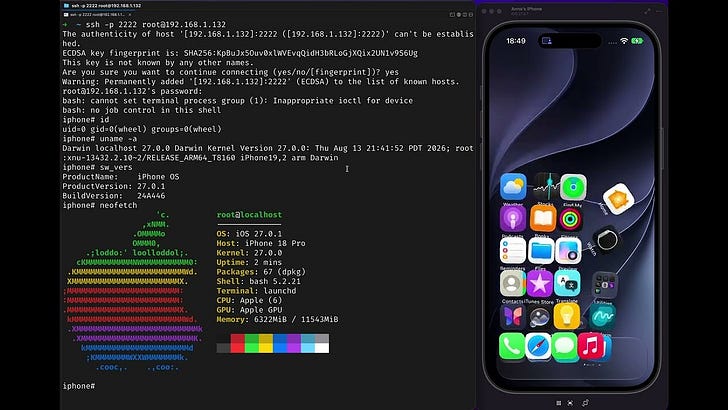
A team of researchers has successfully achieved their primary goal of hacking the iPhone. This milestone marks a significant development in mobile security research and highlights potential vulnerabilities within the device.
Comments
Canada's Senate is currently reviewing Bill C-22, a controversial law that would significantly expand government surveillance powers and threaten citizen privacy. Having already passed the House of Commons, the legislation leaves Canadians with a rapidly closing window to voice their opposition before it is enacted.
Comments
Google has updated its privacy policy to allow the potential use of personal data from Gmail and Google Photos for targeted advertising. This change specifically applies to users who opt into the company's personalized AI features.
CommentsMark Zuckerberg's push to have Meta shield him from California's proposed wealth tax has sparked a broader debate over corporate governance and dual-class share structures. Readers argue that these super-voting arrangements grant founders outsized control over public companies at the expense of everyday shareholders. Consequently, many are calling for stricter SEC regulations or index fund exclusions to limit the power of concentrated ownership in major tech firms.
Comments2026-10-23

Quad9 (DNS Resolver) to Exit France
2026-10-23Quad9, a free public DNS resolver dedicated to improving online security and privacy, is officially withdrawing its operations from France. The exit marks a notable change in the regional availability of the privacy-focused service for French users.
Comments
A Pennsylvania woman is facing up to six years in prison for fraud linked to a Cash App account she claims she never opened. Amanda Smith was arrested at her home after her identity was allegedly used to create the account, highlighting the severe legal risks victims of financial identity theft can face. She is now fighting the criminal charges to clear her name and expose the flaws in the digital payment app's identity verification process.
CommentsA security researcher apologized for prematurely disclosing a PHP remote code execution vulnerability after unknowingly breaking a coordinated disclosure embargo. The incident sparked a debate within the tech community about whether third parties who are not explicitly informed of an embargo are still ethically bound by responsible disclosure practices. Commenters analyzed the complexities of information asymmetry and the game theory behind coordinated security announcements to determine accountability.
Comments