EU Tech Regulation News
The European Union has become one of the most active technology regulators in the world. This section tracks news about EU digital legislation, from the Digital Markets Act and Digital Services Act to AI rules, along with fines, compliance deadlines, and the industry response across member states.
Common stories include the European Commission designating gatekeepers, opening non-compliance investigations, and issuing decisions that force changes to app stores, messaging, and advertising practices. Coverage also follows AI Act implementation milestones, court challenges in Luxembourg, and the guidance documents that turn broad laws into concrete obligations.
Because EU rules often become a template for other regions, decisions made in Brussels ripple far beyond Europe. Companies serving European users, along with lawyers, investors, and policy analysts worldwide, follow this section to see how the bloc's approach reshapes global products and business models.
80386 microcode disassembled
2026-05-23Enthusiasts have successfully disassembled the microcode of the Intel 80386 processor by using a neural network to extract binary data from high-resolution images of its silicon die. By analyzing opcode behaviors to decode the underlying data structure, the team fully reconstructed the processor's internal instruction set. The extracted microcode was then translated into a custom assembly language and Verilog, preserving a foundational piece of computing history.
CommentsAmazon's decision to completely cut off support for older Kindle e-readers has frustrated loyal customers who view the devices as long-lasting appliances rather than disposable technology. While software maintainers see dropping legacy systems as a necessary relief, users argue that Amazon is disregarding their needs by failing to offer a suitable replacement device with physical buttons. This backlash highlights the ongoing tension in the tech industry between corporate desires to streamline software lifecycles and consumer expectations for durable, accessible hardware.
Comments

A team of hardware enthusiasts has reverse engineered the vintage circuitry of a 1980 Spacelab computer once used aboard the Space Shuttle. The project provides a fascinating technical look into early aerospace computing by meticulously analyzing and documenting the original circuit boards. Ultimately, this preservation effort ensures that a crucial piece of space exploration hardware history is saved and understood by future generations.
Comments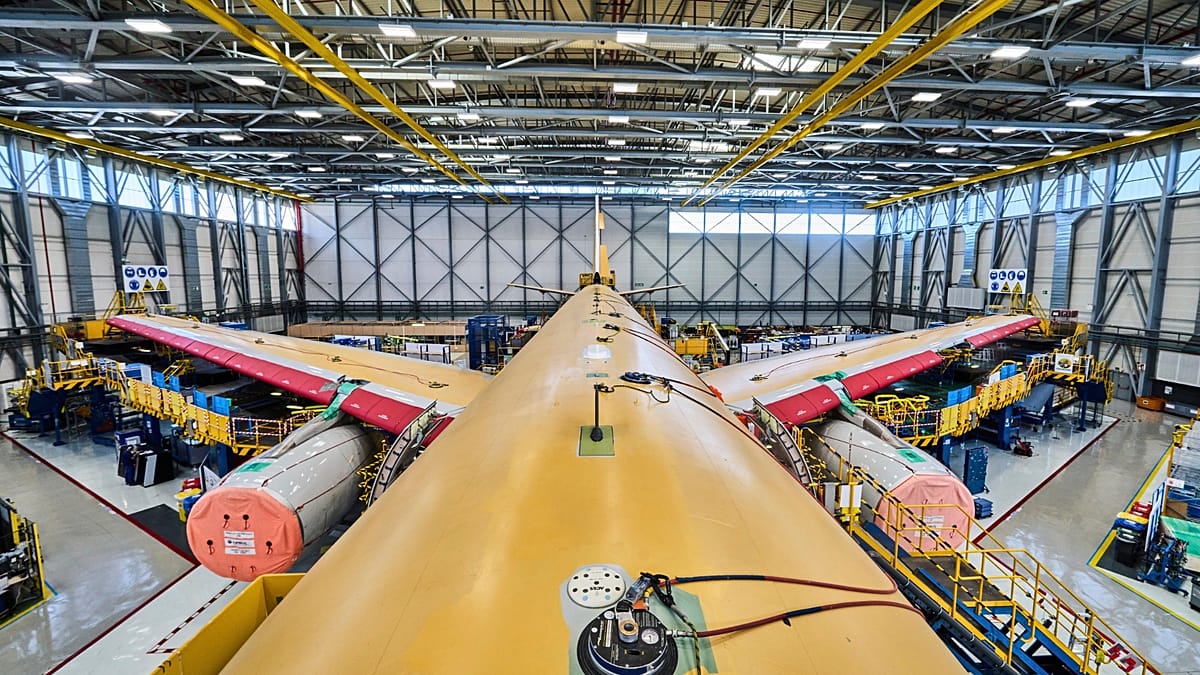
Italy moves to Airbus A330 tankers
2026-05-23Italy is acquiring six Airbus A330 MRTT tanker aircraft in a 1.39 billion euro deal to strengthen the European pillar of NATO. This strategic procurement shift will significantly enhance the nation's advanced aerial refueling capabilities and support broader alliance operations.
Comments
Researchers from the European Spallation Source and RWTH Aachen University used small angle neutron and X-ray scattering to compare the nanostructure of gluten-free and traditional spaghetti. They discovered that gluten-free pasta lacks the structural resilience of regular pasta, making it much less forgiving to varied cooking conditions and explaining why it tends to fall apart.
CommentsHouston's 1940 Air Terminal Museum is liquidating its collection of vintage aviation artifacts and early flight simulator technology, including historic General Precision and Texas Instruments computing equipment. Although the closure has saddened aviation and tech enthusiasts, there is ongoing hope that the Texas Historical Commission will intervene to preserve the historic site.
Comments
A recent research paper introduces CODA, a novel framework that optimizes Transformer models by rewriting their computational blocks as GEMM-epilogue programs. This technique is designed to enhance hardware efficiency by fusing operations and reducing memory access overhead during neural network execution. Consequently, the proposed method offers a promising strategy for accelerating both the training and inference speeds of large-scale AI systems.
Comments
Five leading European mobile payment providers are joining forces to challenge the dominance of American networks like Visa and Mastercard by creating a fully independent, Europe-wide digital infrastructure. This historic alliance aims to redirect millions of daily transactions to establish a sovereign payment ecosystem for approximately 130 million European consumers.
Comments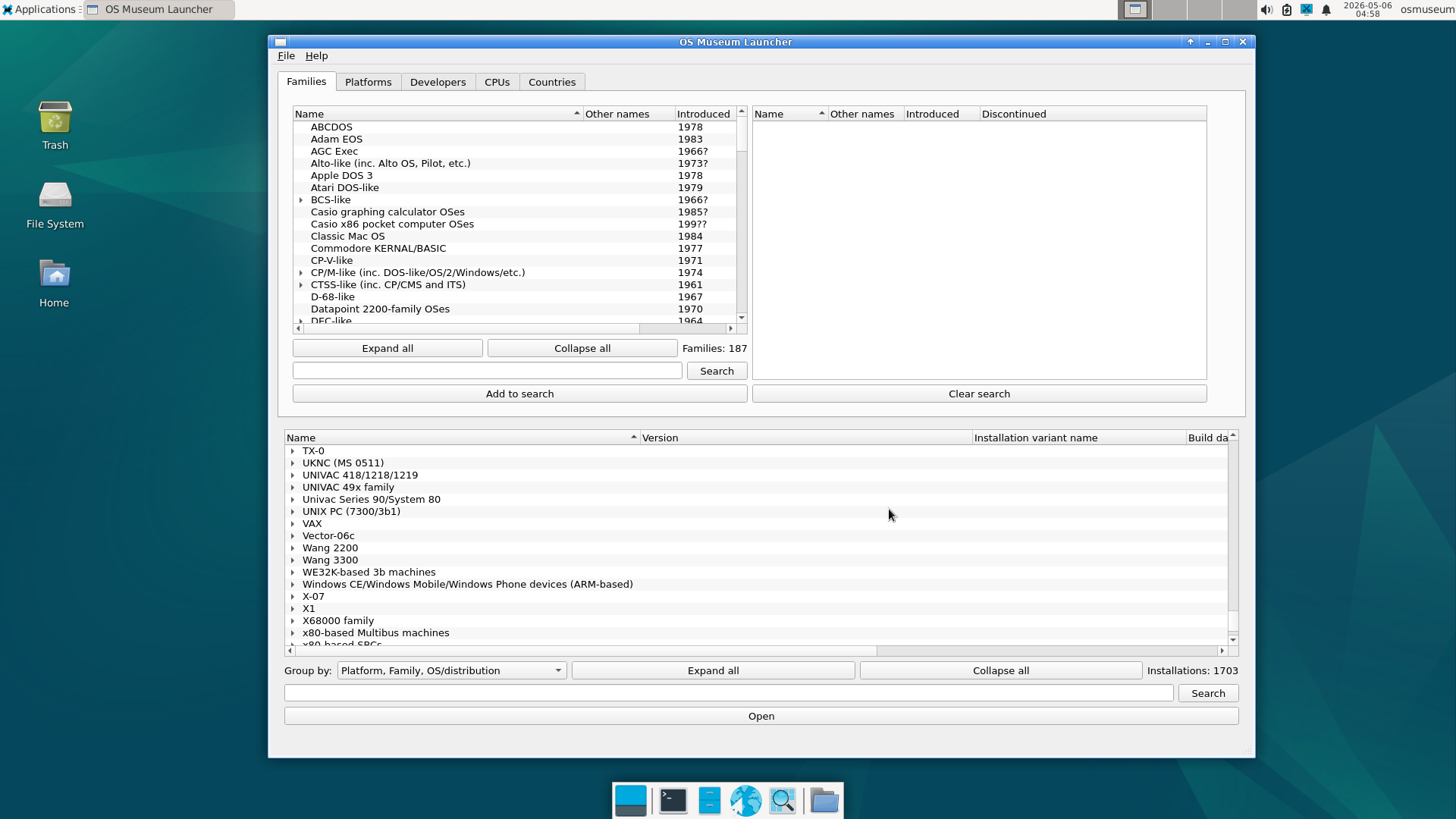
A developer has created a virtual museum featuring over 1,700 operating systems spanning from 1948 to the present day, all housed within a single Linux virtual machine. The project includes bundled emulation tools like QEMU, VirtualBox, and UTM, allowing users to easily run the vintage software via one-click launchers on Windows and Linux.
Comments
Show HN: Gaussian Splat of a Strawberry
2026-05-19A Hacker News user has shared a highly detailed 3D Gaussian splat of a strawberry captured from 90 distinct perspectives. To achieve this level of realism, the creator used a Nikon Z8 and a macro lens to shoot 88 focus-stacked images for every single angle.
CommentsPeter Neumann has died
2026-05-19Peter Neumann has passed away, marking a significant loss for the technology community. Although specific details regarding his career and contributions are not yet available, his passing is being widely noted. Colleagues and industry professionals will undoubtedly reflect on his life and legacy in the coming days.
Comments
Growing Neural Cellular Automata
2026-05-19Researchers have trained an end-to-end differentiable neural cellular automata model to simulate morphogenesis. This self-organising system is capable of both growing and regenerating specific target patterns. The development offers promising applications for creating highly adaptive and self-repairing digital structures.
CommentsA retrospective discussion on a 1979 paper regarding the Provably Secure Operating System highlights early NSA-funded efforts to build formally verified, highly secure computer systems. Commenters note that despite pioneering advancements in formal specifications, these early secure operating systems were ultimately abandoned due to hardware limitations, rigid government testing criteria, and the commercial market's shift toward faster, less secure off-the-shelf products.
Comments
Click (2016)
2026-05-18The 2016 browser game Click offers an interactive exploration of online profiling and digital tracking. By simulating real-time data collection, the project highlights the hidden privacy implications of everyday internet usage. It serves as an educational tool to help users understand how their digital footprints are monitored and utilized by algorithms.
CommentsA recent writeup details the impressive technical achievement of a 16-byte x86 demo that transforms Matrix-style rain into sound. The feat has sparked widespread discussion among demoscene enthusiasts, who marvel at the extreme sizecoding skills required to create such complex audiovisual experiences using barely any code.
Comments
Recent trials on veterans indicate that the potent hallucinogen ibogaine may offer a promising new treatment for post-traumatic stress disorder. However, researchers caution that the exact biological mechanisms driving these therapeutic benefits remain poorly understood.
Comments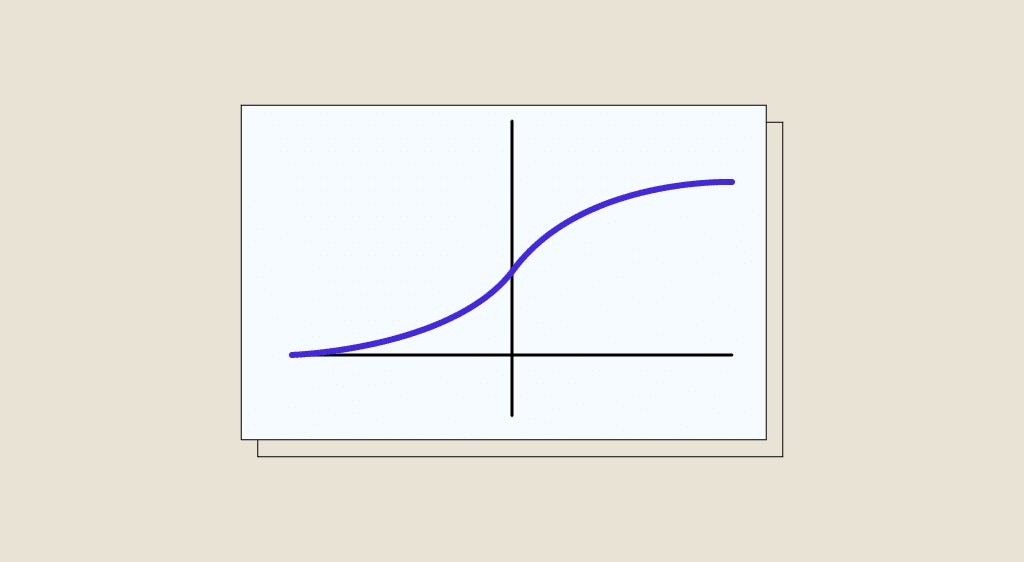
The sigmoids won't save you
2026-05-15A recent tech commentary warns that relying on traditional machine learning techniques like the classic sigmoid activation function is no longer sufficient for solving complex modern artificial intelligence challenges. The piece argues that developers and researchers must move beyond these outdated foundational models to embrace more advanced neural network architectures. Ultimately, it serves as a reality check for the industry to stop overestimating the capabilities of legacy algorithms in the current AI boom.
Comments
A new interactive project allows users to watch a neural network train itself to play the classic game Snake. While the AI can achieve near-perfect scores on a small grid, observers note that the model's performance eventually collapses. Users speculate this degradation is caused by numerical instability, flawed reward structures, or the snake getting trapped in an endless loop when it runs out of space.
CommentsComputer Hobby Movement in Canada
2026-05-14The York University Computer Museum (YUCoM) serves as a historical collection and research center dedicated to the history of computing in Canada. By focusing on the Canadian computer hobby movement, the museum preserves the nation's early technological milestones. It remains a vital resource for understanding the evolution and heritage of domestic computing.
Comments
I moved my digital stack to Europe
2026-05-13Driven by a desire for digital sovereignty, the author details their experience migrating their tech stack to European cloud providers. The piece examines this shift away from US tech giants and argues that Europe's cloud infrastructure has matured into a highly capable and competitive alternative.
Comments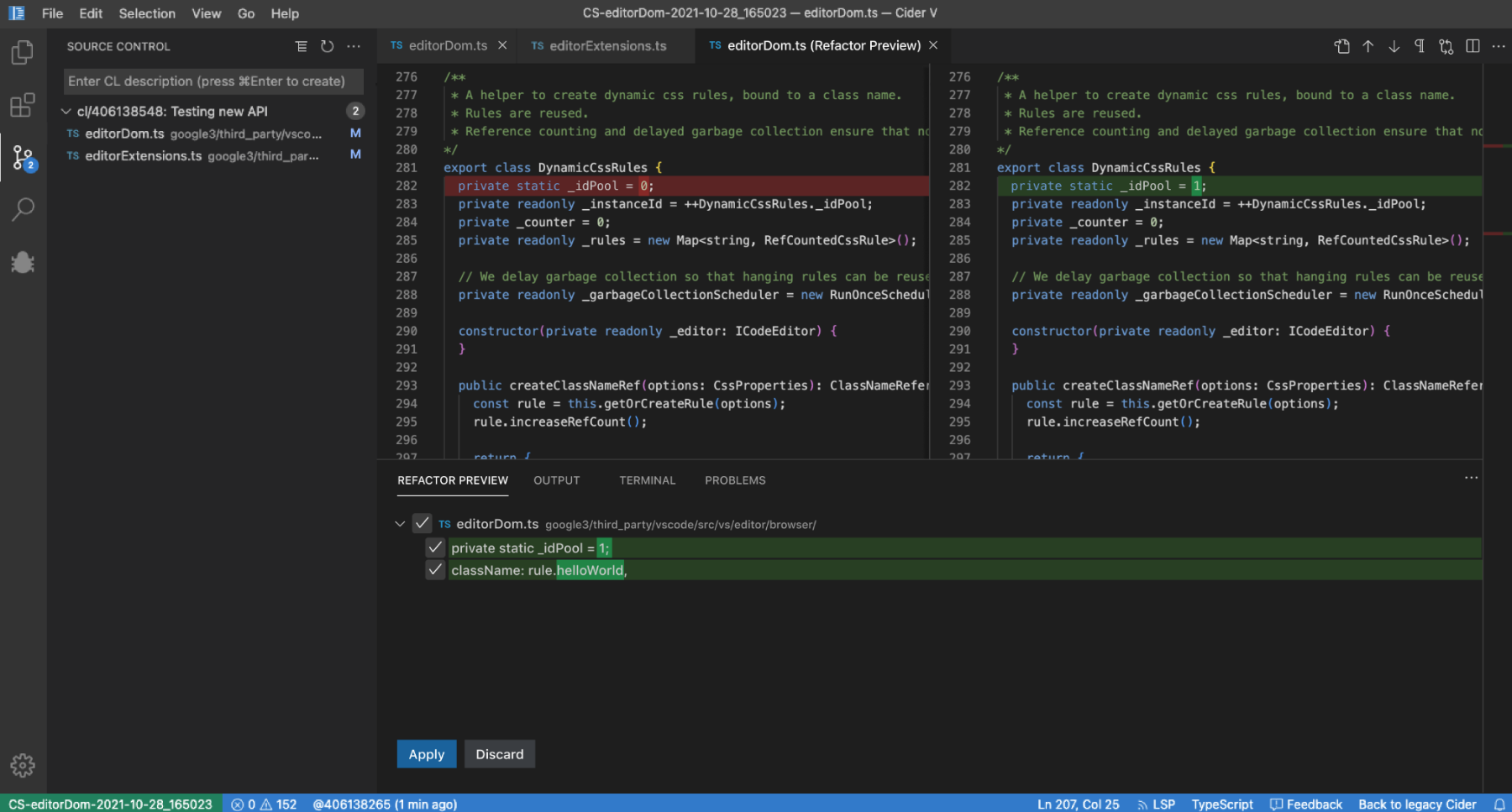
A History of IDEs at Google
2026-05-13Laurent Le Brun's blog post details the evolution of Google's internal development environments, tracing the company's shift from relying on third-party tools to building bespoke, cloud-based IDEs tailored for its massive monorepo. This overview highlights how the immense scale and complexity of Google's codebase forced the tech giant to engineer highly customized, scalable software ecosystems rather than relying on commercially available tools.
CommentsA recent arXiv paper introduces a novel method for deterministic, fully-static whole-binary translation that completely eliminates the need for heuristics. By translating entire software binaries at compile time with strict predictability, this approach ensures exact cross-architecture code execution without relying on dynamic runtime analysis. This systematic technique promises to significantly improve software portability and performance across diverse hardware platforms.
Comments
This 2016 article explores the typographic techniques used to create futuristic text in movies, highlighting the classic use of the Eurostile Bold Extended font. It outlines six simple rules for designers to establish a convincing sci-fi aesthetic on screen. The guide emphasizes starting with clean, sans-serif typefaces as the foundation for future-forward text design.
Comments
Google DeepMind is transforming the traditional mouse cursor into a context-aware AI partner to streamline digital interactions. This innovation, starting with the Chrome browser, aims to replace the friction of standard text prompting with seamless, intuitive AI collaboration.
Comments
The European Union is investigating social media platforms like TikTok and Instagram over their addictive design features that target children. EU Commission President Ursula von der Leyen announced the crackdown to address how these apps allow minors to go down rabbit holes of harmful content.
Comments
Researchers at UCLA Health have discovered the first drug capable of fully replicating the brain-repairing effects of physical stroke rehabilitation in mice. By successfully mimicking physical therapy in animal models, this breakthrough treatment offers a promising pharmaceutical alternative that could eventually revolutionize human stroke recovery.
Comments
A new technical report details the launch of AMÁLIA, an open-source large language model specifically designed for European Portuguese. This release marks a significant milestone in regional AI development and sets a promising direction for the future of specialized language models across Europe.
CommentsTask Paralysis and AI
2026-05-10Individuals with ADHD are increasingly leveraging artificial intelligence tools to overcome task paralysis and manage overwhelming cognitive loads. By using AI to break down complex projects into actionable steps, neurodivergent users can bypass the executive dysfunction that typically halts their progress. This emerging trend highlights the growing potential of AI to serve as a personalized assistive technology for focus and productivity.
Comments
The One Dollar Counterfeiter
2026-05-10The article explores the case of Mister 880, a petty criminal who spent a decade passing fake one-dollar bills and inadvertently triggered the most expensive investigation in Secret Service history. Reader discussions question the disproportionate government manhunt for such a low-stakes crime while explaining the agency's original mandate to protect the nation's currency. The thread also highlights humorous personal anecdotes involving foolish fraud attempts and pedantic debates over the exact definition of counterfeiting.
Comments
While the Apple I and Altair 8800 are commonly cited as the first microcomputers, the actual pioneer was the transfluxor-powered Arma Micro Computer built in 1962. This obscure device predates the widely recognized founders of the personal computing industry by more than a decade.
Comments