EU Tech Regulation News
The European Union has become one of the most active technology regulators in the world. This section tracks news about EU digital legislation, from the Digital Markets Act and Digital Services Act to AI rules, along with fines, compliance deadlines, and the industry response across member states.
Common stories include the European Commission designating gatekeepers, opening non-compliance investigations, and issuing decisions that force changes to app stores, messaging, and advertising practices. Coverage also follows AI Act implementation milestones, court challenges in Luxembourg, and the guidance documents that turn broad laws into concrete obligations.
Because EU rules often become a template for other regions, decisions made in Brussels ripple far beyond Europe. Companies serving European users, along with lawyers, investors, and policy analysts worldwide, follow this section to see how the bloc's approach reshapes global products and business models.

A new satirical React component library called Performative-UI was recently shared on Hacker News to poke fun at modern startup culture. It features a collection of design tropes and user interface elements specifically meant to signal an oversubscribed funding round and project unchecked hyper-growth.
Comments
Public Domain Image Archive
2026-06-07A public domain image archive features a curated collection of out-of-copyright works that are free for anyone to browse, download, and reuse. Operating as a continuously expanding living database, the platform adds a fresh selection of images to its library every week.
Comments
Win16 Memory Management
2026-06-07A reader discussion on Win16 memory management highlights how the operating system's bi-modal design forced developers to navigate complex segmented addressing to maintain compatibility with older processors. Compared to OS/2 and Classic Mac OS, Windows introduced unique hurdles like globally shared DLL data and manual code segmenting to conserve limited RAM. Despite the tedium of managing these strict hardware limitations, developers recall that the overall system was much simpler to comprehend than today's complex cloud environments.
Comments
Biohub has released a comprehensive world model of protein biology featuring the newly introduced ESMFold2, ESMC, and ESM Atlas AI models. These advanced systems support a wide range of scientific applications and are specifically designed to accelerate the design of therapeutic molecules.
Comments
A recent retro-computing project explores the inner workings of the IBM 604 by successfully powering up a module from the 1948 electronic calculator. The demonstration offers a fascinating glimpse into 1940s computing, showcasing the era when businesses were just beginning to transition from electromechanical punch card machines to early electronic devices.
Comments
This blog post explores how pre-modern military systems inherently reflect the broader societies that produce them, providing a general historical framework rather than analyzing specific fictional universes. The guide is designed to help fantasy worldbuilders apply these real-world dynamics to create more realistic and cohesive military structures in their own settings.
CommentsA new infinite canvas note-taking app utilizes a non-Euclidean Poincaré disk to organize exponentially growing knowledge trees in hyperbolic space. Users praise the interface's intuitive spatial navigation for visualizing complex data and mapping knowledge effectively. The community also discussed potential enhancements, suggesting geometric text distortion, grid overlays, and offline stylus support to improve the overall experience.
Comments
Researchers have successfully detected and traced a powerful space-based GNSS interference source disrupting navigation systems across Europe. Detailed in a new arXiv paper titled Chasing Lightning, the study thoroughly characterizes the origins and behavior of this disruptive signal. These findings provide critical insights to help authorities mitigate future satellite navigation outages on the continent.
CommentsTransformers are inherently succinct
2026-06-05A new paper demonstrates that the inherent succinctness of transformers makes basic formal verification problems computationally intractable, leading experts to advise against using them in systems requiring strict mathematical correctness. Although some practitioners note that theoretically intractable problems often have practical solutions, the general consensus is that large language models should not serve as the core of formally verified systems. Additionally, the research suggests transformers possess surprisingly low expressive power compared to recurrent neural networks, which could drive a resurgence of nonlinear RNNs for memory-efficient applications.
Comments
The Dutch government will require companies managing its DigiD digital identity platform to be European for all contracts after August 2028. The upcoming tender will be governed by the Defense and Security Procurement Act to better protect national security. This specific legislation strictly limits eligibility to European firms to minimize potential security risks.
Comments
U.S. Army Corps of Engineers Bay Model
2026-06-04The United States Army Corps of Engineers Bay Model is a massive mid-century hydraulic structure located in a Sausalito warehouse that simulates the complex current flows of the San Francisco Bay. Originally built to study regional hydrology and later utilized by television shows like Mythbusters, the colossal physical scale model remains a celebrated engineering relic. The unique facility also features a museum dedicated to Marinship, the World War II shipyard that previously occupied the historic building.
Comments
Uruky, an EU-based alternative to Kagi, has expanded its ad-free private search platform with new image search and URL rewrite features. These updates enhance the search engine's capabilities while maintaining its core focus on user privacy.
Comments
Samurai City
2026-06-04Japan achieved three hundred years of unprecedented peace and stability by confining its warlike samurai elite to the world's least efficient city. This strategic isolation effectively neutralized internal military threats and ensured long-lasting tranquility for the nation.
Comments
A decade of open-source experimentation in psychovisual modeling and compression has paved the way for JPEG XL, the next-generation image coding standard. These collaborative technical advancements shape the future of digital imaging by delivering superior visual quality and efficiency.
Comments
Debug Project
2026-06-01The Debug Project leverages technology to breed and release beneficial mosquitoes that naturally suppress populations of disease-spreading insects. This innovative, tech-driven biological approach aims to control vector-borne diseases by utilizing helpful insects instead of traditional chemical pesticides.
CommentsA recent community discussion highlights the power of Go's built-in httptrace package for tracing HTTP requests without relying on external dependencies. Developers praise the standard library's tools for tracking connection reuse and preventing resource exhaustion during benchmarking. Many compare Go's robust, self-contained ecosystem favorably to .NET, noting its strong native capabilities for building observability services.
Comments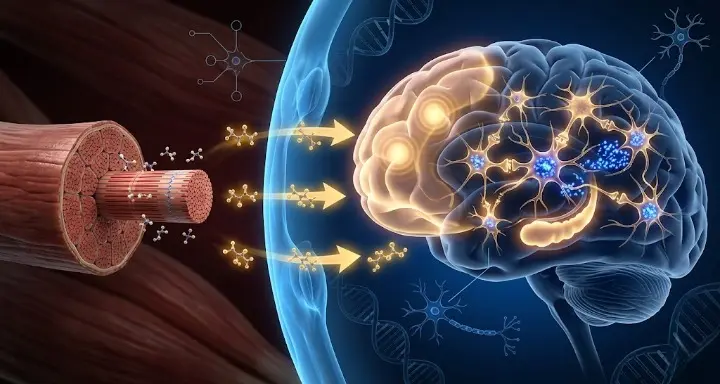
Recent clinical trials and comprehensive reviews reveal that creatine significantly enhances brain energy and cognitive function far beyond its well-known muscle-building effects. The supplement has been shown to slow cognitive decline in early Alzheimer's patients, improve mental stamina under sleep deprivation, and boost outcomes in depression therapy. Despite these profound neurological benefits, they are currently not listed on supplement labels.
CommentsOdysseus – self-hosted AI workspace
2026-05-31Odysseus is a self-hosted AI workspace that recently gained attention after PewDiePie showcased its mobile-native development and automated email response capabilities. However, community members have criticized the project as merely a Python wrapper for existing open-source tools while also questioning if certain features were AI hallucinations or if the platform requires third-party registration.
CommentsPope Leo's first encyclical critiques the tech industry's technological messianism, challenging AI leaders who frame the pursuit of artificial general intelligence as a religious endeavor to build a god. Prompting widespread debate, the ensuing discussion argues that despite the immense capabilities of modern language models, they are fundamentally just next-token predictors lacking true consciousness, subjective experience, or independent reasoning. Ultimately, critics maintain that AI will never achieve genuine aliveness or human-like understanding, serving as a highly powerful tool rather than a standalone superintelligence.
CommentsA Danish pension fund has excluded SpaceX from its investment portfolio, citing concerns over corporate governance and the company's high valuation. The news has sparked online debate among investors, who are discussing whether the valuation is driven by market hype and if the fund's decision was politically motivated.
Comments
A new technical deep dive explores the internal microcode of the historic Intel 8087 floating-point coprocessor, specifically examining its register exchange mechanisms. Introduced in 1980 to accelerate math operations by up to 100 times, the article highlights the clever internal architecture that made this massive performance leap possible in early personal computers.
Comments
Fermat's Library is currently highlighting the 2004 academic paper titled It takes two neurons to ride a bicycle for its unique insights into computational neuroscience. The research demonstrates how minimal neural networks can successfully control complex biomechanical tasks like cycling. This feature provides readers with a fascinating look at the intersection of biology and robotics.
Comments
Notes from the Mistral AI Now Summit
2026-05-29At the recent Mistral AI Now Summit in Paris, the company highlighted its strategic focus on open models, on-premise deployments, and agentic AI harnesses. These developments underscore Mistral's broader ambition to establish itself as Europe's premier full-stack artificial intelligence partner.
CommentsA discussion surrounding cultural gestural instincts reveals that hand movements are a crucial, often unconscious communication tool for teaching and daily interaction. While stereotypes associate expressive gesturing primarily with Southern Europeans, readers note that individuals across various cultures, including the English and the Dutch, rely heavily on body language. Commenters ultimately emphasize that these specific physical gestures are deeply ingrained habits used to convey complex meaning and social cues.
Comments
The European Commission has fined Chinese online retailer Temu €200 million for failing to address the risks of illegal products on its platform. The penalty specifically cites the company's oversight in allowing the sale of unsafe items, such as hazardous baby toys and faulty chargers.
Comments
A recent study reveals that stress impairs the brain's ability to connect overlapping memories and draw logical inferences. This disruption occurs because stress alters hippocampal activity, reducing the neural reactivation of related information and causing the brain to overly separate similar events. These findings highlight the significant physical impact of stress on memory integration and cognitive reasoning.
CommentsSpain blocked prediction markets Polymarket and Kalshi for operating without a required gambling license. This regulatory action highlights growing concerns regarding the real-world risks of such platforms, which critics argue incentivize dangerous behaviors ranging from insider leaks to the tampering of critical infrastructure sensors.
Comments
The Netherlands has blocked an American company from acquiring a vital domestic digital supplier to protect its national interests. This decision reflects growing concerns across Europe regarding the continent's heavy reliance on American technology firms.
CommentsA portentous reunion
2026-05-26A recent article addresses parental anxieties regarding a rapidly changing future, arguing that education should prioritize teaching children adaptability and emotional regulation over specific technical skills. The author also reflects on the irony of using an AI language model to discuss the dangers of technological dehumanization, emphasizing that the future will inevitably remain highly uncertain.
Comments
Dutch authorities arrested the co-owners of two internet hosting companies and seized 800 servers that Russia used to launch cyberattacks and disinformation campaigns. The seized IT infrastructure was specifically targeted for facilitating malicious influence operations across the European Union.
Comments