Consumer Tech News
SubmitConsumer technology touches nearly everyone, and this section covers it broadly. Read about smartphones, laptops, wearables, streaming services, and apps, along with the launches, updates, and company decisions that affect the products in your pocket and home.
Typical stories include new phone and laptop announcements, software updates that add or remove features, streaming service pricing changes, smart home and audio gear releases, and app store policy shifts that ripple down to the tools people rely on daily.
This is the technology news with the most direct personal impact, useful whether you are timing an upgrade, comparing services, or just curious what is coming next. Shoppers, gadget enthusiasts, and gift-givers alike find practical value in staying current here.
2026-09-03

Users are expressing frustration over Mistral AI's confusing and shifting privacy policies regarding the use of customer prompts for model training. The discussion sparked a semantic debate over the contradictory phrase "opt-in by default" and how it misleads consumers about their actual privacy choices. Commenters contrasted Mistral's approach with competitors like Anthropic, which clearly disables data training by default for organizational tiers.
Comments2026-09-01

A dangerous type of wild honey from Nepal known as mad honey is currently being sold online despite its potential to cause fatal heart complications. This unregulated e-commerce trend poses severe health risks to consumers, as highlighted by the recent hospitalization of an individual who ingested the toxic product.
Comments
2026-08-29
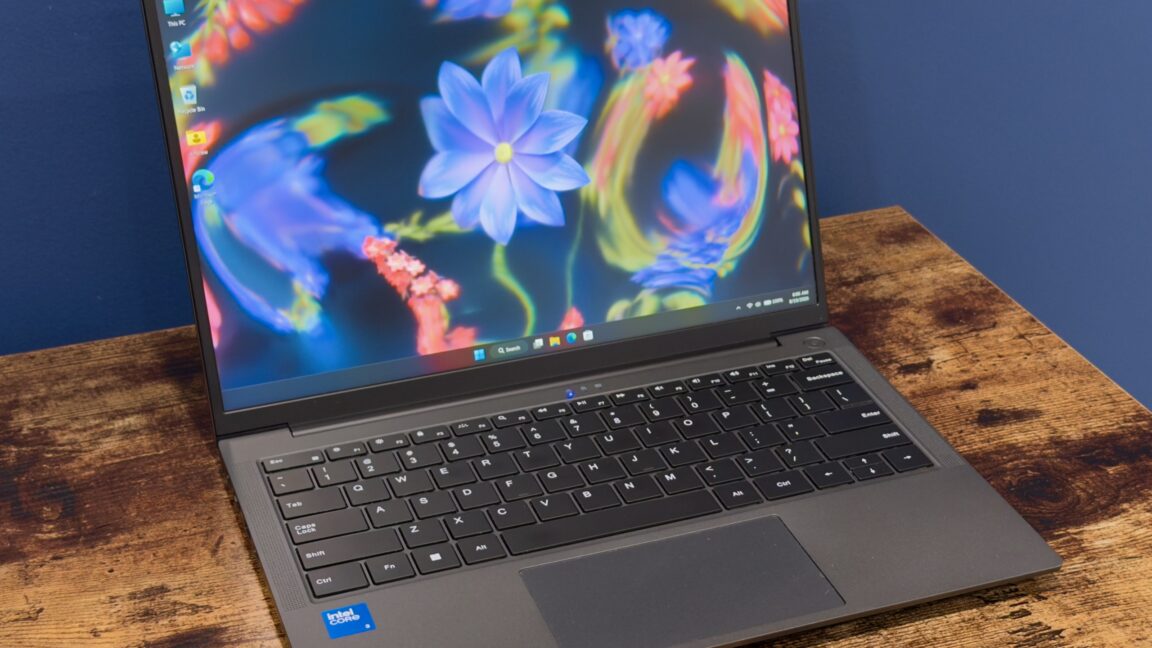
Chuwi has released the $449 Unibook, a bizarre entry-level laptop that serves as a distorted alternative to the MacBook Neo. The device offers an affordable price point for budget-conscious consumers. However, it is a quirky machine best suited only for users with the patience to tolerate its inherent shortcomings.
Comments2026-08-26

Tracking Costco gas prices
2026-08-26A developer reverse-engineered Costco's gas price API to build a live tracker covering every US warehouse. The tool was launched just as a Strait of Hormuz scare sent fuel prices climbing. It now provides consumers with real-time updates on nationwide fuel costs.
Comments2026-08-23
ElevenLabs, TwelveLabs, ThirteenLabs
2026-08-23The AI audio startup landscape has evolved significantly from early hobbyist voice models like 15.ai to commercialized platforms like ElevenLabs. While ElevenLabs popularized a number-based naming trend and shifted toward enterprise solutions, many early pioneers eventually wound down their operations. Consequently, a new wave of companies like Fish Audio, Suno, and Udio has emerged to capture the underserved consumer and user-generated audio markets.
Comments2026-08-21

Consumer Rights Wiki
2026-08-21The Consumer Rights Wiki is a community-built platform dedicated to documenting anti-consumer and anti-ownership practices across the technology sector. It tracks a wide range of restrictive corporate behaviors, including right-to-repair limitations, planned obsolescence, subscription traps, and broader digital rights issues.
Comments2026-08-20
Casio F-B100W-1A
2026-08-20Prompted by news of a new Casio watch, tech enthusiasts are debating why the company has not similarly capitalized on the nostalgia market for its classic CZ-series synthesizers. While some argue there is strong consumer demand for modern synth reissues, others contend that original units remain affordable and praise Casio for prioritizing its highly successful watch and calculator lines.
Comments2026-08-19

The Amazon tax
2026-08-19Marketing expert Seth Godin examines the hidden economic and societal costs of Amazon's market dominance in his latest post, dubbing it the Amazon tax. He argues that the tech giant's relentless focus on convenience extracts a heavy toll on small businesses and creators while eroding genuine consumer connection. Godin urges brands to look beyond algorithmic efficiency and build more respectful, community-driven alternatives.
Comments2026-08-18
India has paved the way to introduce merchant fees for UPI transactions, marking a significant shift in its digital payments ecosystem. This development raises critical questions about who will ultimately bear the costs and whether consumers will resist the new charges.
CommentsHow to disable or avoid intrusive AI
2026-08-18A new guide provides practical steps for everyday users to disable or avoid unwanted artificial intelligence features in their personal tech environments. The tutorial addresses growing consumer frustration by offering actionable advice to minimize intrusive AI integrations and reclaim control over daily digital tools.
Comments2026-08-17

This retrospective explores the technical history of Intel's Pentium MMX processor and its pioneering integration of SIMD instructions into mainstream desktop PCs during the 1990s. The article details how this major architectural shift impacted software development and paved the way for modern parallel processing on consumer hardware.
Comments2026-08-11
Before the term open source existed, consumer electronics and educational kits routinely included detailed schematics that allowed users to understand, modify, and repair their devices. This historical culture of hardware transparency fostered early innovation and information sharing, serving as a physical precursor to the collaborative software movement of today.
Comments
A Dutch consumer rights foundation is launching a class-action lawsuit against Sony for allegedly overcharging players with an unjustified tax on digital PlayStation games. The collective legal action, aligned with the Stop Killing Games campaign, aims to eliminate these inflated digital prices. PlayStation owners are encouraged to join the lawsuit to demand fairer pricing for their digital game purchases.
Comments
Meta Superintelligence Labs has released Muse Glimmer, a 30-billion-parameter open agentic model designed for continuous local operation. The system is specifically optimized to execute always-on agent workflows efficiently on standard consumer hardware.
Comments2026-08-10

Everything you do is being recorded
2026-08-10As modern technology enables the continuous tracking and recording of our daily activities, concerns over digital privacy are reaching a boiling point. This piece examines the extent of this pervasive surveillance and explores actionable strategies for consumers looking to protect their data and fight back against invasive monitoring.
Comments2026-08-08
SupererDuperer
2026-08-08A mysterious new tech entity named SupererDuperer has emerged in the software space, though details regarding its actual product offerings remain entirely undisclosed. Industry observers note that the playful branding suggests a consumer-facing app or digital service aiming to disrupt the market with a lighthearted user experience. Tech analysts are awaiting further announcements to determine if this quirky startup has a viable business model behind its unconventional name.
Comments2026-08-07

A recent investigation reveals that many USB-C cables fail to meet the power and data transfer speeds advertised on their packaging. By physically testing a variety of cords, the author discovered that consumers can no longer trust label claims and must verify actual performance capabilities before purchasing.
Comments2026-08-06

The Valley of Webhooks
2026-08-06After repeatedly building custom webhook consumers from scratch at different companies, a developer highlights the inefficiencies of current webhook implementations. The article advocates for the creation of a better, standardized foundational primitive to eliminate redundant engineering efforts and streamline event-driven integrations.
Comments2026-08-04
A new open-source project called Swiftlet enables users to run massive large language models on Apple devices with remarkably low memory requirements. The tool successfully demonstrates running an 80-billion parameter Qwen model using just 4.3 GB of RAM on a Mac, alongside a 35-billion parameter model on an iPhone. This advancement significantly lowers the hardware barrier for running powerful local AI inference on everyday consumer devices.
CommentsReader discussions reflect on the ill-fated Windows XP 64-bit Edition for Intel's Itanium architecture, noting it was uniquely built on the Windows Server 2003 kernel. Commenters attribute the platform's failure to reach the consumer market to high costs, poor x86 emulation, and the rapid rise of AMD's competing x86-64 architecture. Ultimately, Itanium was relegated to niche high-performance computing roles before Microsoft completely dropped operating system support after Windows Server 2008 R2.
Comments
ComfyUI now features day-zero support for MiniMax H3, an open-weights omni-modal video model that generates 2K resolution video with native stereo audio. Thanks to significant optimizations, this powerful model can be run locally on accessible consumer hardware like a 3060.
Comments2026-08-01

Big Food vs. the People
2026-08-01A new report exposes how major food corporations have filed 239 lawsuits to block public health policies designed to protect consumers. These legal challenges target life-saving nutritional regulations aimed at reducing diet-related diseases. The findings highlight the aggressive and ongoing battle between industry giants and public health advocates.
Comments2026-07-28

Covertly installed residential proxies pose a significant national security threat by routing malicious traffic through legitimate home internet connections via hidden apps, malware, or compromised smart devices. To combat this growing vulnerability, tech manufacturers like LG are banning proxy applications from their smart TVs to prevent consumers from unknowingly facilitating spam and social media manipulation.
Comments2026-07-24
Building on ATProto
2026-07-24Community discussions surrounding the ATProto protocol highlight its growing mainstream visibility and active developer engagement as creators weigh feedback on permissioned data and local-first architecture. Industry leaders including the CTO of Matrix praised Bluesky's consumer-focused approach, while developers are already leveraging the protocol's open primitives to build innovative decentralized applications such as community board game platforms.
Comments2026-07-23
Distributed computing projects allow users to run large language models at home by splitting workloads across multiple machines in a BitTorrent-style network. Although enthusiasts praise the vision of a global computational mesh, community discussions highlight that practical adoption is currently limited by internet bandwidth constraints and recent optimizations that allow smaller models to run efficiently on single consumer GPUs.
Comments2026-07-19

Dupes took over the world
2026-07-19The Verge's Mia Sato explores the massive cultural and economic impact of product dupes, which have become a dominant force in modern consumer markets. The article breaks down why shoppers are increasingly flocking to affordable alternatives and examines the highly profitable business models driving this global trend.
Comments2026-07-17
An Engineer's Guide to USB Typе-С (2024)
2026-07-17A new engineering guide to USB-C explores the immense complexities of the USB-PD protocol that frequently lead to poorly implemented power delivery in consumer hardware. To help debug these widespread issues, the author highlights an open-source USB-PD protocol analyzer designed to troubleshoot power negotiation and cable capabilities. While some readers criticized the guide for overlooking basic five-volt implementations, the community praised the debugging tool and noted the continued usefulness of affordable PD decoy boards for custom hardware projects.
Comments2026-07-16

Microsoft Comic Chat is now open source
2026-07-16Microsoft has open-sourced Comic Chat, the classic IRC client that turned text conversations into comic strips and helped popularize the Comic Sans font. Developers and nostalgic users can now access the repository to explore and modify the retro software.
Comments
Sony has removed previously purchased digital movies from users' accounts, once again highlighting the flawed reality of digital ownership. This ongoing anti-consumer practice demonstrates that buyers are merely licensing temporary access rather than actually owning their media. Advocates remain frustrated by the lack of industry change and continue to demand an end to these restrictive licensing loopholes.
Comments2026-07-15
An article advocating for government and corporate investment in open-source AI has prompted readers to propose funding targeted, hardware-specific benchmark competitions to incentivize the development of optimized consumer-level models. However, commentators highlight the significant logistical costs of curating fair evaluations and remain divided on whether financial prizes or mandatory open-weight releases offer the best path forward for the movement.
Comments