China Tech Policy News Today
China's approach to technology policy shapes global supply chains, chip markets, and the AI race. This section follows Beijing's regulations, industrial strategy, and responses to export controls, along with the fortunes of Chinese tech giants operating under them. It is essential context for anyone watching the US-China technology rivalry.
Typical stories cover new rules for platform companies and AI services, state investment in semiconductors and other strategic industries, and Beijing's countermeasures to foreign export restrictions. The performance of major Chinese hardware, e-commerce, and AI firms under this policy environment is a constant thread.
Because so much of the world's electronics manufacturing and a growing share of AI research sit in China, these policy decisions reach far beyond its borders. Supply chain managers, investors with exposure to Asia, and analysts of geopolitics all treat this coverage as required reading.

Nike exits the S&P 100 after 18 years and a $200B market-cap wipeout
2026-09-14Nike is exiting the S&P 100 index after 18 years following a $200 billion market-cap wipeout. The sportswear giant's departure is driven by a five-year stock decline of nearly 80 percent linked to weakness in China. It will be replaced by a tech company on September 21.

One corner of China’s internet is insisting that the Tang Dynasty never existed
2026-08-25A small but vocal corner of the Chinese internet is promoting the bizarre claim that the Tang Dynasty never existed. This online movement challenges the established historical consensus regarding one of China's most famous dynasties.
New Worlds: We are living in the future of J.G. Ballard or William Gibson
2026-08-22Readers are debating whether modern technological reality truly captures the cyberpunk dystopias envisioned by William Gibson, with some arguing that today's tech giants lack the distinct cultural aesthetics of fictional megacorporations. Meanwhile, others point to the hyper-technological, neon-lit environment of Shenzhen, China, as the perfect real-world embodiment of the genre, though skeptics counter that strict government control contradicts the anti-establishment ethos central to classic cyberpunk fiction.
How do payments work in the US, China, and Brazil?
2026-08-20This piece explores the distinct payment infrastructures in the US, China, and Brazil to highlight the technological differences between these major economies. It challenges the common American assumption that global payment systems mirror the domestic model.
A particle made of force: physicists say they've found mysterious 'glueball'
2026-08-18After nearly two decades of searching, physicists in China have found strong evidence of a glueball, a mysterious particle composed entirely of force-carrying gluons. This discovery confirms a key prediction of quantum chromodynamics by providing direct evidence that gluons can interact with themselves.
China begins producing advanced chipmaking deep-ultraviolet lithography machines
2026-08-02Accelerated by Western technology export restrictions, China has begun manufacturing its own advanced deep-ultraviolet lithography machines to secure its domestic semiconductor supply chain. While the nation still trails behind in extreme ultraviolet technology, observers note that massive state funding and long-term strategic planning are rapidly closing the existing technological gaps. Ultimately, commentators suggest these sanctions have only hastened Beijing's inevitable push toward complete technological independence.
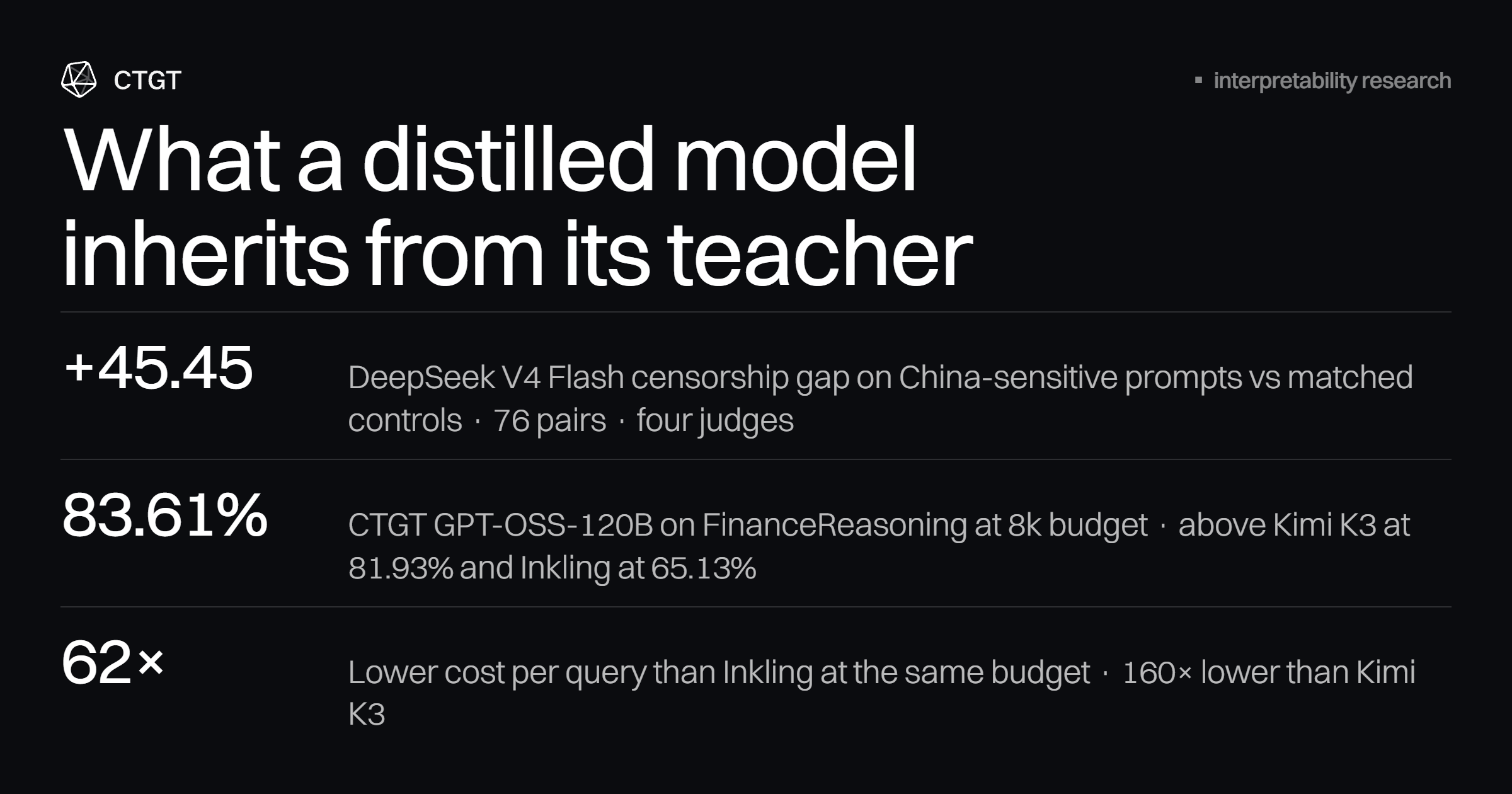
Show HN: Distilling DeepSeek into GPT-OSS doesn't transfer censorship. Try it
2026-07-31Distilling the Chinese AI model DeepSeek into GPT-OSS does not transfer its strict censorship on China-sensitive topics. Despite DeepSeek V4 Flash being heavily censored, models trained on the distilled data retain the baseline censorship levels of the untouched American foundations.
The relay market powering token resellers and fraud
2026-07-27A gray-market relay economy has emerged to provide mainland China with cheap, large-scale access to major AI models from OpenAI, Anthropic, and Google. This structured network of token resellers relies on fraudulent practices to supply discounted business-to-business API access.

Producing ammonia and fertiliser using wind power in Morris, Minnesota
2026-07-26A new project in Morris, Minnesota, is utilizing wind power to produce ammonia and fertilizer, highlighting the potential for renewable energy integration in rural agriculture. While readers praise the local initiative, discussions emphasize that much larger green ammonia and hydrogen projects are currently underway in countries like China and Spain. Commenters also debate US competitiveness in the renewable sector, arguing that heavy subsidies and unpriced carbon externalities for the fossil fuel industry hinder the rapid adoption of clean energy technologies.
DeepSeek pause fundraise after comments on compute gap to US leaked (transcript) [pdf]
2026-07-26Chinese AI startup DeepSeek has paused its fundraising efforts after a transcript of founder Liang Wenfeng's four-hour investor meeting was leaked online. The exposed recording contained candid remarks about the significant computing power gap between China and the United States, prompting the company to temporarily suspend its capital-raising activities.

China’s open-weights AI strategy is winning
2026-07-20China is currently leading the artificial intelligence sector by embracing an open-weights strategy for its models. Meanwhile, the United States' closed-first approach is facing criticism as a failing strategy that could ultimately drag down the American economy.
The state of open source AI
2026-07-17Community discussions suggest that open-weight AI models could threaten closed developers like OpenAI and Anthropic, as hyperscalers like Apple and Google can deploy them for free to protect their own device ecosystems. The conversation also debates whether China's push for open models is a tactical maneuver to bypass Western restrictions or a principled strategy to accelerate practical economic applications. Ultimately, the high costs of training frontier models raise concerns about the financial sustainability of open-weight strategies as the industry shifts focus toward efficient, on-device edge AI.
Metal-Organic Frameworks, Chemistry's New Miracle Materials (2018)
2026-07-15Metal-organic frameworks are highly efficient, customizable chemical catalysts that recently earned pioneer Omar M. Yaghi the 2025 Nobel Prize in Chemistry. Yaghi has since relocated his research to Tsinghua University in China, citing slashed US research funding, restricted international collaborations, and a stronger push for AI-driven science. His departure underscores growing concerns about the defunding of American research institutions and the resulting brain drain of top scientific talent.
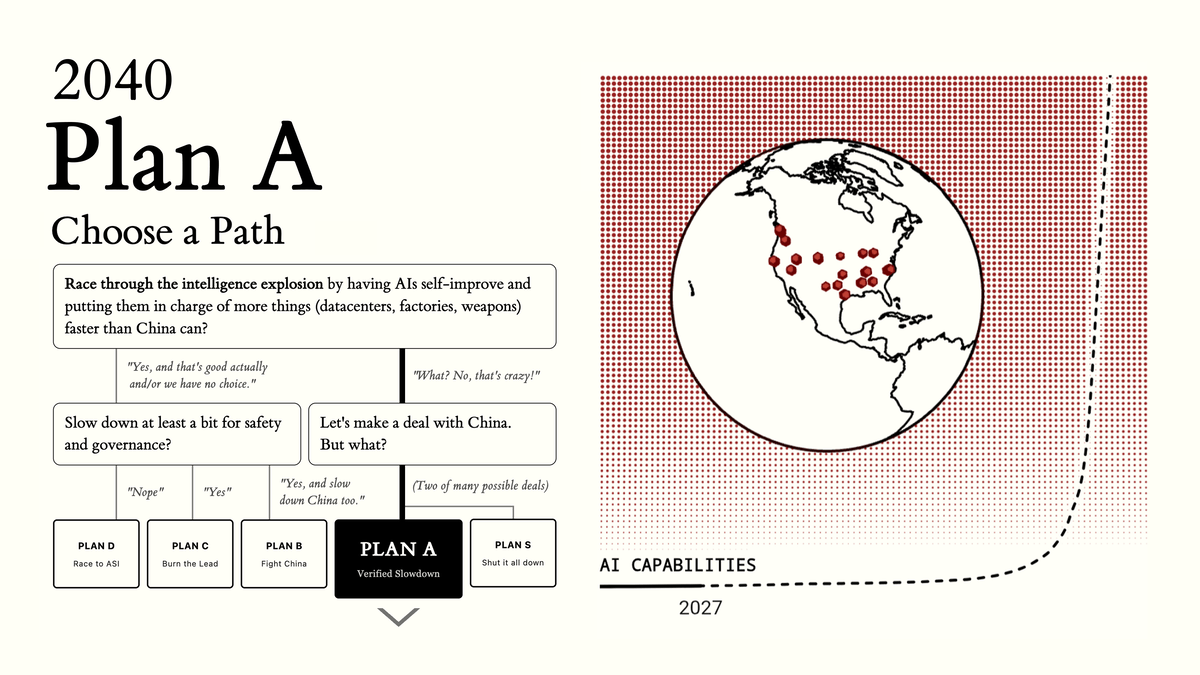
AI 2040: Plan A
2026-07-11The new report AI 2040: Plan A offers a detailed forecast and strategic recommendations for the United States, China, and the global community to navigate the impending era of artificial superintelligence. It outlines critical steps for international collaboration to manage the complex geopolitical and technological challenges associated with this transformative milestone.
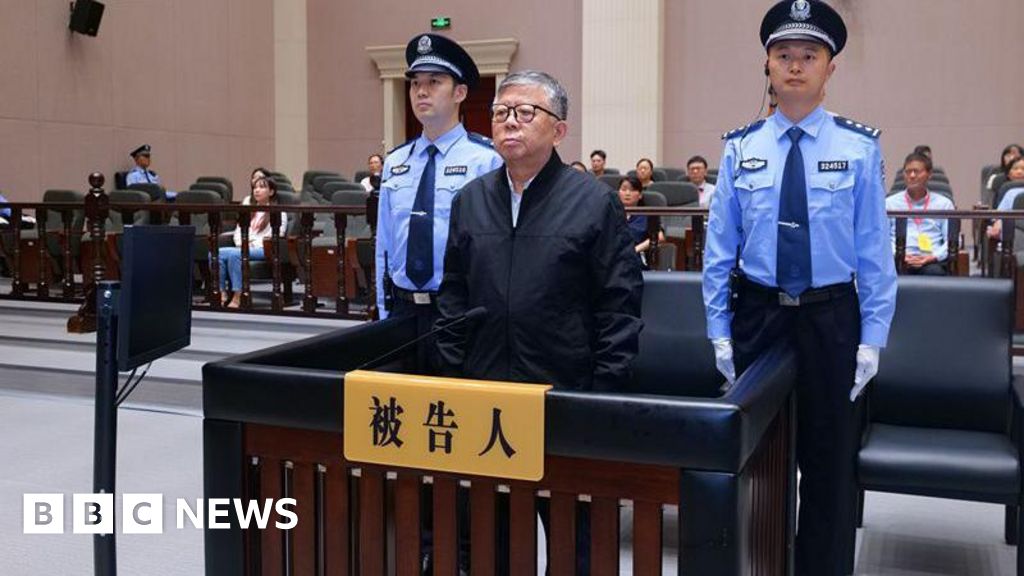
China sentences official to death for taking $325M in bribes
2026-07-07A 69-year-old Chinese official was sentenced to death for accepting $325 million in bribes. The court heard that the official received these illicit payments in exchange for helping companies secure valuable contracts.
Alibaba to ban Claude Code in workplace over alleged backdoor risks, source says
2026-07-03Alibaba is reportedly banning Anthropic's Claude Code from its workplace over concerns regarding potential backdoors and the broader security risks of hosted AI tools. This decision highlights growing industry anxieties that feeding proprietary code into remote models exposes sensitive intellectual property to espionage, data breaches, and supply chain attacks, prompting organizations to reevaluate their reliance on third-party AI providers.
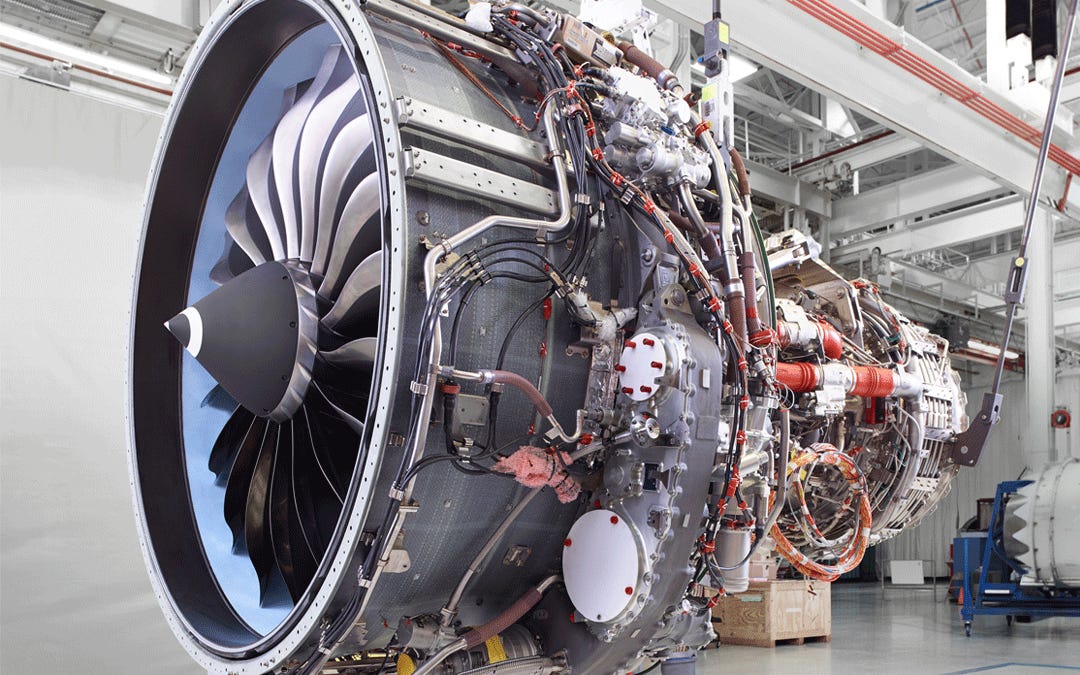
Why jet engines aren't made in China
2026-07-01China's ongoing struggles to develop advanced jet engines highlight the inherent limitations of state-directed industrial policy in highly complex technological sectors. Despite massive government investments, the extreme metallurgical precision and engineering expertise required for aerospace cannot be easily mandated. This demonstrates that cutting-edge manufacturing relies on deep, organic industrial ecosystems rather than just heavy state funding.
Anthropic says Alibaba illicitly extracted Claude AI model capabilities
2026-06-25Anthropic has accused Alibaba and associated Chinese resellers of illicitly extracting Claude's capabilities to sell heavily discounted AI tokens to users blocked by regional restrictions. These operators bypass payment and identity barriers using bot networks and fraud, while subsidizing their deeply discounted rates by harvesting and selling model reasoning traces to domestic AI labs for training data.
US holds off blacklisting DeepSeek, more than 100 firms deemed security risks
2026-06-17Although the US has temporarily delayed blacklisting DeepSeek while flagging over 100 other firms as security risks, developers continue to praise the AI model for its unmatched cost-effectiveness for everyday coding tasks. In community discussions, users express apathy toward data privacy concerns and heavily debate the model's capabilities against other frontier systems. Many developers note that while DeepSeek excels at routine programming, a temporarily available model named Fable significantly outperformed both DeepSeek and Claude Opus in complex software engineering and reasoning tasks.
OpenAI Is Preparing to File for an IPO Soon
2026-05-21As OpenAI prepares to file for an upcoming IPO, industry observers warn that its inflated valuation could be threatened by highly competitive open-source AI models from China like DeepSeek-v4. These freely available models are effectively commoditizing the AI software stack to undermine American tech leaders, driven by nation-state strategies rather than direct profit motives. Consequently, this shift toward open-weight releases is rapidly expanding the market for affordable third-party generic AI hosting providers.