AI Tech News
Artificial intelligence remains the fastest-moving story in technology. Here you will find news on model releases and research, the labs and companies competing for the frontier, enterprise adoption, and the debates over safety, jobs, and regulation that AI continues to raise.
Typical stories include new model launches and benchmark claims, massive infrastructure and chip investments, AI features arriving in mainstream products, research papers that shift the field's direction, and enterprise deals that show where adoption is real rather than experimental.
AI now sets the agenda for the rest of the technology industry, steering capital, talent, and strategy at nearly every major company. Developers, executives, policymakers, and workers wondering how their jobs will change all have reasons to follow it closely.
2026-06-24

OpenAI has unveiled Jalapeño, its first custom-designed processor built in collaboration with Broadcom. The new chip is specifically engineered to optimize the unique computational demands of the company's artificial intelligence inference systems.
Comments
RubyLLM is a new unified Ruby framework that connects developers to all major AI providers through a single interface. The platform enables the rapid development of chatbots, AI agents, RAG applications, and a wide variety of custom AI workflows.
Comments

Computer use in Gemini 3.5 Flash
2026-06-24The new Gemini 3.5 Flash model now includes a built-in computer use tool that allows the AI to directly interact with and control digital environments. This native capability enables developers to build more autonomous agents capable of executing complex, multi-step computer tasks.
Comments
Krea has released Krea 2, a state-of-the-art 12-billion parameter text-to-image model with open weights designed for creative exploration. This release provides developers with access to two distinct variants, K2 Raw and K2 Turbo, for advanced AI image generation.
Comments
Large language models can now generate comprehensive vulnerability reports with the same insight and confidentiality previously exclusive to human experts. Consequently, the unique value of these reports is rapidly diminishing as anyone can easily access the same high-quality security analysis.
CommentsQualcomm to Acquire Modular
2026-06-24Qualcomm is acquiring Modular, the AI compute company founded by Chris Lattner that is developing the Mojo programming language. While some in the developer community worry about the future of Mojo under Qualcomm and question its design choices, the company has confirmed that the language remains on track to be open-sourced later this year.
Comments
A new arXiv paper introduces Qwen-AgentWorld, a novel framework that leverages language-based world models to simulate environments for training general-purpose AI agents. By using large language models to predict environmental states and outcomes, the research aims to significantly enhance the decision-making and adaptability of autonomous systems across diverse tasks.
CommentsWhy eval startups fail (2025)
2026-06-24A 2025 blog post examines the primary reasons behind the high failure rate of AI evaluation startups in the current market. It highlights how these companies struggle to survive amid rapid open-source competition, market commoditization, and the challenge of proving a clear return on investment to enterprise customers.
Comments2026-06-23
Printing Gaussian Splats
2026-06-23A newly highlighted industrial 3D printing technology utilizes UV inkjet CMYK resin to achieve unprecedented photorealistic fidelity that far exceeds standard hobbyist machines. These advanced commercial systems can produce incredibly lifelike objects, but they currently cost around $200,000 and remain largely restricted by corporate patents. However, more affordable prosumer alternatives from companies like HeyGears and EufyMake are beginning to emerge for early adopters.
CommentsResearchers have unveiled VibeThinker-3B, a three-billion parameter small language model that outperforms Opus 4.5 in complex reasoning tasks. The model achieves this frontier-level performance through a novel training approach combining supervised fine-tuning with group relative policy optimization. This breakthrough highlights the growing capability of compact models to execute verifiable reasoning without relying on massive parameter counts.
CommentsBaidu has released Unlimited OCR, an advanced optical character recognition tool capable of one-shot long-horizon parsing for exceptionally long documents. This new model processes complex layouts and extracts text in a single pass, eliminating the need for document chunking and significantly improving large-scale digitization efficiency.
CommentsWill It Mythos?
2026-06-23The article investigates whether the restricted large language model Mythos is truly uniquely capable of finding complex security bugs compared to other models. Drawing on experience with a custom automated bug-hunting tool, the author evaluates how different LLMs perform at identifying vulnerabilities to determine if Mythos's exclusive reputation is justified.
CommentsThe Low-Tech AI of Elden Ring
2026-06-23Discussions surrounding the low-tech AI of Elden Ring reveal that the game's notoriously cryptic NPC questlines are built on primitive custom bytecode systems and early behavior tree implementations. These strict technical limitations result in janky design choices, such as requiring players to repeatedly exhaust dialogue to advance a quest. However, players and the market ultimately reward this abstruse approach, as it creates a deeply immersive world where NPCs feel driven by their own independent goals rather than serving as mere utilities.
Comments
Mistral OCR 4
2026-06-23Mistral has launched OCR 4, an enterprise document AI model designed to process text across 170 languages. The new release features precise bounding box capabilities and supports self-hosted deployments. This gives organizations greater control and security over their data processing.
Comments
OpenAI DayBreak – GPT-5.5-Cyber
2026-06-23OpenAI has launched its new DayBreak cybersecurity suite, introducing the specialized GPT-5.5-Cyber model and Codex Security. These tools are designed to help enterprises identify, validate, and patch software vulnerabilities at scale.
Comments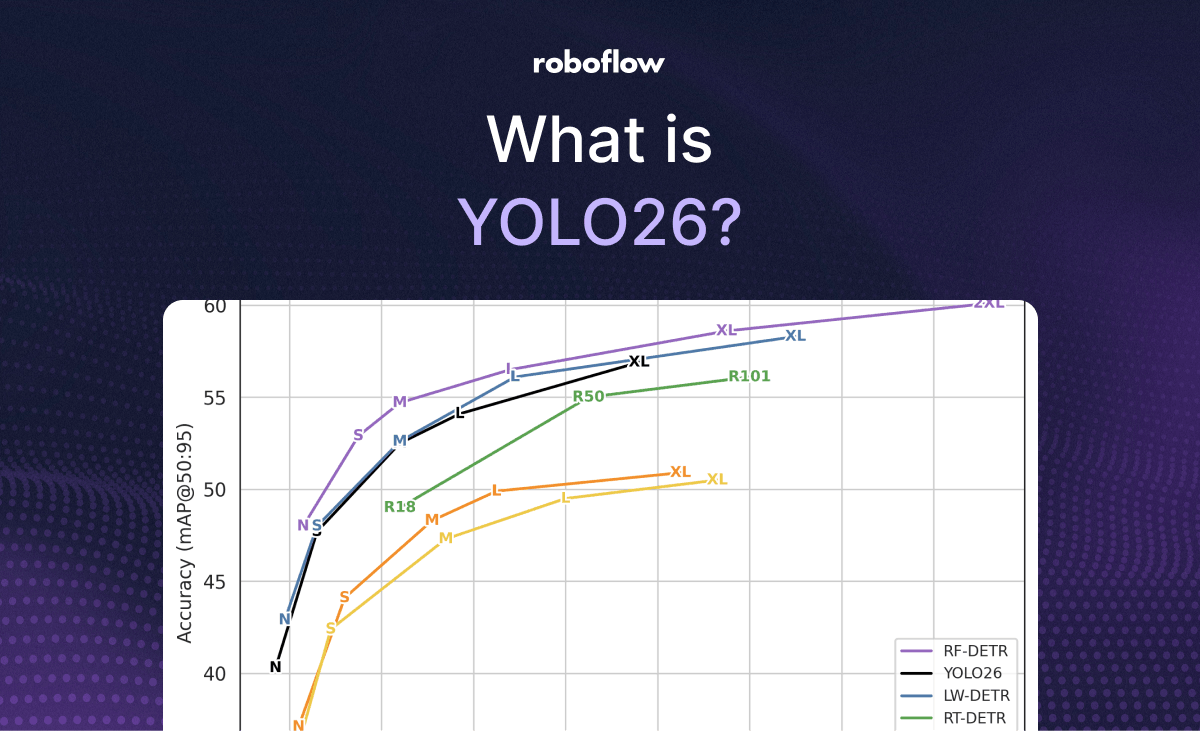
An Introduction to YOLO26
2026-06-23YOLO26 is a newly introduced, edge-optimized object detection model that eliminates Non-Maximum Suppression to achieve 43% faster CPU inference. A comprehensive overview details the model's performance benchmarks across various sizes and outlines its specific licensing terms. Additionally, the report provides a direct performance comparison between YOLO26 and the competing RF-DETR architecture.
Comments2026-06-22
Help I accidentally a wigglegram
2026-06-22A recent tech discussion explores the evolution of wigglegrams and stereograms, highlighting techniques that range from dedicated multi-lens hardware to synthetic depth mapping on modern smartphones. While the original poster's accidental attempts lack the precise parallax of professional 3D rigs, commenters note that mobile features and generative AI are making pseudo-3D creation more accessible. In response, enthusiasts are sharing custom software libraries, DIY camera builds, and stereoscopic apps to revive these underrated visualization methods.
Comments
GLM-5.2 – How to Run Locally
2026-06-22Z.ai has released instructions for running its new GLM-5.2 model entirely on local hardware. This development allows users to deploy the advanced AI on their own machines without relying on cloud infrastructure. The guide provides detailed instructions for setting up and optimizing the model for offline use.
CommentsMoebius is a newly introduced image inpainting framework that operates with a lightweight 0.2 billion parameters. Despite its compact size, the model achieves performance levels comparable to much larger 10 billion-parameter systems. This development offers a highly efficient and accessible solution for high-quality image restoration.
CommentsTech community discussions suggest there is minimal downside to switching to open-weight models, as they are only a few months behind their proprietary counterparts. Additionally, user suspicions regarding silent performance degradation in paid services make open-source and local inference alternatives increasingly appealing for developers.
Comments
A new project called Oak was recently showcased on Hacker News as a Git alternative specifically built for AI agents. The tool provides a version control system tailored to machine-driven workflows, allowing autonomous coding agents to efficiently manage and track changes in codebases.
CommentsA critical Codex logging bug that threatened to write terabytes of data to local SSDs has been resolved by developers. The team merged three pull requests to address the issue, successfully reducing the excessive log output by 85 percent. These fixes are now available in the latest software release.
Comments
GLM 5.2 vs. Opus
2026-06-22A new real-world test pits the hyped GLM-5.2 model against Claude Opus by challenging both to build a 3D platformer game from scratch using raw WebGL. This head-to-head comparison aims to reveal whether the capabilities of GLM-5.2 are genuinely impressive or merely optimized to ace standard AI benchmarks.
Comments
A developer successfully fine-tuned a small local Qwen LLM to categorize user queries for a metadata-aware household RAG chatbot. By classifying questions into specific categories before searching the vector database, the system effectively narrows the search space for improved retrieval accuracy. This lightweight pre-processing step optimizes the chatbot's overall performance while keeping the model entirely local.
Comments
Sakana Fugu
2026-06-22Sakana Fugu is a newly launched model interface that enables the seamless coordination of specialized AI agents. By routing multiple distinct models through a single OpenAI-compatible API, it significantly simplifies the development and deployment of complex multi-agent systems.
CommentsMemory Safe Inline Assembly
2026-06-22A recent discussion on Fil-C's memory-safe inline assembly highlights a debate over its choice to use runtime panics instead of compile-time errors for unsafe code, which critics argue merely delays crashes to production. However, supporters defend the approach as a practical way to port legacy C applications without full rewrites, noting that the feature's implementation was notably accelerated by using AI to parse x86_64 assembly.
CommentsReaders discussing the mechanics behind Anthropic's Extended Thinking feature note that major AI companies intentionally hide their models' raw reasoning processes to protect proprietary research. Exposing these internal mechanics would allow competitors to easily replicate their advanced thinking workflows by training on the exposed data. Consequently, companies choose to summarize or postprocess these cognitive outputs to maintain a competitive edge in the AI market.
Comments
A recent piece explores how foundational research conducted in Munich in 1991 laid the critical groundwork for the modern AI boom. Key breakthroughs from that era, including the development of LSTMs, GANs, deep residual learning, and knowledge distillation, eventually paved the way for advanced systems like ChatGPT.
Comments2026-06-21
Apertus is a fully open foundation model designed to empower nations and organizations to build sovereign artificial intelligence systems. By providing complete transparency and unrestricted access, it allows users to develop localized AI technologies without relying on proprietary models. This initiative aims to democratize advanced machine learning and ensure long-term technological independence for its users.
Comments
Identity verification on Claude
2026-06-21Anthropic's implementation of identity verification for Claude is driving some international users away due to frustrations over US export controls and data privacy concerns. As affected subscribers begin migrating to alternative models like Mistral, the broader tech community is actively debating the company's underlying motives. Many question whether the new restrictions are merely a temporary compliance measure or a calculated strategy to achieve regulatory capture against open-weight AI.
Comments