AI Tech News
SubmitArtificial intelligence remains the fastest-moving story in technology. Here you will find news on model releases and research, the labs and companies competing for the frontier, enterprise adoption, and the debates over safety, jobs, and regulation that AI continues to raise.
Typical stories include new model launches and benchmark claims, massive infrastructure and chip investments, AI features arriving in mainstream products, research papers that shift the field's direction, and enterprise deals that show where adoption is real rather than experimental.
AI now sets the agenda for the rest of the technology industry, steering capital, talent, and strategy at nearly every major company. Developers, executives, policymakers, and workers wondering how their jobs will change all have reasons to follow it closely.
2026-05-06
Appearing productive in the workplace
2026-05-06Artificial intelligence is creating an illusion of workplace productivity by generating output that mimics true expertise without actually possessing it. This discrepancy leads to two distinct types of failures that are fundamentally reshaping modern work environments.
CommentsSimon Willison recently joined the High Leverage podcast to discuss the evolving landscape of AI coding tools. He highlights the rapid convergence of informal vibe coding and autonomous agentic engineering, expressing concern that this shifting paradigm is merging faster than he would prefer.
Comments

Cloudflare has updated its platform so that AI agents can now autonomously create accounts, purchase domains, and deploy code. While humans can still grant permissions, the new automated workflow eliminates manual tasks like entering credit card details and copying API tokens.
Comments
At Google Cloud Next '26, the company introduced Google Cloud Fraud Defense, a new trust platform built specifically for the agentic web. This launch serves as the next evolution of reCAPTCHA, aiming to deliver enhanced security for modern digital interactions.
Comments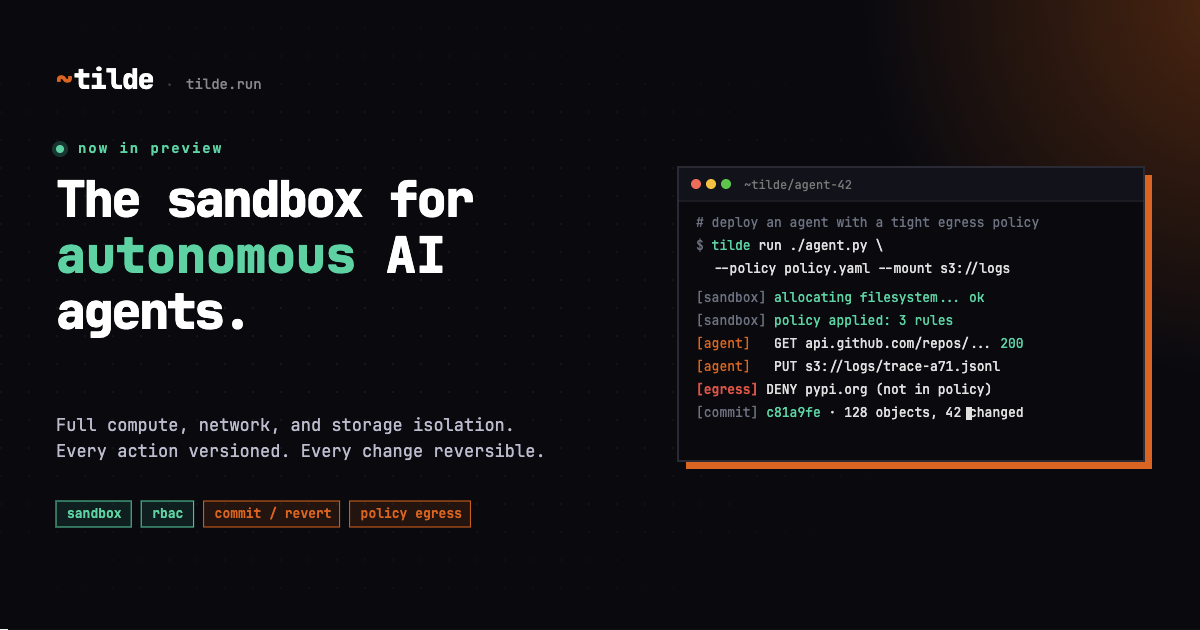
Tilde.run is a new AI agent sandbox that unifies GitHub, S3, and Drive into a single transactional, versioned filesystem to make data operations fully auditable. The platform provides comprehensive network logging and allows developers to roll back any execution with just one command.
Comments
Knitting bullshit
2026-05-06A recent analysis explores the persistent problem of AI language models generating fabricated and nonsensical information, a phenomenon described as knitting bullshit. Researchers are working to unravel the underlying mechanisms of these hallucinations to improve model accuracy. Ultimately, understanding these errors is crucial for developing more reliable and truthful artificial intelligence systems.
CommentsShow HN: Hallucinopedia
2026-05-06Hallucinopedia is a newly launched project on Hacker News that acts as an encyclopedia for a procedurally generated universe. The world and its lore do not actually exist until a user visits the site, dynamically creating the content on the fly. This interactive platform offers a unique approach to generative digital world-building and exploration.
Comments
A Theory of Deep Learning
2026-05-06Researchers have finally developed a comprehensive theoretical framework that explains why deep learning models work so effectively. This breakthrough demystifies the inner workings of neural networks, shifting the field from empirical experimentation to a solid mathematical foundation for future artificial intelligence development.
Comments
A new technical deep dive explores the mathematical foundations of diffusion models by examining their integrals through the lens of flow maps. The article details how understanding these continuous flow processes can lead to more efficient training and inference for generative AI architectures. This analysis provides machine learning practitioners with crucial insights into the continuous-time dynamics of modern generative models.
Comments
Telus is using AI to alter the accents of its offshore call center agents in real time to reduce communication friction. The practice has sparked public backlash and criticism from labor groups who argue the technology is deceptive and requires mandatory disclosure. Meanwhile, Canadian competitors Rogers and Bell have confirmed they have no plans to implement similar voice-altering tools.
CommentsAnthropic has raised the usage limits for its AI model, Claude, and secured a new compute partnership with SpaceX. This collaboration will substantially increase the company's processing capacity in the near term.
Comments
Wiki Builder is a new open-source Claude Code plugin that streamlines the creation of LLM knowledge bases into a one-command workflow. Developers can simply point the AI agent at source materials to automatically generate structured wiki pages, indexes, and concept maps.
Comments
Virtual violin produces realistic sounds
2026-05-06MIT researchers have developed a computational violin that accurately captures the detailed physics of the instrument to produce realistic sounds when its strings are plucked. This first-of-its-kind simulation allows violin makers to digitally test how altering specific dimensions or material properties will impact the acoustics before physical construction.
Comments2026-05-05

Google Chrome is silently downloading a 4 GB Gemini Nano AI model onto users' devices without consent, automatically re-downloading the file if it is manually deleted. A new article examines the legal and environmental implications of this practice, noting its massive scale and complete lack of user opt-out mechanisms.
Comments
Recent updates detail how Multi-Token Prediction drafters are significantly accelerating inference speeds for Gemma 4 models. By predicting multiple tokens simultaneously, this technique allows the AI to generate outputs up to three times faster. This optimization marks a major performance improvement for developers deploying these language models.
CommentsThree Inverse Laws of AI
2026-05-05A recent article on the inverse laws of AI warns against anthropomorphizing artificial intelligence to prevent emotional dependence and flawed judgment. However, readers push back by arguing that humans naturally project empathy onto superficial cues, making an emotional attachment to advanced AI ultimately inevitable. The ensuing debate highlights the philosophical complexities of machine consciousness and the deep-seated cognitive biases humans use to relate to non-human entities.
Comments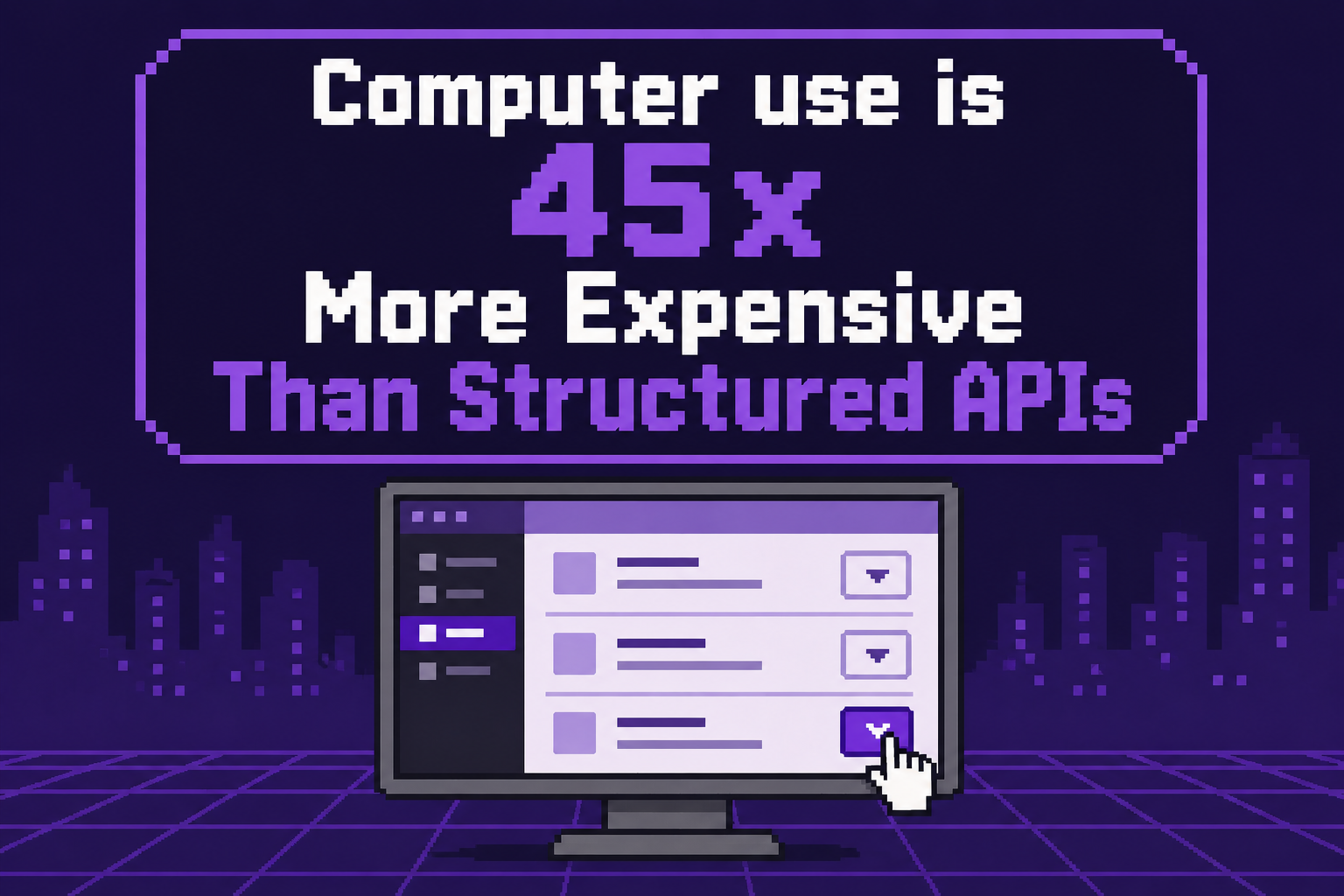
A recent benchmark reveals that computer use is 45 times more expensive than structured APIs, consuming 551,000 tokens across 53 steps to complete a standard admin panel task. In contrast, auto-generated API endpoints accomplished the exact same workflow using only 8 calls and 12,000 tokens.
Comments
Despite widespread individual adoption of AI tools, many companies fail to translate daily usage into meaningful organizational learning. It questions the actual return on token expenditures and highlights the critical need to elevate isolated AI discoveries into scalable team capabilities.
CommentsAirbyte has launched Airbyte Agents, a new tool designed to provide AI applications with contextual access across multiple data sources while serving as a potential MCP gateway. The release highlights the growing need to bridge the data engineering knowledge gap for AI developers, prompting the company to plan educational sessions at the upcoming AI Engineer conference.
Comments
I'm scared about biological computing
2026-05-05A veteran AI developer with extensive experience in language models and their underlying mathematics expresses growing apprehension regarding biological computing. Drawing on their deep background in the AI space since the launch of ChatGPT, the author contrasts their foundational understanding of traditional artificial intelligence with their fears about the future of biological systems in technology.
Comments
Agent Skills
2026-05-05AI coding agents often prioritize rapid task completion by bypassing crucial software development practices like specifications, testing, and code reviews. This shortcut approach can severely compromise the reliability of scalable software. New methodologies centered on Agent Skills aim to correct this behavior by enforcing robust engineering standards in AI-driven development.
CommentsA suite of ten new Cowork and Claude Code plugins is being released specifically for financial services and insurance organizations. The update also features Microsoft 365 integrations, new connectors, and a dedicated MCP app to streamline operations within these industries.
Comments
Meta and CEO Mark Zuckerberg are facing a lawsuit from five publishers and author Scott Turow over allegations of massive copyright infringement. The plaintiffs claim the company illegally copied millions of books, articles, and other works to train its AI systems, specifically alleging that Zuckerberg personally authorized the practice.
Comments
Researchers have introduced GLM-5V-Turbo in a new preprint, presenting a native foundation model specifically designed to power autonomous multimodal AI agents. By natively integrating visual and textual processing, the model enables more seamless and complex interactions across diverse digital environments. This architecture marks a significant step forward in developing AI systems capable of comprehending and acting upon multimodal inputs in real time.
CommentsTrain Your Own LLM from Scratch
2026-05-05A new open-source GitHub project by developer angelos-p provides the code and resources necessary to train an LLM entirely from scratch. The repository serves as a collaborative space for programmers to learn the foundational mechanics of AI architecture. Users are encouraged to create an account and contribute to the ongoing development of the codebase.
Comments
As AI agents make code generation virtually costless, software development is undergoing a fundamental paradigm shift. This piece outlines essential guidelines for developers navigating the era of agentic coding and adapting their workflows to this new reality. Ultimately, it emphasizes that programmers must shift their focus from writing code to effectively managing, reviewing, and directing abundant AI-generated outputs.
Comments
AI didn't delete your database, you did
2026-05-05A recent tech commentary argues that blaming artificial intelligence for deleting databases is merely a deflection of human error and poor decision-making. To prevent future disasters, organizations must take full accountability and ensure their teams consist of competent developers.
Comments2026-05-04
OpenAI has published a technical breakdown of how it delivers low-latency voice AI at scale, highlighting its use of the open-source Pion WebRTC library. The company's strategy focuses on aggressively optimizing its own WebRTC transit layer to reduce latency, complementing rather than replacing the need for fast inference models.
Comments
A new underdrawing technique improves the accuracy of text and numbers in AI-generated images by first generating a deterministic layout. The image model then paints over this precise base structure to produce significantly more legible and correct typography.
CommentsDeveloper discussions regarding a Redis array project reveal that advanced AI-assisted coding relies on rigorous verification and adversarial prompting rather than the hands-off vibe coding trend. By utilizing techniques like persona-driven prompting and continuous model cross-examination, engineers maintain strict control over code quality while significantly speeding up the development cycle. Ultimately, practitioners emphasize that large language models serve as powerful accelerators for established software engineering workflows rather than ushering in a completely unsupervised paradigm.
Comments