AI Tech News Past 24 Hours
AI news moves quickly, and this section helps you keep pace. It surfaces recent stories on model launches, research advances, funding and partnerships among AI companies, enterprise adoption, and the regulatory and societal questions the technology keeps raising.
In any given stretch the stories might include a lab releasing a new model or capability, a multibillion-dollar infrastructure deal, a startup emerging with notable backing, fresh benchmark results, or a government moving on AI rules. Product integrations and safety debates round out the mix.
Few fields make a daily check worthwhile the way AI does, because capabilities and competitive positions genuinely change week to week. Engineers choosing tools, leaders setting strategy, and readers trying to understand the technology's trajectory all benefit from a recent-first view.

The popular fan-run Turtle WoW private server for World of Warcraft is shutting down after Blizzard Entertainment successfully secured a legal injunction against the project. The beloved community server will cease operations following the court order, bringing an end to its unique run of custom classic content.
CommentsKimi K2.6: Advancing open-source coding
2026-04-20Kimi K2.6 advances open-source coding by introducing innovative features such as long-horizon coding and coding-driven design. The release also enhances collaborative AI capabilities through proactive agents, agent swarms, and the newly introduced Claw Groups research preview.
Comments
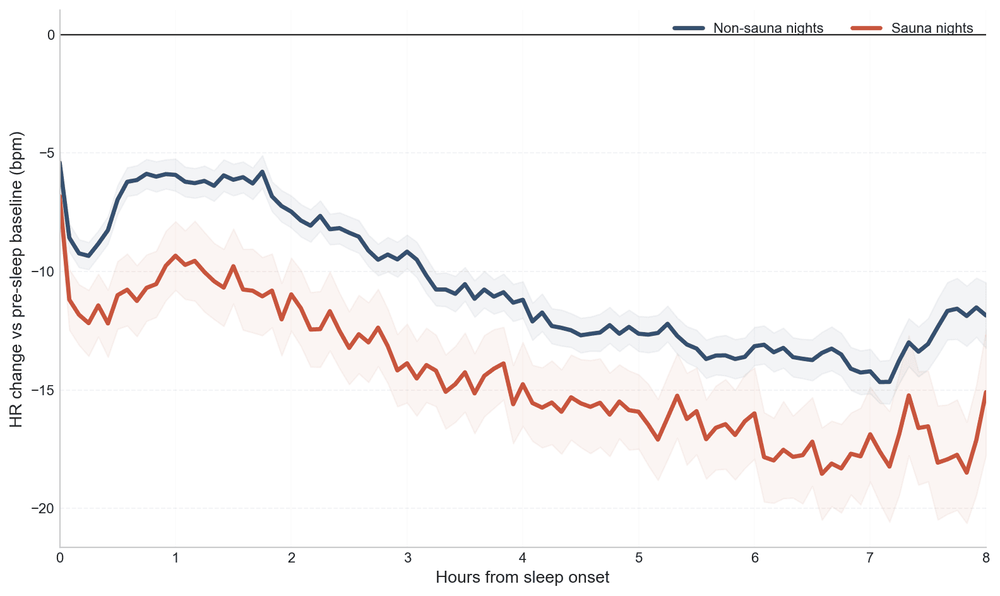
Sauna effect on heart rate
2026-04-20A new study analyzed over 59,000 wearable data records from 256 sauna users to quantify the precise physiological effects of heat therapy. By applying statistical tests to same-day heart rate metrics, researchers provided concrete data on how sauna sessions impact cardiovascular strain.
Comments
Security experts confirm that quantum computers do not pose a threat to current 128-bit symmetric encryption keys. This consensus is based on the specific scaling details of Grover's algorithm. Consequently, organizations do not need to increase their symmetric key sizes during the transition to post-quantum cryptography.
Comments
Music streaming service Deezer reports that 44% of daily song uploads are now AI-generated. Despite this high volume of new tracks, actual listener consumption of AI music remains low, accounting for only 1% to 3% of total streams. Furthermore, the company detects and demonetizes 85% of these AI streams, identifying them as fraudulent activity.
Comments
Tech teams often attempt to solve workplace communication breakdowns with engineering solutions instead of addressing the root issues of poor dialogue. The author argues that failing to listen and talk to one another is the primary driver of these software development problems. Ultimately, designers and product leaders must prioritize genuine human conversation over technical workarounds to improve collaboration.
CommentsA decade ago, a developer added a unit test to the Servo project with a hardcoded cookie expiry date of April 2026. The project's continuous integration pipeline is currently broken and will remain unresolved until another maintainer merges a pull request to address the issue.
Comments
A Brief History of Fish Sauce
2026-04-20This article explores the rich history of fish sauce, tracing its origins from ancient Asian recipes to its widespread use during the Roman Empire. It details how this pungent condiment evolved over the centuries to become a beloved staple in modern global cuisine, highlighting its many delicious contemporary uses.
CommentsThe NSA is adopting Anthropic's Mythos AI model, reversing a previous Pentagon decision to blacklist the company as a supply chain risk. This integration marks a major shift in government procurement after officials initially attempted to penalize the firm.
Comments
Modern Rendering Culling Techniques
2026-04-20Modern rendering culling techniques optimize graphics performance by identifying and excluding unseen objects, such as obscured trees or buildings, from the rendering pipeline. This process prevents GPUs from wasting computational resources on drawing invisible geometry that falls outside the camera's field of view. Implementing these advanced culling methods is essential for maintaining high frame rates and ensuring smooth visual experiences in complex 3D environments.
Comments
Jujutsu megamerges for fun and profit
2026-04-20A new practical guide details how to implement and maintain efficient megamerge workflows using the Jujutsu version control system. By adopting these advanced techniques, developers can significantly accelerate their code integration processes while minimizing merge conflicts.
CommentsKefir C17/C23 Compiler
2026-04-20Kefir is an independent C17/C23 compiler developed by a single programmer to provide a simple, maintainable alternative to industry standards like GCC and Clang. By introducing a third compiler implementation, the project helps developers vet code portability and catch hidden bugs stemming from compiler-specific extensions and preprocessor defines. The tech community has praised the solo project for its impressive test suite and its value in diversifying the C language ecosystem.
Comments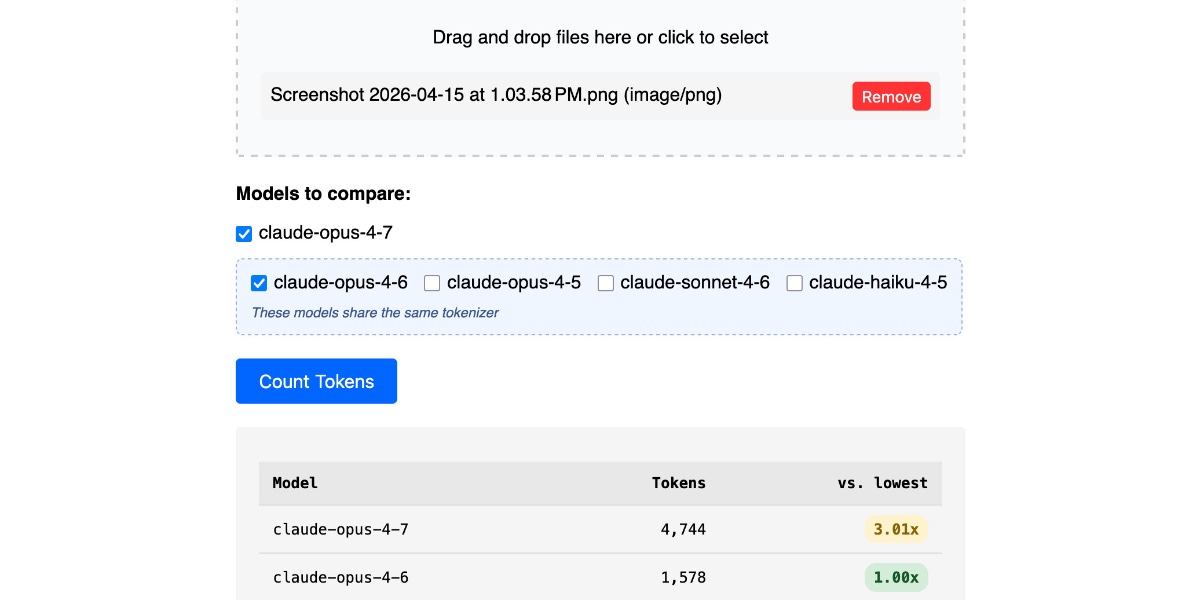
The creator of the Claude Token Counter has upgraded the tool with a new model comparison feature. This update allows users to run token counts on the same input text across multiple different AI models to easily compare their results.
CommentsReader discussions comparing the rapid success of OpenClaw to MS-DOS and modern large language models highlight the tech industry's tendency to reward reckless innovation over careful planning and safety. Critics argue this shortcut-driven approach, exemplified by OpenAI's deployment of these models, facilitates copyright theft and threatens jobs while prioritizing short-term profit. Furthermore, commentators warn that the unchecked proliferation of AI-generated content increases global information entropy by destroying the historical link between written text and authentic human authorship.
CommentsDevelopers behind the Soul Player C64 project have successfully run a 25,000-parameter transformer AI model on an original 1 MHz Commodore 64. This remarkable feat showcases extreme software optimization by fitting modern machine learning architecture onto severely limited retro hardware. The project highlights the ongoing creativity of programmers pushing vintage machines far beyond their original design capabilities.
Comments
A recent analysis of Excel files from 600 published scientific papers has revealed widespread copy-paste errors within the underlying datasets. These findings highlight significant data integrity issues and raise concerns regarding the overall accuracy of published scientific research.
Comments
An OpenAI advertising partner is launching a pilot program that sells ChatGPT ad placements dynamically matched to user prompt relevance. Advertisers will pay CPMs ranging from $15 to $60 for these placements, with a $50,000 minimum spend required to participate.
Comments
F-35 is built for the wrong war
2026-04-20The F-35 fighter jet is an aerospace marvel, but its extreme complexity makes it too expensive and slow to manufacture for modern attrition warfare. Unlike mass-producible military assets, it requires immense time and resources to build each individual unit. Critics argue this prioritization of precision over scalability leaves the aircraft fundamentally mismatched for current large-scale conflicts.
Comments
Vercel April 2026 security incident
2026-04-19Cloud development platform Vercel has disclosed a security incident after threat actors claimed to have breached its systems. The attackers are currently attempting to sell the stolen data.
Comments
To combat the use of artificial intelligence in student assignments, a college instructor is requiring students to write their papers on typewriters. This low-tech approach forces students to produce their own work without the assistance of computers or automated writing tools.
Comments
A newly accessible digital archive of BYTE magazine offers tech enthusiasts a deep dive into the early days of personal computing. The extensive collection starts with the inaugural 1975 issue and preserves foundational hardware-focused content from the era. Readers can explore vintage guides on topics ranging from recycling integrated circuits to troubleshooting mystery keyboards.
CommentsAnthropic remains the only major AI lab to publicly share the system prompts for its user-facing chat models, maintaining an archive that dates back to Claude 3. This ongoing transparency recently allowed observers to examine the specific system prompt modifications implemented between the releases of Claude Opus 4.6 and 4.7.
Comments
The Bromine Chokepoint
2026-04-19The ongoing U.S.-Israeli war with Iran has exposed a critical vulnerability in the global semiconductor memory supply chain regarding the availability of bromine. Because bromine is an essential chemical in chip manufacturing, this geopolitical disruption has created a severe production chokepoint that threatens the tech industry with widespread memory shortages.
Comments
Video game developers recently shared insights into the technical tricks and design challenges required to implement a seamless pause feature. They explained the complex engineering processes involved in accurately halting and resuming game states when a player presses a button.
Comments
The RAM shortage could last years
2026-04-19The tech industry is bracing for a multi-year RAM shortage as memory manufacturers struggle to keep pace with surging demand. Current projections indicate that makers will only be able to fulfill 60 percent of total market requirements by the end of 2027.
CommentsReader discussions surrounding the Nanopass Framework debate the merits of using numerous small compiler passes versus fewer, larger ones. While some developers praise the framework's domain-specific language for simplifying transformations and pass reordering, others warn of significant performance overhead, redundancy, and debugging difficulties. The conversation highlights that the ideal pass architecture ultimately depends on specific language design choices and the careful balance between separation of concerns and complex inter-pass interactions.
Comments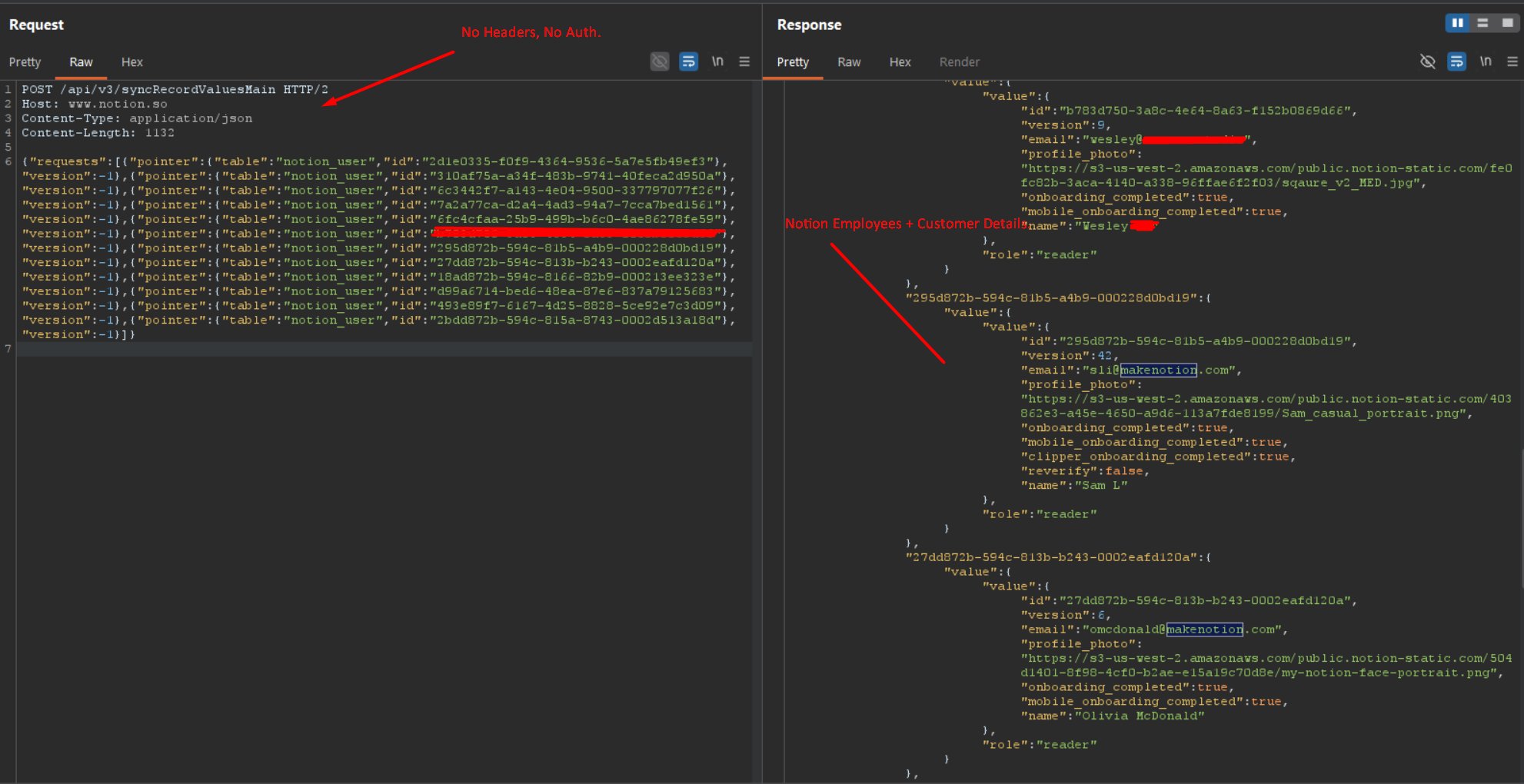
A zero-authentication vulnerability in Notion allows anyone to extract the full names, email addresses, and profile photos of users who have edited a public page. The issue requires no login or tokens, as a single POST request returns all sensitive contributor data. This flaw poses a significant privacy risk for organizations utilizing public company wikis, potentially exposing the personal information of their entire workforce.
CommentsThe author reflects on their first IETF meeting, noting that the organization involves a significant amount of internet maintenance grunt work. The accompanying piece examines the theoretical versus practical realities of IPv6, analyzing how the protocol was designed to solve the internet's complex scaling challenges.
CommentsA new browser demo generates Excalidraw diagrams from text prompts by running the 3.1GB Gemma 4 E2B AI model entirely in desktop Chrome via WebGPU. The application optimizes performance using custom WGSL compute shaders to compress the KV cache by 2.4 times, but it currently requires desktop Chrome 134 or higher and lacks Safari and iOS support.
Comments
A former Unity employee details the process of updating the Gun Rocket project across ten years of engine iterations. The walkthrough provides developers with practical tips, tricks, and firsthand insights into the technical evolution of the platform.
Comments