AI Tech News Past 24 Hours
AI news moves quickly, and this section helps you keep pace. It surfaces recent stories on model launches, research advances, funding and partnerships among AI companies, enterprise adoption, and the regulatory and societal questions the technology keeps raising.
In any given stretch the stories might include a lab releasing a new model or capability, a multibillion-dollar infrastructure deal, a startup emerging with notable backing, fresh benchmark results, or a government moving on AI rules. Product integrations and safety debates round out the mix.
Few fields make a daily check worthwhile the way AI does, because capabilities and competitive positions genuinely change week to week. Engineers choosing tools, leaders setting strategy, and readers trying to understand the technology's trajectory all benefit from a recent-first view.
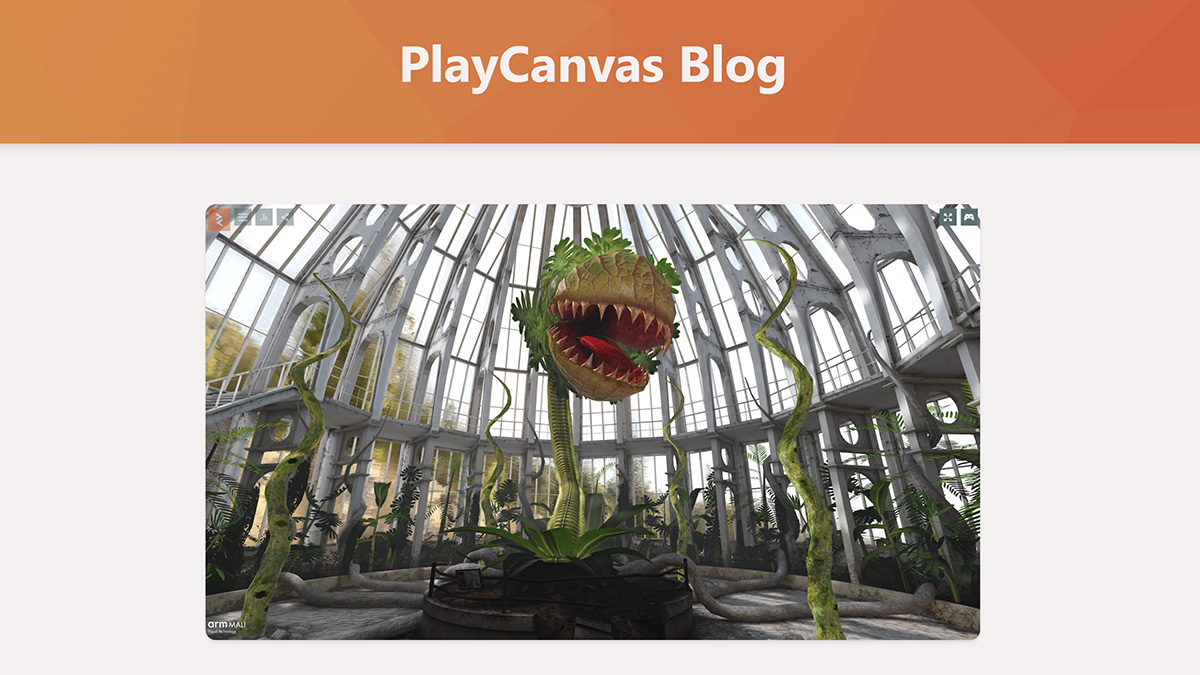
Show HN: Turning a Gaussian Splat into a videogame
2026-04-26A developer has successfully transformed a photogrammetric 3D Gaussian Splat scene into a fully playable browser-based first-person shooter. Built entirely within the PlayCanvas engine, the project incorporates advanced mechanics such as collision detection, pre-baked lighting, and behavior-tree AI for non-player characters.
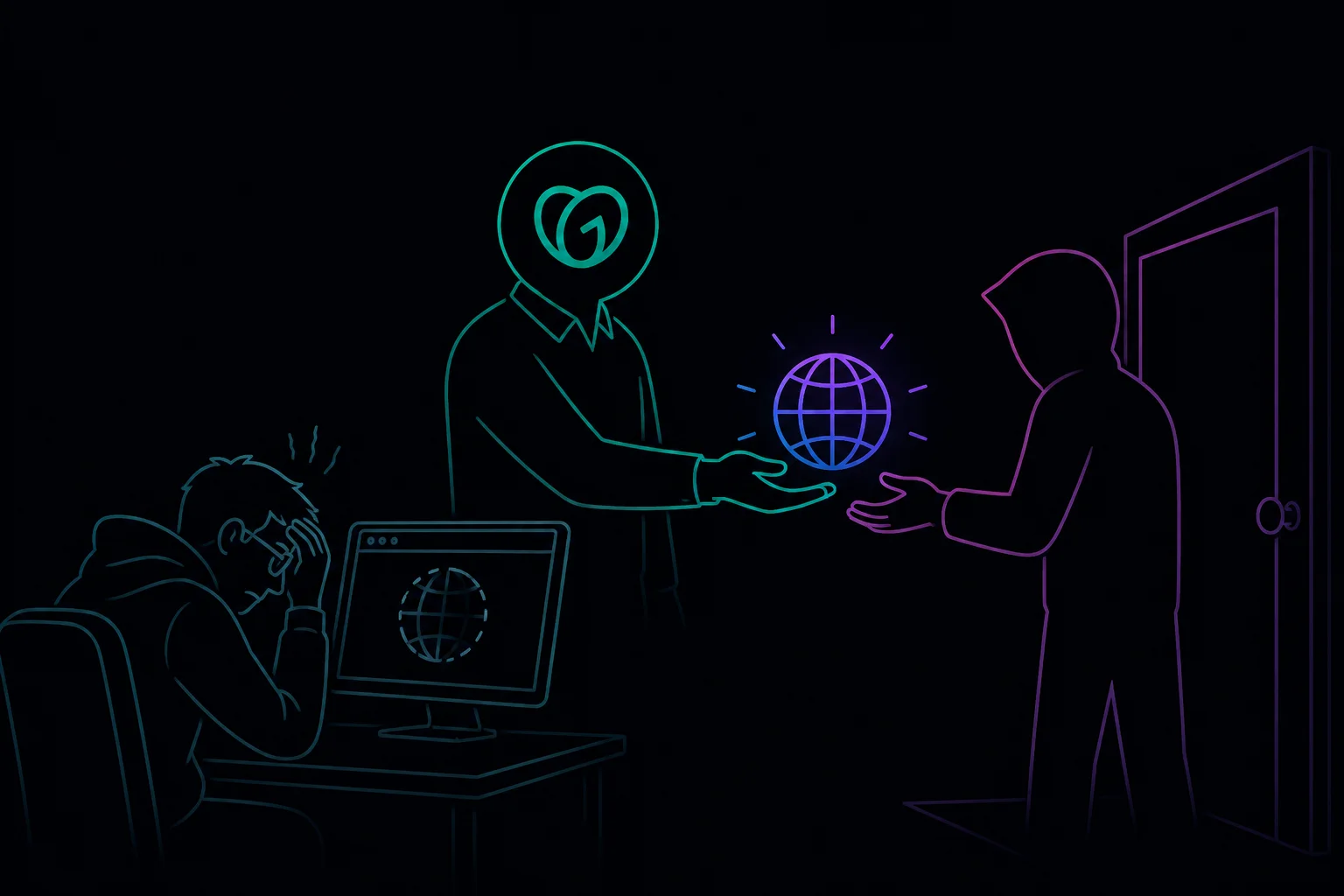
GoDaddy gave a domain to a stranger without any documentation
2026-04-26GoDaddy abruptly seized a domain name from an organization that had used it for 27 years and transferred it to a stranger. The domain registrar executed the sudden takeover without providing the original owners any advance warning or supporting documentation.
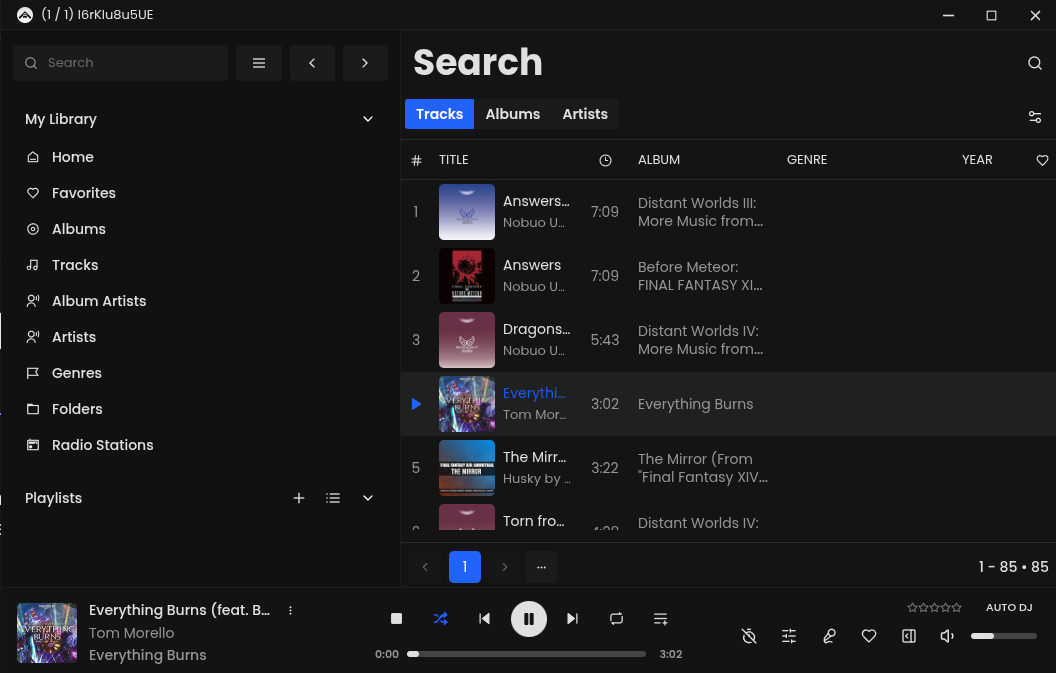
Using coding assistance tools to revive projects you never were going to finish
2026-04-25A developer successfully used the AI coding assistant Claude Code with Opus 4.6 to revive and complete an abandoned project connecting YouTube Music and OpenSubsonic. The tool significantly accelerated the development process, transforming an unfinished idea into a fully working application in a remarkably short amount of time.
1-Bit Hokusai's "The Great Wave" (2023)
2026-04-25A striking 1-bit digital recreation of Katsushika Hokusai's The Great Wave has prompted online readers to discuss the crisp aesthetics of monochrome pixel art and its nostalgic ties to early Macintosh displays. Alongside technical appreciation for retro computing and limited-resolution artwork, the community expressed profound admiration for the original Japanese master's timeless brushwork and emotional depth.
USB Cheat Sheet (2022)
2026-04-25The 2022 USB Cheat Sheet provides a highly praised, comprehensive overview of USB specifications that was recently updated to correctly define SBU pins as Sideband Use. Readers commend the author for his technical accuracy and quick responsiveness to feedback, comparing the guide favorably to his other in-depth hardware articles.
Plain text has been around for decades and it’s here to stay
2026-04-25A recent blog post on software craft highlights the enduring value and relevance of plain text in modern development. Despite the proliferation of complex data formats, plain text remains an essential foundation for building high-quality and easily maintainable software systems.
Replace IBM Quantum back end with /dev/urandom
2026-04-25A developer launched a satirical GitHub repository named quantumslop that replaces the IBM Quantum backend with the Linux /dev/urandom random number generator. Although the project failed to win a QDay programming challenge, it offers a humorous take on the noise and hype surrounding current quantum computing advancements.

There Will Be a Scientific Theory of Deep Learning
2026-04-25A newly published arXiv paper posits that a rigorous scientific theory of deep learning will inevitably emerge to fully explain neural network behavior. The authors argue that transitioning from purely empirical observations to a unified mathematical framework is essential for the field's continued advancement. This foundational theory aims to demystify exactly why deep learning models generalize so effectively despite their immense architectural complexity.
Work with the garage door up (2024)
2026-04-25Discussions surrounding a recent article about working with the garage door up explore the benefits and psychological hurdles of building tech projects in public versus behind closed doors. While transparent development can demystify the creation process and engage communities, some developers find that sharing unfinished work prematurely drains their motivation due to the goal disclosure effect. Ultimately, the conversation highlights how individual psychology dictates whether creators thrive with their metaphorical garage door open or closed.

Education must go beyond the mere production of words
2026-04-25As artificial intelligence becomes increasingly capable of generating written content, the traditional focus on mere word production is no longer sufficient for modern education. Authentic learning must now evolve to prioritize deeper critical thinking and uniquely human skills that technology cannot easily replicate.

Simulacrum of Knowledge Work
2026-04-25This article explores the growing challenge of verifying the quality of AI-generated knowledge work, such as market analyses and professional reports. It questions how professionals can confidently evaluate these outputs without having to manually redo the underlying work to check for accuracy.
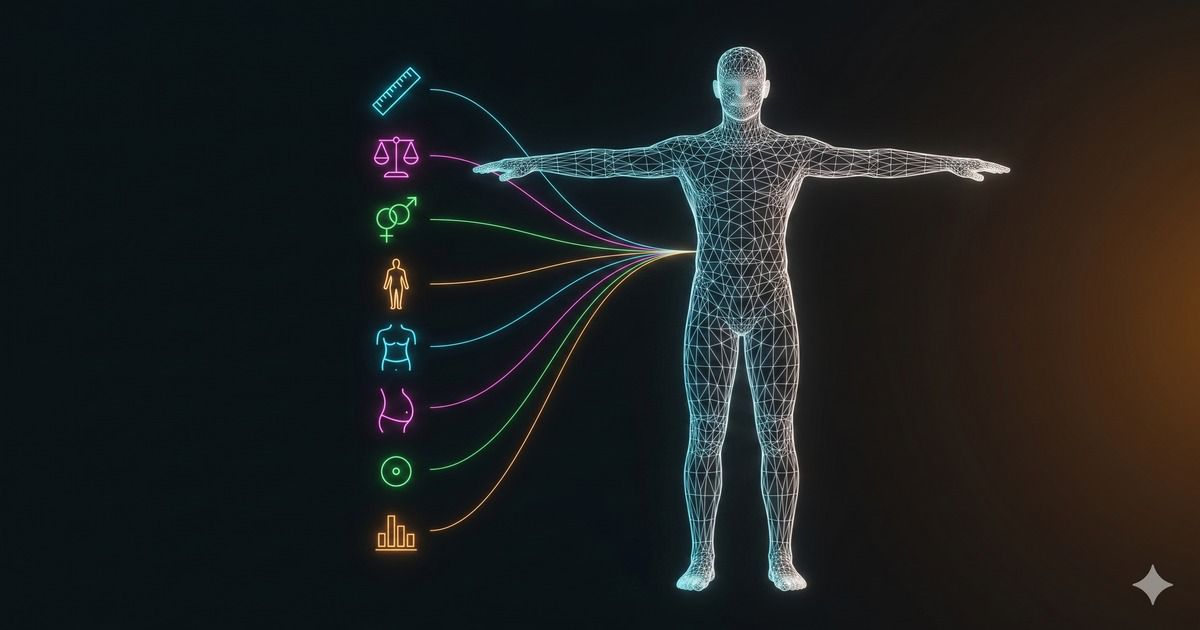
A 3D Body from Eight Questions – No Photo, No GPU
2026-04-25Researchers have developed a machine learning model that generates accurate 3D body shapes from just eight questionnaire inputs without requiring photos or GPU inference. By training with a differentiable physics loss, the system significantly outperforms traditional baselines and achieves a mass prediction mean error of only 0.3 kilograms.
A web-based RDP client built with Go WebAssembly and grdp
2026-04-25A new open-source project called grdpwasm introduces a web-based RDP client built with Go WebAssembly and the grdp library. This tool allows users to access remote desktops directly through their web browser without requiring additional local software. The code is currently available on GitHub for the community to test and contribute to its ongoing development.
Hokusai and Tesselations
2026-04-25A recently digitized 1884 pattern book by Katsushika Hokusai, originally created for kimono textiles, highlights his lasting influence on the mathematical tessellation work of M.C. Escher. Readers are exploring high-resolution digital archives of the collection to study the intricate designs found within the historical album. The discussion also features an ongoing debate regarding whether Hokusai successfully incorporated all seventeen mathematical plane symmetry groups into his patterns.
What async promised and what it delivered
2026-04-25The async/await evolution solved previous programming challenges by introducing sequential syntax that greatly improved code readability. However, this approach has introduced new structural costs and obscured crucial execution details. Specifically, the sequential appearance hides which operations actually depend on one another, demanding greater structural awareness from developers.
GPT‑5.5 Bio Bug Bounty
2026-04-25OpenAI has published details regarding its Bio Bug Bounty program to address potential biological security risks associated with advanced models like GPT-5.5. The initiative incentivizes security researchers to identify and report vulnerabilities, highlighting the company's ongoing commitment to AI safety and the mitigation of cyberbio threats.
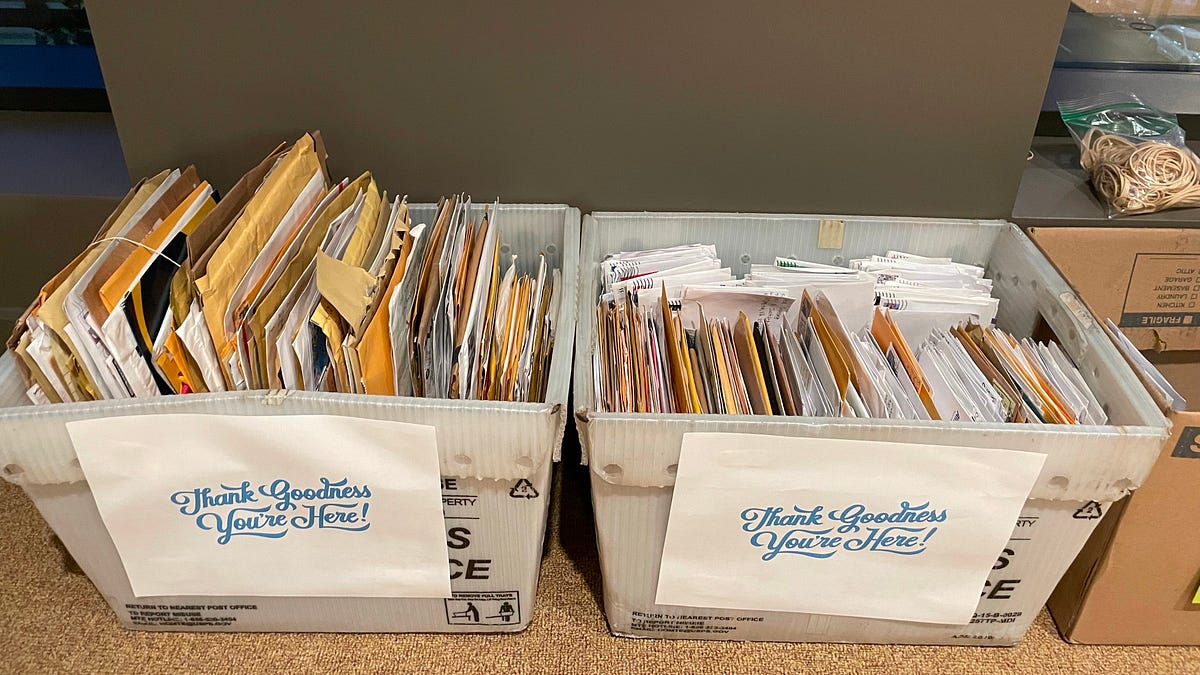
The mail sent to a video game publisher
2026-04-25Inspired by a 1980s Activision idea, video game publisher Panic recently sent out physical mail to its community and received a wildly diverse range of responses. This nostalgic initiative has generated incredible and unexpected outcomes for the studio behind modern titles like Despelote and Arco. The campaign highlights the enduring appeal of retro community engagement in the modern gaming industry.
Open source memory layer so any AI agent can do what Claude.ai and ChatGPT do
2026-04-25Stash is a new open-source, self-hosted memory layer that provides AI agents with persistent memory, knowledge graphs, and self-modeling capabilities. It is compatible with major models like Claude and ChatGPT, as well as Ollama and any MCP-compatible agent. This enables developers to easily add advanced contextual recall and goal tracking to their custom AI applications.
Show HN: A Karpathy-style LLM wiki your agents maintain (Markdown and Git)
2026-04-25YC S26 startup Nex.ai has launched WUPHF, a platform enabling users to deploy collaborative teams of AI agents. These agents work together over a shared context to maintain a dynamic, Markdown and Git-based wiki inspired by Andrej Karpathy. The system is compatible with multiple popular coding tools and local large language models to streamline multi-agent workflows.
Lambda Calculus Benchmark for AI
2026-04-25A new Lambda Calculus benchmark highlights that top-tier AI models like Anthropic's Opus still significantly outperform cheaper and open-source alternatives on complex, unbenched tasks. Despite recent marketing hype labeling smaller models as Opus killers, the tech community notes these cheaper options are merely sufficient for routine work and struggle with advanced problems. Consequently, developers suggest that future productivity gains will rely more on improved AI tooling and workflows rather than just chasing the next state-of-the-art model.