AI Tech News Past 24 Hours
AI news moves quickly, and this section helps you keep pace. It surfaces recent stories on model launches, research advances, funding and partnerships among AI companies, enterprise adoption, and the regulatory and societal questions the technology keeps raising.
In any given stretch the stories might include a lab releasing a new model or capability, a multibillion-dollar infrastructure deal, a startup emerging with notable backing, fresh benchmark results, or a government moving on AI rules. Product integrations and safety debates round out the mix.
Few fields make a daily check worthwhile the way AI does, because capabilities and competitive positions genuinely change week to week. Engineers choosing tools, leaders setting strategy, and readers trying to understand the technology's trajectory all benefit from a recent-first view.
2026-07-11

Apple has filed a lawsuit against OpenAI, accusing the AI company of stealing its trade secrets. The legal action specifically targets former Apple employees who allegedly transferred proprietary information to OpenAI. The tech giant claims these ex-workers illegally obtained and shared confidential data to benefit OpenAI's development efforts.
Comments
AI neoclouds like CoreWeave and Nebius are experiencing soaring revenues and stock prices due to massive demand for GPU infrastructure. However, lacking the deep cash reserves of Big Tech, these companies are relying on complex, circular financing structures to fund their rapid expansion. This unconventional approach to securing capital has raised red flags regarding the long-term sustainability of their business models.
Comments
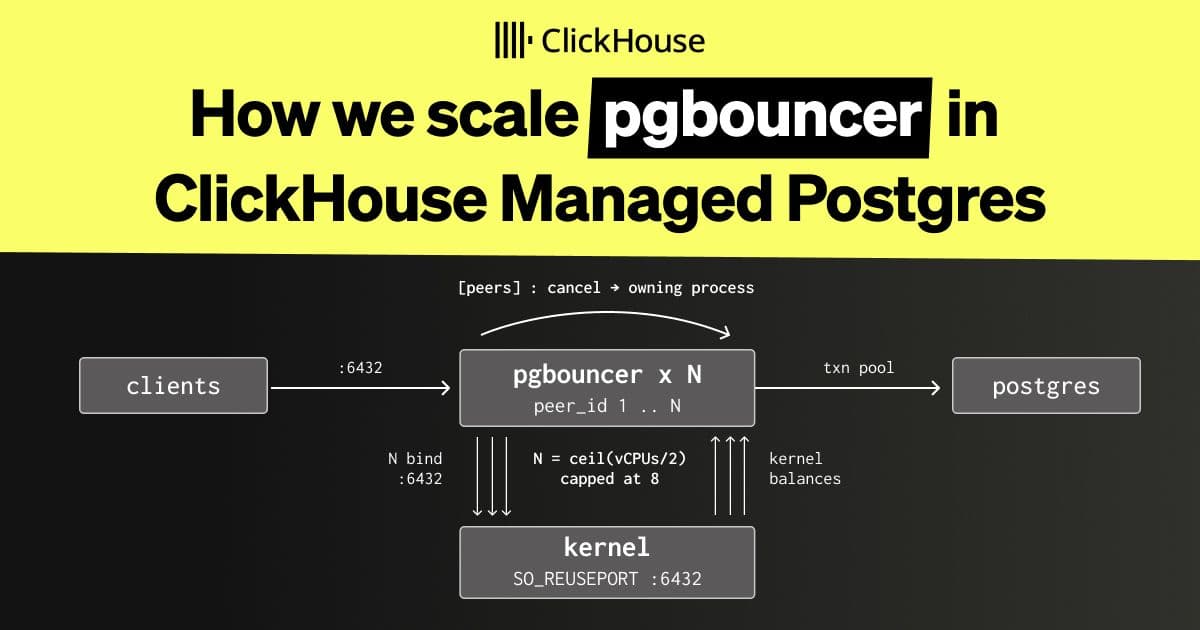
We scaled PgBouncer to 4x throughput
2026-07-11ClickHouse Managed Postgres overcame PgBouncer's single-threaded CPU limitations by deploying a peered fleet of processes utilizing the so_reuseport feature to scale across all available cores. This approach allows the connection pooler to fully utilize the entire CPU capacity of the host machine. Consequently, the team achieved a fourfold increase in throughput, as confirmed by recent performance benchmarks.
Comments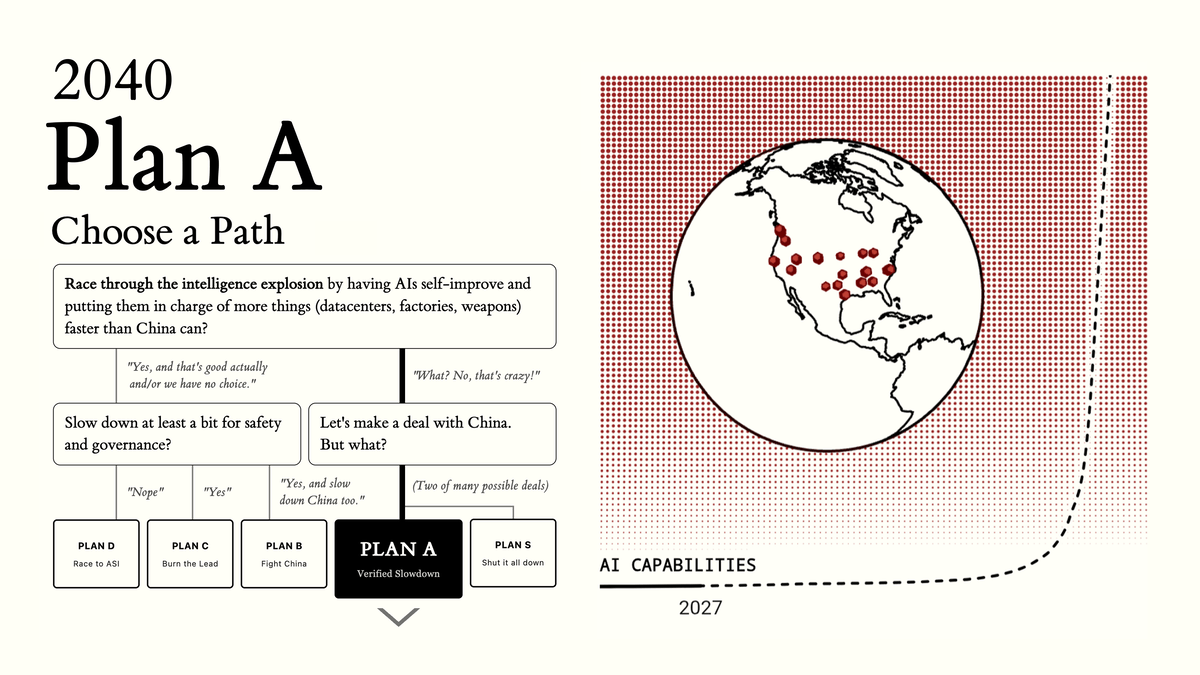
AI 2040: Plan A
2026-07-11The new report AI 2040: Plan A offers a detailed forecast and strategic recommendations for the United States, China, and the global community to navigate the impending era of artificial superintelligence. It outlines critical steps for international collaboration to manage the complex geopolitical and technological challenges associated with this transformative milestone.
CommentsA 1993 retrospective on the history of Singular Value Decomposition honors numerical analysis pioneers like Gene Golub, William Kahan, and Christian Reinsch for developing the practical SVD algorithm still used today. Accompanying reader discussions explore the mathematical intuition behind SVD, comparing it to generalized eigenvalues and explaining its utility in decomposing linear mappings into rotations and coordinate scaling.
CommentsAlternate clock designs and time systems
2026-07-11A recent article on alternate clock designs sparked a community discussion highlighting innovative and unconventional methods for visualizing time. Readers shared several creative web projects, including a twelve-variation visualizer and a unique Triclock design. The conversation also featured minor bug reports and widespread praise for specific favorites, most notably a digital Pi clock and a mesmerizing falling sand visualization.
CommentsRISCBoy is a completely open-source portable gaming console engineered from the ground up, featuring a custom CPU, graphics processor, and printed circuit board. The comprehensive hardware design and all associated project files are publicly available for developers and tech enthusiasts to explore and modify.
Comments
Scientists warn that modern design elements like LED lighting and repetitive architectural patterns can overload the brain's visual processing system. This continuous sensory strain is causing physical distress, headaches, and nausea for millions of people.
Comments
American rower Kelsey Pfendler successfully completed a historic solo journey of over 2,400 miles from California to Hawaii. In doing so, she achieved multiple milestones by becoming the first American woman, the youngest woman, and the fastest woman to ever make the solo crossing.
CommentsThe Python library Otary for image processing and 2D geometry has launched a new tutorials section featuring step-by-step guides and interactive Jupyter notebook workflows. These resources aim to help developers practically apply the library's clean API to real-world computer vision tasks beyond standard documentation. Community members note the tool excels at solving niche problems in just a few lines of code, often succeeding where large language models fail.
CommentsBook: RISC-V System-on-Chip Design
2026-07-11A new book titled RISC-V System-on-Chip Design, authored by David Harris, James Stine, Sarah Harris, and Rose Thompson, is now available for purchase on Amazon. The publication focuses on system-on-chip design utilizing the RISC-V architecture, and buyers can currently receive free shipping on qualifying orders.
CommentsIn a 2019 blog post, Paul Khuong draws a conceptual parallel between thread preemption and garbage collection to explain the complexities of memory reordering. He illustrates how preemption can inherently resolve concurrent memory ordering issues, offering a unique perspective on system optimization. This insight adds to his broader body of work exploring advanced computing concepts, mathematical theories, and compiler design.
CommentsReflecting on the 1984 book Digital Deli, readers discussed the extreme hardware constraints of early personal computing, noting how one contributor hand-coded the bestselling Apple Writer word processor using just 8KB of memory. The discussion contrasted these tight historical limitations with modern software bloat and today's massive GPU memory requirements. Participants also observed a cyclical trend in the industry, suggesting that modern AI tools are ushering in a new era of independent cottage programmers reminiscent of the early PC days.
CommentsHow to hide from killer drones
2026-07-11Online discussions about hiding military assets from killer drones reveal that visual countermeasures like dazzle camouflage and strobe lights fail against multi-sensor machine vision. Instead, readers argue that attempting to confuse AI targeting simply makes vehicles more visible to secondary systems, making a 360-degree close-in weapon system the only viable defense against swarming drones.
Comments
Although the toxic nature of lead was known from the very invention of leaded gasoline, it was widely adopted as the standard automotive fuel for decades. The prolonged and widespread burning of this poison throughout the mid-twentieth century has resulted in devastating and long-lasting consequences for global public health and the environment.
Comments2026-07-10
The open-source QuadRF is a Raspberry Pi 5-powered phased-array radio that utilizes advanced beamforming to track drones and detect WiFi signals through walls. Functioning as a wireless equivalent to network sniffers like Wireshark, this device highlights the advanced remote surveillance capabilities currently available to both the open-source community and government agencies.
CommentsGood Tools Are Invisible
2026-07-10The author argues that the best software tools should be completely invisible, criticizing the tech community for romanticizing the steep learning curves of programs like Vim as enjoyable puzzles. Ultimately, the piece emphasizes that software should prioritize seamless utility and efficiency to get out of the user's way rather than trying to be entertaining.
CommentsAn Indonesian solo developer named Rizky Nova has built a widely praised train simulation game using Unreal Engine on a low-spec machine with just 16GB of RAM. This impressive technical achievement has sparked extensive online discussions regarding how hardware limitations and resource constraints can foster creativity and drive innovative programming.
CommentsAlthough GPT 5.6 Sol Ultra successfully generated a proof for the Cycle Double Cover Conjecture, readers observe that the feat required extensive prompt engineering and explicit strategy guidance rather than independent reasoning. Discussants highlight that current large language models lack true volition, relying heavily on human direction and extended thinking modes to navigate complex mathematical tasks. Ultimately, they emphasize that these systems remain statistical predictors prone to hallucination, resolving complex logic through probability rather than genuine understanding.
CommentsFollowing an early 2025 report on the AI scraper bot scourge, this update examines the evolving tactics used by automated bots to bypass website security. It specifically focuses on the continued exploitation of residential proxies and highlights the ongoing technological arms race between content publishers and sophisticated scraping operations.
CommentsThis 2017 oral history retrospective details the pioneering computer graphics and practical effects technology used to create the film Terminator 2. Through insights from the original crew, the piece highlights how the movie's groundbreaking visual effects permanently altered the trajectory of cinematic technology.
Comments
Scientists have discovered that snail teeth are stronger than spider silk, officially dethroning it as nature's strongest material. This remarkable strength is a practical evolutionary adaptation, as the mollusks use their teeth to excavate solid rocks while feeding.
CommentsA lost city containing an ancient church has been discovered beneath Egypt's desert, providing new insights into the region's pre-Islamic history. The discovery highlights the late fourth to mid-seventh centuries AD, a period when Christianity was the dominant religion and Egypt was a wealthy Roman province. Discussions surrounding the find emphasize how these archaeological revelations challenge modern perceptions of the historical cultural and religious shifts across the Middle East.
CommentsA love letter to flashcards
2026-07-10In a personal reflection, the author highlights the enduring benefits of handcrafted flashcards and spaced repetition for memory retention. The piece explores how these intentional, low-tech study methods foster a deeper, more lasting understanding of complex subjects.
Comments
Apple is experiencing incredible demand for its Mac mini and Mac Studio desktops as they become the preferred machines for running AI agents. Apple silicon executive Doug Brooks highlighted this trend in a recent interview ahead of WWDC 2026, noting the growing reliance on the company's custom chips for on-device AI workloads.
Comments
Successful companies go blind
2026-07-10Drawing a biological analogy to the blind Mexican cavefish, this piece examines how highly successful companies often retain outdated practices long after they become obsolete. Much like the fish keeps vestigial eye genes, these organizations hold onto legacy mindsets that ultimately blind them to new market realities and emerging innovations. This evolutionary hangover prevents once-disruptive businesses from recognizing the need for future adaptation.
Comments
Developers have built a real-time AI tutor designed to teach math and reading to children aged four to nine. Because young learners require immediate feedback and cannot read text interfaces, the team integrated early childhood pedagogy directly into the system's engineering. The article details the key architectural decisions and technical lessons learned from creating a fast and highly accurate educational model for young children.
CommentsWrite code like a human will maintain it
2026-07-10Large language models enable rapid code generation, tempting developers to bypass traditional best practices like the DRY principle. However, because humans ultimately maintain the software, relying on endless AI output creates significant long-term technical debt. Developers must therefore prioritize clean, readable code over the sheer volume of AI generation to ensure future maintainability.
CommentsA retrospective on the history of 3D Realms and Apogee Software has prompted readers to share nostalgic memories of the 1990s shareware era, early game modding, and snail-mail customer support. The discussion also sparked technical debates over the actual adoption rates of mid-90s modem speeds and how bandwidth constraints shaped software distribution. Additionally, commenters criticized the modern iteration of 3D Realms for taking down its legacy website, contradicting the current CEO's stated reverence for the original studio.
CommentsRecent advancements in AI enable the generation of highly optimized videos designed to maximally stimulate specific target brain regions. Readers warn that tech companies could exploit this capability to create surgically targeted, hyper-addictive content. This development raises severe concerns about unprecedented psychological manipulation and the evolution of digital media into perfectly engineered behavioral triggers.
Comments