AI Tech News Last 24 Hours
SubmitArtificial intelligence moves quickly, and this section captures its most recent developments. Coverage includes new model releases, research milestones, AI product launches, startup funding, and the policy debates surrounding the technology. It is a convenient briefing for anyone trying to keep pace with AI's constant stream of news.
A single day can bring a frontier model announcement, benchmark disputes, an enterprise adoption deal, a lab safety controversy, and a nine-figure funding round, and this section aims to catch them all. Coverage spans research labs, chip suppliers, application startups, and the regulators trying to keep up.
No area of technology compresses more change into less time, and staying a day behind in AI can mean missing something genuinely important. Engineers building with these models, executives planning around them, and researchers tracking the field use a rolling AI briefing to keep their bearings.
2026-11-16

Giant roadside attractions have helped put hundreds of communities on the map, but many now face mounting costs and an uncertain future. As their novelty fades, towns must decide whether the landmarks are worth maintaining.
Comments
OpenAI has begun the first phase of embedded assessments with Apollo Research, METR, Transluce, and Goodfire. The outside partners will independently evaluate model alignment, safeguards, and monitoring systems.
Comments
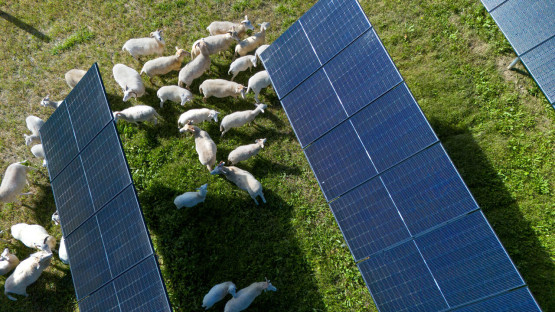
Solar grazing is expanding nationwide, and new research aims to help sheep farmers improve profitability. The work also examines how sheep density in solar array fields affects beneficial insects.
CommentsJiff 1.0: A datetime library for Rust
2026-11-16Jiff 1.0 has launched as a new datetime library for Rust. Readers praised it as another high-quality release from burntsushi and expressed hope that the wider ecosystem will adopt it over chrono and similar libraries. Some predict Jiff will become the default datetime library for many Rust developers and LLMs in the coming years.
CommentsArtificial Intelligence for the Z80
2026-11-16A new guide aims to teach artificial intelligence from scratch using BASIC on 8-bit Z80 computers. It offers a practical walkthrough of algorithms, data, and neural networks, showing how AI concepts can be implemented on retro hardware.
Comments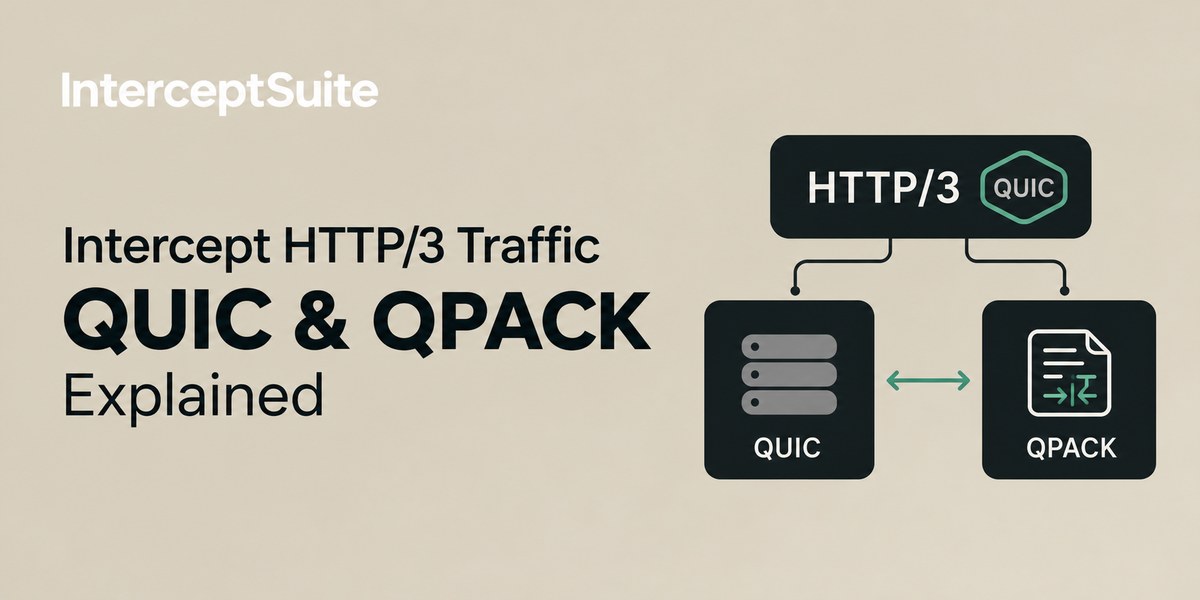
A new guide explains how to intercept and edit HTTP/3 traffic, covering what a proxy can see in QUIC streams and how QPACK obscures headers. It also walks through editing and replaying requests, with techniques tested in a real lab.
CommentsA new GitHub project provides reproducible proofs for the Septopert, described as the smallest possible nopert polyhedron. The tom7/noperts repository invites contributions and aims to make these proofs reproducible.
Comments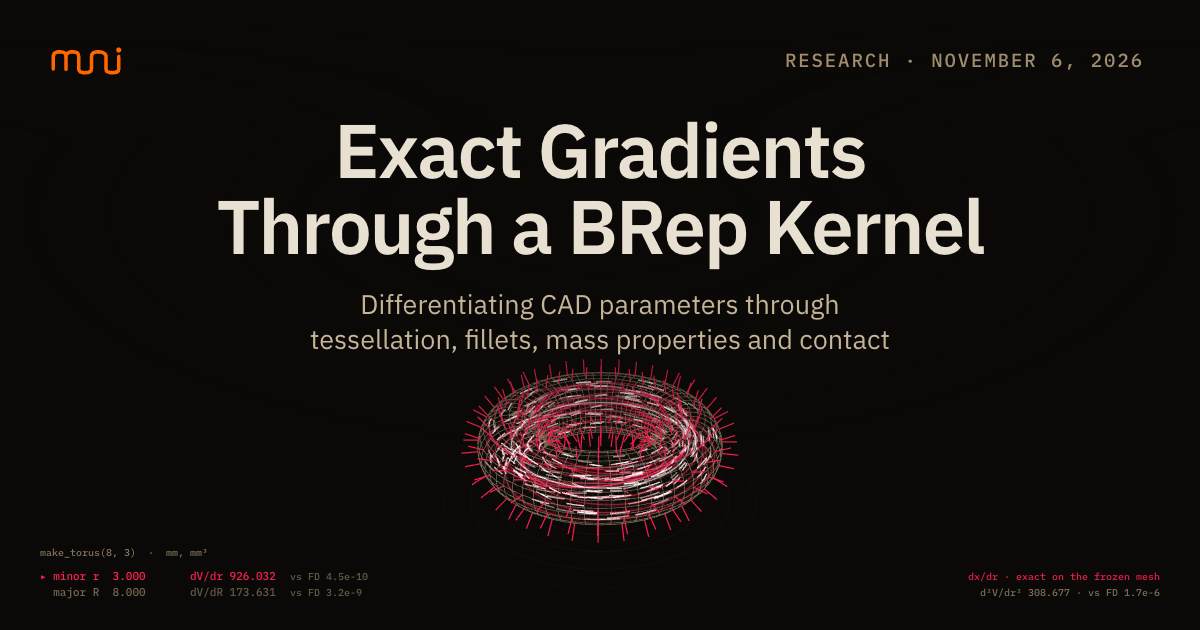
Exact Gradients Through a BRep Kernel
2026-11-16vcad has demonstrated exact gradients of CAD parameters, including fillet radii, through its BRep kernel by freezing the tessellation topology and differentiating node positions. The approach supports second-order derivatives, a transposed pass, and a rigid-body adjoint with contact, and was validated against finite differences of fresh rebuilds. The checks also measured the polygonization gap and uncovered two seam errors.
Comments
ParadeDB is demonstrating how Postgres users can keep normalized schemas while still accelerating search and aggregate joins, using DataFusion, Rank Joins, co-partitioning, and tuple tagging. The approach aims to remove the need to denormalize data just to support fast search workloads.
CommentsFormal Verification Is Not Verifiable
2026-11-16The article questions the promise of formal verification, arguing that verification claims are themselves difficult to verify and often depend on human assumptions, specifications, and tools. A reader discussion invoked Dijkstra’s call to replace “bug” with “error,” emphasizing programmer accountability over the idea that defects sneak in maliciously. The exchange highlights that rigorous software correctness requires clear language and human responsibility as much as formal methods.
Comments
Microsoft attributed a major email outage to a software defect introduced by a July fix. Engineers ultimately had to patch the patch rather than roll back the change to restore service.
Comments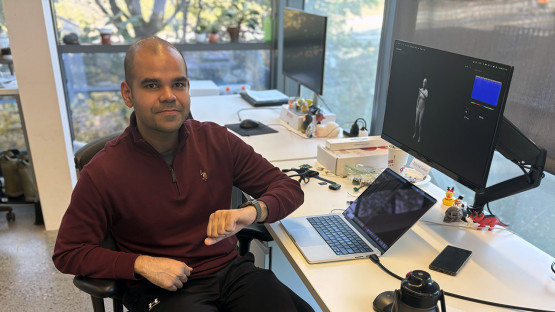
Cornell researchers have developed a smartwatch-based system that uses ultrasonic sound waves and a lightweight AI model to track a person’s whole-body movement. The approach works with off-the-shelf hardware while prioritizing privacy and efficiency.
CommentsThe piece examines the claim that the Apollo Guidance Computer used 60% of integrated circuits in 1963, with discussion focusing on a procurement strategy of buying whatever vendors made as long as it met certain characteristics rather than investing in suppliers. Readers noted this approach helped develop a market and was useful when speed was essential.
Comments
Posting Airdash on Show HN last week led to 17 services emailing the project’s inbox within four days to sell something, and nearly all of the pitches were automated. The author highlights the volume of automated sales outreach triggered by a Show HN launch.
Comments
Cihuatlán’s large-scale artificial wetland is highlighted as a nature-based sanitation approach that uses engineered wetland ecosystems to treat wastewater. The piece frames it against global treatment gaps—Mexico treats only about 40% of its wastewater—and compares it with systems like Kolkata’s vast but declining East Calcutta Wetlands. It also weighs engineered wetlands as biomimicry alternatives to costly conventional sewage plants, raising questions about funding, government will, and sustainable wastewater management.
Comments
The Origins of the Placenta
2026-11-16The placenta’s origins are tied to implantation, the process in which an early embryo attaches to and burrows into the uterine wall. Despite its importance, implantation remains the least understood stage of early human development.
CommentsSutra-OS is a new open-source, self-hosted ontology platform featured on Show HN. It organizes data around scarce, typed, related, and actionable units, with the project available in the 0nelight/sutra-os repository.
Comments
Stop Filming in Log
2026-11-16A veteran colorist argues that videographers should stop filming in log, saying log-encoded clips often create unnecessary challenges and are frequently used as a crutch on set. The piece pushes back on the common internet claim that log equals film, suggesting many shooters adopt log profiles without a real need.
Comments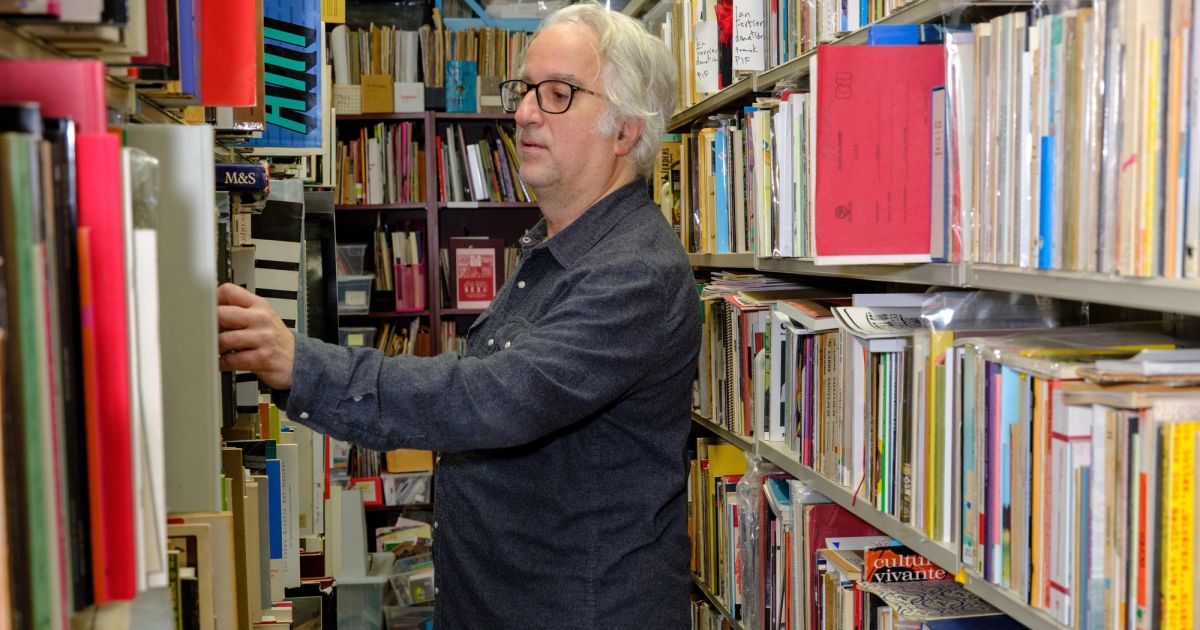
Expozine’s 25th edition turned away nearly 40 percent of applicants, raising questions about whether the independent print scene has outgrown the fair. Meanwhile, ARCMTL’s new online catalogue makes more than 10,000 zines easier to discover.
Comments
Psychic is a new fuzzy finder similar to fzf that learns from your past actions to predict which file you want to open next. It aims to make file selection faster by adapting to your behavior.
CommentsRust Changed Me as a Developer
2026-11-16A developer reflects on how learning Rust reshaped their approach to programming, not just their toolset. The piece explores how Rust’s emphasis on ownership, safety, and explicit error handling changed the way they reason about code and software design. It argues that the language’s constraints can foster clearer thinking and more disciplined development habits.
Comments