AI Tech News Last 24 Hours
Artificial intelligence moves quickly, and this section captures its most recent developments. Coverage includes new model releases, research milestones, AI product launches, startup funding, and the policy debates surrounding the technology. It is a convenient briefing for anyone trying to keep pace with AI's constant stream of news.
A single day can bring a frontier model announcement, benchmark disputes, an enterprise adoption deal, a lab safety controversy, and a nine-figure funding round, and this section aims to catch them all. Coverage spans research labs, chip suppliers, application startups, and the regulators trying to keep up.
No area of technology compresses more change into less time, and staying a day behind in AI can mean missing something genuinely important. Engineers building with these models, executives planning around them, and researchers tracking the field use a rolling AI briefing to keep their bearings.
2026-07-10
The open-source QuadRF is a Raspberry Pi 5-powered phased-array radio that utilizes advanced beamforming to track drones and detect WiFi signals through walls. Functioning as a wireless equivalent to network sniffers like Wireshark, this device highlights the advanced remote surveillance capabilities currently available to both the open-source community and government agencies.
CommentsGood Tools Are Invisible
2026-07-10The author argues that the best software tools should be completely invisible, criticizing the tech community for romanticizing the steep learning curves of programs like Vim as enjoyable puzzles. Ultimately, the piece emphasizes that software should prioritize seamless utility and efficiency to get out of the user's way rather than trying to be entertaining.
Comments
An Indonesian solo developer named Rizky Nova has built a widely praised train simulation game using Unreal Engine on a low-spec machine with just 16GB of RAM. This impressive technical achievement has sparked extensive online discussions regarding how hardware limitations and resource constraints can foster creativity and drive innovative programming.
CommentsAlthough GPT 5.6 Sol Ultra successfully generated a proof for the Cycle Double Cover Conjecture, readers observe that the feat required extensive prompt engineering and explicit strategy guidance rather than independent reasoning. Discussants highlight that current large language models lack true volition, relying heavily on human direction and extended thinking modes to navigate complex mathematical tasks. Ultimately, they emphasize that these systems remain statistical predictors prone to hallucination, resolving complex logic through probability rather than genuine understanding.
CommentsFollowing an early 2025 report on the AI scraper bot scourge, this update examines the evolving tactics used by automated bots to bypass website security. It specifically focuses on the continued exploitation of residential proxies and highlights the ongoing technological arms race between content publishers and sophisticated scraping operations.
CommentsThis 2017 oral history retrospective details the pioneering computer graphics and practical effects technology used to create the film Terminator 2. Through insights from the original crew, the piece highlights how the movie's groundbreaking visual effects permanently altered the trajectory of cinematic technology.
Comments
Scientists have discovered that snail teeth are stronger than spider silk, officially dethroning it as nature's strongest material. This remarkable strength is a practical evolutionary adaptation, as the mollusks use their teeth to excavate solid rocks while feeding.
CommentsA lost city containing an ancient church has been discovered beneath Egypt's desert, providing new insights into the region's pre-Islamic history. The discovery highlights the late fourth to mid-seventh centuries AD, a period when Christianity was the dominant religion and Egypt was a wealthy Roman province. Discussions surrounding the find emphasize how these archaeological revelations challenge modern perceptions of the historical cultural and religious shifts across the Middle East.
CommentsA love letter to flashcards
2026-07-10In a personal reflection, the author highlights the enduring benefits of handcrafted flashcards and spaced repetition for memory retention. The piece explores how these intentional, low-tech study methods foster a deeper, more lasting understanding of complex subjects.
Comments
Apple is experiencing incredible demand for its Mac mini and Mac Studio desktops as they become the preferred machines for running AI agents. Apple silicon executive Doug Brooks highlighted this trend in a recent interview ahead of WWDC 2026, noting the growing reliance on the company's custom chips for on-device AI workloads.
Comments
Successful companies go blind
2026-07-10Drawing a biological analogy to the blind Mexican cavefish, this piece examines how highly successful companies often retain outdated practices long after they become obsolete. Much like the fish keeps vestigial eye genes, these organizations hold onto legacy mindsets that ultimately blind them to new market realities and emerging innovations. This evolutionary hangover prevents once-disruptive businesses from recognizing the need for future adaptation.
Comments
Developers have built a real-time AI tutor designed to teach math and reading to children aged four to nine. Because young learners require immediate feedback and cannot read text interfaces, the team integrated early childhood pedagogy directly into the system's engineering. The article details the key architectural decisions and technical lessons learned from creating a fast and highly accurate educational model for young children.
CommentsWrite code like a human will maintain it
2026-07-10Large language models enable rapid code generation, tempting developers to bypass traditional best practices like the DRY principle. However, because humans ultimately maintain the software, relying on endless AI output creates significant long-term technical debt. Developers must therefore prioritize clean, readable code over the sheer volume of AI generation to ensure future maintainability.
CommentsA retrospective on the history of 3D Realms and Apogee Software has prompted readers to share nostalgic memories of the 1990s shareware era, early game modding, and snail-mail customer support. The discussion also sparked technical debates over the actual adoption rates of mid-90s modem speeds and how bandwidth constraints shaped software distribution. Additionally, commenters criticized the modern iteration of 3D Realms for taking down its legacy website, contradicting the current CEO's stated reverence for the original studio.
CommentsRecent advancements in AI enable the generation of highly optimized videos designed to maximally stimulate specific target brain regions. Readers warn that tech companies could exploit this capability to create surgically targeted, hyper-addictive content. This development raises severe concerns about unprecedented psychological manipulation and the evolution of digital media into perfectly engineered behavioral triggers.
Comments
A new report from the Cambridge Programme on AI Science and Policy examines how the terrorist group Boko Haram is leveraging frontier artificial intelligence. The research highlights an emerging security threat as extremist organizations increasingly gain access to advanced AI tools to enhance their operations.
Comments
While previous research has heavily focused on the negative effects of teen screen time, a new study examines how parental device use impacts the adolescent-caregiver attachment bond. The findings reveal that parents' technology habits can significantly disrupt their relationship with their teenage children, highlighting a critical and previously overlooked gap in psychological research.
CommentsTriple Dragon Fractal (2020)
2026-07-10A recent feature on Paul Bourke's website showcasing the Triple Dragon Fractal sparked discussion among readers, with some praising it as a refreshing non-AI graphic. However, others challenged the originality of the work, pointing out that the underlying mathematical equations and similar visualizations have been explored for decades. Ultimately, the community agreed that Bourke's contribution was a specific rendering and webpage rather than a novel mathematical discovery.
Comments2026-07-09
A developer has introduced Colibri, a lightweight engine that runs the massive 744-billion parameter GLM-5.2 AI model on consumer machines with just 25GB of RAM. Written in pure C with zero dependencies, the project achieves this feat by streaming model experts directly from disk instead of loading them entirely into memory. This innovation dramatically lowers the hardware requirements for running immensely large language models locally.
Comments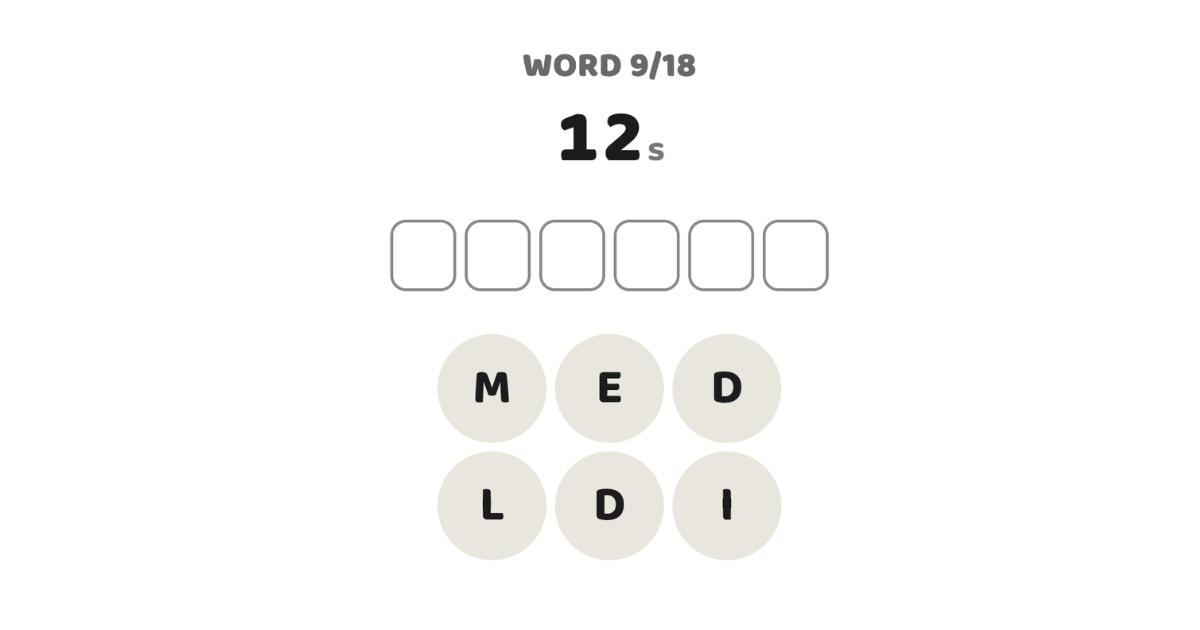
Show HN: 18 Words
2026-07-09A new daily word puzzle game called 18 Words has launched on Hacker News. The fast-paced browser game requires users to unscramble words against a timer, challenging players to correctly solve all 18 daily prompts.
CommentsThe Federal Trade Commission and state attorneys general have secured a right to repair settlement with John Deere. Under the agreement, equipment owners will be allowed to independently fix their own machines without facing corporate restrictions.
CommentsGPT-5.6
2026-07-09OpenAI's developer guide for GPT-5.6 highlights improvements in intent understanding and image processing, emphasizing that shorter prompts now yield better performance and lower costs. Readers discuss the model's reduced default verbosity and compare its output to competitors like Claude, while also debating the technical distinction between context curation and actual machine learning.
CommentsHy3
2026-07-09Simon Willison's recent blog post evaluates AI image generation using his pelican test, prompting readers to question the benchmark's validity as models may be over-trained on his specific SVG examples. The community discussion also reflects on the broader impact of AI on software development, with some developers expressing a preference for hand-coding despite the industry's rapid shifts. Additionally, readers debated the current capabilities of local models, noting that Gemma4 and Deepseek 4 currently outperform GPT-OSS for coding tasks.
Comments
The United States Army's logistics network, optimized over the last two decades for uncontested environments and static bases, has become a critical vulnerability in modern warfare. As the military shifts toward large-scale multidomain combat, this fragile and efficiency-driven supply chain must now prioritize resilience to avoid collapsing in future conflicts.
CommentsA leap second will not be introduced at the end of December 2026 because Earth's rotational speed remains highly unpredictable due to environmental factors, geological activity, and human water management. Because maintaining highly accurate predictive models for satellites and other systems is increasingly difficult, the international community has agreed to completely phase out the practice of adding leap seconds by 2035.
Comments
Muse Spark 1.1
2026-07-09Meta is facing criticism over the benchmark performance of its new Muse Spark 1.1 model after it was discovered that evaluations exceeded strict CPU and RAM limits. Critics argue that overriding these resource constraints on the Terminal-bench-2.1 leaderboard invalidates the results and fails to measure real-world agent behavior. However, some defenders downplay the controversy, suggesting that relaxing limits is common industry practice aimed at preventing task timeouts rather than outright cheating.
CommentsA recent interview with Mitchell Hashimoto explores his pragmatic engineering decisions behind the Ghostty terminal emulator and his use of the Zig programming language. The ensuing discussion highlights his stance on open-source forking, where he argues that maintaining a custom fork to remove unwanted features is comparable in effort to maintaining a feature flag. This perspective sparked broader debates among readers regarding the synchronization burdens of forks, the open source project as a product mentality, and the potential for AI to automate downstream customizations.
Comments
A road to Lisp: Why Lisp
2026-07-09This article explores the enduring appeal and unique advantages of the Lisp programming language for modern software development. It highlights Lisp's powerful macro system, code-as-data philosophy, and significant historical influence on contemporary functional programming paradigms. Ultimately, the piece serves as a comprehensive guide for developers looking to understand why Lisp remains a highly respected and influential language today.
Comments
A possible future for Damn Interesting
2026-07-09The popular long-form storytelling website Damn Interesting has unveiled a strategic plan to ensure its long-term survival and financial sustainability. The announcement outlines the platform's future direction, though the author self-deprecatingly notes the post contains an awkward abundance of moist metaphors.
CommentsA recent article proposing a fast MPMC queue was corrected to clarify that its bounded waiting structure is not actually wait-free, sparking community discussions about the inherent trade-offs in concurrent queue design. Participants emphasized that developers must carefully weigh compromises between bounded memory, global FIFO ordering, and non-blocking behavior to select the data structure that best fits their specific system requirements.
Comments