AI Tech News December 13 2025
SubmitArtificial intelligence produces a constant flow of announcements, and some days stand out more than others. This section gathers AI news in the format of a dated briefing, focused on the stories around December 13, 2025.
Typical stories include new model launches and benchmark comparisons, AI features in popular products, research papers, partnerships between AI labs and cloud providers, and debates about safety and regulation.
A dated view of AI news shows how fast the field moves from one month to the next. Developers, researchers, investors, and business leaders use it to put new announcements into context.
2026-11-03

Revolut moves to self-hosted GLM
2026-11-03Revolut has moved roughly 2,000 engineers onto self-hosted GLM for coding, making Claude Code and Codex exceptions rather than defaults. According to AI ops lead David Abitbol, the setup uses 56 Nvidia B200s at a blended 30 cents per million tokens—about a tenth of what Revolut previously paid Anthropic and OpenAI.
CommentsA reported issue alleges that Postman silently auto-installs AI plugins and attempts to share all API data, raising privacy and security concerns. Users described unexpected changes to their coding agents after opening Postman on macOS. The report has been filed in the issue tracker, where duplicate submissions are expected to be closed.
Comments
A new paper argues that LLMs can natively read and write neural network weights, enabling “weight-space programming.” The news piece reports that Qwen 3.8 27B running on a laptop can also interpret model weights, suggesting the capability may be accessible on local hardware.
Comments
Fujifilm plans to increase its magnetic tape production fivefold to meet growing archiving demand driven by AI. Magnetic tape remains attractive for archival storage because it is low-cost and offers offline security.
Comments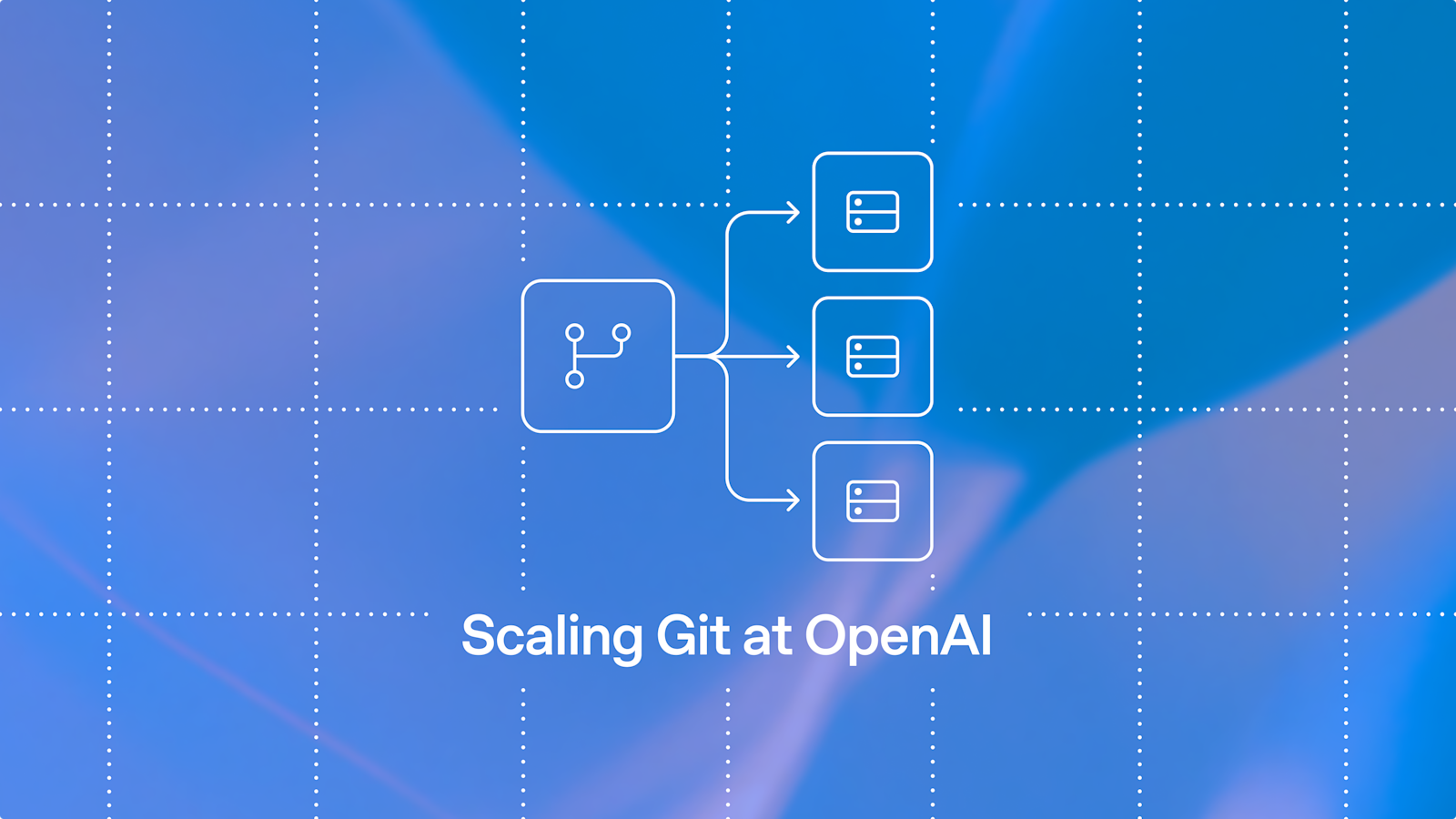
Scaling Git at OpenAI
2026-11-03OpenAI has built Pando, a Git-compatible backend designed to handle the development scale made possible by its Codex coding tools. The system aims to overcome Git’s scaling limits as AI-assisted coding increases repository activity and development throughput.
Comments
Google is giving schools more ways to restrict student access to its A.I. tools. However, schools that block A.I. entirely will lose student access to Google’s search engine.
CommentsGitbook Breached
2026-11-03GitBook’s CTO confirmed the company has been dealing with a security attack since yesterday, taking a large portion of services offline to protect users and progressively restoring them while monitoring the situation. The company is keeping users updated via email, Slack, and its status page, and discussion praised its outreach and decision to rotate tokens itself. Some readers also questioned GitBook’s claim that the attack involved AI agents, asking what evidence distinguishes it from human activity.
CommentsQuili AI
2026-11-03Quili AI is a playful human-powered alternative to AI chatbots that has sparked debate over relative water use, with commenters estimating a person answering an average 11-minute chat may consume roughly four times the water of an AI interaction. Others caution the comparison depends on electricity use and how water re-enters the cycle, and some criticize the project’s claims as overly propagandistic while pointing to Chile’s broader water crisis.
Comments
Resisting Cognitive Surrender
2026-11-03A discussion of “Resisting Cognitive Surrender” warns that relying on LLM-generated code and content can erode human understanding, turn review into rubber-stamping, and degrade codebases over time. Commenters support scaffolding and review workflows but argue that unchecked adoption risks persistent dependence and lost cognitive competence, making continued investment in human capability and control essential.
CommentsWorkOS reports security breach
2026-11-03WorkOS says a security incident was isolated to its internal go-to-market systems and that no customer platform data was accessed. The CEO said the attack involved ARTEX, an autonomous AI agent framework used for offensive security operations, and that the incident has been contained with independent experts investigating. Customers seeking more details can contact WorkOS’s security team.
CommentsMuvon has released Octomind, an open-source AI coding agent and runtime built as a single static Rust binary. It is model-agnostic and MCP-native, aims to save tokens, and can run in the terminal, CI, or as a daemon.
CommentsAntimony, a code-based CAD tool rooted in Lisp-machine ideas rather than drafting-table workflows, has seen maintenance taper since around 2016, though a more actively maintained fork called Stibium is now available. Discussion around the piece highlights renewed momentum in code CAD and AI-driven CAD projects, citing OpenSCAD’s long-awaited release candidate, PythonSCAD, CADquery, Build123D, and Halfspace. Commenters debated the practicality of code-based parametric CAD while noting desired features like SolveSpace-style 2D sketching and fillets/bevels.
Comments
I use AI (Oct 2026)
2026-11-03A year after their first writeup, the author revisits how they use AI and finds their workflow and tools have changed entirely. The piece documents the stark contrast between their earlier practices and their current approach.
CommentsA new Show HN project offers interactive, one-page explainers on core LLM topics including RLHF, attention, LoRA, and LLM evaluations. The notes aim to make computer science and engineering concepts more approachable through hands-on explanations.
Comments
Flipper One is an open Linux computer powered by an ARM processor with an offline AI NPU, Wi-Fi 6E, and Gigabit Ethernet. It supports M.2 expansion for 5G modems, SDR radios, and more, as the company prepares a Kickstarter and opens pre-orders.
Comments
PsiQuantum has unveiled Optical Circuit Switching technology built on its low-loss silicon photonics platform. The company says the approach can help address major scaling challenges facing AI infrastructure.
Comments
The piece outlines ten harness patterns for applying AI testing to real repositories, emphasizing how AI testing differs from traditional software testing. It highlights golden sets, RAG and agent evaluation, and monitoring as key practices for building reliable production AI systems.
CommentsNvidia – open-source auto-ontology
2026-11-03NVIDIA has open-sourced Auto Ontology, a Python framework for building semantic, graph-based reasoning layers over data. It supports deterministic query generation, improved context retrieval, and more explainable AI for LLM and agent workflows.
Comments2026-11-02
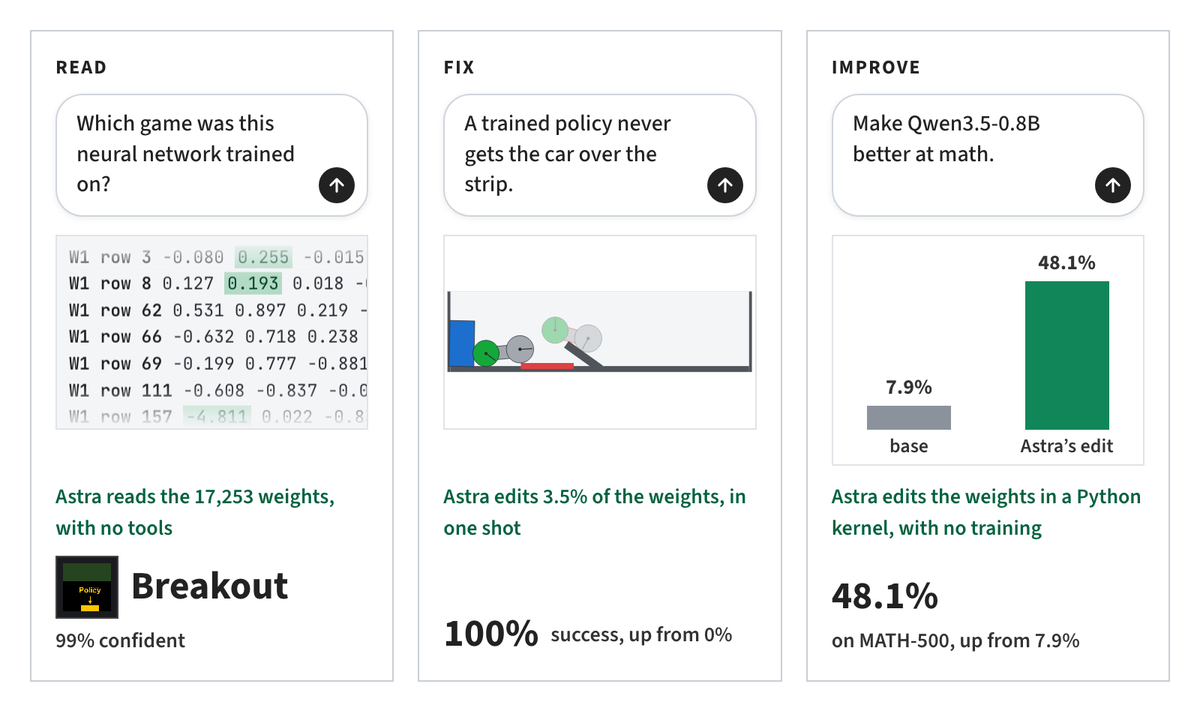
Astra can natively read and write neural network weights to improve Qwen. The work finds frontier LLMs are surprisingly capable at manipulating weights directly, exceeding expectations for humans or conventional algorithms.
CommentsThe reported figure that Anthropic’s internal AI use at retail prices exceeds its employee pay is being framed in discussion as a valuation/opportunity-cost measure, not actual cash spending—scarce compute is counted at API list prices rather than what it costs Anthropic. Commenters note the implied ~$300K per employee is based on those list prices and debate whether the spend reflects wasteful usage or justified R&D and productivity investment amid supply constraints and falling costs.
Comments
An Apollo economist says artificial intelligence has delivered “zero financial payoff” to most companies outside the tech sector, despite massive investment and widespread hype. The assessment challenges claims that AI is broadly boosting corporate America’s finances.
Comments
Anthropic’s revised S-1 reports $17 billion in third-quarter revenue and $895 billion in commitments, updating its initial prospectus that only included financials through the first half of the year. The filing provides a more complete view of the AI company’s finances.
Comments
Momentic, a YC W24 startup, has launched Mo, an AI QA engineer that finds bugs in web, iOS, and Android apps and provides reproduction steps. It also turns its test runs into regression tests that run on every pull request.
CommentsPostgres 19 is late, and it's AI's fault
2026-11-02PostgreSQL 19 is missing its historically predictable mid-September release window, and the delay is being blamed on AI. The slip breaks a decade-long pattern of major releases arriving no earlier than the middle of September.
Comments
AI-powered fan wikis are spreading inaccurate or irrelevant information across games culture, often sidelining the fans who traditionally maintain reliable resources. As these LLM-generated wikis gain prominence, publishers are left playing whack-a-mole to correct errors and stem the confusion.
Comments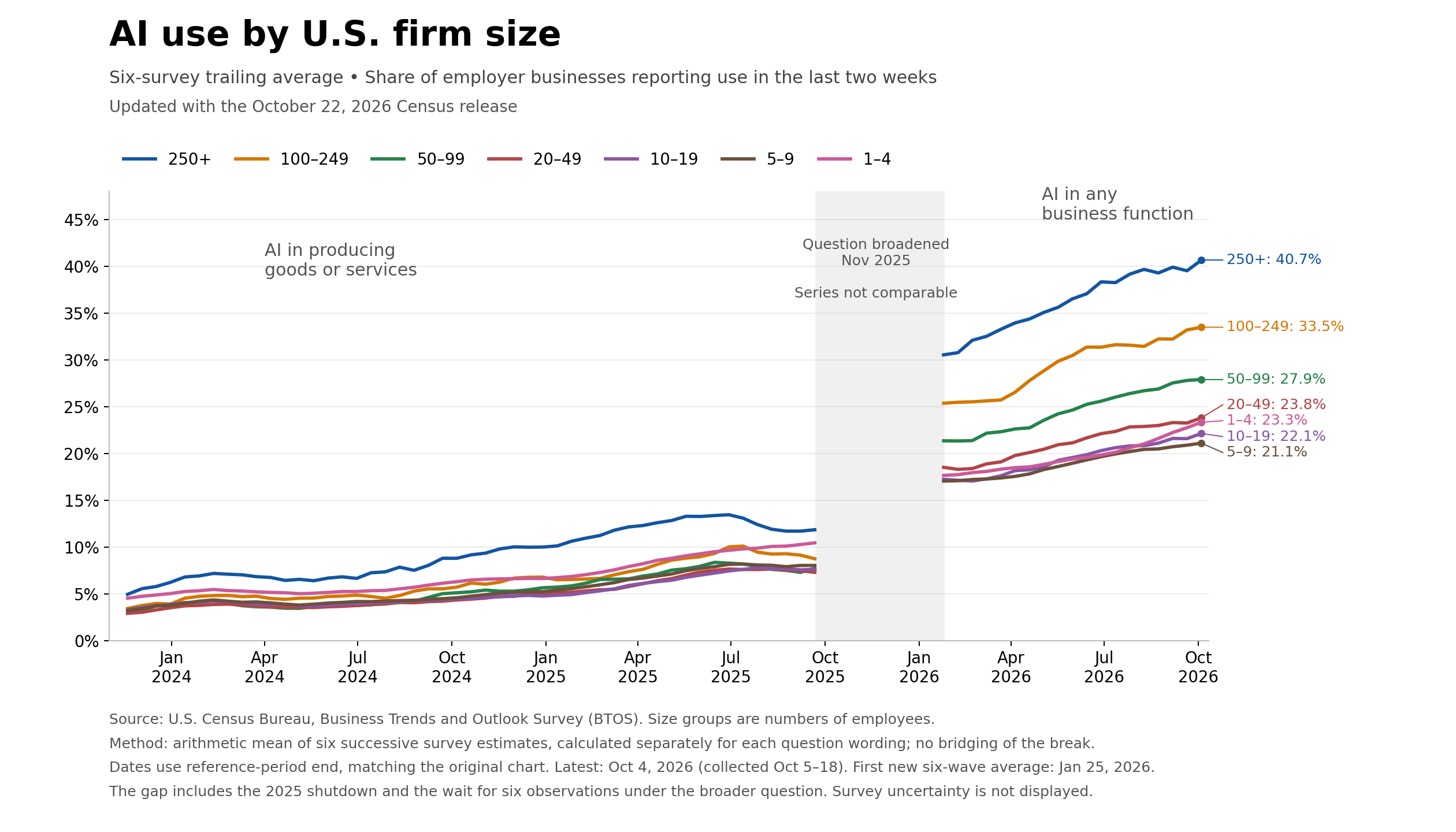
The piece ties U.S. Census Bureau data on AI adoption to the debate over “super intelligence,” recalling an Apollo Global Management chart from September 2025 that showed AI adoption rates trending down at large companies. It suggests that slowing enterprise uptake complicates hype about imminent superintelligent AI.
Comments
A newly posted arXiv paper (2610.37741), “Agentic Backdoors via Pretraining Poisoning,” examines how backdoors could be implanted in AI agent systems by poisoning pretraining data. The title alone signals a focus on attacks that surface only once a model is deployed as an autonomous agent, adding to growing concerns about data-integrity and supply-chain risks in foundation model training.
CommentsAsk HN: Who is hiring? (November 2026)
2026-11-02The November 2026 Ask HN hiring thread features companies posting full-time engineering and sales roles across Amsterdam, Skopje, Colorado, Toronto, London, New York, San Francisco, Zurich, and remote locations. Stream is hiring backend and infrastructure engineers plus a Staff Engineer for its Video team with EU remote and Netherlands visa sponsorship, while Namespace, Juro, Equall, and Mastra also list infrastructure, AI engineering, backend, and founding sales openings.
CommentsWir müssen wissen – wir werden wissen
2026-11-02A blog post invoking Hilbert’s “We must know—we will know” argues that software developers should keep raising abstraction levels, refactoring and adopting higher-level languages until code can be held in one’s head. Readers debate where that level lies, especially with AI-generated code, warning that vague prompts are not specifications and that agents may silently fill underspecified behavior with plausible but inconsistent output. They suggest formal specifications and verification may become essential as AI accelerates coding without replacing the need to understand and check the result.
Comments
LongCat-2.5 is a 1.6-trillion-parameter model designed for agentic tasks with native multimodality. Its training was completed entirely on domestic Chinese chips.
Comments