AI Tech News December 13 2025
Artificial intelligence produces a constant flow of announcements, and some days stand out more than others. This section gathers AI news in the format of a dated briefing, focused on the stories around December 13, 2025.
Typical stories include new model launches and benchmark comparisons, AI features in popular products, research papers, partnerships between AI labs and cloud providers, and debates about safety and regulation.
A dated view of AI news shows how fast the field moves from one month to the next. Developers, researchers, investors, and business leaders use it to put new announcements into context.
2026-09-30
Livenerf: Has Opus 5.5 been nerfed yet?
2026-09-30A new benchmarking tool called Livenerf has been launched to track post-release performance changes in artificial intelligence models. The project specifically aims to determine if the Opus 5.5 model has been nerfed or downgraded in capability since its initial release. By providing continuous monitoring, Livenerf allows the developer community to verify that deployed AI systems maintain their original performance levels over time.
CommentsAmerica.gov
2026-09-30Readers discussing the new America.gov website criticized its user interface design and browser compatibility, while also noting that its published labor statistics contradict the administration's optimistic projections regarding AI-driven job growth. The site's integration of an AI chatbot to help citizens navigate government services sparked further debate over the risks of relying on potentially flawed LLM outputs for authoritative information versus the benefits of simplifying complex bureaucratic processes.
Comments

GPT-6.1 Sol is a new AI model delivering near-Astra level intelligence for coding, computer use, and professional tasks. It provides these advanced capabilities at a significantly reduced cost, priced at just one-fifth of Astra's standard API input and output token rates.
Comments
NAND-16 is an interactive browser-based project that simulates a fully functional 16-bit computer constructed entirely from 277,248 NAND gates. It successfully runs a complete CPU, memory, operating system, and even Tetris directly in your web browser. Additionally, users can zoom in on the simulation to visually track the flow of data signals through the virtual hardware.
CommentsPostHog has introduced Jeeves, a new project demonstrating that integrating reasoning capabilities significantly enhances Jev-like decision models. This open-source initiative highlights how advanced reasoning techniques can be leveraged to improve complex decision-making processes in AI systems.
Comments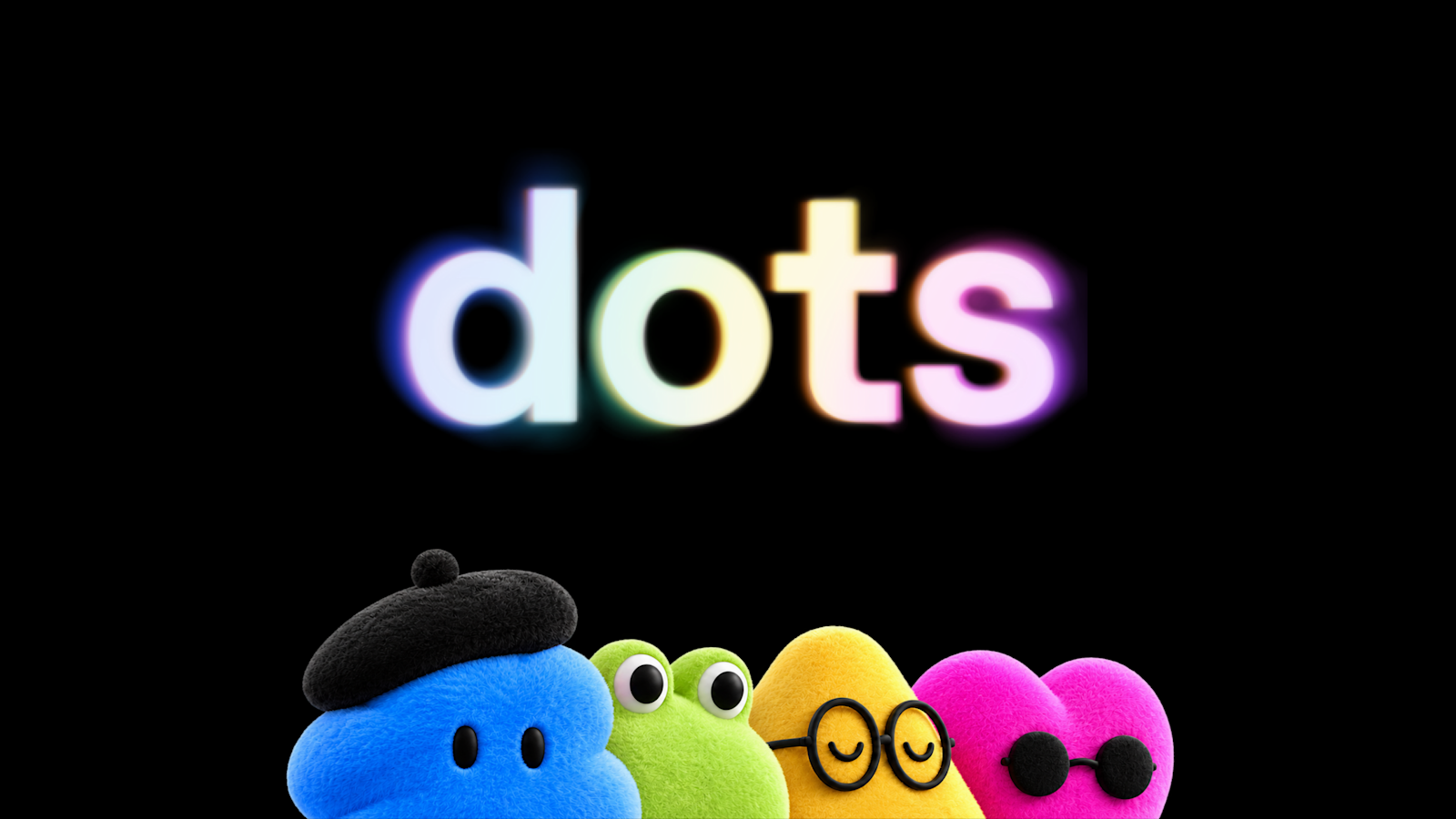
Dots: Always-on agents
2026-09-30OpenAI has introduced Dots, a new suite of always-on AI agents designed to proactively manage both complex projects and everyday tasks. These autonomous assistants operate continuously in the background, enabling users to maintain oversight and control while the work progresses.
Comments
The author of a recent article explains how using AI coding agents to build a website produced a polished result that looks like it was crafted by a dedicated designer. This vibe coding experience has unexpectedly sparked a deeper personal interest in web design and visual aesthetics.
Comments2026-09-29
MicroLLM Lab is a new platform powered by WebGPU that allows users to run seven small language models entirely within their web browser. The tool enables on-device chatting, benchmarking, and comparing of compact models like PetitGPT and SmolLM2 without relying on cloud infrastructure.
CommentsTank Body Problem
2026-09-29A developer has launched a browser-based artillery game inspired by the classic Scorched Earth, featuring a circular world with orbital dynamics and AI-assisted coding. Following community feedback, the creator is fixing a major movement exploit that previously allowed players to drive up and attack point-blank. The developer is also working on adding a single-player version and a leaderboard to the project.
CommentsDevelopers have successfully deployed a 0.4 billion parameter language model on a seven-node ESP32-S3 microcontroller cluster. The system utilizes 1.58-bit BitNet ternary quantization and an SPI daisy-chain architecture to efficiently run the AI model across distributed, low-power edge devices.
Comments
World Labs Is Joining AMD
2026-09-29World Labs is joining AMD in a strategic move aimed at accelerating the future of artificial intelligence research and computing. This collaboration will combine innovative AI research with advanced compute capabilities to drive significant technological advancements.
Comments
It's Time to Investigate the AI Labs
2026-09-29The two leading frontier AI labs have recently exhibited increasingly brazen behavior, starting with a series of strategic public announcements. This trend has prompted growing calls for official investigations into the operations and practices of these top artificial intelligence companies.
Comments
Nvidia is developing a dedicated watchdog chip and software to monitor and secure AI agents in real time. The company claims this new technology could have prevented the recent security incident involving OpenAI and Hugging Face.
Comments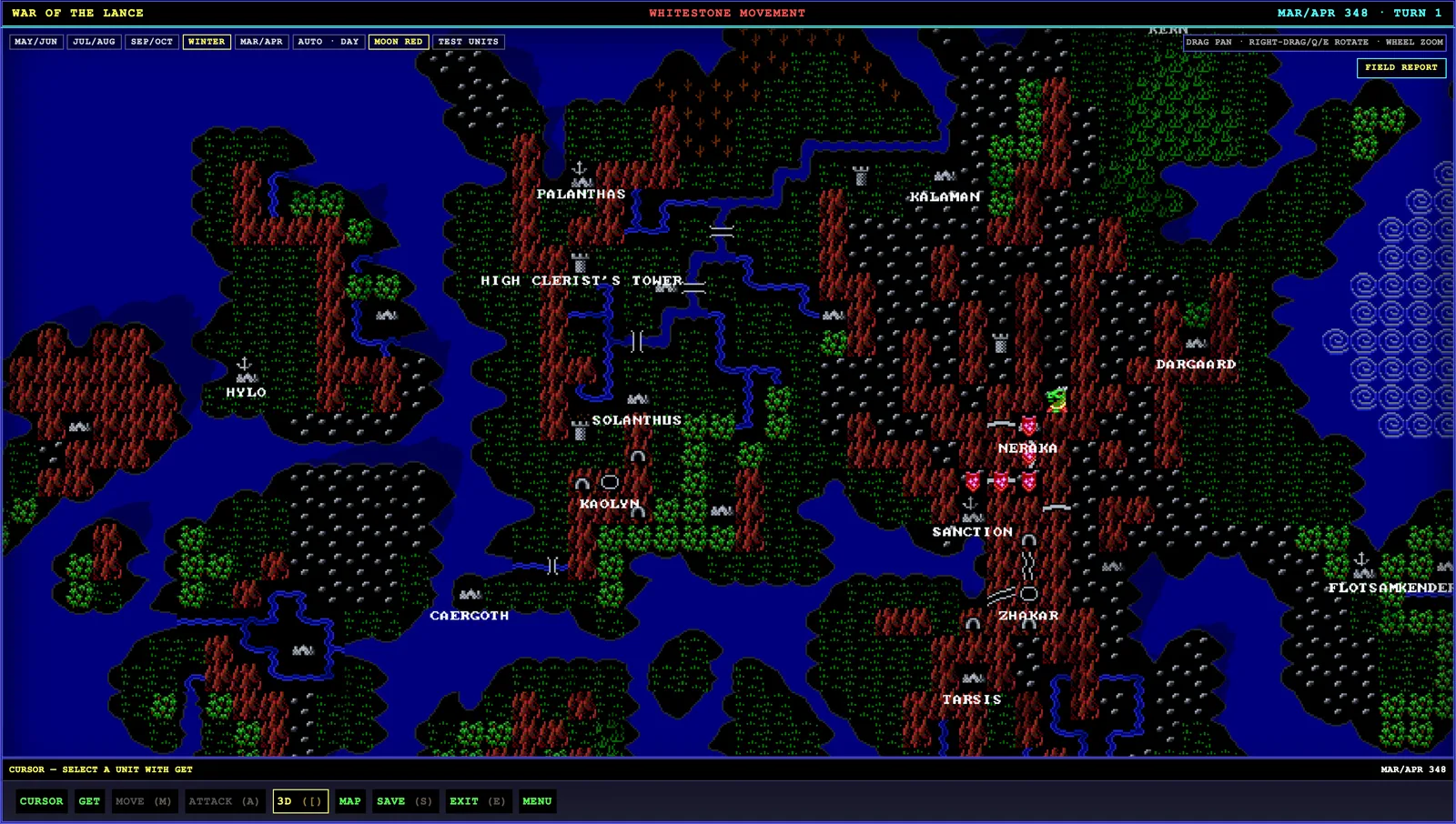
A developer is using the Qwen-3 AI model to reverse engineer and modernize the 1989 video game War of the Lance as a case study for the technology's broader economic impact. The project highlights how AI tools can significantly alter the cost, efficiency, and feasibility of updating legacy software codebases.
Comments
Coding is not solved
2026-09-29A new essay challenges the narrative that AI has solved software development, arguing that code is merely a byproduct of achieving conceptual clarity. The author warns that offloading comprehension to AI strips developers of true ownership and will inevitably cause a collapse in software pricing. However, the piece concedes that bypassing code comprehension remains justifiable for proof-of-concept projects, personal applications, and cyber attacks.
Comments2026-09-28
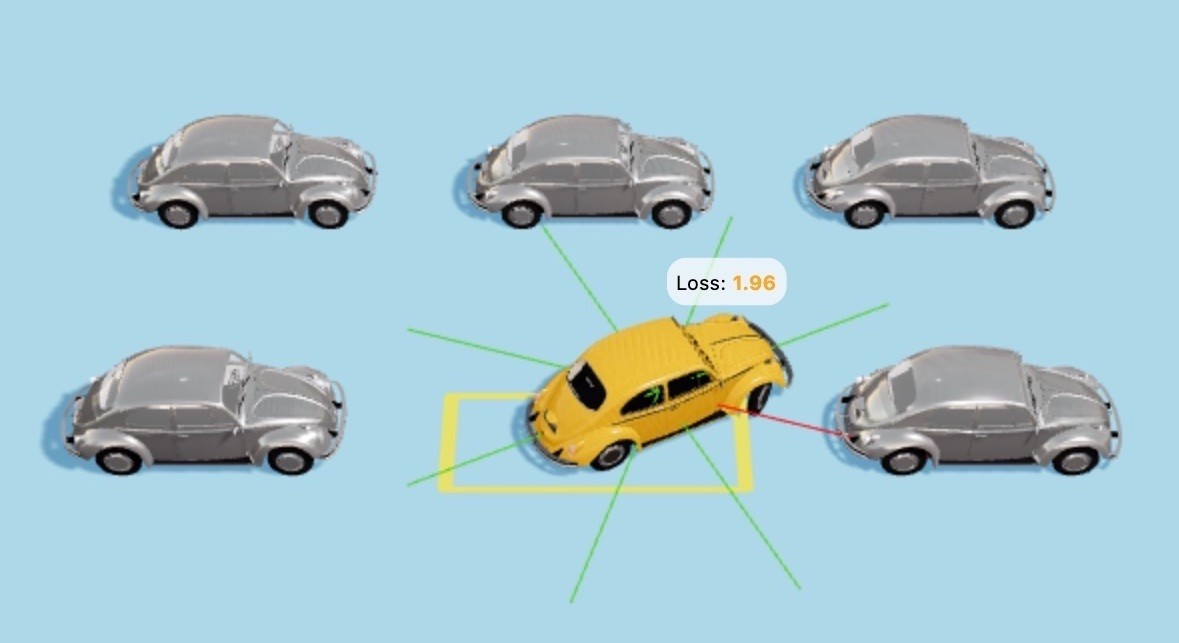
A 2021 technical demonstration showcases a vehicle successfully trained to self-park using a genetic algorithm. By leveraging evolutionary computing instead of traditional programming, the car autonomously learns to navigate and park, highlighting innovative machine learning applications in autonomous driving.
Comments
Ember-1
2026-09-28Fireworks Research has unveiled Ember-1, a new specialized model that matches the output quality of Kimi K3 while consuming 40% fewer tokens. This significant reduction in token usage offers developers a much more efficient and cost-effective solution for their applications.
CommentsA recent article and subsequent reader discussion emphasize that human code review serves a broader purpose than mere bug detection, functioning primarily as a tool for team collaboration, architectural defense, and shared system comprehension. While some engineers argue that manual reviews will become a bottleneck in the era of AI-generated code, others defend the practice as essential for liability shielding, validating test coverage, and evaluating overall deployment strategies. Ultimately, the debate highlights that effective code review is about assessing the broader problem-solving approach and team alignment rather than just scrutinizing the code itself.
CommentsLunar Terminator Paradox
2026-09-28Readers are debating a recent article about the Lunar Terminator Paradox, criticizing the author's ambiguous terminology and noting that the perceived visual illusion is simply a result of projecting three-dimensional celestial geometry onto a two-dimensional sky. To resolve the confusion, readers highlight that the author developed a custom software simulator to visualize the phenomenon after AI models consistently failed to explain it correctly.
CommentsAs AI increases efficiency in the legal sector, clients are demanding lower prices instead of allowing firms to retain the savings from automated work. Meanwhile, reader discussions contrast this with the healthcare industry, where AI is frequently being used to upcode billing and charge patients extra out-of-pocket fees, raising concerns that technological advancements will simply create new ways for professionals to increase profit margins rather than reduce consumer costs.
CommentsImp is a full port of DSPy to the BEAM
2026-09-28The newly released Imp project is a full port of the DSPy framework to the BEAM virtual machine, bringing programmatic language model development to Elixir. It enables developers to build declarative, self-improving AI applications by combining DSPy's optimization capabilities with the robust concurrency of the Elixir ecosystem.
Comments
Researchers at Duke University's General Robotics Lab have developed the Cartesian Hand, a novel robotic device featuring all-linear fingers designed to enhance in-hand manipulation capabilities. This innovation supports the lab's broader research initiatives in embodied intelligence, artificial intelligence, and advanced robotics.
Comments2026-09-27

DeepSeek Elastic Compute (DSec)
2026-09-27DeepSeek has introduced DSec, a novel elastic compute sandbox infrastructure detailed in a recent arXiv paper to enable effective agentic AI training at scale. This system provides isolated and scalable environments that optimize resource allocation to overcome computational bottlenecks in developing complex autonomous agents.
Comments
GLM-5.3-Flash has been adapted into a Jev-like decision model that generates typed decisions with probabilities in a single forward pass. This new approach matches Jev's accuracy while offering faster European response times and enhanced security through confidential computing. The release also includes an interactive playground and comprehensive benchmark results evaluated across 29 datasets.
CommentsThe rise of AI-driven code generation is prompting a fundamental reevaluation of how programming languages are designed. As machines become the primary writers of code, future languages will likely evolve to prioritize machine efficiency and optimization over human readability. This transition will ultimately reshape the entire landscape of software development.
CommentsDrawgent is a next-generation social coding platform that integrates an AI coding agent directly onto a live Excalidraw canvas. This tool enables developers to collaboratively build and visualize software projects in real-time by seamlessly merging visual whiteboarding with automated code generation.
CommentsA new technique enables the generation of custom fonts where every large language model token is rendered at the exact same visual width. This ensures uniform text alignment and spacing in AI outputs, offering improved visual consistency for user interfaces and data visualizations.
Comments
After artificial intelligence proved capable of completing all course homework, an educator was forced to completely overhaul their teaching methods to maintain academic integrity. The instructor abandoned traditional pedagogical practices in favor of oral and written exams, highlighting the significant adjustments required in higher education to adapt to rapidly advancing AI tools.
CommentsReaders discussing an article about modifying programming languages criticized the recurring trend of dismissing fundamental concepts just because LLMs can process them faster. However, the discussion highlights that the fear of language macros is largely overblown. While macro abuse can occur, features like the core.async library in Clojure show that macros often improve code readability and understanding when used properly.
Comments
This article explores strategies for software developers to maintain their passion for coding amid the rapid rise of large language models. It addresses common industry anxieties, including AI burnout, job displacement by less skilled programmers, and frustrations over declining code quality. Ultimately, the piece offers guidance on how to uphold high engineering standards and find fulfillment in an increasingly AI-driven landscape.
Comments