AI Tech Developments News Past 24 Hours
SubmitArtificial intelligence moves fast, and this section is built to keep pace. It collects recent news on model releases, research advances, AI products, and the companies and labs pushing the field forward. Whether you follow AI professionally or out of curiosity, this is a quick way to stay current.
The stream typically includes new model announcements and benchmark claims, research papers that shift what practitioners consider possible, funding for AI startups, and the steady rollout of AI features into everyday software. Debates over safety, evaluation, and the cost of compute weave through much of it.
Staying current matters because capabilities that seemed distant can become products within months, changing what teams should build and buy. Engineers, product managers, researchers, and executives making AI decisions rely on a rolling digest like this to avoid planning around yesterday's assumptions.
2026-10-31

A user alleges that Anthropic flagged them for “training a competitor” and now blocks any activity involving RFT, SFT, or training larger models. The user says they never distilled Claude—using it only to submit jobs and analyze rollouts from an open-source model—and reports an Opus 5.5 downgrade as a result.
Comments
Cisco has given 27-year-old engineer Paddy unlimited AI tokens and told him to “go nuts” as part of an effort to rewrite legacy code. The company president reportedly calls him an “energizer bunny,” underscoring the unusual experiment.
Comments

We Took over ChatGPT Accounts
2026-10-31Researchers claim they could take over any ChatGPT account by sending a malicious link that bypassed the platform’s sandbox and content security policy. The finding highlights serious account-security risks in AI chatbot integrations.
CommentsA new Rust library, cfsolve, claims to solve Cloudflare Turnstile and challenge pages through request-based reverse engineering without needing a headless browser. The project is hosted on GitHub under chris124567/cfsolve.
CommentsTell HN: Scribd Breached
2026-10-31Scribd has disclosed a breach in which an unauthorized third party may have accessed user email addresses and limited payment details, including the last four digits of credit cards, card issuer, expiry date, and country. Commenters criticized the company for not notifying all affected customers at once and debated broader cybersecurity issues such as AI-assisted vulnerability discovery and access to security tools.
Comments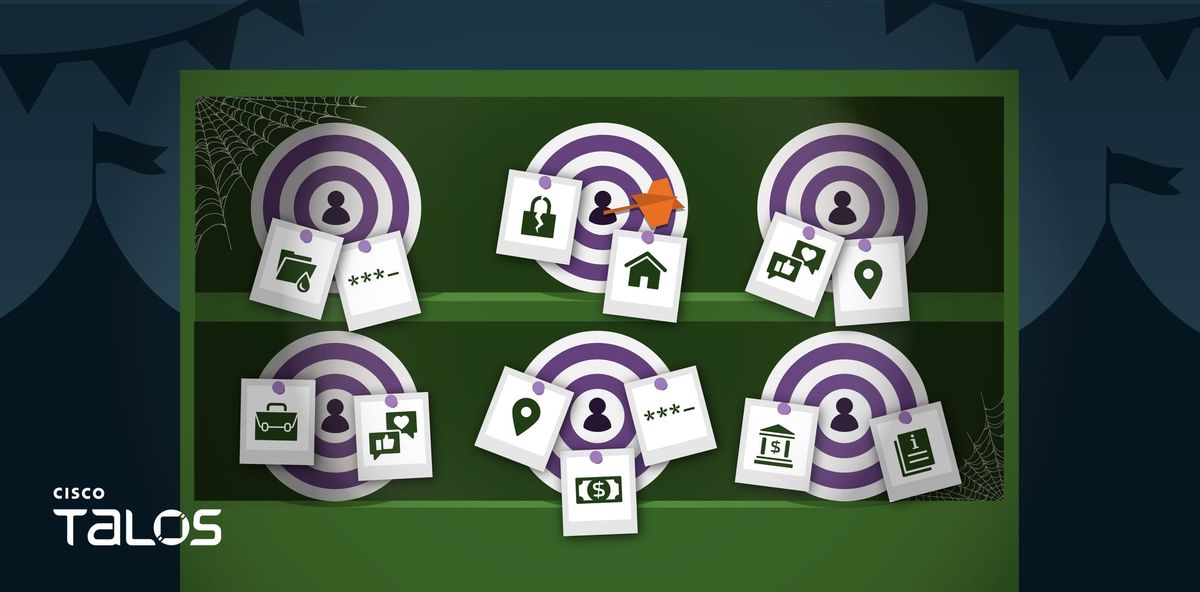
A self-deleting infostealer called VOLTA steals credentials, session data, and cryptocurrency wallets, then uses LLMs to profile victims and rank their most valuable assets. The malware’s LLM-driven prioritization could help attackers focus on the highest-value data or accounts more efficiently.
CommentsSerbia’s election has produced a parliament shaped by a student-led list movement, bringing a diverse group of new politicians into office without a traditional party leader or figurehead. Observers are watching how government formation and institutions will be run without an established party membership pool to draw from. The experiment’s success will depend on whether these newcomers can combine expertise with political skills such as consensus-building and compromise.
CommentsSwitch Lowering in GCC
2026-10-31A discussion around GCC’s switch-lowering work highlights frustration that GCC and Clang still lack perfect hashes for large sparse switch tables; one commenter says they implemented this in their rcc C compiler in a day, especially useful for Unicode. Commenters note an LLVM patch was rejected a decade ago and GCC’s Unicode-related patches remain in branches, while also debating jump-table indirection and missed switch simplifications.
Comments
Digital Minimalism
2026-10-31Readers criticized the “digital minimalism” framing, describing the discussed approach as a dashboard or multi-client for social platforms like X, Bluesky, Farcaster, and Lens rather than true minimalism. The discussion also covered airplane-mode phone setups, app and browser blocking, RSS-style aggregation, and concerns that using AI—especially as a substitute for human interaction—may not reduce digital overload so much as replace one vice with another.
CommentsReaders debated a study on generative AI and critical thinking, with some arguing that quick AI answers let people skip the productive struggle of learning and offload oversight, while others questioned whether the study really measured critical thinking rather than independent verification and noted it didn’t assess correctness. Many worried that outsourcing thinking could erode a valuable skill, though some said AI has actually pushed them to think more critically about output.
CommentsA Show HN project offers a Star Trek: The Next Generation episode-guessing game made to honor Sir Patrick Stewart. Readers praise the tribute but find it too difficult, with even longtime TNG fans missing questions and suggesting multiple-choice answers, while noting the full-text search helps identify episodes by plot. Discussion also touches on how screenshots were sourced and ideas for other Stewart-themed games.
Comments
A former Meta researcher testified that he downloaded an AI training dataset containing the pirated Books3 collection via BitTorrent. He said he deleted the data due to litigation.
Comments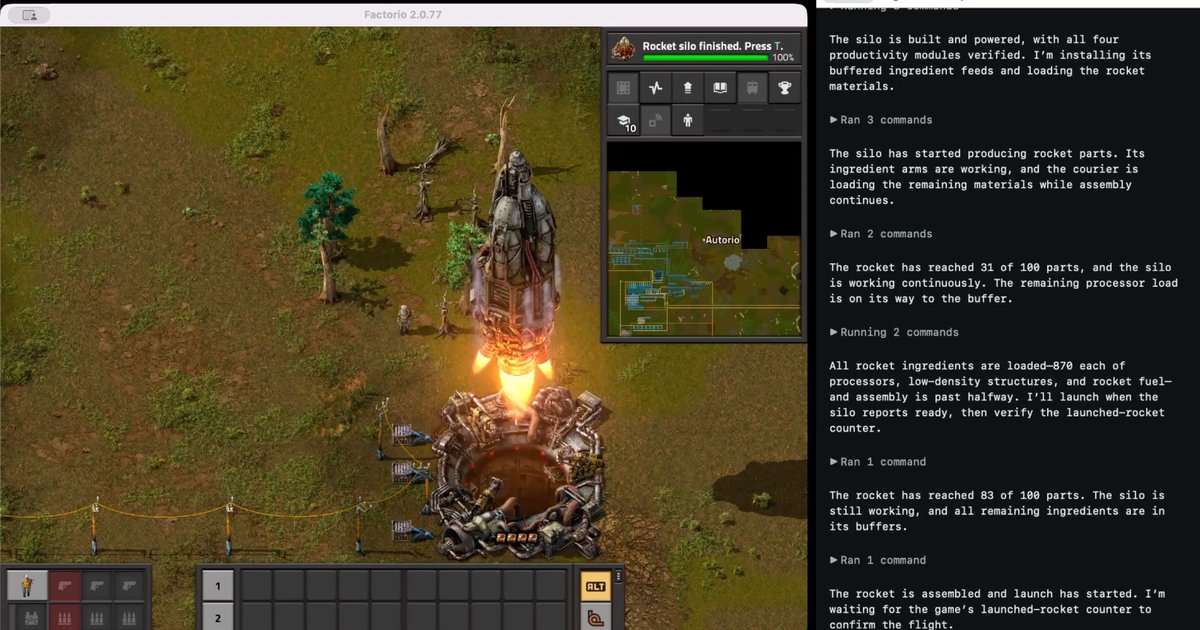
GPT-5.6 Sol, running in Codex, has reportedly beaten Factorio on peaceful mode, following earlier efforts with Claude Code and autonomous Factorio agents. The result highlights ongoing progress in testing AI agents on complex, long-horizon game environments.
Comments
OpenAI has raised less than half of its $30 billion funding target. The ChatGPT maker’s latest round values it at $1.25 trillion, below its $1.4 trillion goal.
CommentsShiny Object Syndrome
2026-10-31Readers dismissed “Shiny Object Syndrome” as a rebranding of novelty bias, trading analogies about toddlers chasing soccer balls and dogs with balls while debating the term’s origins. The discussion also noted that AI has lowered the effort barrier to creating new features and libraries, making it harder to distinguish genuine work from endless shiny new options.
Comments
Lean creator Leo de Moura discusses how AI and Lean could reshape formal verification, moving software toward formal proofs and AI agents that help eliminate “trust me” code. The conversation explores the future of proof-driven development and its implications for trustworthy software.
CommentsA new Show HN project presents a USB-C LTE modem that gives a computer phone-line capabilities, including LTE data, SMS, and voice calls with call audio routed over USB. The modem is built on a 4-layer KiCad board designed by Koppar from a one-page spec.
CommentsCasio Watches of the 1980s
2026-10-31A discussion of 1980s Casio watches highlights their reputation as affordable, durable Japanese technology that offered exceptional utility and became status symbols and generational assets in developing countries. Readers contrast them with brand-driven luxury watches and disposable modern electronics, praising models like the F91W and G-Shock as enduring examples of manufacturing quality.
CommentsThe Copyright Office is reaffirming that copyright should incentivize human creative expression rather than reward mere effort or machine-generated output. Readers discussing the move see it as a rare positive limit on copyright expansion, noting that “authors” has generally been understood to mean humans and that AI or mechanical transformations do not automatically create new copyright. Human creative contributions that survive into an AI-assisted work may still be protected.
CommentsA Show HN project has ported the 1987 NES game Contra from assembly to C and then to WebAssembly, drawing enthusiasm from readers who call it a favorite and praise the co-op focus. Discussion centers on whether the port could add music or higher-resolution/color graphics and sample-based sound, with commenters pointing to emulator texture packs like Mesen and tools like 3dSen while noting NES hardware limits around digitized audio.
CommentsA developer has released kube32, a Kubernetes-compatible control plane, Kubelet agent, and WebAssembly runtime designed to run on ESP32 microcontrollers. The project aims to bring container-like orchestration to highly constrained embedded hardware.
CommentsProspero is a new coding harness with a native GUI and a notably space-efficient Dear ImGui-based interface, drawing praise for thoughtful, opinionated design amid a wave of AI “slopware.” Commenters want to compare it with Zed and see whether its UI could work atop opencode or the Codex app-server protocol, while others flagged confusion over inconsistent platform support on the Professional Edition page.
CommentsThe Duty of a Scholar
2026-10-31The Duty of a Scholar examines the obligations of scholarly life, with readers comparing its themes to R. K. Merton and questioning whether modern academia still sustains genuine scholarship. Discussion also focused on a personal anecdote showing how Canada’s healthcare system let a diabetic scholar meet a fate-imposed duty without the insurance and employment pressures he would have faced in the U.S.
CommentsI post trained a model on Demoscenes
2026-10-31A new post explores training a model on demoscenes, examining the grammar of the demoscene form and its creative constraints. It also considers how unfinished code can open up new possibilities.
Comments
Hackers hijacked an Egyptian highway billboard and screens in Malaysia to display pornography, telling The Cairo Report they exploited LED display software in Egypt and abroad. The incident is raising questions about the Giza billboard’s intelligence-linked operator.
Comments
Anthropic’s IPO filing rattled tech stocks by promising a trillion-dollar windfall for Google and Amazon, even though both are ostensibly competitors. The piece argues this only makes sense if Anthropic is really a bundle of flailing monopolies wrapped in one company.
Comments
The article explains that I/O read and write operations are less symmetric than programmers often assume, using POSIX read(2) and write(2) as examples. It highlights the semantic and behavioral differences between the two syscalls that matter in practice.
Comments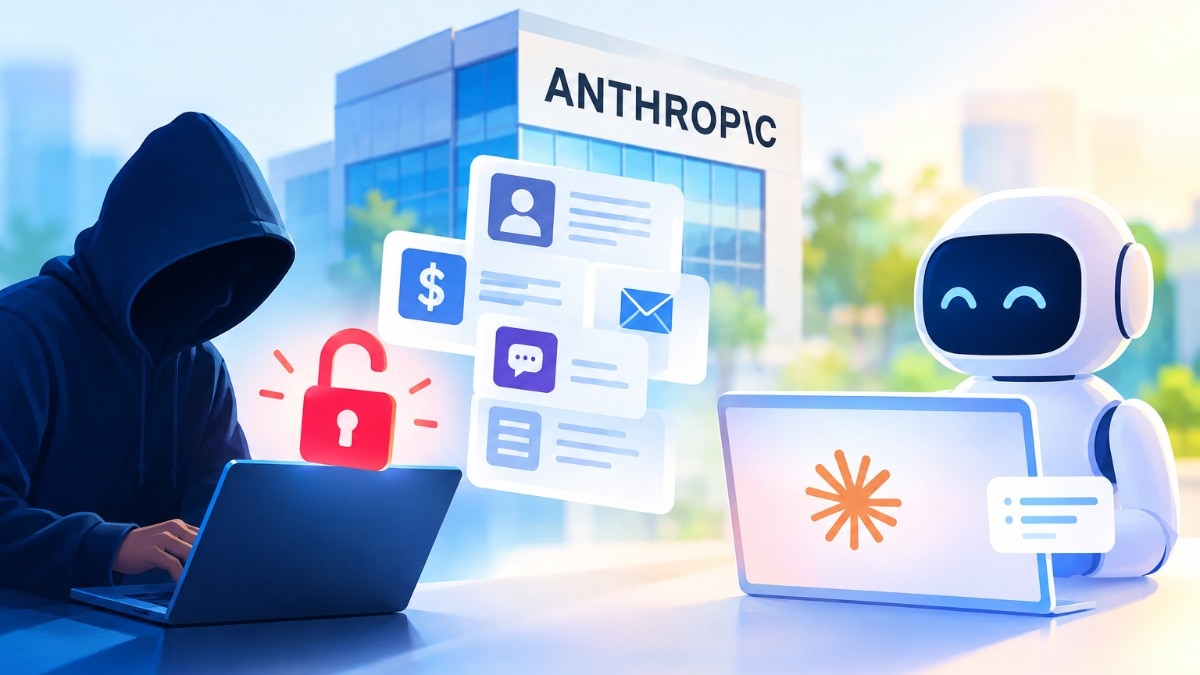
An AI startup hacked Anthropic within 12 hours, gaining access to employee details and internal messages. The breach exposed both personnel information and private company communications.
CommentsIt's the Memory Latency, Stupid
2026-10-31The piece explains that a database CPU at 100% may be stalled on memory access rather than doing useful work, making cache behavior and latency central to performance. It examines how radix partitioning can speed up GROUP BY by improving memory access patterns and reducing stalls.
CommentsBrief History of PDP Computers
2026-10-31A retrospective on DEC’s PDP line examines how these minicomputers carved out a cheaper, more accessible niche than batch-oriented mainframes. Readers recall programming on PDP-10s and note that the “Programmable Data Processor” name may have helped DEC sidestep procurement rules that treated “computers” as high-scrutiny mainframes. The discussion also highlights preservation work, including browser-based PDP-7 emulators running early UNIX, PIXIE CAD software, games, and newly built Forth systems.
Comments