AI Tech Developments News Past 24 Hours June 2026
Artificial intelligence evolves so quickly that a single day can bring several major announcements. This section follows AI developments in a past-24-hours format, highlighting what changed around June 2026.
Typical stories include new language and image model releases, benchmark results, AI agents and developer tools, funding rounds for AI startups, chip supply news, and regulatory decisions affecting AI companies.
Tracking AI day by day helps readers separate meaningful progress from hype. Developers, product teams, investors, and policymakers use this coverage to keep up with a field that rarely slows down.
2026-07-30

Over half of the artificial intelligence industry's top startups, commonly referred to as unicorns, have never published a research paper or preprint. This trend highlights a growing shift where leading AI companies are keeping their technological advancements proprietary instead of sharing them with the broader scientific community.
CommentsA new open-source inference engine named turbo-fieldfare enables users to run the Gemma 4 26B-A4B language model locally on any Apple M-series Mac. Remarkably, the highly optimized tool requires only about 2 GB of RAM, significantly lowering the hardware barrier for running large AI models on everyday laptops.
Comments
LLM Honeypot
2026-07-30Readers are discussing a nostalgic web project called Cameron's World that remixes text and images from archived GeoCities pages to recreate the early internet aesthetic. The comment thread also demonstrates the article's LLM honeypot concept in action, as one comment features an AI web scraper accidentally leaking its internal system instructions.
Comments
A comprehensive new report breaks down the timeline and technical details of a major security intrusion targeting a frontier AI lab in July 2026. The analysis explores how the breach impacted the open-source AI organization and outlines the remediation steps taken to secure their infrastructure.
CommentsArtificial intelligence companies are aggressively recruiting thousands of electricians and carpenters to build the massive data centers required for their expanding operations. Although this construction boom offers lucrative opportunities for skilled tradespeople, commenters warn that the data center industry is historically cyclical and prone to sudden busts. Despite these fluctuations, many note that the broader transition toward a fully electrified economy will likely sustain steady demand for these professions well beyond the current artificial intelligence boom.
Comments
Researchers have introduced a new benchmark to evaluate how well AI agents follow instructions within lengthy policy documents. Their findings reveal that extensive, long-context guidelines do not reliably govern agent behavior, highlighting a major challenge in controlling autonomous AI systems.
Comments
SalesPatriot (YC W25) Is Hiring FDEs
2026-07-30YC W25 startup SalesPatriot is building an AI-native platform to automate and modernize legacy defense, aerospace, and industrial supply chain operations. The company, which has raised over $10 million and processes $50 million weekly, is hiring Founding Full-Stack Engineers to relocate to San Francisco and work directly onsite with clients to implement and scale the technology.
CommentsA new Hacker News project introduces a local merge queue designed for parallel Claude Code agents. The open-source tool safely queues code modifications to prevent file conflicts when multiple AI assistants work in the same repository. This allows developers to run concurrent AI coding tasks locally without overwriting each other's changes.
Comments
Anthropic recently showcased the cryptographic capabilities of its unreleased Claude Mythos model by publishing new cryptanalysis results against the HAWK signature scheme and reduced-round AES. Alongside the technical findings, the company released a blog post detailing the research process behind these breakthroughs. Security researchers are now analyzing these results to understand the growing impact of advanced AI on cybersecurity.
Comments
Rather than simply indicating a speculative bubble, circular AI deals mirror the traditional financing methods historically used by capital-intensive commodity industries. The piece explores the dual nature of these arrangements, examining when such circular investments are healthy business practices and when they are used to obscure underlying financial risks.
CommentsYC S26 startup Tokenless has launched an AI model router that serves as a drop-in replacement for the OpenAI and Anthropic APIs. By automatically switching between models, the platform delivers equivalent output quality while cutting API costs by more than half.
Comments2026-07-29
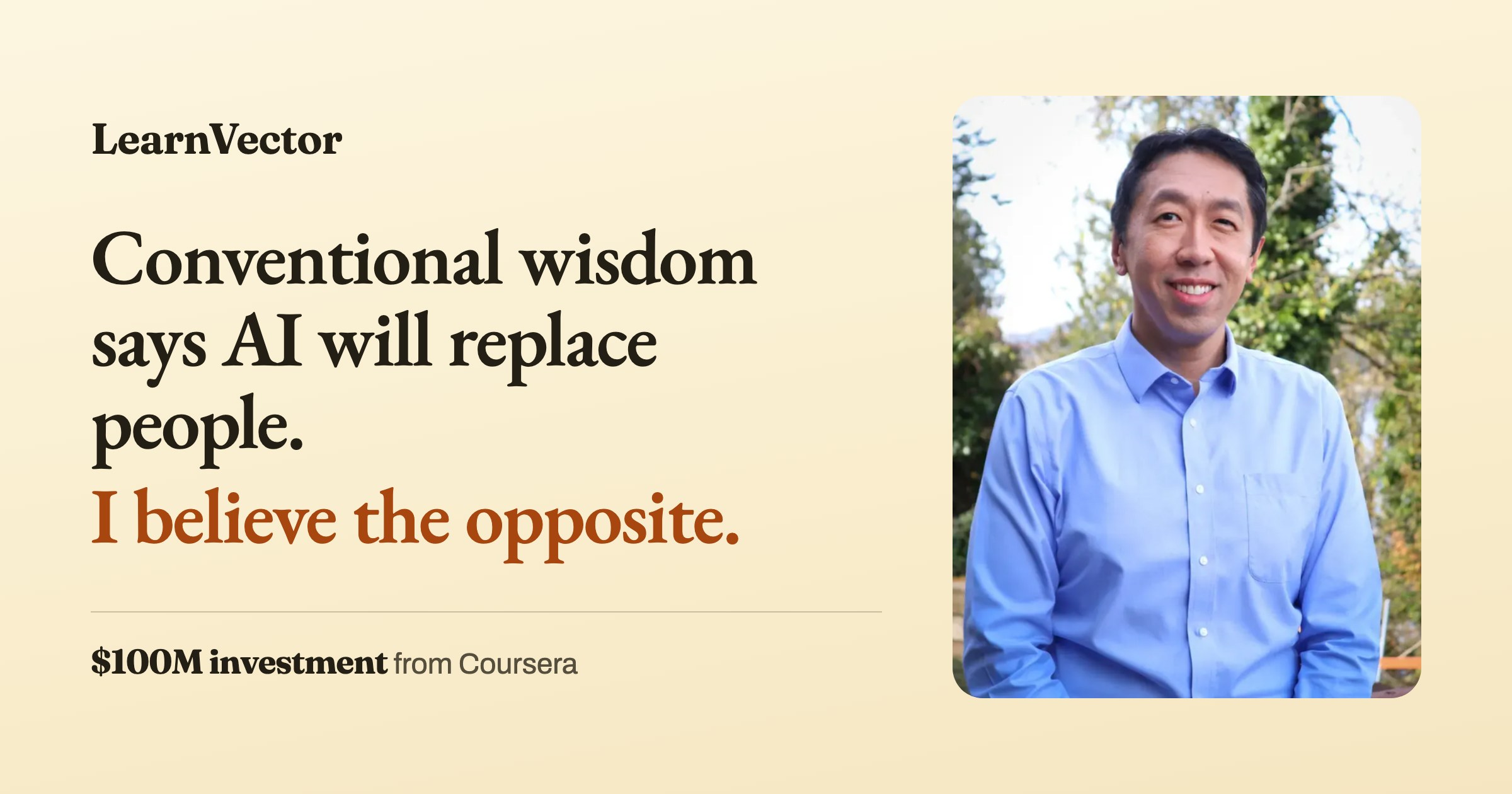
AI pioneer Andrew Ng has launched LearnVector, a new education startup backed by a $100 million investment from Coursera. The company is developing personalized, one-to-one AI learning experiences designed to adapt to users until they fully master new skills.
Comments
Investor anxiety over artificial intelligence has triggered a widespread slump in chip stocks across the US and Asia. The downturn was particularly severe in South Korea, where trading on the Kospi index was temporarily halted following an 8% plunge.
Comments
The new open-source notetaking application Hubble is designed for seamless collaboration between humans and AI agents. The platform allows automated agents to directly read, write, and organize notes alongside human users in a shared workspace. This integration bridges the gap between traditional productivity tools and automated machine workflows.
CommentsScientist Abel Jansma challenges current methods of evaluating factual accuracy in large language models by arguing that truth cannot be captured as a simple directional vector within neural networks. Drawing on Tarski's semantic frameworks, the analysis critiques existing LLM probing techniques and suggests that evaluating factual alignment in AI requires embracing higher-order interactions and complex information theory.
CommentsPeter Norvig’s classic 1998 essay on learning programming has resurfaced for discussion, sparking debate over the impact of artificial intelligence on the profession. While some readers lament that LLMs have diminished the joy of tinkering and made deep technical mastery feel obsolete, others urge developers to continue honing their skills the traditional way. These advocates argue that resisting the urge to rely entirely on AI is essential to prevent skill degradation and maintain the intrinsic rewards of lifelong learning.
Comments
Interview with Boris Cherny [video]
2026-07-29Following the launch of Opus 5, Claude Code creator Boris Cherny joined Diana Hu at Startup School 2026 to discuss the latest advancements in AI. During the interview, they explored the new capabilities of the Opus 5 model and how the updated Claude platform is being utilized by developers.
CommentsA new open-source project named ZIL introduces a relational knowledge language and Datalog DSL designed specifically for AI applications. Implemented in Lean 4 and inspired by Google Zanzibar, the system features a Clojure runtime and toolchain to help developers structure complex data.
Comments
A new AI-native web application brings 3Blue1Brown's Manim mathematical animation engine to the browser via WebGPU. This tool enables users to seamlessly create, edit, and refine complex mathematical animations directly online without requiring local installations.
CommentsAnthropic researchers have utilized their Claude Mythos Preview model to successfully identify vulnerabilities within cryptographic algorithms. This advancement highlights the emerging role of artificial intelligence in proactively discovering security flaws and strengthening digital encryption standards.
Comments
Pacing the frontier
2026-07-29Over 1,000 employees from leading frontier AI companies have signed a joint statement urging the industry to prioritize safety and responsible development practices. The coalition advocates for strict regulatory oversight and self-imposed pacing mechanisms to mitigate the severe risks associated with unchecked artificial intelligence advancements.
Comments2026-07-28

Our position on open-weights models
2026-07-28Anthropic CEO Dario Amodei has outlined the company's official stance on open-weight AI models, balancing the potential for rapid innovation against significant safety and misuse risks. The company argues against treating model accessibility as a strict binary of fully open or completely closed systems. Instead, Anthropic advocates for a nuanced approach that relies on careful safety evaluations and the responsible deployment of powerful AI technologies.
CommentsThis piece highlights the unexpectedly positive experience of using open-source AI models, emphasizing their growing performance and developer accessibility. The author argues that these open alternatives now provide a highly satisfying and practical solution that effectively rivals closed proprietary systems.
Comments
Researchers fine-tuned a 9B open-source model for just $500 using reinforcement learning to tackle an e-commerce catalog review workflow. This specialized model successfully outperformed leading frontier AI systems on the real-world task at a fraction of the cost. The achievement highlights a growing trend of companies building proprietary AI solutions rather than relying exclusively on expensive general-purpose models.
CommentsBenchmarking Opus 5 on SlopCodeBench
2026-07-28The Humanlayer GitHub repository is seeking contributors to benchmark the Opus 5 AI model on the SlopCodeBench testing suite. Developers can participate in this advanced context engineering project to help evaluate and optimize performance for coding agents.
Comments2026-07-27
We have proof automation now
2026-07-27The integration of Large Language Models with formal theorem provers is emerging as a powerful approach to automate software verification and generate mathematically correct code. Proponents argue this synergy will make dependent-type systems highly practical and shift the core programming skill toward writing formal specifications. However, experts caution that while LLMs simplify proof engineering, human insight remains essential for defining correct abstractions and managing complex production edge cases.
CommentsDiscussions surrounding Mike Acton's Introduction to Data-Oriented Design emphasize prioritizing data structures over algorithms to naturally optimize performance and reduce cognitive load. While some debate whether this approach is premature optimization for everyday applications, proponents praise its simplicity and flexibility compared to rigid Object-Oriented frameworks. Additionally, Acton has recently released a dedicated LLM skill to assist developers in applying data-oriented programming principles.
CommentsA gray-market relay economy has emerged to provide mainland China with cheap, large-scale access to major AI models from OpenAI, Anthropic, and Google. This structured network of token resellers relies on fraudulent practices to supply discounted business-to-business API access.
CommentsHow to Block Some of the Bots
2026-07-27Web administrators are increasingly deploying technical countermeasures like JavaScript challenges and strict authentication to combat resource-exhausting AI bot traffic that frequently overwhelms servers. While relentless crawling forces some to shut down legacy sites, the webmaster community remains divided on the long-term strategy of blocking content from growing LLM user bases. Ultimately, blocking bots is being framed both as a necessary defense for server stability and a deliberate choice to partition content from low-trust internet access.
Comments
Artificial intelligence is being hailed for its emerging superpowers of focus and followthrough in the workplace. However, this technological leap comes with an ironic twist, as the relentless pace of managing these highly productive tools is driving a new surge in human burnout.
Comments