AI News Today Big Tech
The race to lead in artificial intelligence is being run largely by the biggest names in tech. Here you will find stories about AI models, products, partnerships, and strategy from companies such as Google, Microsoft, Meta, Amazon, and Apple. The section also covers the chips, data centers, and talent wars behind the headlines.
Expect news on frontier model launches, AI assistants being woven into operating systems and office software, and the enormous capital expenditures going into GPUs and data centers. Partnership and licensing deals between platform companies and AI labs are a recurring theme, as are high-profile researcher moves between rivals.
The stakes are unusually high because AI leadership could decide which of today's giants dominates the next computing era. Investors watch these companies' AI spending for market signals, developers build on their platforms, and policymakers study their moves when weighing how the technology should be governed.

First public macOS kernel memory corruption exploit on Apple M5
2026-05-14Despite Apple spending five years fortifying its systems against memory corruption, security researchers have developed the first public macOS kernel exploit for the new M5 chip. Working alongside Mythos Preview, an engineering team successfully built a functional exploit in just five days.
New Nginx Exploit
2026-05-14A newly discovered exploit for the Nginx web server is now available on GitHub, specifically targeting the CVE-2026-42945 vulnerability. Developed by DepthFirstDisclosures, the exploit tool named Nginx-Rift is currently open for community code review and contributions.
Claude for Small Business
2026-05-14The newly launched Claude for Small Business package integrates the AI assistant directly into the everyday tools used by smaller enterprises. This offering includes a suite of connectors and ready-to-run workflows designed to streamline daily operations.

UK government replaces Palantir software with internally-built refugee system
2026-05-14The UK government has replaced its use of Palantir software with a newly developed, internally built IT system for managing refugee data. Officials stated that the in-house solution offers greater flexibility while maintaining high security standards.
Computer Hobby Movement in Canada
2026-05-14The York University Computer Museum (YUCoM) serves as a historical collection and research center dedicated to the history of computing in Canada. By focusing on the Canadian computer hobby movement, the museum preserves the nation's early technological milestones. It remains a vital resource for understanding the evolution and heritage of domestic computing.

What's in a GGUF, besides the weights – and what's still missing?
2026-05-14This piece breaks down the GGUF file format to explain the essential metadata and extra components needed to run a language model independently of its raw weights. Additionally, it highlights the current limitations of the format by identifying what crucial information is still missing for seamless deployment.
A Claude Code and Codex Skill for Deliberate Skill Development
2026-05-14A new open-source project introduces a specialized skill for AI coding assistants like Claude Code and OpenAI Codex to foster deliberate practice. The tool, named learning-opportunities, helps developers actively refine their programming abilities while working alongside AI. By prompting users to engage critically with the code, it prevents over-reliance on automated generation and promotes continuous learning.

AI is making me dumb
2026-05-14An author reflects on the overwhelming temptation to use artificial intelligence for everyday writing tasks such as drafting articles, documents, and code. They warn that this growing dependency on automated tools is actively diminishing their personal writing skills and cognitive sharpness.
Claude for Legal
2026-05-14Anthropic has released an open-source GitHub repository called Claude for Legal, providing a suite of plugins tailored specifically to streamline legal workflows. Developers are encouraged to contribute to the project's ongoing development to help integrate the company's AI capabilities into specialized legal processes.
Show HN: Nibble
2026-05-14A new open-source project named Nibble allows developers to generate LLVM IR without using malloc or relying on external dependencies. The lightweight tool is available on GitHub and is designed to be entirely self-contained. This makes it a highly practical solution for low-level code generation in constrained environments.

USDA Projects Smallest US Wheat Harvest Since 1972 Due to Plains Drought
2026-05-14Driven by severe drought in the Plains, the USDA predicts the US wheat harvest will drop to its lowest level since 1972 for the 2026/27 season. In contrast, the agency forecasts record soybean production gains as farmers navigate ongoing challenges from trade tensions and rising input costs.

Meta won't let you block its AI account on Threads
2026-05-14Meta is testing a new Threads feature that allows users to tag a Meta AI account to ask questions and receive answers. However, users do not have the option to block the AI account if they prefer not to interact with it.
Saying Goodbye to one line of APL
2026-05-14A discussion surrounding an article about saying goodbye to a classic APL one-liner sparked nostalgia for the dense, vector-oriented language and its chalkboard origins. Readers brainstormed modern ways to interact with the code, suggesting tablet-based stylus apps with live evaluation and exploring modern dialects like BQN. The conversation also featured a detailed technical breakdown of a complex one-liner that uses boolean algebra to efficiently reduce consecutive spaces in a string.

Int a = 5; a = a++ + ++a; a =? (2011)
2026-05-14Developers are revisiting a notorious C programming interview question involving complex increment operators that triggers undefined behavior and sequence point violations. Commenters recall the frustration of interviewers mistakenly treating specific compiler outputs as the definitive answer rather than acknowledging the language rules. The community consensus emphasizes that the only appropriate response is to recognize such code as unmaintainable and refuse to write it.

Linux gaming is faster because Windows APIs are becoming Linux kernel features
2026-05-13Linux gaming performance is improving significantly as Windows APIs are increasingly integrated directly into the Linux kernel. Thanks to this ongoing integration, the number of unplayable games on the operating system continues to shrink.

Setting up a free *.city.state.us locality domain (2025)
2026-05-13US residents can register free subdomains under their local city and state domains by coordinating with their delegated domain manager. The setup process requires using Amazon Lightsail for nameservers, submitting an interim template, and pointing DNS records to a webhost.

I moved my digital stack to Europe
2026-05-13Driven by a desire for digital sovereignty, the author details their experience migrating their tech stack to European cloud providers. The piece examines this shift away from US tech giants and argues that Europe's cloud infrastructure has matured into a highly capable and competitive alternative.
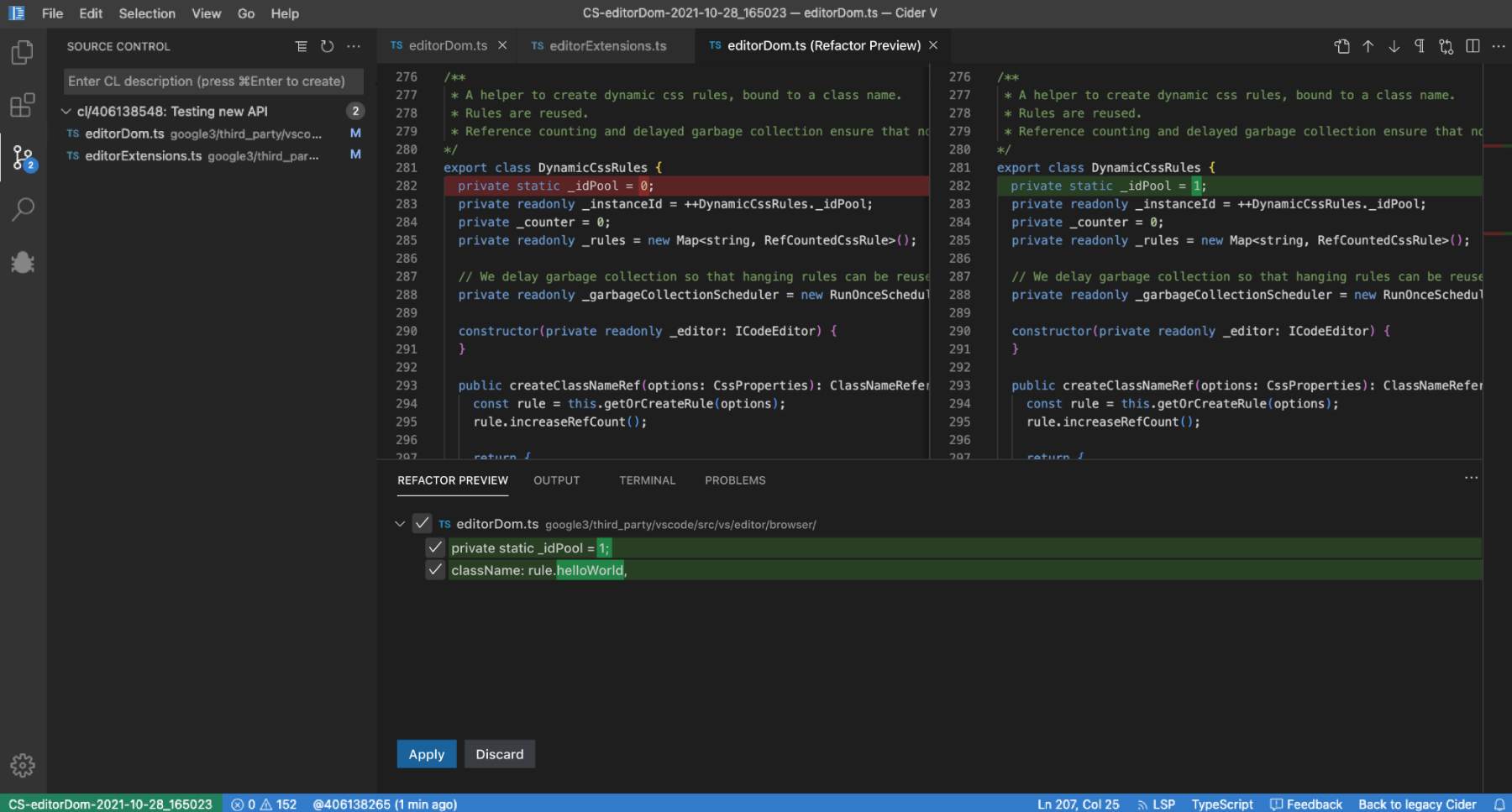
A History of IDEs at Google
2026-05-13Laurent Le Brun's blog post details the evolution of Google's internal development environments, tracing the company's shift from relying on third-party tools to building bespoke, cloud-based IDEs tailored for its massive monorepo. This overview highlights how the immense scale and complexity of Google's codebase forced the tech giant to engineer highly customized, scalable software ecosystems rather than relying on commercially available tools.
The Emacsification of Software
2026-05-13As AI makes software production increasingly effortless, developers are retreating into highly personalized, isolated coding environments akin to custom Emacs configurations. While this trend maximizes individual productivity, it creates severe bottlenecks for collaboration and code sharing because these custom environments are nearly impossible for others to understand or integrate. This shift is now challenging traditional version control platforms like GitHub and forcing teams to rethink how they collaborate on highly fragmented, individually generated code.

Leaving GitHub for Forgejo
2026-05-13A DevOps consultancy details its decision to migrate code repositories and development workflows from GitHub to Forgejo, prioritizing self-hosted and open-source solutions. This move reflects a growing trend among tech professionals to seek greater control, security, and operational continuity outside of proprietary platforms.