AI News Today Big Tech
The race to lead in artificial intelligence is being run largely by the biggest names in tech. Here you will find stories about AI models, products, partnerships, and strategy from companies such as Google, Microsoft, Meta, Amazon, and Apple. The section also covers the chips, data centers, and talent wars behind the headlines.
Expect news on frontier model launches, AI assistants being woven into operating systems and office software, and the enormous capital expenditures going into GPUs and data centers. Partnership and licensing deals between platform companies and AI labs are a recurring theme, as are high-profile researcher moves between rivals.
The stakes are unusually high because AI leadership could decide which of today's giants dominates the next computing era. Investors watch these companies' AI spending for market signals, developers build on their platforms, and policymakers study their moves when weighing how the technology should be governed.
2026-08-05
Through its Open Source Sabbatical program, the City of Munich is providing up to six months of funding for the development of the open-source XML parsing library libexpat. The initiative allows professional developers, including the project's maintainer Sebastian, to dedicate time to improving critical software infrastructure. While supporters praise the move as a positive continuation of the city's historical commitment to open-source software, critics argue that municipal funds should be reserved for traditional public services.
CommentsA recent article examining myths in software engineering and generative AI has sparked debate over the fallacy of delaying current work in anticipation of future, fully autonomous AI models. Commenters emphasize that human cognition and creative reasoning remain essential for complex tasks, while also questioning whether the abductive reasoning behind historical scientific breakthroughs will eventually be replicated by large language models.
Comments

Mistral has released Shieldstral, a new 3B open-weights multimodal safety classifier designed for content moderation. The model is specifically built to evaluate and filter multimodal content for safety. Despite its compact size, Shieldstral outperforms competing moderation models that are up to seven times larger.
CommentsFollowing recent market losses and the restriction of 2x leverage products, retail investors are increasingly turning to high-risk 3x leverage in a desperate bid for outsized returns. This surge in leveraged trading reflects a broader trend of financial nihilism and gambling behavior, especially as US household wealth becomes heavily concentrated in highly valued tech giants. Ultimately, the shift underscores growing economic frustration among everyday investors who view the stock market as their only viable path to financial security.
CommentsDuckDB, a high-performance data science database designed to run locally on your laptop, is now available in Clojure. This update enables Clojure developers to leverage the fast analytical engine for their local data processing workflows.
CommentsBugtraq Is Back
2026-08-05The legendary Bugtraq security mailing list has reportedly returned, though readers are skeptical of its relevance in an era dominated by social media and closed security groups. Critics point out the irony of its AI-generated announcement and argue that the original list only succeeded due to a lack of modern alternatives. Consequently, many believe that open vulnerability disclosures have simply moved underground to private channels, rendering a mailing list revival largely unnecessary.
CommentsMaple-Preview is a 20-billion parameter Mixture of Experts model trained from scratch in a ternary format, achieving speeds of 120 tokens per second directly on an iPhone. While the project demonstrates impressive mobile efficiency, community testing reveals the model still struggles with confident hallucinations on niche topics compared to larger alternatives.
Comments
Web developers have long joked about the difficulty of centering a div, but new browser sidebars are introducing a fresh layout complication. Instead of simply centering content within the traditional webview, developers must now center the page within the entire browser window to maintain proper alignment. This ongoing shift in browser user interfaces continues to challenge standard web design practices.
Comments
INTERPOL's African Cyberthreat Assessment Report 2026 reveals that artificial intelligence now fuels more than half of all cybercrime across the continent. This rapid adoption of AI by cybercriminals has led to a surge in scams that are faster, more convincing, and larger in scale than previous threats.
Comments
A newly identified vulnerability in passwordless authentication occurs when relying parties fail to properly validate the User Verified flag during login. This implementation gap effectively reduces multi-factor authentication to a single factor, significantly undermining the core security benefits of passkey systems.
CommentsThe Video2NAND project demonstrates how the VP8 video codec can be theoretically abused to construct NAND logic gates by exploiting its maximum resolution and minimum block size parameters. While some commenters speculate this technique could eventually be scaled to build a small CPU, others argue the project's title overstates its current computational capabilities. The discussion highlights the creative potential of repurposing media formats for unconventional computing, even if achieving true Turing completeness in practice remains a challenge.
Comments
Flowise Is Shutting Down
2026-08-05The team behind Flowise has announced that the popular open-source visual builder for LLM applications is officially shutting down. In a message regarding the project's future, the developers detailed the end of the platform's lifecycle and what users can expect moving forward.
Comments
Waymo in Dallas
2026-08-05Waymo has officially launched its fully autonomous ride-hailing service in Dallas, allowing anyone in the city to hail a driverless vehicle. Starting today, users can download the Waymo app to book a ride as the company continues to expand its robotaxi footprint.
Comments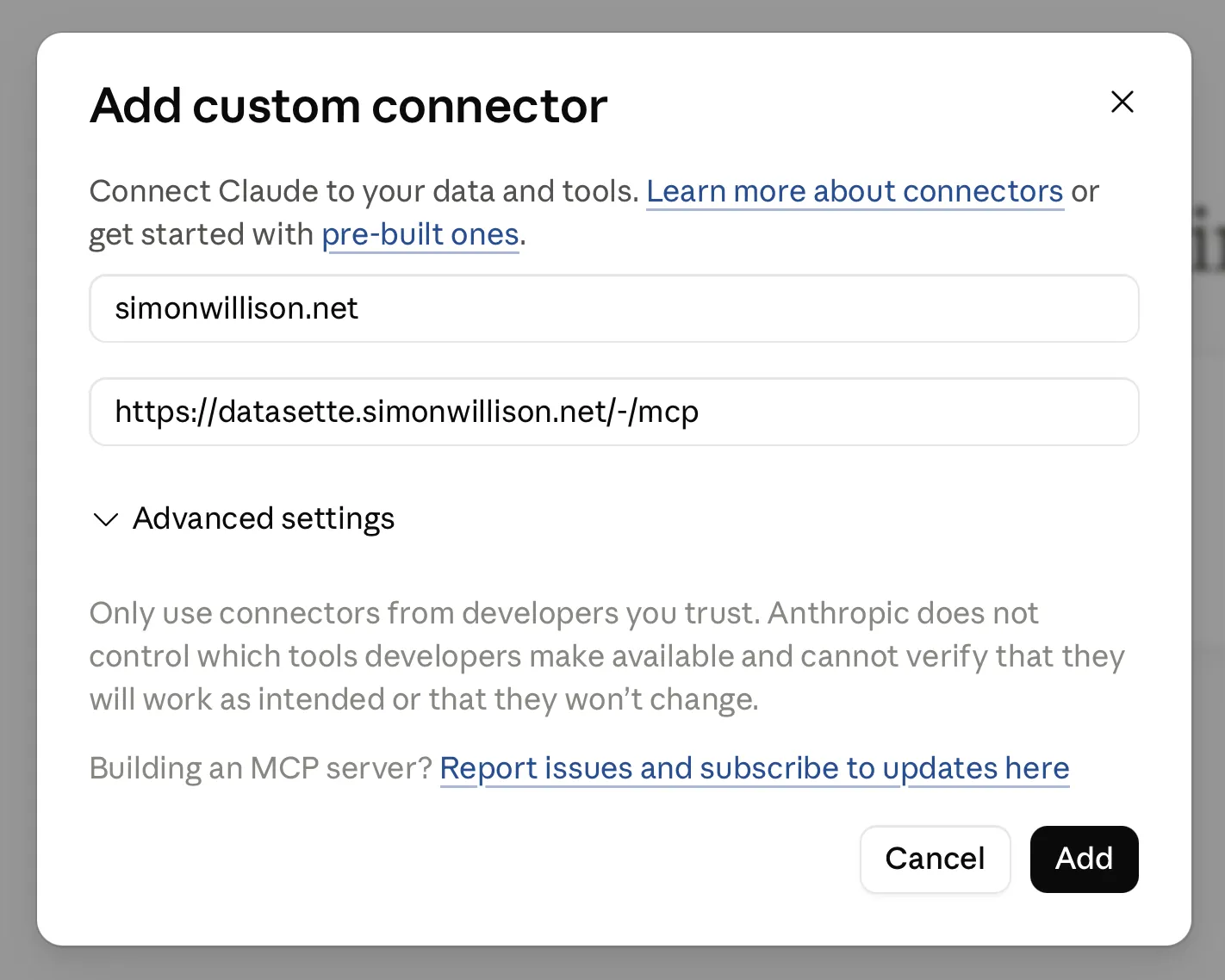
Stateless MCP has recaptured my interest
2026-08-05The Model Context Protocol 2.0 specification was officially released this Tuesday, introducing a highly significant shift to a stateless architecture. This major update has successfully recaptured developer interest in the protocol and marks a pivotal moment for its future development.
CommentsShow HN: SIMD Viterbi Decoder in Rust
2026-08-05A developer has shared a new open-source Rust crate that implements a SIMD-optimized Viterbi decoder for forward error correction. The project offers high-performance error correction capabilities and is now available for community contribution on GitHub.
Comments
The Keyv npm package and eight related dependencies were compromised in an active supply chain attack on August 4, 2026. An attacker injected Mini Shai-Hulud malware into the packages after gaining unauthorized access to the maintainer's GitHub account.
Comments
Cloudflare is introducing Cloudflare Wallets to equip AI agents with native web payments and verifiable digital identities. Powered by the x402 protocol, this programmable wallet enables agents to autonomously purchase APIs and content while operating within strict safety guardrails.
Comments
YC-backed startup truemetrics, which uses smartphone technology to optimize last-mile delivery routing, is hiring a Go-To-Market Lead in Berlin to help scale its core enterprise business and discover new product opportunities. The profitable company is seeking an autonomous commercial leader to work directly with the founders as it aims to grow its annual recurring revenue from €1.5M to over €10M.
CommentsThere Will Come Soft Rains (1950) [pdf]
2026-08-05Readers discussing Ray Bradbury's "There Will Come Soft Rains" reflect on how mid-century fiction's pervasive fear of nuclear annihilation shaped public opinion and potentially hindered nuclear power adoption. The conversation highlights a generational shift, noting that while Cold War anxieties have faded from daily public consciousness, the underlying existential threats remain. Commentators warn that this modern complacency is dangerous, especially as global military spending rises and geopolitical tensions echo the fears of the past.
CommentsOxide Computer raises $445M (SEC Form D)
2026-08-05Hardware startup Oxide Computer has raised $445 million in a Series D funding round, marking its fourth major capital raise in recent years. Although the company states this influx of capital ensures its long-term independence, community discussions reflect skepticism about whether massive funding guarantees actual business success. Commenters also note that Oxide targets specialized markets like high-frequency trading firms using advanced networking technologies, rather than pursuing traditional enterprise software customers.
Comments2026-08-04

LLMs reward expertise
2026-08-04Recent reader discussions highlight that large language models heavily favor users with existing technical expertise, as novices often lack the specific vocabulary needed to prompt effective code generation. While programming experts can build simple applications in a single prompt, non-technical users frequently get trapped in endless brainstorming loops or struggle with basic developer interfaces. This reveals a significant gap between the promised democratization of software creation and the reality of using AI tools without foundational domain knowledge.
CommentsRecent estimates reveal that the ancient Amazonian civilization supported a population of approximately three million people. This large population was concentrated within just three percent of the total Amazon forest area.
CommentsAlthough the original article highlights ten recent advances in mathematics and theoretical computer science, reader discussions primarily focus on the societal and political implications of exponential technological growth driven by large language models. Commenters express concern over the unprecedented ability of AI to scalably manipulate individuals through highly personalized, real-time conversational engagement. The debate also explores how these computational breakthroughs will impact experimental fields like biology and potentially exacerbate political polarization through advanced digital manipulation.
CommentsA new open-source project called Swiftlet enables users to run massive large language models on Apple devices with remarkably low memory requirements. The tool successfully demonstrates running an 80-billion parameter Qwen model using just 4.3 GB of RAM on a Mac, alongside a 35-billion parameter model on an iPhone. This advancement significantly lowers the hardware barrier for running powerful local AI inference on everyday consumer devices.
Comments
Devtools must be open source
2026-08-04The article argues that developer tools must remain open source to support the industry's rapid shift toward highly personalized software. Open-source devtools provide the necessary flexibility and community-driven innovation required to build these customized applications. Ultimately, keeping these tools open is essential for developers to thrive in this new era of personalized technology.
Comments
A developer reflects on their unsuccessful 2015 Microsoft internship interview, which they pursued during their computer science degree after gaining confidence from open-source contributions. The author recalls targeting the tech giant specifically because of its impressive work on TypeScript and the open-source rewrite of the C# compiler.
CommentsThe August 2026 Hacker News hiring thread features numerous software engineers and infrastructure specialists showcasing their technical expertise to potential employers. Candidates highlight extensive backgrounds in AI infrastructure, distributed computing, and full-stack development using languages like Rust, Go, and TypeScript. While the majority of applicants are seeking remote opportunities, several remain open to relocation for the right roles.
CommentsReader discussions reflect on the ill-fated Windows XP 64-bit Edition for Intel's Itanium architecture, noting it was uniquely built on the Windows Server 2003 kernel. Commenters attribute the platform's failure to reach the consumer market to high costs, poor x86 emulation, and the rapid rise of AMD's competing x86-64 architecture. Ultimately, Itanium was relegated to niche high-performance computing roles before Microsoft completely dropped operating system support after Windows Server 2008 R2.
Comments
Serving frontier AI models like Kimi and GLM at scale requires overcoming significant GPU memory constraints through techniques like KV cache quantization and weight compression. These optimizations enable faster and cheaper deployment, while newly implemented integrity checks ensure safer model serving.
CommentsDevelopers are debating the practice of manually retyping LLM-generated code to prevent cognitive debt and ensure a deeper understanding of the software being built. While some argue this meticulous workflow negates AI efficiency gains and reduces engineers to mindless typists, others find value in using AI as a collaborative design tool rather than a direct code generator. The discussion reflects broader industry anxieties about the future of software engineering, with many anticipating a shift away from manual coding toward high-level visual architecture.
Comments