AI News Today Big Tech
The race to lead in artificial intelligence is being run largely by the biggest names in tech. Here you will find stories about AI models, products, partnerships, and strategy from companies such as Google, Microsoft, Meta, Amazon, and Apple. The section also covers the chips, data centers, and talent wars behind the headlines.
Expect news on frontier model launches, AI assistants being woven into operating systems and office software, and the enormous capital expenditures going into GPUs and data centers. Partnership and licensing deals between platform companies and AI labs are a recurring theme, as are high-profile researcher moves between rivals.
The stakes are unusually high because AI leadership could decide which of today's giants dominates the next computing era. Investors watch these companies' AI spending for market signals, developers build on their platforms, and policymakers study their moves when weighing how the technology should be governed.
2026-08-04

LLMs reward expertise
2026-08-04Recent reader discussions highlight that large language models heavily favor users with existing technical expertise, as novices often lack the specific vocabulary needed to prompt effective code generation. While programming experts can build simple applications in a single prompt, non-technical users frequently get trapped in endless brainstorming loops or struggle with basic developer interfaces. This reveals a significant gap between the promised democratization of software creation and the reality of using AI tools without foundational domain knowledge.
CommentsRecent estimates reveal that the ancient Amazonian civilization supported a population of approximately three million people. This large population was concentrated within just three percent of the total Amazon forest area.
Comments
Although the original article highlights ten recent advances in mathematics and theoretical computer science, reader discussions primarily focus on the societal and political implications of exponential technological growth driven by large language models. Commenters express concern over the unprecedented ability of AI to scalably manipulate individuals through highly personalized, real-time conversational engagement. The debate also explores how these computational breakthroughs will impact experimental fields like biology and potentially exacerbate political polarization through advanced digital manipulation.
CommentsA new open-source project called Swiftlet enables users to run massive large language models on Apple devices with remarkably low memory requirements. The tool successfully demonstrates running an 80-billion parameter Qwen model using just 4.3 GB of RAM on a Mac, alongside a 35-billion parameter model on an iPhone. This advancement significantly lowers the hardware barrier for running powerful local AI inference on everyday consumer devices.
Comments
Devtools must be open source
2026-08-04The article argues that developer tools must remain open source to support the industry's rapid shift toward highly personalized software. Open-source devtools provide the necessary flexibility and community-driven innovation required to build these customized applications. Ultimately, keeping these tools open is essential for developers to thrive in this new era of personalized technology.
Comments
A developer reflects on their unsuccessful 2015 Microsoft internship interview, which they pursued during their computer science degree after gaining confidence from open-source contributions. The author recalls targeting the tech giant specifically because of its impressive work on TypeScript and the open-source rewrite of the C# compiler.
CommentsThe August 2026 Hacker News hiring thread features numerous software engineers and infrastructure specialists showcasing their technical expertise to potential employers. Candidates highlight extensive backgrounds in AI infrastructure, distributed computing, and full-stack development using languages like Rust, Go, and TypeScript. While the majority of applicants are seeking remote opportunities, several remain open to relocation for the right roles.
CommentsReader discussions reflect on the ill-fated Windows XP 64-bit Edition for Intel's Itanium architecture, noting it was uniquely built on the Windows Server 2003 kernel. Commenters attribute the platform's failure to reach the consumer market to high costs, poor x86 emulation, and the rapid rise of AMD's competing x86-64 architecture. Ultimately, Itanium was relegated to niche high-performance computing roles before Microsoft completely dropped operating system support after Windows Server 2008 R2.
Comments
Serving frontier AI models like Kimi and GLM at scale requires overcoming significant GPU memory constraints through techniques like KV cache quantization and weight compression. These optimizations enable faster and cheaper deployment, while newly implemented integrity checks ensure safer model serving.
CommentsDevelopers are debating the practice of manually retyping LLM-generated code to prevent cognitive debt and ensure a deeper understanding of the software being built. While some argue this meticulous workflow negates AI efficiency gains and reduces engineers to mindless typists, others find value in using AI as a collaborative design tool rather than a direct code generator. The discussion reflects broader industry anxieties about the future of software engineering, with many anticipating a shift away from manual coding toward high-level visual architecture.
CommentsThere Will Come Soft Rains (1950) [pdf]
2026-08-04Readers are revisiting Ray Bradbury's classic short stories There Will Come Soft Rains and The Pedestrian to discuss their enduring relevance to modern technological isolation and existential threats. The conversation compares the tales of post-human automation and nuclear annihilation to contemporary anxieties like global warming and upcoming science fiction films. Ultimately, the discussion highlights a debate over Bradbury's literary style and a growing cultural fatigue with dystopian narratives.
Comments
Security researchers have successfully hacked the Windows 365 Link, a locked-down thin client designed exclusively to connect to Microsoft's Cloud PC. By breaking out of its restricted Windows 11 environment, they demonstrated that the device can be repurposed, echoing past failures in Microsoft's attempts to lock down its hardware.
CommentsReplacing the Kobo Libra H2O Battery
2026-08-04A recent guide on replacing the Kobo Libra H2O battery has prompted readers to discuss the broader repairability of Kobo e-readers using commodity parts. Although newer models use soldered eMMC storage, users emphasize that screens, SD cards, and standard lithium-ion batteries can be easily swapped to extend the devices' lifespans. The community strongly encourages repairing aging e-readers with generic components instead of purchasing replacements.
CommentsBonsai: Janestreet's UI Library
2026-08-04Jane Street has introduced Bonsai, a new UI library designed for building dynamic web applications using the OCaml programming language and the Js_of_ocaml compiler. This release provides a robust framework that allows developers to seamlessly translate their front-end code into JavaScript for efficient browser execution.
CommentsAirLLM 70B inference with single 4GB GPU
2026-08-04A new open-source project called AirLLM enables the inference of 70B parameter large language models using only a single 4GB GPU. This dramatic reduction in hardware requirements makes running advanced AI models highly accessible to users with limited computing resources. Developers can view the code and contribute to the project's ongoing development on GitHub.
Comments
The widely cited Dunning-Kruger effect, often used to explain why incompetent individuals overestimate their abilities, may not be a genuine psychological phenomenon. Instead, recent analysis suggests this popular cognitive bias is actually just a statistical data artefact.
CommentsA new open-source project named KisakCOD aims to reimplement the multiplayer experience of the classic game Call of Duty 4. Hosted by SwagSoftware on GitHub, the initiative is actively seeking community contributions to help develop and refine the codebase.
Comments2026-08-03

Qwen3.8-Max establishes a new benchmark for coding and collaborative work through the comprehensive capabilities of Qwen Studio. The platform delivers a diverse suite of features, including chatbot interactions, multimodal understanding, and image generation. Additionally, it enhances user productivity with advanced tools for document processing, web search integration, and artifact creation.
Comments
Karpathy’s Pelican
2026-08-03Moving beyond simple prompt evaluations, Andrej Karpathy recently tested a large language model by giving it a one million token budget to expand upon the first paragraph of The Lord of the Rings. This ten dollar experiment with the Opus model demonstrates the evolving capabilities of AI in handling extensive and complex generation tasks.
CommentsThe developer behind the Book Corners project has decided against syncing new public bookcase submissions to OpenStreetMap. This decision follows an evaluation of the operational and community requirements necessary for contributing data to the open-source mapping platform.
CommentsA tiny Mamba-based language model has been successfully deployed on a vintage 1975 MOS 6502 processor. Using a custom 8-bit ternary inference engine, the system generates text directly on a 1980s BBC Micro. This achievement demonstrates how modern AI architectures can be heavily optimized for severely constrained retro hardware.
Comments
Developers form strong attachments to their software tools because consistent functionality builds essential trust in their daily workflows. When these tools constantly change their capabilities, it forces users to continually relearn them and disrupts their established processes. This instability highlights a critical flaw in tool design by undermining the reliable routines that developers depend on.
Comments
Despite Patrick O'Brian's life being marked by hidden truths, his renowned Aubrey-Maturin novels continue to provide profound comfort to thousands of readers. His enduring literary legacy ultimately overshadows his personal secrets, proving that his fiction remains his most meaningful contribution.
CommentsThe Computational Theory of Mind (2015)
2026-08-03A 2015 article on the Computational Theory of Mind has sparked reader debate over whether digital systems like LLMs can truly think or if human cognition strictly requires continuous temporal and physical embodiment. While some readers argue that artificial neural networks represent a simplified form of cognition that could eventually blur the lines of machine thought, others emphasize the fundamental differences between emergent AI and traditional computational models. Ultimately, the discourse highlights the ongoing philosophical and scientific challenge of defining both consciousness and computation in the age of advanced artificial intelligence.
Comments
Show HN: A Handwritten Blogging Platform
2026-08-03A new Show HN project introduces a minimalist blogging platform designed for handwritten posts to encourage slower, more authentic thinking. The service intentionally omits algorithmic feeds and social metrics like likes, focusing purely on distraction-free publishing with native RSS support.
Comments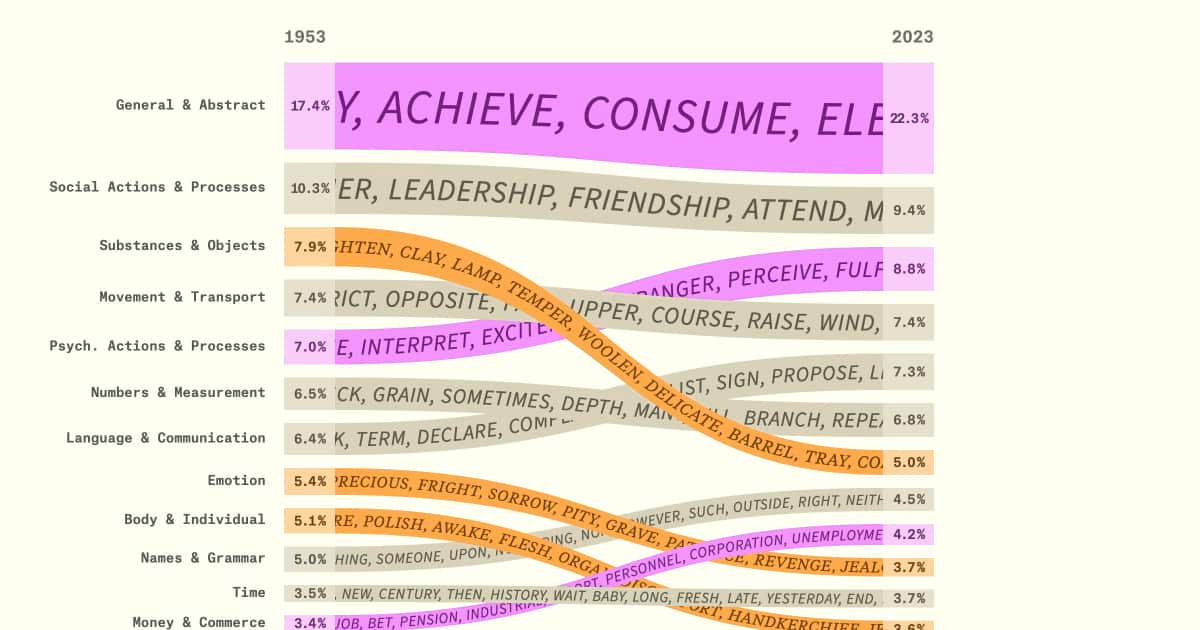
A recent comparison of essential vocabulary lists highlights how the core words taught to English language learners have evolved between 1953 and 2023. The analysis reveals that modern language instruction prioritizes different terms compared to those used seven decades ago. This shift reflects broader changes in daily communication, technological advancements, and evolving societal needs.
CommentsA new open-source project named NixOS-DGX-Spark enables users to run the Nix package manager and NixOS Linux distribution on the DGX Spark. This integration brings Nix's reproducible package management to the desktop AI workstation. The developer is actively seeking community contributions on GitHub to help expand and refine the project.
Comments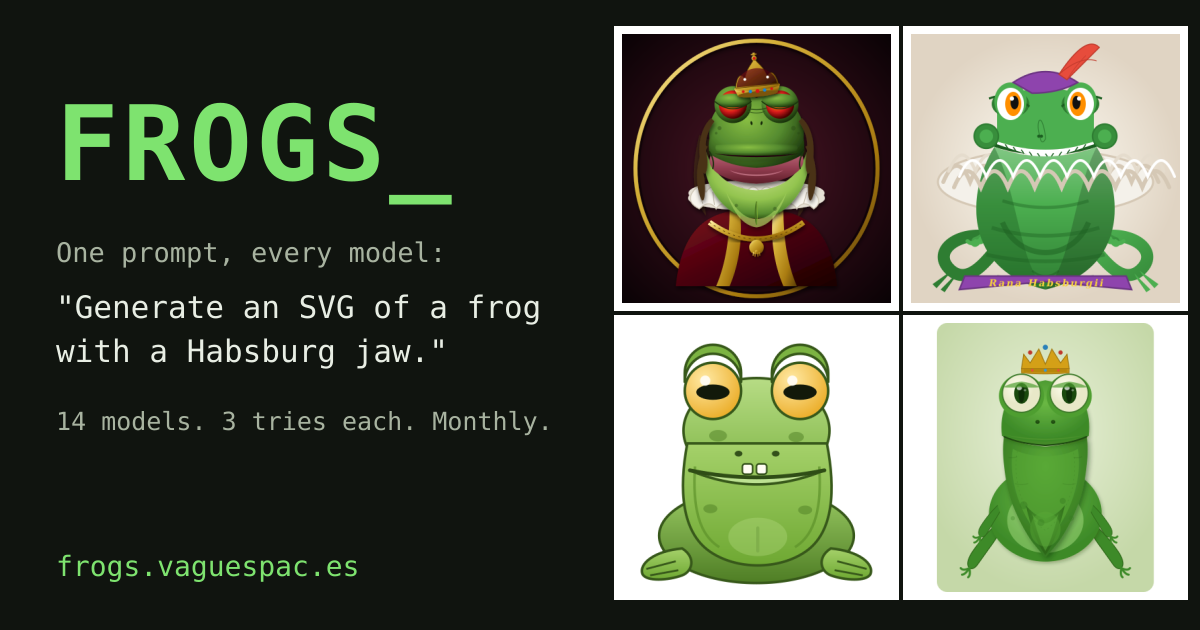
The author has created a unique personal benchmark to evaluate AI image generation capabilities by challenging models to create an SVG of a frog with a Habsburg jaw. Each model is given exactly three attempts per month to successfully render this highly specific prompt.
CommentsPlaying with Georgia
2026-08-03A recent article exploring the Georgia typeface prompted readers to discuss its cross-platform availability, typographic characteristics, and personal preferences for alternative serif fonts. Commenters shared browser tricks for rendering web pages in specific typefaces and criticized the use of faux bolding. The discussion concluded with suggestions to modernize the classic font by converting it into a true variable axis font.
CommentsA new open-source tool named pytest-leak-finder helps developers pinpoint the root causes of unstable Python tests by detecting state leaks. Created by mgaitan, the utility identifies the specific test that leaks before the actual failure occurs. This approach significantly simplifies the debugging process for flaky test suites across Python projects.
Comments