AI And Tech News Past 24 Hours
Artificial intelligence now touches nearly every corner of the technology world. This section combines recent AI developments, from model releases to enterprise adoption, with the broader tech stories they connect to, giving readers a fast way to catch up on both.
A given day might bring a new model or agent framework, chip and data center news driven by AI demand, enterprises reporting real deployment results, and debates over safety, jobs, or regulation. The feed connects these threads so the AI story reads as one picture rather than scattered headlines.
AI news moves fast enough that even practitioners struggle to keep pace. Engineers, product leaders, investors, and curious readers use a consolidated daily view like this to stay current without spending hours sorting genuine advances from hype.

Flipper One – we need your help
2026-05-21Flipper is developing an ambitious new project called Flipper One to reimagine the concept of a Linux cyberdeck. To bring the device to life, the team is opening up the development process and actively seeking community contributions.
Comments
Google is testing new advertising formats in Search powered by its Gemini AI model. The company is also expanding its Direct Offers pilot program to enhance the online shopping experience for users.
Comments
A developer indexed a year of video into a local, queryable archive using a 2021 MacBook Pro M1 Max and the Gemma4-31B model via LM Studio. The intensive build required utilizing 50GB of swap memory to handle the large AI model and provided valuable technical insights through the resolution of four distinct bugs.
CommentsGoogle's Antigravity bait and switch
2026-05-21Google is facing user backlash after abruptly pivoting its specialized Antigravity IDE into a general agentic tool, effectively resetting the product and breaking established workflows. The controversial update, which also sunsets the Gemini CLI, has been criticized for missing key features like Windows WSL support and causing significant local storage bloat. Although some users found the new standalone command-line interface works as a basic drop-in replacement, the transition highlights a frustrating pattern of abrupt product changes and rapid AI tool churn.
Comments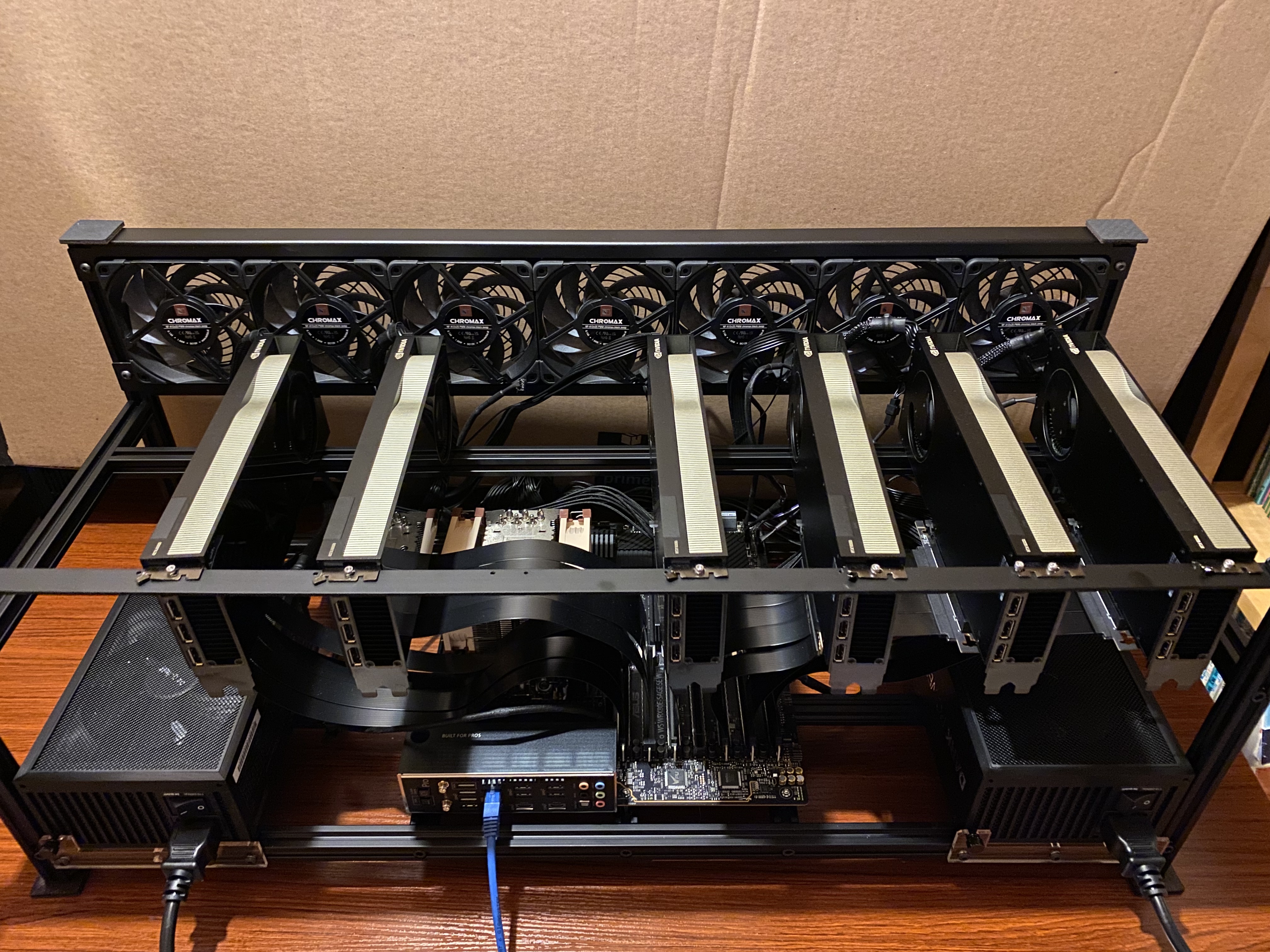
Was my $48K GPU server worth it?
2026-05-21After leaving a FAANG job to become an independent researcher, an engineer built a custom $48,000 server equipped with six RTX 6000 Ada GPUs. The blog post details the technical challenges of the build and evaluates whether owning the local hardware was ultimately more practical and cost-effective than relying on cloud computing resources.
Comments
After running a blog on Ubuntu 16.04 for ten years, the author successfully migrated the site to a FreeBSD virtual private server hosted on Hetzner. The migration guide details the configuration of Jails, Bastille, and Caddy reverse proxies. The author also performed comprehensive load testing and benchmarking from four continents to assess the new setup.
Comments
A recent opinion piece criticizes the frustrating trend of pasting lengthy AI-generated blocks of text into everyday conversations, arguing that recipients prefer genuine human interaction over robotic essays. The author notes that anyone looking for a ChatGPT response would simply use the tool themselves, urging users to keep their digital communications natural and concise.
Comments
Using Kagi Search with Low Vision
2026-05-21This article explores how Kagi Search helps users with low vision and cortical visual impairment manage visual fatigue. The author highlights the platform's most effective accessibility features, including a dedicated low vision theme designed to create a more comfortable browsing experience.
Comments
Major newspaper chains including McClatchy and Tribune Publishing are blocking the Internet Archive's web crawlers from accessing their online content. This restriction prevents the nonprofit from preserving historical news articles on its Wayback Machine. The move significantly limits the long-term digital preservation of modern journalism for researchers and the public.
CommentsReaders criticize the defense of AI as a tool for unauthorized plagiarism at scale, arguing that automating the mass extraction of information creates qualitative harms that cannot be equated to individual learning. The discussion also highlights broader frustrations with online privacy, noting the stark contrast between easily accessible public records and the nearly impossible process of actually deleting personal information from the internet.
CommentsDonald Knuth developed the TeX typesetting system and METAFONT program after becoming dissatisfied with the declining typographic quality of his books during the publishing industry's shift to digital typesetting. His 1980 paper details the complex process of using METAFONT to algorithmically capture the underlying design logic of traditional typefaces, an ambitious endeavor that took him years of rigorous refinement with professional typographers to achieve his exacting visual standards.
Comments
Vivaldi 8.0
2026-05-21The Vivaldi web browser has released version 8.0, marking over thirteen years of continuous development and refinement. The team remains deeply passionate about the project, driven by a sustained belief in their unique vision for the future of web browsing.
Comments
Spotify has announced a new feature called Reserved that will hold a pair of concert tickets on select tours for fans to purchase. Unveiled at the company's investor day, the initiative aims to reward dedicated listeners by giving them priority access to live shows.
Comments
Anthropic is expanding its partnership with SpaceX to scale up GB200 computing capacity at the Colossus 2 facility throughout June. With assistance from Elon Musk's team, this upgraded infrastructure will be used to host and run Anthropic's Claude AI models.
CommentsA 2023 technical guide details how developers can mount historical git commits directly as standard directories using the Network File System. This approach allows teams to browse and interact with past repository states using basic file system commands instead of traditional git operations. By bridging version control with standard directory structures, it simplifies legacy code access and enables seamless file-based automation workflows.
CommentsHaskell Foundation 2026 Update
2026-05-21The Haskell Foundation is transitioning to a new sponsorship model that directly funds technical challenges to attract a broader range of production companies. Community discussions surrounding the update highlight Haskell's potential strengths for AI-assisted coding due to its strong typing and small context requirements. However, developers continue to debate the ecosystem's overall tooling and package management, with practitioners split between praising mature solutions like Stackage and citing ongoing friction with cross-platform compilation compared to languages like Rust.
CommentsBBEdit 16
2026-05-21The release of BBEdit 16 has sparked a debate among readers regarding the software industry's shift from one-time purchases to recurring subscription models. While some argue that subscriptions are necessary to fund continuous maintenance and security updates, others praise the app's lifetime pricing and criticize forced auto-updates. Ultimately, the discussion highlights a deep divide over consumer preferences and developer incentives in modern software distribution.
Comments
YC P26 startup Runtime has launched a platform that enables non-engineering teams to build and run sandboxed cloud coding agents. The tool allows users to create customized agents using company-specific context and guardrails, which can be triggered directly from existing workflows like Slack, Linear, or the browser.
Comments
Intuit is laying off over 3,000 employees to streamline its corporate structure and accelerate its focus on artificial intelligence. In a memo to staff, CEO Sasan Goodarzi explained that reducing operational complexity will ultimately allow the company to deliver better AI products.
CommentsA new project revives obsolete scanners by utilizing an in-browser Linux virtual machine bridged to WebUSB over USB/IP. In community discussions, the developer clarified that the core Linux components are fully open-source, though some printing-related code is temporarily withheld for potential monetization. Additionally, contributors suggested optimizing the setup by compiling printer filters with Emscripten to bypass the need for full operating system emulation.
CommentsColorado has amended its age verification bill, SB051, to exempt open-source projects and applications distributed through free, public code repositories from its regulatory requirements. Some developers hope this exemption will end the practice of companies forcing users to use proprietary first-party clients. However, others warn that the legislation remains highly ambiguous and could lead to unintended consequences, such as widespread government ID mandates for all online services.
CommentsAs OpenAI prepares to file for an upcoming IPO, industry observers warn that its inflated valuation could be threatened by highly competitive open-source AI models from China like DeepSeek-v4. These freely available models are effectively commoditizing the AI software stack to undermine American tech leaders, driven by nation-state strategies rather than direct profit motives. Consequently, this shift toward open-weight releases is rapidly expanding the market for affordable third-party generic AI hosting providers.
Comments
An OpenAI model has solved the 80-year-old unit distance problem, disproving a central conjecture in discrete geometry. This groundbreaking achievement marks a significant milestone in the rapidly advancing field of AI-driven mathematics.
Comments
Meta has blocked human rights organizations, including the Saudi-focused ALQST, from reaching audiences in Saudi Arabia and the United Arab Emirates. The social media company's restrictions prevent these independent grassroots groups from promoting and protecting human rights in the region. This action has raised significant concerns about digital censorship and the suppression of independent advocacy on major tech platforms.
Comments
Saying goodbye to asm.js
2026-05-20Mozilla is discontinuing asm.js by disabling its specific optimizations within the SpiderMonkey JavaScript engine. This move reflects the broader industry's transition to WebAssembly as the modern standard for delivering high-performance web applications. Developers relying on asm.js should begin migrating their codebases to WebAssembly to maintain optimal execution speeds in future browser updates.
CommentsForge is a new Python framework that enables self-hosted large language model tool-calling and multi-step agentic workflows. By implementing specialized guardrails, the project boosts the performance of an 8B model on agentic tasks from 53% to 99%.
CommentsFlipper One Tech Specs
2026-05-20The official technical specifications and comprehensive documentation for the Flipper One have been published. This release provides developers and hardware enthusiasts with detailed insights into the device's underlying architecture. Users can now access the full documentation to explore its complete feature set and integration options.
Comments
A BBC investigation recently revealed that AI chatbots can be easily manipulated to generate misinformation through simple prompts. Google and other major AI companies are now actively working to patch these vulnerabilities and secure their models.
CommentsHow fast is N tokens per second really?
2026-05-20Recent reader discussions surrounding LLM output speeds explore how token generation rates impact both AI reasoning and human readability. While slow speeds hinder an AI agent's complex thinking, extremely fast outputs quickly overwhelm human readers. Ultimately, ultra-fast generation rates are impractical for human consumption because the physiological limits of visual processing cap comfortable reading speeds at around 20 to 30 tokens per second.
Comments
Qwen3.7-Max: The Agent Frontier
2026-05-20Qwen Studio is pushing the agent frontier forward with the release of Qwen3.7-Max, introducing a highly comprehensive suite of multimodal capabilities. The platform supports a vast array of functionalities, including chatbot interactions, document processing, image and video understanding, and image generation. By integrating web search, tool utilization, and artifact creation, it offers a robust environment for complex AI workflows.
Comments