AI And Tech News Past 24 Hours
Artificial intelligence now touches nearly every corner of the technology world. This section combines recent AI developments, from model releases to enterprise adoption, with the broader tech stories they connect to, giving readers a fast way to catch up on both.
A given day might bring a new model or agent framework, chip and data center news driven by AI demand, enterprises reporting real deployment results, and debates over safety, jobs, or regulation. The feed connects these threads so the AI story reads as one picture rather than scattered headlines.
AI news moves fast enough that even practitioners struggle to keep pace. Engineers, product leaders, investors, and curious readers use a consolidated daily view like this to stay current without spending hours sorting genuine advances from hype.
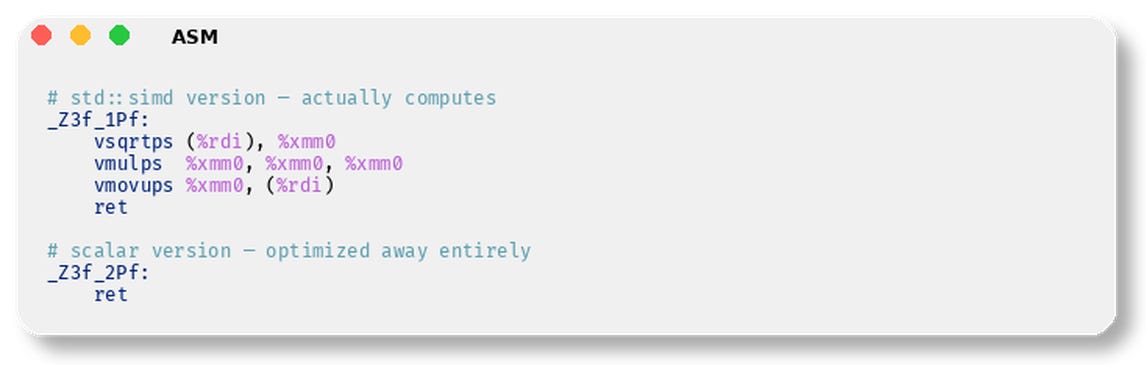
C++26 Shipped a SIMD Library Nobody Asked For
2026-05-17The C++26 standard has introduced a new std::simd library that developers are criticizing as both unsolicited and practically inadequate. Analysis shows that the implementation fails to express 90% of real-world SIMD code. This severe limitation renders the new feature largely ineffective for most high-performance computing tasks.

AI subscriptions are a ticking time bomb for enterprise
2026-05-17AI labs are intentionally operating at a financial loss to serve enterprise customers under current subscription models. This unsustainable strategy creates a ticking time bomb for businesses relying on these services until pricing eventually adjusts to reflect true costs.
Illusions of understanding in the sciences
2026-05-17A recent discussion regarding a new paper highlights the illusion of understanding in science, noting that researchers often mistake the predictive accuracy of mental models for true comprehension of underlying causal structures. While these simplified models are indispensable, the conversation warns that relying heavily on computational software can constrain how we conceptualize complex problem spaces. Ultimately, the discussion emphasizes that genuine scientific progress requires acknowledging the limitations of these models and avoiding dogmatic adherence when they inevitably fail.
WHO declares Ebola outbreak a global health emergency
2026-05-17The World Health Organization declared a new Ebola outbreak a Public Health Emergency of International Concern, a rare designation just below a pandemic emergency. While traditional Ebola strains are highly lethal but relatively easy to contain due to low transmissibility, the specific strain driving this outbreak carries unknown transmission risks. This uncertainty has prompted experts to urge robust containment efforts, drawing on lessons learned from the early stages of the COVID-19 pandemic regarding global infrastructure and disease spread.
Frontier AI has broken the open CTF format
2026-05-16Frontier AI models are now dominating open CTF cybersecurity competitions, effectively disrupting the traditional event format. This surge in AI success has hollowed out leaderboards and made it difficult to distinguish human achievement from machine automation. As a result, competitive CTF performance is no longer a reliable indicator of elite human problem-solving skills.
Moving away from Tailwind, and learning to structure my CSS
2026-05-16A new article explores a developer's transition away from the utility-first framework Tailwind CSS in favor of a more structured, traditional CSS methodology. The piece details the challenges of unlearning framework habits and highlights the long-term benefits of mastering core styling principles. Ultimately, it serves as a practical guide for frontend engineers looking to improve their CSS architecture and write more scalable code.

Zerostack – A Unix-inspired coding agent written in pure Rust
2026-05-16Zerostack is a new Unix-inspired coding agent written entirely in pure Rust. The tool is now available on crates.io, the central registry for sharing Rust packages, allowing developers to easily integrate it into their own projects to enhance their workflows.
Accelerando (2005)
2026-05-16Reader discussions surrounding the 2005 sci-fi novel Accelerando highlight how its chilling predictions about artificial intelligence and technological dependency are rapidly coming to pass. Commentators note that our increasing reliance on autonomous AI agents is already causing human skills atrophy, while the book's vision of AI-run corporations endlessly consuming resources feels like a distressingly plausible future. Ultimately, the novel's foresight serves as a stark warning about humanity's growing vulnerability and loss of agency in an increasingly automated world.

δ-mem: Efficient Online Memory for Large Language Models
2026-05-16Researchers have introduced δ-mem, a new framework presented in a recent arXiv paper that enables efficient online memory for large language models. This innovative approach optimizes how AI systems dynamically manage and retain contextual information during active use. By streamlining memory operations, this method could significantly improve the performance and resource efficiency of long-context AI applications.

OpenAI and Government of Malta partner to roll out ChatGPT Plus to all citizens
2026-05-16OpenAI and the Government of Malta have partnered to provide all Maltese citizens with access to ChatGPT Plus. The initiative also includes dedicated training programs to help residents build practical AI skills and use the technology responsibly.

The main thing about P2P meth is that there's so much of it (2021)
2026-05-16The illicit drug market has experienced a massive surge in methamphetamine production since 2009 due to the widespread adoption of the phenylacetone manufacturing method. Experts are currently investigating whether the distinct chemical composition of this P2P meth is directly linked to rising rates of schizophrenia and other severe mental health crises.
Orthrus-Qwen3: up to 7.8×tokens/forward on Qwen3, identical output distribution
2026-05-16A new dual-view diffusion decoding method called Orthrus-Qwen3 has been introduced to achieve fast, lossless inference for the Qwen3 large language model. By generating up to 7.8 tokens per forward pass, the technique significantly accelerates processing speeds compared to standard methods. Crucially, it maintains an identical output distribution to the baseline model, ensuring no drop in accuracy.
MCP Hello Page
2026-05-16The article highlights a practical use of HTTP content negotiation to serve a helpful HTML guide when users browse a Model Context Protocol server endpoint directly. Community discussions also explore broader challenges with the MCP specification regarding authentication and gateways, though developers remain optimistic about the protocol's future for standardizing AI agent tools.
Additive Blending on the Nintendo 64
2026-05-16Commenters discuss a technical deep dive into why the Nintendo 64 lacked the vibrant visual effects seen on the original PlayStation, attributing it to hardware limitations with additive blending. The discussion draws parallels between this graphical constraint and audio mixing, explaining how preventing value overflow without dynamic compression forces lower overall brightness. Ultimately, fans debate whether the N64's muted explosions suffer from a lack of realistic light emission or simply deliver a more satisfying, stylized game feel.
PART Telescopes – Bringing radio astronomy within reach of rural schools
2026-05-16The PART Telescopes project aims to bring radio astronomy within reach of rural schools. This initiative is driven by OpenRockets, a registered global nonprofit organization. The organization is operated entirely by teenagers who are dedicated to advancing science worldwide.

DeepSeek-V4-Flash means LLM steering is interesting again
2026-05-16DeepSeek-V4-Flash has renewed interest in large language model steering by offering a well-documented method to dynamically remove refusal behaviors directly during inference. This runtime approach is praised for preserving the model's core capabilities, allowing developers to modify model behavior on demand without permanently altering the underlying model weights.

Erlang/OTP 29.0
2026-05-16The Erlang development team has officially released version 29.0 of the Erlang programming language and its associated Open Telecom Platform. This major update introduces new features and enhancements aimed at improving system performance and the overall developer experience. It continues to reinforce the platform's core strengths in concurrency and fault tolerance for building scalable distributed applications.
SQL patterns I use to catch transaction fraud
2026-05-16This guide details practical SQL query patterns used to detect transaction fraud, sharing exact queries to identify red flags like rapid transaction velocity and impossible geographical distances. It also highlights the use of advanced window functions to analyze merchant clusters and track unusual off-hours buying behavior.
Gaining control of every projector and camera on campus
2026-05-16After a student caused a campus-wide network outage by enumerating DNS records to discover and gain control of every projector and camera on campus, university IT issued a surprisingly polite warning. This lenient response to the network exploitation sparked a debate among readers regarding the appropriate disciplinary measures for students who disrupt academic infrastructure.

Where to buy a non-Apple, non-Google smartphone
2026-05-16As Apple and Google impose increasingly strict limitations on their mobile ecosystems, users are turning to alternative smartphones to escape traditional walled gardens. This guide highlights the best non-Apple and non-Google phones currently available for consumers looking to make the switch.