AI And Tech News Past 24 Hours
Artificial intelligence now touches nearly every corner of the technology world. This section combines recent AI developments, from model releases to enterprise adoption, with the broader tech stories they connect to, giving readers a fast way to catch up on both.
A given day might bring a new model or agent framework, chip and data center news driven by AI demand, enterprises reporting real deployment results, and debates over safety, jobs, or regulation. The feed connects these threads so the AI story reads as one picture rather than scattered headlines.
AI news moves fast enough that even practitioners struggle to keep pace. Engineers, product leaders, investors, and curious readers use a consolidated daily view like this to stay current without spending hours sorting genuine advances from hype.
Sharing AI progress in mathematics
2026-10-07Recent AI advancements are reportedly solving major mathematical challenges, including Barnette's Conjecture and a potential breakthrough regarding the Quasi-Riemann Hypothesis. While AI models are now tackling dozens of top open math problems, these rapid developments evoke complex emotions among human researchers who have dedicated their lives to studying these puzzles. Furthermore, the mathematical community is actively debating whether these AI-generated solutions rely on brute-force computation or genuine, novel insights.

Mistral Large 4
2026-10-07Mistral has announced the release of Mistral Large 4, positioning it as the most powerful AI platform built for enterprise use. The new system allows organizations to customize, fine-tune, and deploy AI assistants, autonomous agents, and multimodal applications. By utilizing open models, it provides businesses with highly flexible and robust AI integration capabilities.

Decisions API is in public beta
2026-10-07The Decisions API is now in public beta, offering developers new capabilities to check conditions and select from fixed options. The API also allows users to score both text and images against specific rubrics for more precise data evaluation.
The cost of lies: A Mineserver story
2026-10-07Tech columnist Robert Cringely is facing intense backlash after failing to deliver a low-cost Minecraft server promised through a $35,500 Kickstarter campaign. While unconfirmed rumors about his death have sparked wild speculation among frustrated backers, critics suggest he simply lacked the follow-through to complete the hardware project, making the failed campaign a cautionary tale about the risks of crowdfunding.

Penguin Mail – open-source Rust email client for Linux with AI
2026-10-07Penguin Mail is a new open-source email client for Linux built with Rust that includes AI capabilities. The fast, locally hosted application supports Gmail, Microsoft, IMAP, and POP3 accounts. It also integrates calendar and contacts management into a single unified interface.

EmbeddingGemma 2: An open, lightweight multimodal embedding model
2026-10-07EmbeddingGemma 2 is a newly introduced open and lightweight multimodal embedding model designed for developers. It is specifically optimized to support privacy-first use cases, providing a secure and accessible tool for building advanced AI applications without compromising user data.
Claude Code’s suggested message feature: I think the real customer is the model
2026-10-07Readers discussing a new suggested message feature in Claude Code note that it often frustratingly suggests reverting unwanted changes the AI made autonomously. While users debate the jarring all-lowercase formatting of these automated prompts, many suspect the feature is actually designed to harvest frictionless user feedback for future model training. Ultimately, the discussion highlights the irony of an AI tool where the underlying model appears to be the primary beneficiary of the user interaction.
ESP32-C3 Adblock
2026-10-07Developers have created a Pi-hole-class DNS ad-blocker that runs entirely on a $2 ESP32-C3 microcontroller without requiring extra PSRAM. The project efficiently blocks ads by storing 537,000 domain hashes in flash memory and features a built-in web dashboard for easy management.
OpenTPU – An open-source AI accelerator, developed by AI
2026-10-07OpenTPU is a newly released open-source AI accelerator that was entirely developed by artificial intelligence, featuring a comprehensive repository that includes its RTL, ISA, simulator, compiler, and profiler. The accelerator has already demonstrated its capabilities by successfully running large language models such as Qwen3, LFM2.5, and Qwen3.5 on a Kintex-7 PCIe card.
Jev-Driven SRE Diagnosis: What Worked and What Failed
2026-10-07A newly evaluated Jev-driven Site Reliability Engineering diagnosis pipeline successfully passed 76.2% of 105 test cases. The accompanying analysis details the system's workflow and examines both successful and failed diagnostic traces. Additionally, the report provides interactive comparisons of the pipeline's time and cost efficiency.
LLMs may have helped my RSI
2026-10-07A personal tech blog post details how the author's Repetitive Strain Injury improved after incorporating Large Language Models into their daily workflow. The writer explains that relying on AI for text generation and coding tasks significantly reduced the physical strain on their hands and wrists.

State of Devs 2026
2026-10-07The State of Devs 2026 survey reveals a significant decline in job security among developers, with many now anticipating involuntary career changes within the next five years due to widespread layoff fears. Despite this prevailing pessimism, roughly a quarter of respondents still express hope or excitement for the future of the tech industry.
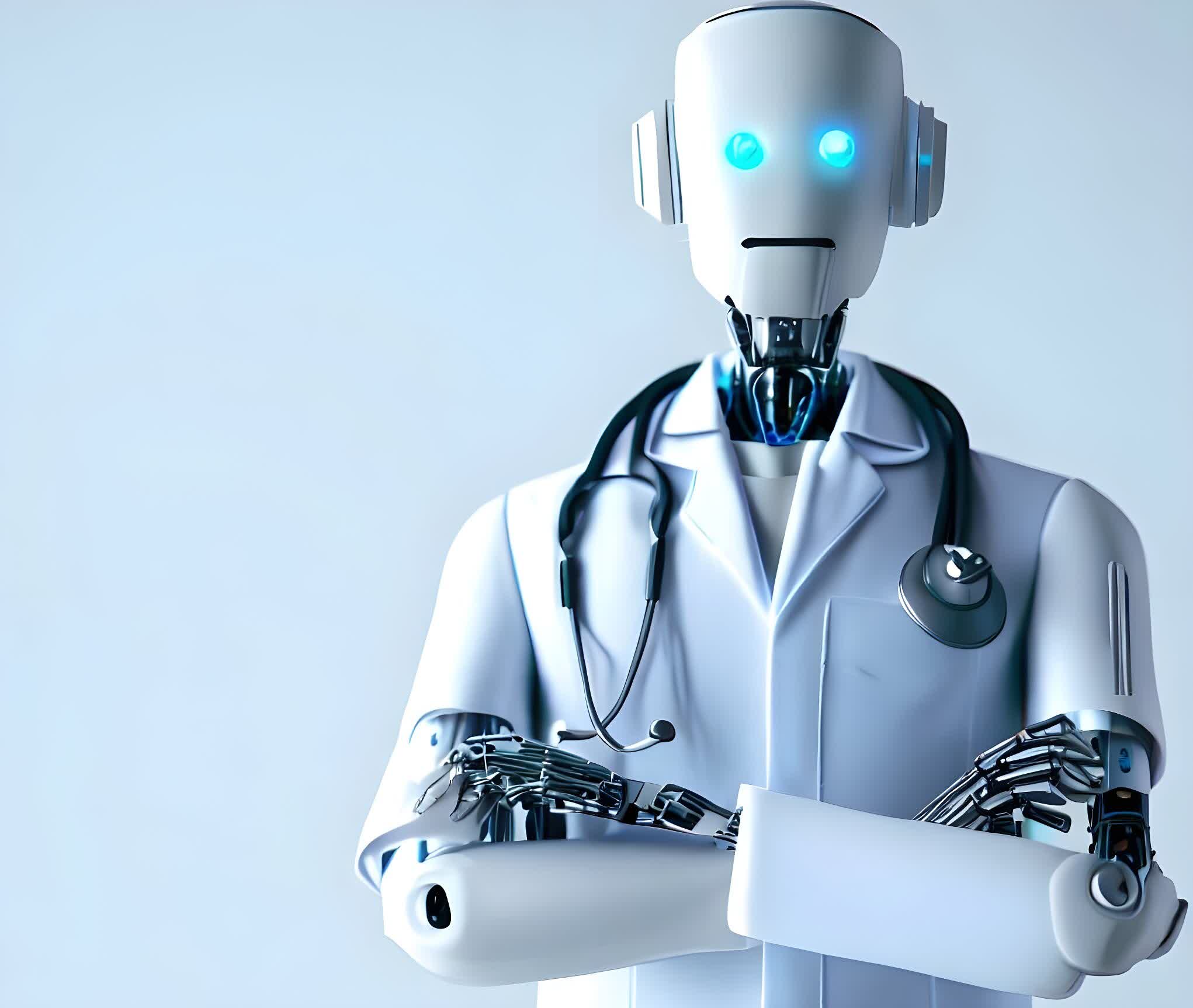
Utah to let AI examine patients and prescribe medication without human oversight
2026-10-07Utah has approved a program allowing artificial intelligence to examine patients and prescribe medication without human oversight. The initiative is currently limited to a one-year pilot focusing exclusively on treating mild-to-moderate acne.

What's Earth's dominant species by mass?
2026-10-07Contrary to a popular myth, humans outweigh all the world's ants combined by a ratio of roughly five to one. However, termites may actually surpass humans in total global biomass. Experts note that comparing the mass of a single human species against thousands of distinct insect species makes for an inherently uneven comparison.

Paramount Skydance has completed its $111B merger with Warner Bros. Discovery
2026-10-07Paramount Skydance has officially completed its $111 billion merger with Warner Bros. Discovery after a last-ditch effort to block the deal failed. As a result of the massive consolidation, Paramount now fully owns Warner Bros.

UniEvo-VL: Self-Distillation Training for Multimodal Model Self-Improvement
2026-10-07Researchers have introduced UniEvo-VL, an on-policy self-distillation training recipe designed to enable multimodal models to continuously self-improve. This novel methodology allows artificial intelligence systems to autonomously refine their capabilities and enhance overall performance by learning from their own generated outputs.
Integer multiplication below n log n
2026-10-07OpenAI has launched a new GitHub repository dedicated to exploring mathematical algorithms that achieve integer multiplication below the n log n time complexity. The open-source initiative aims to advance computational mathematics through collaborative research and development. Developers and researchers interested in contributing to the project are encouraged to create a GitHub account and join the effort.
Treg (OpenRouter for Tools)
2026-10-07Treg is a new project designed to act as an OpenRouter equivalent specifically for AI agent tools. It aims to simplify tool integration for developers building autonomous agents. The project is currently supported by an active Discord community for developer collaboration.
South Korea says AI agents appear to have been used to hack the country's banks
2026-10-07South Korea reports that AI agents were likely used to breach its banking sector, drawing skepticism and highlighting the nation's history of legacy security vulnerabilities. While some institutions avoided the attack by strictly isolating internal networks from external staff, experts warn that integrating AI could inadvertently expand these attack surfaces. The incident raises broader concerns about how automated systems might complicate financial operations and create new vectors for cyberattacks.
The Query Transformation Pipeline
2026-10-07This article examines the importance of query transformation pipelines in optimizing database performance and dataflow. It explains how rewriting queries before execution enables database engines to build more efficient plans for scanning, joining, and filtering data.