AI And Tech News Past 24 Hours
SubmitArtificial intelligence now touches nearly every corner of the technology world. This section combines recent AI developments, from model releases to enterprise adoption, with the broader tech stories they connect to, giving readers a fast way to catch up on both.
A given day might bring a new model or agent framework, chip and data center news driven by AI demand, enterprises reporting real deployment results, and debates over safety, jobs, or regulation. The feed connects these threads so the AI story reads as one picture rather than scattered headlines.
AI news moves fast enough that even practitioners struggle to keep pace. Engineers, product leaders, investors, and curious readers use a consolidated daily view like this to stay current without spending hours sorting genuine advances from hype.
2026-10-31
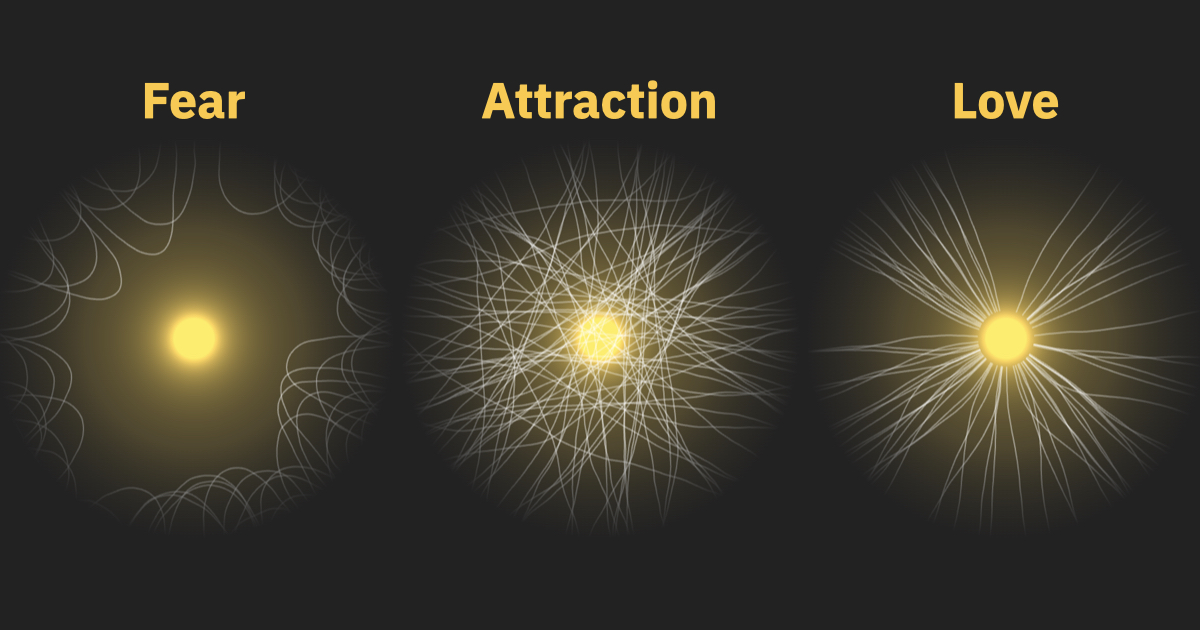
Simple circuits can exhibit surprisingly complex behaviors, according to a new report. The finding suggests rich dynamics may emerge from minimal electronic designs, with potential implications for robotics and computing.
CommentsJepsen: ParticleDB 1.1.4
2026-10-31Jepsen’s ParticleDB 1.1.4 report drew discussion over ParticleDB’s home-page claim that it was “formally proven” with a TLA+ proof, with readers joking it may have meant “formerly.” The linked GitHub repository was initially returning 404 and confirmed to still be private, though ParticleDB said it hoped to resolve that shortly.
Comments
Configure a UPS on Linux with NUT
2026-10-31This guide explains how to install and configure Network UPS Tools (NUT) on Linux to detect a UPS and load the correct driver. It also covers setting up automatic safe shutdown when the battery runs low.
CommentsOqtaDrive marks five years since its first alpha release, having grown from a shelved hobby project into an Arduino Nano-based emulator of eight Sinclair Microdrives for the ZX Spectrum with Interface 1 and the QL. The project has shipped 34 releases over that period, and its creator is now looking back at its evolution.
Comments
Distributed Proofreaders
2026-10-31Distributed Proofreaders is a web-based platform that helps convert public domain books into e-books. It divides the work into individual pages so many volunteers can proofread a book simultaneously.
Comments
Rhind Mathematical Papyrus
2026-10-31A reader discussion suggests the Rhind Mathematical Papyrus may be less a grand treatise than a student’s notebook of applied exercises completed under a teacher’s direction. Despite the scribe’s grandiose introduction about “accurate reckoning” and “all secrets,” the content raises questions about the original text’s actual circumstances.
Comments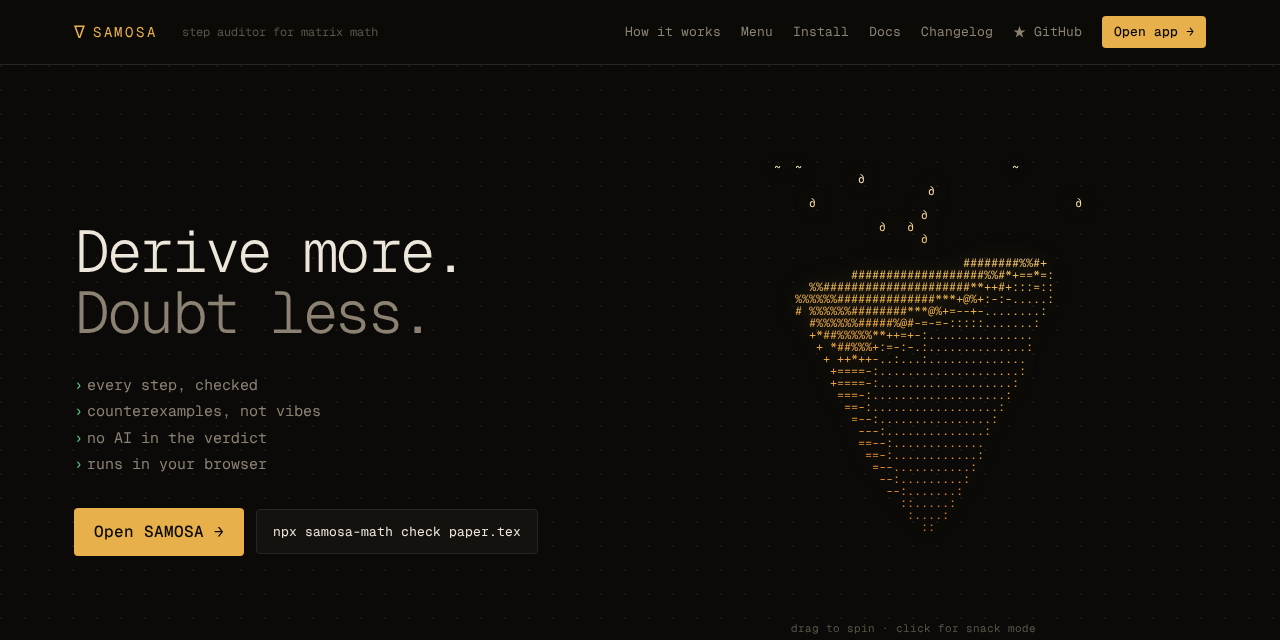
Show HN introduces Samosa, a linter that verifies every step of matrix derivations exactly over finite fields. It offers a browser-based 2x2 counterexample and fix, and its verdicts do not rely on AI.
Comments
The 1607 Bristol Channel flood was one of Britain’s worst natural disasters and was widely seen as a divine warning that people had strayed from God. Erik Crnkovich examines how miraculous weather and the early modern printing industry fed a growing appetite for the occult, exotic, and odd.
CommentsThe article explains why Python’s None is often an inadequate way to represent absence and how custom sentinel values can better fill that role. It also covers how PEP 661 makes sentinels first-class citizens in Python 3.15.
CommentsTrapped in the Technologist Factory
2026-10-31A new piece examines how the tech industry’s assembly-line approach to producing technologists can leave workers feeling trapped in narrow roles and rigid career paths. It questions whether the factory model of churning out technical talent truly serves individuals or mainly employers.
CommentsGhostman is a fast, keyboard-driven TUI API client and webhook inspector. It runs 100% locally with no cloud dependency or Electron, aiming for a lightweight, local-first workflow.
Comments
A/SIDE is a private sharing app for photos, videos, and everyday updates with people you know. It offers a chronological feed and encrypted chats, with no ads and no AI in the app.
Comments