AI And Tech News Past 24 Hours
Artificial intelligence now touches nearly every corner of the technology world. This section combines recent AI developments, from model releases to enterprise adoption, with the broader tech stories they connect to, giving readers a fast way to catch up on both.
A given day might bring a new model or agent framework, chip and data center news driven by AI demand, enterprises reporting real deployment results, and debates over safety, jobs, or regulation. The feed connects these threads so the AI story reads as one picture rather than scattered headlines.
AI news moves fast enough that even practitioners struggle to keep pace. Engineers, product leaders, investors, and curious readers use a consolidated daily view like this to stay current without spending hours sorting genuine advances from hype.
2026-09-04

GPT-6 Astra
2026-09-04GPT-6 Astra has been introduced as the most intelligent and aligned model to date. It features state-of-the-art capabilities across computer use, coding, cybersecurity, and science.
Comments.name Termination
2026-09-04Verisign's proposal to terminate all existing third-level registrations under the .name top-level domain has sparked severe backlash from users who condemn the move as a disgraceful rug-pull. Critics argue that existing domains should be honored or transitioned to second-level equivalents, highlighting ongoing frustrations with ICANN's profit-driven management of top-level domains at the expense of user stability.
Comments

Project Xanadu: Even More Hindsight
2026-09-04A new retrospective examines the successes and failures of Project Xanadu, arguing that a lack of design iteration and practical use-cases prevented its visionary goals from becoming a useful reality. The author highlights how these historical shortcomings stalled the project's development and contrasts these past missteps with a more practical, modern approach to technology design.
CommentsCerebras has made the Qwen 3.8 27B model available on its public endpoints, achieving an impressive inference speed of 1500 tokens per second. Developers can now access this model and browse other available options directly through the platform's public API.
CommentsMathematicians and enthusiasts are exploring complex permutations of multi-sided dice designed to guarantee completely tie-free and fair turn orders for any number of players. While commercial options already exist for smaller groups, discovering a mathematically perfect set of five 30-sided dice that remains fair for any subset of players remains a massive computational challenge. Discussions also highlight that simply using a single 120-sided die to determine all possible outcomes ironically just shifts the tie-breaking problem to deciding who gets to roll it.
Comments
Heart Aerospace has successfully flown the largest electric airplane ever built, featuring a 100-foot wingspan and a 25,000-pound takeoff weight. The Y Combinator-backed startup completed the historic flight using just five dollars of electricity.
Comments
The construction of artificial beaver dams has significantly improved the survival rates of juvenile coho salmon. Following the installation of these dams, one river saw the survival rate for the young fish soar from 8% to 60%.
Comments
A comprehensive study analyzed nearly 17,000 sessions to evaluate how coding agents like Claude Code, Codex, and Cursor select and implement development tools. The research tested 1,163 prompt variations across 75 repositories to observe the agents' actual behaviors. By focusing on real implementation rather than just recommendations, the findings provide deep insights into the practical decision-making processes of AI assistants.
Comments
A developer used a large language model to translate the 68000 assembly code of their 1993 Amiga game, Babylonian Twins, and port it to the Godot engine. The creator recently shared their findings after reviewing the AI-assisted porting process. Additionally, the original game disks have been released for free on itch.io.
Comments
IFM has launched K2 Horizon, an open-source fleet of six frontier AI models designed to handle reasoning, coding, and agentic workflows. This connected ecosystem also provides specialized solutions for edge devices and enterprise deployment, offering developers a comprehensive suite of advanced tools.
Comments
A new interactive platform called Any Human Ever allows users to randomly generate a detailed biographical profile from the estimated 100 billion humans who have ever lived. The project ensures historical accuracy by meticulously sourcing every detail of the selected individual's life.
Comments
Xanadu was waiting for agents
2026-09-04Ted Nelson's sixty-year-old vision of a fully interconnected docuverse, originally outlined in Project Xanadu, is finally coming to fruition. The recent rise of AI agents has introduced the native users required to navigate this complex information space, bringing his long-awaited technological dream to life.
Comments
Top-ranked Go player Shin Jin-seo has defeated the premier artificial intelligence engine KataGo in a dramatic comeback match while playing with a two-stone handicap. This victory marks a significant milestone in the ongoing competition between human grandmasters and advanced AI.
Comments
Tasklet, a Y Combinator-backed startup, is hiring a Customer Success Engineer to support users building complex AI-driven automation workflows. Rather than simply resolving support tickets, the position focuses on enhancing the overall user experience by optimizing the core product, self-serve resources, and internal tooling.
Comments
The Jactl scripting language introduces a custom continuation-based mechanism to simulate virtual threads in Java 8 without relying on Project Loom. The article details the underlying architectural design of this approach and provides benchmarks to evaluate its performance impact.
Comments
The Information reports that OpenAI's upcoming Astra model features a novel looped transformer architecture. This recurrent design has sparked debate among AI commentators, raising questions about the potential risks and broader implications of the technology.
CommentsAsk HN: Who is using MCP in production?
2026-09-04Hacker News developers are sharing diverse production use cases for the Model Context Protocol, including customer-facing voice agents, government open data initiatives, and automated web scraping. While many praise the protocol for providing a standardized, agent-friendly interface that simplifies third-party integrations and tool discovery, others caution about challenges like context window bloat and inefficiencies when handling large data payloads compared to traditional command-line tools.
Comments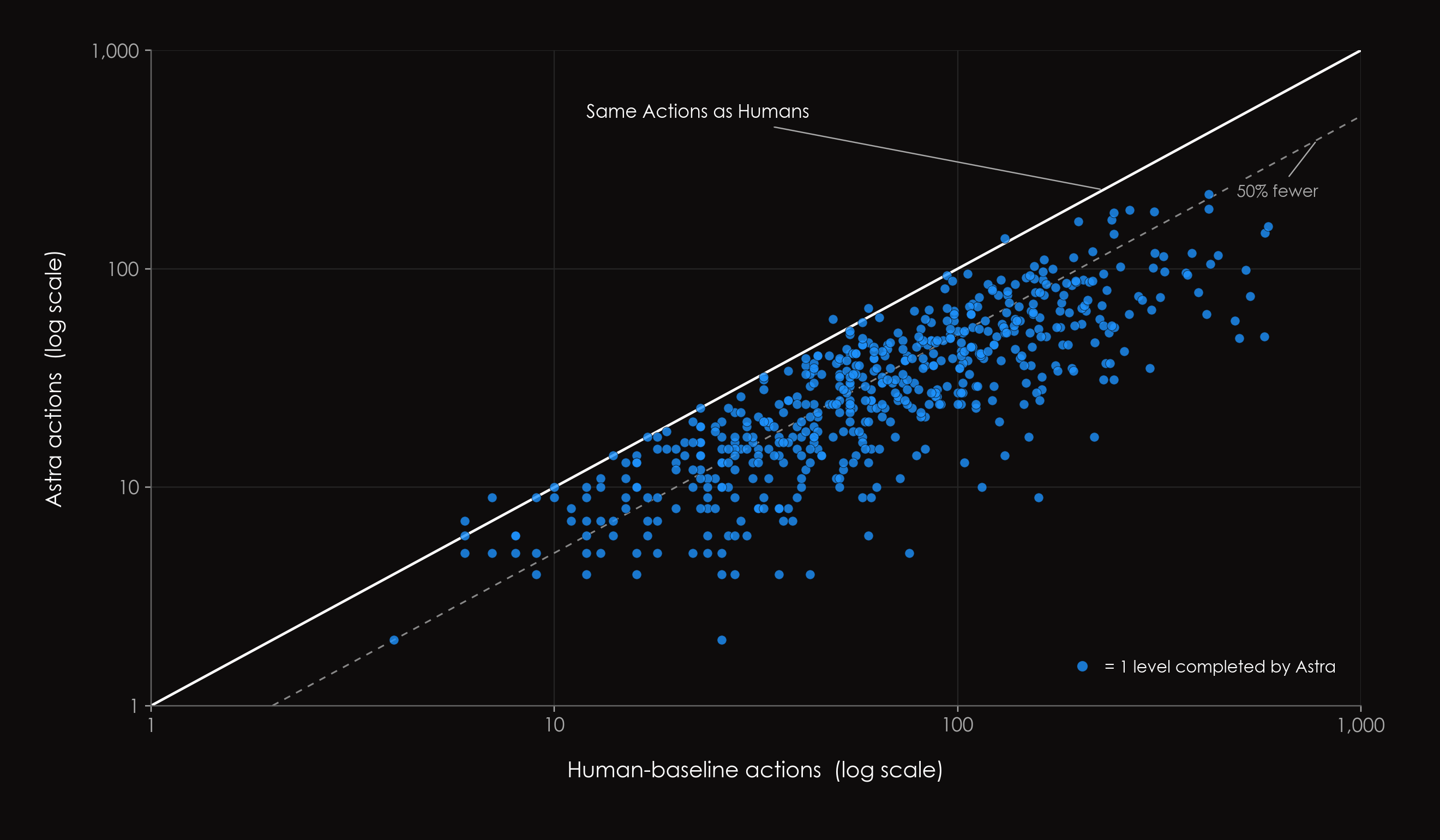
OpenAI's GPT-6 Astra on ARC-AGI-3
2026-09-04OpenAI's latest model, GPT-6 Astra, has achieved state-of-the-art results on the ARC-AGI-3 benchmark. This milestone demonstrates significant advancements in the model's abstract reasoning capabilities. The achievement marks a major step forward in the ongoing development of artificial general intelligence.
CommentsGenerative AI is disrupting front-end web development by empowering non-technical users to independently build and update websites at a fraction of the traditional cost. Although this automation threatens basic web design roles, senior engineers anticipate their expertise will remain essential for developing the underlying frameworks and guardrails of these new tools.
Comments
How to get a free .arpa domain
2026-09-04A new guide demonstrates how to acquire a free .arpa domain by exploiting IPv6 reverse DNS delegations through Hurricane Electric. The tutorial walks users through configuring the deSEC DNS service and successfully hosting a live website on the custom address.
CommentsA simultaneous outage affecting OpenAI, Claude, and Grok led users to suspect a cascading failure across major cloud infrastructure providers. However, the community heavily debated the reliability of Downdetector's tracking data, arguing that self-reported spikes are often skewed by observer bias. Ultimately, the discussion highlighted widespread skepticism toward automated outage trackers and the unpredictable nature of shared digital infrastructure.
Comments2026-09-03

Muse Spark 1.3
2026-09-03Muse Spark 1.3 has been released with specialized training for autonomous agentic workflows and complex task execution. The latest version also introduces targeted optimizations to significantly improve its competitive coding performance.
Comments
Gemini 3.8 Flash and 3.8 Flash Cyber
2026-09-03The newly announced Gemini 3.8 Flash and 3.8 Flash Cyber models deliver next-generation artificial intelligence designed to power complex agentic workflows. Additionally, the specialized Cyber variant provides robust, tailored capabilities specifically engineered for advanced cybersecurity operations.
Comments
Holden's Lightning Flight
2026-09-03A historical account reveals how an RAF officer named Holden flew a Lightning aircraft on a test mission despite lacking current qualification on the type. Because the base's regular test pilot was not current on the Lightning and outside help would take days, Holden took it upon himself to conduct the flight. During a subsequent review, Air Marshal Kenneth Porter used classic British understatement to question the decision, ultimately acknowledging systemic gaps in the military's testing protocols.
Comments
A recent analysis reveals that AI search engines like Perplexity are heavily citing obscure websites for software recommendations, with nearly 60 percent of sources falling outside the top 100,000 most-visited domains. Many of these highly cited sites, including three domains that generated over 215,000 best software pages, are specifically designed to be read by AI models rather than human users.
CommentsFable 5.1 World Modeling
2026-09-03PhiloLabs has released Fable 5.1, a world modeling update that enables the generation of virtual environments via code. The fable51-worlds project is now available on GitHub, where developers are encouraged to contribute to its ongoing development.
Comments
Users are expressing frustration over Mistral AI's confusing and shifting privacy policies regarding the use of customer prompts for model training. The discussion sparked a semantic debate over the contradictory phrase "opt-in by default" and how it misleads consumers about their actual privacy choices. Commenters contrasted Mistral's approach with competitors like Anthropic, which clearly disables data training by default for organizational tiers.
Comments
Reasons robotics is hard
2026-09-03This article explores the complex engineering and physical challenges that make building reliable robots so difficult. It also advises readers to be skeptical of polished robotics demo videos, which frequently mask the real-world failures and underlying complexities of these systems.
CommentsA new technical deep dive explores the engineering optimizations that make Wasmi 2.0 one of the fastest WebAssembly interpreters available today. The breakdown details the specific techniques used to achieve this high performance and compares execution speeds directly against competing solutions like Wasm3 and Stitch.
Comments
New findings suggest that aging brains do not simply lose memories, but rather blend them together. Older individuals tend to replay experiences too broadly, which causes distinct memories to mix instead of fading away completely.
Comments