Aging Tech News
As populations grow older, a wave of companies is building technology for seniors and the people who care for them. Here you will find news on age-tech startups, remote health monitoring, longevity science, and accessible product design. The section also tracks investment flowing into this fast-growing market.
Stories in this section often cover fall-detection wearables, medication management apps, robotics for elder care, and research into extending healthy lifespan. Funding rounds for age-tech companies appear regularly, as do partnerships between technology firms, insurers, and healthcare providers aimed at helping people live independently for longer.
The topic matters because demographic change is one of the most predictable forces in the global economy. Caregivers, healthcare professionals, product designers, and investors all follow age-tech closely, since the market for products serving older adults keeps expanding while the workforce available to provide care keeps shrinking.
Launch HN: Transload (YC P26) – Measuring freight items with CCTV
2026-06-09YC-backed startup Transload has developed a computer vision platform that uses standard warehouse CCTV footage to measure freight dimensions, helping less-than-truckload carriers recover roughly $50,000 per site each month from underbilling. By leveraging advanced depth estimation and 3D mapping models to achieve sub-1.5-inch accuracy without manual calibration, the company plans to expand its technology into broader warehouse management and manufacturing applications.
A Matter Wi-Fi Light Bulb in Rust on the Raspberry Pi Pico 2 W
2026-06-08A new open-source project demonstrates how to create a Matter-compatible Wi-Fi smart light bulb using the Raspberry Pi Pico 2 W and the Rust programming language. By leveraging the Rust Embassy asynchronous framework, the repository offers practical code examples for developers looking to integrate the microcontroller into modern IoT ecosystems.
Harness engineering: Leveraging Codex in an agent-first world
2026-06-07Harness engineering is exploring how to leverage Codex to adapt its software development practices for an agent-first world. By integrating autonomous coding agents into daily workflows, the technical staff aims to significantly enhance overall engineering efficiency and embrace AI-driven development.
Win16 Memory Management
2026-06-07A reader discussion on Win16 memory management highlights how the operating system's bi-modal design forced developers to navigate complex segmented addressing to maintain compatibility with older processors. Compared to OS/2 and Classic Mac OS, Windows introduced unique hurdles like globally shared DLL data and manual code segmenting to conserve limited RAM. Despite the tedium of managing these strict hardware limitations, developers recall that the overall system was much simpler to comprehend than today's complex cloud environments.

Speculative KV coding: losslessly compressing KV cache by up to ~4×
2026-06-07A new technique called Speculative KV coding enables the lossless compression of AI model KV caches by up to four times. By leveraging a cheaper predictor model to drive an arithmetic coder, the method significantly reduces memory overhead for large language models without sacrificing data integrity.
The Quiet Numbers Station: Decoding Nineteen Years of GPS Cryptography
2026-06-06An article detailing a 19-year analysis of GPS cryptographic signals has sparked discussions regarding the aging US navigation infrastructure compared to newer global systems. Readers highlighted the delayed modernization of GPS signals, the surprising operational longevity of older satellites, and the constellation's lesser-known role in the US nuclear monitoring network.

Dutch gov't will only allow European company to operate DigiD platform
2026-06-05The Dutch government will require companies managing its DigiD digital identity platform to be European for all contracts after August 2028. The upcoming tender will be governed by the Defense and Security Procurement Act to better protect national security. This specific legislation strictly limits eligibility to European firms to minimize potential security risks.

Journey to JPEG XL: open-source experiments shaped the future of image coding
2026-06-04A decade of open-source experimentation in psychovisual modeling and compression has paved the way for JPEG XL, the next-generation image coding standard. These collaborative technical advancements shape the future of digital imaging by delivering superior visual quality and efficiency.
Castor: CERN Advanced STORage Manager
2026-06-04CERN's legacy CASTOR storage system was officially replaced in 2020 by the CERN Tape Array after its automated disk-to-tape abstraction caused unpredictable performance issues. The shift to the new tape array, along with their in-house EOS disk storage solution, resolved operational bottlenecks and eliminated random staging delays. Additionally, the organization continues to engage the public by selling retired LHC data tapes as souvenirs and hosting petabytes of open-access physics data.
Uber's $1,500/month AI limit is a useful signal for AI tool pricing
2026-06-03Uber implemented a $1,500 monthly spending limit on internal AI tools after exhausting its entire 2026 AI budget in just four months. This sudden cap highlights the rapid escalation of enterprise AI costs and serves as a valuable benchmark for how companies are currently managing and pricing their AI usage.
I was recently diagnosed with anti-NMDA receptor encephalitis
2026-06-03Patients dealing with complex, frequently misdiagnosed conditions like Mast Cell Activation Syndrome are increasingly turning to AI chatbots like Claude and Copilot when traditional doctors fail. Users report that these AI tools successfully analyze obscure symptoms and recommend personalized supplement regimens, highlighting a growing trend of individuals leveraging generative AI for personal health management.
Gooey: A GPU-accelerated UI framework for Zig
2026-06-03Gooey is a new hybrid immediate and retained mode UI framework for the Zig programming language designed to build fast, GPU-rendered applications. It supports cross-platform development by leveraging graphics APIs such as Metal, WebGPU, and Vulkan across macOS, WebAssembly, and Wayland environments.
Alphabet announces $80B equity capital raise to expand AI infra and compute
2026-06-01Alphabet plans to raise $80 billion in equity to significantly expand its AI infrastructure and compute capabilities, with a portion of that funding coming from a $10 billion private placement to Berkshire Hathaway. Despite concerns that advanced language models could cannibalize its core search advertising revenue, the company is mitigating this risk by deeply integrating AI directly into its existing search platform. By leveraging its vast proprietary data and unmatched distribution network, Alphabet aims to maintain its market dominance as user behavior transitions toward AI-driven queries.

Naphtha shortages in Japan
2026-05-30Severe naphtha shortages are increasingly disrupting a wide range of industries across Japan. The material scarcity has forced significant supply chain adjustments for many companies. As a direct result, leading snack-food manufacturer Calbee has announced it will switch to black-and-white packaging for select products.

I'm Getting into Mesh Networks (Meshtastic, MeshCore, and Reticulum)
2026-05-28After running a personal ISP, a networking enthusiast realized their continued reliance on centralized service providers despite managing their own physical infrastructure. This experience has prompted them to explore fully decentralized connectivity by diving into mesh network technologies like Meshtastic, MeshCore, and Reticulum.

All of human cooking compressed into 2 megabytes
2026-05-27Researchers have developed a machine learning model named Epicure that maps the complex relationships between food ingredients into a mathematical space. By leveraging these embeddings, the team has effectively compressed the vast knowledge of human cooking into a tiny two-megabyte dataset. This breakthrough reveals an emergent geometric structure to culinary recipes that could significantly advance automated food generation.
Raft Consensus with a Minority of Nodes
2026-05-27A recent article explores how distributed systems can achieve Raft consensus using only a minority of nodes by leveraging mathematical structures like finite projective planes for quorum intersection. The piece challenges the traditional assumption that a standard majority is strictly required, demonstrating instead that preventing split-brain scenarios relies on carefully designed selection criteria to guarantee overlapping node participation. This approach effectively balances fault tolerance and system continuity by ensuring that no two conflicting network partitions can independently authorize state changes.

Outsourcing plus local AI will soon become more economical vs. frontier labs
2026-05-26Industry analysis suggests that combining outsourced AI services with local AI deployments will soon become a more cost-effective alternative to relying exclusively on frontier AI labs. This hybrid approach enables businesses to significantly reduce operational expenses while still leveraging advanced machine learning capabilities. As local models continue to improve, this economical shift is expected to fundamentally reshape enterprise AI strategies.
C extensions, portability, and alternative compilers
2026-05-25Discussions around C portability and alternative compilers reveal significant challenges in parsing non-standard, platform-specific code within header files. Developers continue to debate the trade-offs between strict POSIX compliance and leveraging OS-specific features like systemd, which frequently breaks compatibility for Windows and FreeBSD users. Ultimately, the discourse highlights that achieving true cross-platform compatibility in C remains difficult due to prevalent Linux-centric assumptions and inconsistent compiler support.
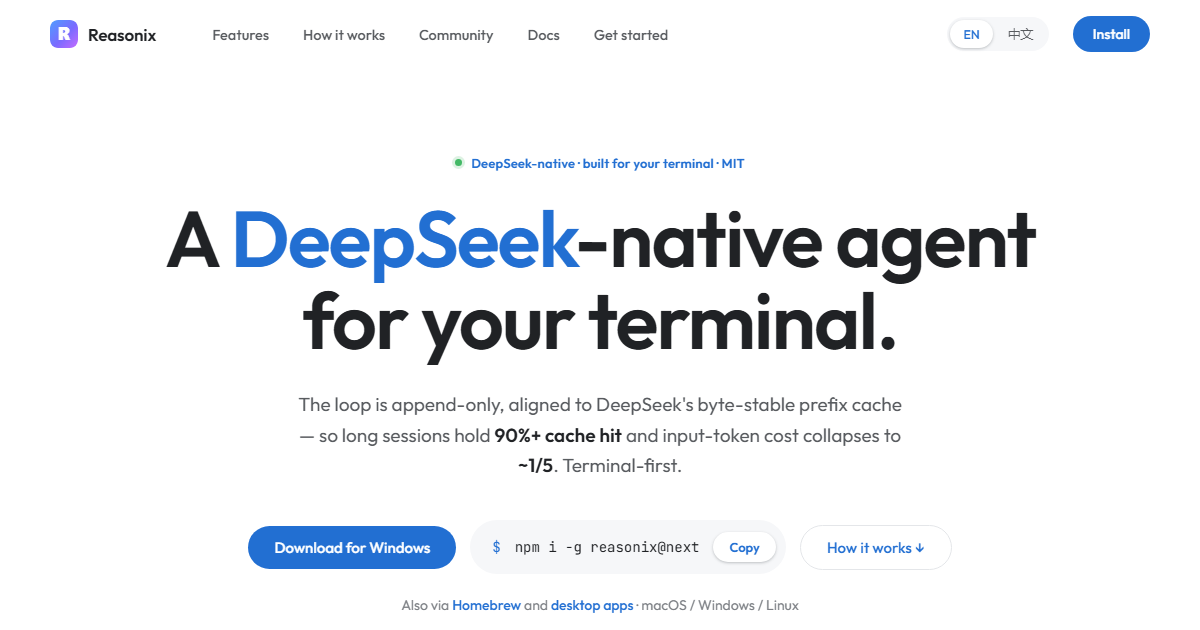
DeepSeek reasonix, DeepSeek native coding agent with high caching and low cost
2026-05-24DeepSeek Reasonix is a new open-source AI coding agent designed for use across terminals, browsers, and compatible editors. By leveraging DeepSeek's byte-stable prefix cache, the tool maintains over a 90% cache hit rate during long sessions and reduces input-token costs to one fifth. The MIT-licensed project is distributed as a single Go binary, ensuring easy installation and seamless accessibility across desktop and web platforms.