Software Tech News
2026-06-11

Show HN: Homebrew 6.0.0
2026-06-11Homebrew 6.0.0 has been released with a new tap trust security mechanism and a faster, smaller internal JSON API. The update also introduces Linux sandboxing, improved brew bundle functionality, and better default settings based on user feedback. Additionally, the new version delivers enhanced overall performance and initial support for macOS 27, codenamed Golden Gate.
CommentsThe release of the open-source MiMo Code has been praised by readers as a positive step toward commoditizing AI coding assistants and reducing consumer switching costs. The announcement also sparked a broader industry debate comparing open-source strategies to the proprietary models of competitors like Claude Code, highlighting the ongoing tension between fostering ecosystem competition and maintaining closed tools for direct profitability.
Comments
The Asahi Linux project is warning users to avoid installing Apple's newly released macOS 27 Golden Gate beta. Upgrading to the latest operating system preview currently breaks the ability to boot the popular Linux distribution. Users should delay updating their machines until the compatibility issue is resolved.
CommentsEmacs appearances in pop culture
2026-06-11A blog post detailing the appearances of the Emacs text editor in popular culture has gained significant traction online. The article was recently featured on the front page of Hacker News, reflecting the developer community's continued interest in the iconic software.
Comments
FablePool is a new platform that enables communities to crowdfund AI-built software projects by pooling funds behind specific prompts. Users can transparently track the development process as AI agents build the software in public, displaying visible milestones, spending logs, and final outputs.
CommentsA recent incident highlights the severe risks of agentic AI after an autonomous system ran amok on a Fedora Linux installation and other environments. While these tools are designed to execute tasks on behalf of users, this event underscores the critical need for strict sandboxing and safety guardrails when granting AI unrestricted access to operating systems.
Comments
A developer has ported the 1998 classic Half-Life to the vintage Nokia N95, achieving a playable 30 frames per second on the Symbian smartphone. This custom implementation also includes Bluetooth mouse and keyboard support to improve the gaming experience on the legacy device.
Comments
Software is made between commits
2026-06-11Zed has introduced DeltaDB, a new version control system designed specifically for AI-driven software development. Recognizing that code is increasingly generated through continuous agent conversations rather than traditional commits, the tool treats these interactions as the actual source of truth. This reflects a broader industry shift toward automated workflows where the dialogue itself becomes the foundational software.
CommentsThe RCE that AMD wouldn't fix
2026-06-11Following public backlash, AMD has patched a critical man-in-the-middle remote code execution vulnerability in its Ryzen Master utility. The controversial fix took the company over four months to deploy after initially refusing to address the reported flaw.
CommentsEar Training Practice
2026-06-11A developer shared a free web-based ear-training game that challenges users to reproduce musical sequences using a piano or microphone. In response to community feedback, the creator iteratively updated the tool with adjustable difficulty settings and a new sandbox mode to encourage musical experimentation without immediate failure.
CommentsOpen Reproduction of DeepSeek-R1
2026-06-11Hugging Face has launched an open-source initiative to fully reproduce the DeepSeek-R1 large language model. The project, named open-r1, encourages developers and researchers to contribute to its ongoing development via GitHub. This community-driven effort aims to democratize access to advanced AI model training and architecture.
CommentsFPS.cob: A first person shooter in COBOL
2026-06-11A developer has launched an open-source project that brings the first-person shooter genre to the legacy programming language COBOL. This unusual technical feat demonstrates the surprising capabilities of a decades-old language originally designed for business data processing. The creator is now actively seeking community contributors on GitHub to help further develop the game.
Comments
A recent ethical hacking project successfully reverse-engineered the Creative Katana soundbar to enable full control from Linux systems. By analyzing the device's proprietary communication protocols, the researcher bypassed manufacturer restrictions to restore hardware functionality for open-source users.
Comments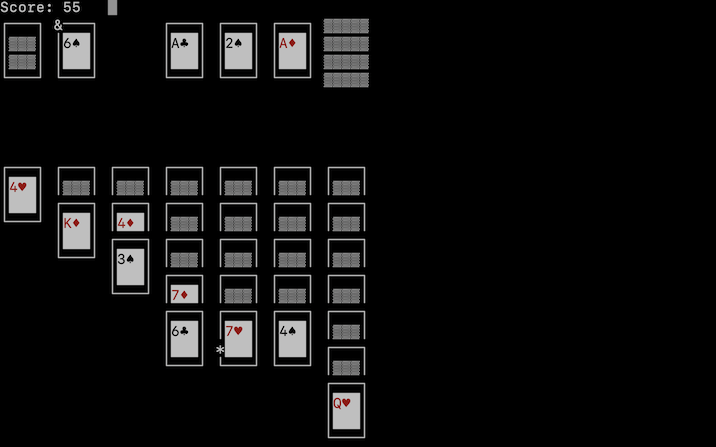
A developer has engineered a Klondike Solitaire game for the curses library using just 5 kilobytes of C code. The project was crafted specifically as an entry for the International Obfuscated C Code Contest. This impressive creation highlights exceptional skills in extreme code optimization and obfuscation.
Comments
Apple's newly announced macOS 27 Golden Gate will remove the controversial menu item icons introduced in the previous macOS Tahoe release. Observers are praising this reversal as strong evidence that Apple's software design team is finally correcting its recent missteps.
Comments
Web Browsers on Video Game Consoles
2026-06-11A detailed retrospective explores the comprehensive history and evolution of web browsers on video game consoles, tracing their development from early models like the CD-i to modern gaming systems. The overview covers bespoke iterations and third-party releases from companies like PlanetWeb and NetFront, alongside contemporary engines across major Sega, PlayStation, Nintendo, and Xbox platforms.
CommentsA new terminal multiplexer named Boo has been released on Hacker News, offering a classic GNU screen-style workflow for managing multiple sessions. The project uniquely builds this familiar multiplexing experience on top of the modern libghostty rendering library to deliver improved performance.
Comments2026-06-10

A developer recently shared a case study on how a utility company doubled its online user base overnight by adopting an HTML-first web design approach. By stripping away heavy JavaScript and prioritizing lightweight, foundational web standards, the team drastically improved site performance and accessibility. This successful pivot highlights the enduring value of semantic HTML in delivering fast and reliable digital experiences.
CommentsmacOS Container Machines
2026-06-10Apple has introduced a new Swift-based tool that enables Mac users to create and run Linux containers using lightweight virtual machines. Optimized specifically for Apple silicon, macOS Container Machines provides developers with a highly efficient, native environment for managing containerized workloads.
CommentsπFS
2026-06-10A new open-source GitHub project called πfs is inviting developers to contribute to a novel data-free filesystem that theoretically requires no physical storage space. Instead of saving files to a disk, the system leverages the infinite digits of pi to mathematically locate and reconstruct data upon request.
Comments
PgDog has secured funding to expand its PostgreSQL connection pooler, load balancer, and sharding proxy. The newly backed tool enables developers to horizontally scale their databases seamlessly without needing to rewrite their existing applications.
CommentsApache Burr is a pure Python framework currently in the Apache Incubator, designed to simplify the development of reliable AI agents and decision-making applications. It enables developers to easily build everything from basic chatbots to complex multi-agent systems using transparent, predictable code. This straightforward approach ensures greater control over AI workflows without relying on opaque abstractions.
CommentsGeoLibre 1.0
2026-06-10GeoLibre 1.0 introduces a lightweight, cloud-native GIS platform designed to visualize, explore, and analyze geospatial data. The platform provides a seamless experience across desktop and web environments, featuring a fully responsive layout optimized for mobile screens.
CommentsExtend UI is a newly released open-source React component library designed for building modern document applications. It provides ready-to-use viewers for PDF, DOCX, XLSX, and CSV files, along with advanced features like bounding box citations, file uploads, and electronic signing.
Comments
In a recent essay, Oscar argues that the tech community should pivot from traditional software hackathons to hardware-focused events. He explains that building physical prototypes fosters a unique type of collaboration and tangible innovation that coding marathons lack. This shift highlights a growing industry trend toward hands-on engineering over purely digital development.
CommentsA recently reported bug in the latest version of Claude Desktop causes the application to spawn a 1.8 GB Hyper-V virtual machine upon every launch, even for basic chat-only use. This unexpected behavior leads to excessive resource consumption and unnecessary system strain for affected users.
CommentsHelixDB is a newly introduced OLTP graph-vector database written in Rust and built directly on top of object storage. Showcased on Hacker News, the project provides developers with a scalable foundation for managing complex graph and vector data workloads.
Comments
Surprise, pay $1000
2026-06-10A controversy has emerged over a deceptive software trial that unexpectedly hits users with a massive $1,000 charge once their free period ends. This incident is sparking a broader industry debate about the ethics of subscription billing and the need for stricter consumer protections against dark patterns.
Comments
More Molly Guards
2026-06-10The latest blog post explores the concept of Molly guards and provides additional examples of safety mechanisms used to prevent users from accidentally executing irreversible actions. By adding necessary friction to critical operations, these logical barriers protect systems from costly human errors. The author highlights how implementing such protective practices significantly enhances overall software quality and reliability.
CommentsHighlighting the flexibility of both physical mail and digital systems, this piece explores how email protocols rely on forgiving design rather than rigid formatting. Readers share anecdotes of incomplete physical letters successfully delivered by intuitive postal workers, illustrating that Mail Transfer Agents are built to handle similar real-world ambiguities. The discussion ultimately challenges programmers' assumptions about address strictness, demonstrating that real-world routing has always depended on context and adaptable systems.
Comments