Software Tech News
2026-06-05
Mouseless is a new cross-platform tool for macOS, Linux, and Windows that allows users to navigate and control their operating systems using only the keyboard. Readers are eager to try it as an alternative to apps like Shortcat and Homerow, hoping it resolves the speed and accessibility issues present in current software. However, some users caution that its dynamic hotkeys might hinder muscle memory and point out that its common name makes the app difficult to search for online.
CommentsMicrosoft has open-sourced pg_durable, a new project that enables in-database durable execution for PostgreSQL. The repository is now available on GitHub, inviting developers to explore the codebase and contribute to its ongoing development.
Comments

New Gemma 4 quantization-aware training checkpoints have been released to optimize AI compression for mobile and laptop efficiency. These updated models significantly reduce memory requirements while improving overall on-device performance.
CommentsDid Claude increase bugs in rsync?
2026-06-05The rsync project maintainer faced severe community backlash after a release containing Claude AI-assisted commits introduced breaking changes and regressions. Although critics blamed the AI for disrupting workflows, the developer defended the update as a deliberate choice to prioritize critical security fixes, highlighting ongoing tensions over the use of generative AI in open-source development.
Comments
Gov.uk has replaced its payment processor Stripe with the Dutch company Adyen to expand digital payment options for citizens. This transition enables residents to pay for local authority and government services using a new pay by bank feature, allowing them to bypass traditional credit cards.
Comments
Changing how we develop Ladybird
2026-06-05The team behind the Ladybird web browser is overhauling its code contribution process to streamline development. This shift in workflow is a crucial step as the project prepares to officially release the browser for everyday public use.
Comments
SaturnCI is a newly introduced continuous integration platform specifically tailored for Ruby on Rails applications. It utilizes a specialized agent skill designed to streamline and automate the test-driven development process. This tool enables Rails developers to seamlessly integrate rigorous testing workflows directly into their continuous integration pipelines.
CommentsMeta has enabled Android Debug Bridge access on its discontinued Portal smart displays, allowing the community to repurpose the abandoned hardware and reduce electronic waste. Although users welcome the newfound capabilities, many criticize the company for initially denying such access and ultimately killing the popular video-calling device. Reader discussions reveal that the hardware was scrapped due to internal corporate politics, massive financial losses, and a forced strategic pivot toward virtual reality.
Comments
Cooldown Support for Ruby Bundler
2026-06-05Ruby Bundler is introducing a new cooldown feature to mitigate supply chain attacks that exploit the brief window immediately after a compromised gem is published. The new cooldown period delays the availability of newly released packages, preventing malicious versions from being instantly resolved during a standard bundle install.
CommentsAlibaba has released Open Code Review, a free and open-source CLI tool that combines deterministic pipelines with LLM agents for automated code analysis. The hybrid architecture provides precise, line-level feedback and includes built-in rulesets to detect common bugs and security vulnerabilities. Compatible with OpenAI and Anthropic models, the tool brings battle-tested, enterprise-grade code review capabilities to developers.
CommentsA newly introduced branchless quicksort implementation has demonstrated faster sorting performance than standard C++ algorithms like std::sort and pdqsort in recent benchmarks. The accompanying discussion highlights the original author's subsequent collaboration on ipnsort and driftsort, two high-performance sorting algorithms recently integrated into the Rust standard library. Additionally, the thread explores the design of the misfortunate Rust crate, which intentionally violates the expected social contract of standard traits to test edge cases in safe Rust implementations.
Comments
Redis 8.8 is now available in open source, introducing a new array data type and a window counter rate limiter. The release also adds streams NACK functionality alongside various performance-focused updates.
CommentsI tested every IP KVM in my Homelab
2026-06-05The author has tested nearly every IP KVM available for homelabs to evaluate their practical value against modern software alternatives. The review highlights that tools like VNC, Tailscale, and SSH often provide highly effective remote access without the need for dedicated hardware.
Comments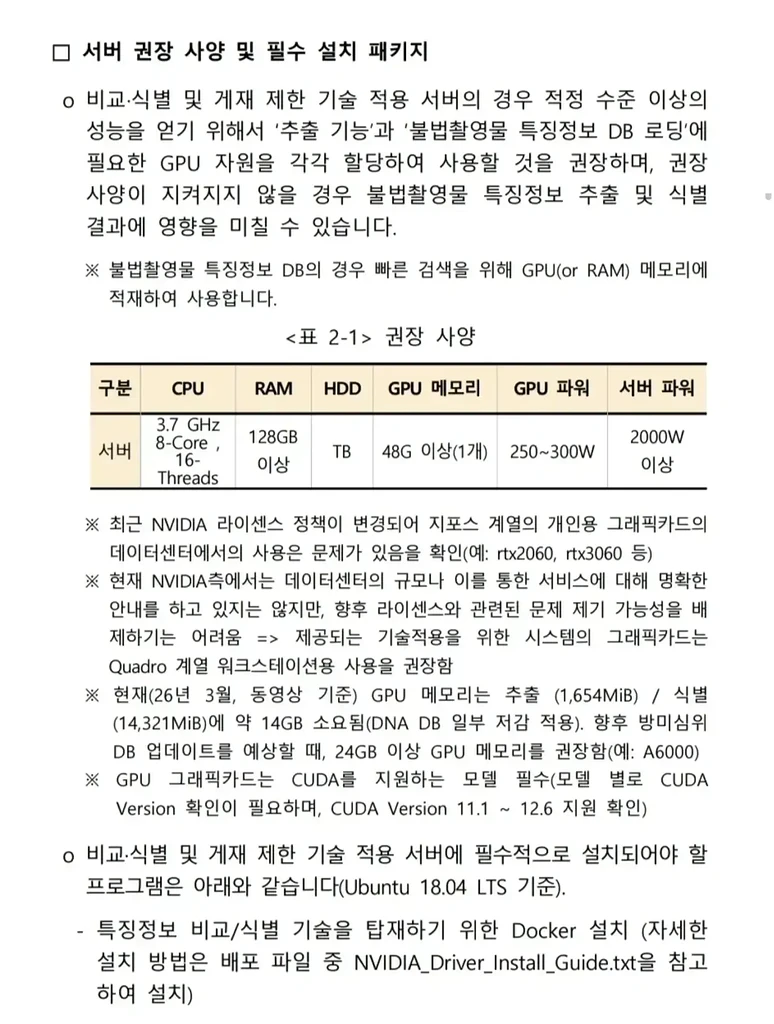
Under new telecommunications regulations, the South Korean government is requiring all online forums to scan user-uploaded images and videos using AI censorship tools. This mandate aims to enforce stricter content moderation across the country's internet communities. However, the requirement will force platform owners to invest heavily in the hardware necessary to process such a massive volume of digital media.
Comments
Microsoft has released the public preview of Azure Linux 4.0, marking its first general-purpose Linux distribution built upon the CBL-Mariner codebase. This new cloud operating system can run on any Azure virtual machine and is coming soon to the Windows Subsystem for Linux.
CommentsLowfat is a new command-line filter that strips unnecessary noise from terminal output to significantly reduce token consumption when using large language models. The open-source tool reportedly saves up to 91.8% of API tokens, offering developers a simple way to lower costs and streamline AI-assisted workflows.
CommentsY Combinator startup General Instinct aims to deploy frontier AI models on edge devices by using distillation techniques to recover performance lost during model quantization. The launch sparked technical discussions debating the viability of Mixture of Experts architectures for edge hardware compared to memory-dense alternatives. These conversations also highlight a broader industry trend toward optimizing local inference speeds and making on-device large language models more practical for everyday use.
Comments2026-06-04

VoidZero Is Joining Cloudflare
2026-06-04VoidZero, the team behind popular web tools like Vite, Vitest, and Rolldown, is officially joining Cloudflare. Despite the acquisition, the team confirmed that Vite will remain completely open source and vendor-agnostic for the broader community.
CommentsAnthropic has released an open-source framework designed to enhance AI-powered vulnerability discovery and software defense. The customizable autonomous harness provides essential skills for threat modeling, automated scanning, triage, and patching. Developers can leverage this reference tool to significantly streamline the identification and resolution of code vulnerabilities.
Comments
A security researcher built a deliberately vulnerable book review app and spent $1,500 to test if Large Language Models could successfully hack it. The experiment aimed to determine if AI can reproduce common classes of software exploits typically found in real-world applications.
CommentsHuawei has introduced KVarN, a new native vLLM backend designed for KV-cache quantization. This calibration-free enhancement allows developers to achieve three to five times more context length while maintaining FP16-level accuracy and exceeding standard throughput. The improved performance can be easily enabled for AI agents using just a single flag.
CommentsGaussian Point Splatting
2026-06-04Gaussian splatting is an advanced 3D rendering technique that leverages modern GPUs to create highly detailed visual representations, though experts caution its lack of physical surfaces and high processing costs currently limit its use in real-time AAA gaming. Consequently, the technology is primarily being adopted for visual-only applications, such as generating realistic digital environments to train computer vision models for autonomous vehicles and drones.
Comments
Uruky, an EU-based alternative to Kagi, has expanded its ad-free private search platform with new image search and URL rewrite features. These updates enhance the search engine's capabilities while maintaining its core focus on user privacy.
Comments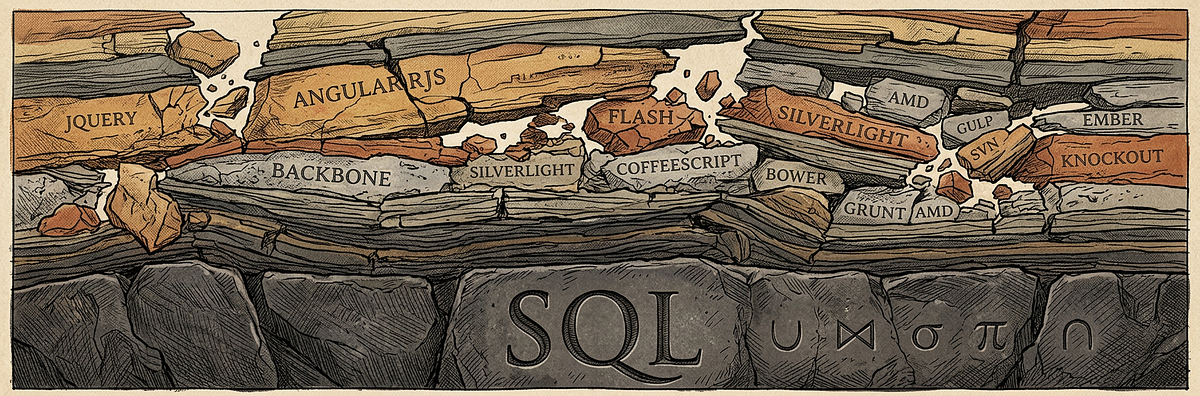
Learn SQL Once, Use It for 30 Years
2026-06-04SQL has maintained its industry relevance for decades because it is fundamentally built on mathematics rather than fleeting technological trends. This enduring stability makes learning the language a valuable, long-term investment for developers looking to future-proof their technical skill sets.
CommentsAn analysis of the Stella companion app reveals that Meta has shipped a complete on-device facial recognition stack for its smart glasses. The recent software build includes embedded face models, a local database schema, and a vector index to process facial data directly on the device. This indicates that Meta's wearables are now fully equipped to identify faces locally without relying on cloud processing.
CommentsReaders discussing persistent live images for Debian and Fedora explore various methods for retaining state changes, comparing immutable technologies like rpm-ostree and bootc against traditional overlay filesystems and dedicated persistent partitions. While immutable approaches provide highly robust and reproducible environments, users warn they can cause significant performance overhead for everyday development tasks compared to standard live USB setups. Ultimately, the community suggests that while advanced tools offer deep system reliability, simpler solutions like overlay configurations or specialized partition scripts remain highly effective for general persistence.
Comments
JLink JTAG Access on the Pinecil
2026-06-04Building on previous hardware modifications, a developer has established JLink JTAG access on the Pinecil smart soldering iron for advanced debugging. This renewed exploration of the device was prompted by the recent addition of upstream support for its Bouffalo Lab BL706 microcontroller in the Zephyr operating system.
Comments
A decade of open-source experimentation in psychovisual modeling and compression has paved the way for JPEG XL, the next-generation image coding standard. These collaborative technical advancements shape the future of digital imaging by delivering superior visual quality and efficiency.
CommentsPatching my guitar amp's firmware
2026-06-04A recent write-up on reverse engineering and patching the firmware of a guitar amp sparked a detailed community discussion about the complexities of hardware hacking. Readers shared their own experiences and practical advice on mastering embedded engineering skills, such as deciphering datasheets, using logic analyzers, and brute-forcing hardware interfaces. The conversation highlighted the steep learning curve of the field, emphasizing that persistence and comprehensive beginner tutorials are essential for demystifying hardware modification.
CommentsCastor: CERN Advanced STORage Manager
2026-06-04CERN's legacy CASTOR storage system was officially replaced in 2020 by the CERN Tape Array after its automated disk-to-tape abstraction caused unpredictable performance issues. The shift to the new tape array, along with their in-house EOS disk storage solution, resolved operational bottlenecks and eliminated random staging delays. Additionally, the organization continues to engage the public by selling retired LHC data tapes as souvenirs and hosting petabytes of open-access physics data.
Comments