Software Tech News
2026-06-03

Elixir version 1.20 is now a gradually typed language, marking a significant shift in how code is validated. This update ensures that every program is automatically type-checked to detect verified bugs and typing violations.
CommentsUber implemented a $1,500 monthly spending limit on internal AI tools after exhausting its entire 2026 AI budget in just four months. This sudden cap highlights the rapid escalation of enterprise AI costs and serves as a valuable benchmark for how companies are currently managing and pricing their AI usage.
Comments
DaVinci Resolve 21
2026-06-03DaVinci Resolve 21 offers professional video editing, color correction, visual effects, and audio post production tools within a single application. The comprehensive software suite is available in both free and paid versions for Mac, Windows, and Linux users.
Comments
A Post-Quantum Future for Let's Encrypt
2026-06-03Let's Encrypt plans to implement Merkle Tree Certificates to add post-quantum authentication to the web without sacrificing the speed and reliability of TLS. This proactive shift addresses the growing urgency of securing web traffic against future quantum computers capable of forging digital signatures in real time.
CommentsA newly discovered vulnerability in Visual Studio Code allows attackers to steal GitHub authentication tokens with a single click. This security flaw puts developers at risk of having their repositories and sensitive source code compromised if the exploit is triggered.
Comments
Meta is introducing new workplace tracking controls that allow employees to temporarily pause data collection. According to an internal memo, workers can now opt out of being monitored for up to 30 minutes at a time.
Comments
A newly discovered exploit called Pwnd Blaster allows attackers to compromise a PC remotely through its built-in speaker. The vulnerability abuses an unauthenticated Bluetooth protocol to turn the audio hardware into a malicious input device. This enables hackers to silently inject harmful keystrokes into the system without ever physically touching the computer.
CommentsGooey is a new hybrid immediate and retained mode UI framework for the Zig programming language designed to build fast, GPU-rendered applications. It supports cross-platform development by leveraging graphics APIs such as Metal, WebGPU, and Vulkan across macOS, WebAssembly, and Wayland environments.
CommentsEvery Byte Matters
2026-06-03A recent article highlights how Java developers frequently add numerous fields to large classes without considering the resulting memory overhead. Instead of evaluating the byte-level impact of these additions, programmers typically rely on asymptotic algorithmic analysis to measure performance. The author argues that true optimization requires recognizing that the memory cost of every single field matters in class design.
Comments
Ableton Extensions SDK
2026-06-03Ableton has introduced the Extensions SDK, an open JavaScript toolkit designed to expand the capabilities of its Live 12 Suite. This framework empowers developers and users to build custom tools that introduce fresh functionalities directly into the music production software.
Comments
After six years of development, the reactive notebook environment Pluto.jl has reached its official 1.0 release. This milestone celebrates the project's significant progress and signifies that the platform is fully mature and ready for widespread use.
Comments
Roku has released the operating system for its Roku LT devices as an open source distribution. The platform is widely recognized for providing simple access to thousands of streaming entertainment channels directly to your television. This new release gives developers the ability to modify and adapt the underlying software for custom applications.
Comments
Edsger is a newly launched handwritten Clojure REPL designed specifically for the reMarkable 2 e-ink tablet, allowing developers to write and execute functional code by hand. To demonstrate the tool's capabilities, the creator also published a companion blog post written entirely by hand.
CommentsY Combinator-backed startup Hyper is launching an AI-powered company brain that uses knowledge graphs and large language models to structure enterprise domain knowledge for agentic workflows. The platform stores facts as interconnected subject-predicate-object records in a Postgres database, enabling AI agents to perform dynamic graph traversals to maintain deep business context. Addressing community questions during the launch, founders clarified their strict no-training data privacy policy and explained how the system uses supplementary tool calls to mitigate potential context loss.
CommentsA developer has reverse-engineered the classic 1990 DOS game Test Drive 3 to extract and map its complete world routing data. This open-source project is now available on GitHub, allowing fans to explore the retro game environment and contribute to further development.
CommentsCapstone is a multi-platform and multi-architecture disassembly framework designed for comprehensive binary analysis. Dubbed the ultimate disassembler, the tool offers versatile capabilities for developers and security researchers. It serves as a highly adaptable solution for reverse engineering across diverse hardware and software environments.
CommentsThe new open-source tool sandboxd allows developers to self-host an AI app builder that constructs real applications within isolated Docker and Go environments. It generates live preview URLs for each project without requiring Kubernetes and can be deployed on your own server with a single command.
Comments2026-06-02

MAI-Code-1-Flash
2026-06-02Microsoft released MAI-Code-1-Flash, a 137B parameter mixture of experts model with 5B active parameters that the company claims significantly outperforms Claude Haiku on the SWE-bench Pro coding benchmark. Community critics accuse the company of cherry-picking weak opponents for comparison, arguing the model merely matches the performance of much smaller and more efficient open-source alternatives like Qwen. In defense of the release, some users highlight Microsoft's emphasis on decontaminated training data and clean licensing, which could offer better real-world generalization and reduced legal liability.
Comments
Gmail thinks I'm stupid, so I left
2026-06-02In a recent personal essay, a frustrated user explains they abandoned Gmail due to its increasingly condescending AI features. The author notes that the platform's overzealous assistance makes them feel belittled rather than helped. This highlights a growing trend of aggressive AI integrations in everyday software alienating users by prioritizing over-simplification over genuine productivity.
CommentsA new Linux tool called nbd-vram allows users to utilize their Nvidia GPU's unused VRAM as system swap space to prevent slow SSD swapping. This provides a clever performance workaround for laptop owners with soldered RAM and no physical memory upgrade path.
Comments
OpenAI's frontier models and Codex are now generally available on AWS, allowing enterprises to integrate advanced AI into their existing cloud environments. This integration enables businesses to leverage their current AWS security controls and procurement workflows to accelerate the transition from evaluation to production.
CommentsThe transition from X11 to Wayland in Linux desktop environments like KDE Plasma is causing significant regressions for accessibility software, most notably the popular voice-input tool Talon. Frustrations are mounting as Talon's developer plans to drop public X11 support due to missing Wayland APIs, drawing criticism over the tool's closed-source nature and strained community relations. In response, Linux developers and advocates are calling for better ecosystem coordination to finalize the necessary Wayland protocols and ensure essential accessibility tools remain viable.
Comments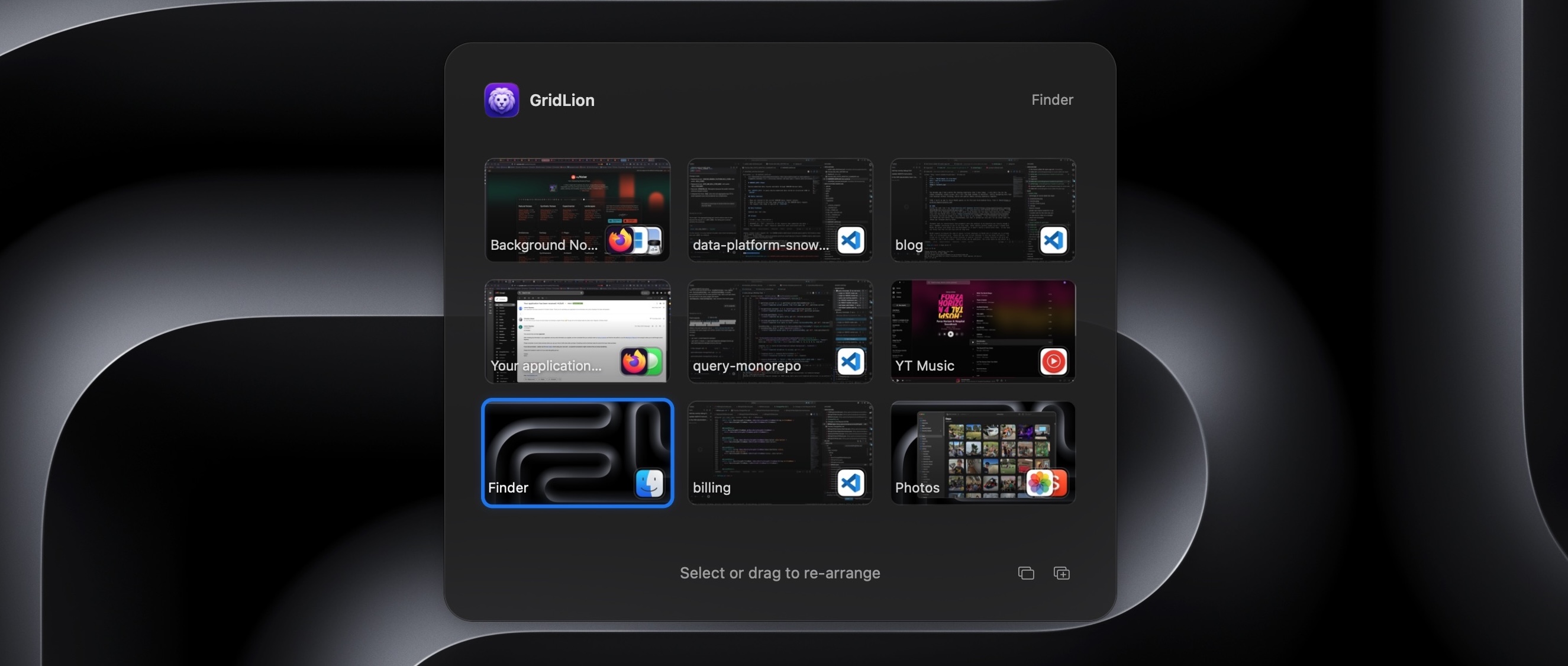
macOS needs its grid back
2026-06-02Frustrated with modern macOS desktop navigation, a developer has created a custom app to restore the pre-Lion grid layout. The tool brings back the original grid-enabled spaces experience, allowing users to seamlessly manage multiple displays using spatial memory.
CommentsReader discussions surrounding a 1993 retrospective on Fidonet highlight the pioneering dial-up network's role in fostering early, tight-knit online communities long before the modern internet. Users fondly recall using FidoNet and regional clones to share messages, distribute files, and meet in person, noting that these networks effectively functioned as a precursor to modern social media. These nostalgic reflections emphasize how much interactive, web-like functionality was already possible during the Bulletin Board System era.
Comments
How we index images for RAG
2026-06-02This piece details new methods for indexing visual elements like screenshots, diagrams, and tables within technical documentation. These techniques enable large language models to better interpret complex image data. Ultimately, this approach significantly improves the accuracy and context of RAG systems.
Comments
Love systemd timers
2026-06-02This article advocates for the widespread adoption of systemd timers as a modern and robust alternative to traditional cron jobs. The piece highlights how this integrated Linux tool simplifies automated task scheduling for system administrators of all experience levels.
Comments
OpenFOV is a new software tool that allows iRacing players to use their standard webcams for real-time head tracking. By dynamically adjusting the in-game field of view to match physical head movements, it unlocks an immersive VR-style experience on standard monitors.
CommentsA new 2024 DOS demo called Pits has achieved native multicore processing and Full HD graphics in pure DOS without relying on external drivers. Since the legacy operating system lacks built-in multithreading, developers accomplished this by running standard DOS on one CPU core while executing custom code on additional cores. This workaround coordinates the cores via shared memory and requires programmers to manually implement synchronization, effectively writing a micro-kernel to manage the complex cross-core execution.
CommentsPrivacy advocates warn that Big Tech is designing a two-track privacy system by introducing built-in browser tracking features that bypass the strict consent regulations required of third-party advertisers. By enabling these proprietary tracking tools by default and hiding opt-out options in browser settings, companies aim to eliminate annoying cookie banners while seamlessly retaining their ability to collect user data.
Comments2026-06-01
A newly discovered Instagram exploit allows attackers to bypass two-factor authentication by manipulating customer support staff or AI chatbots during the account recovery process. Following the revelation, tech commentators are urging platforms to implement more secure recovery methods, such as mandatory time delays or secondary email notifications, to prevent malicious account takeovers.
Comments