Software Tech News
2026-05-08

Google's reCAPTCHA system now requires users to run the company's proprietary software to prove they are human. Consequently, privacy-focused individuals using de-googled versions of Android are being incorrectly flagged as bots and blocked from accessing websites.
Comments
Cloudflare is cutting approximately 20% of its workforce to restructure operations and prioritize the adoption of artificial intelligence tools. Alongside the layoffs, the company announced that its second-quarter revenue forecast fell slightly below Wall Street expectations.
Comments

Instructure's Canvas learning management platform has been restored online following a disruption caused by a confirmed data breach. The ShinyHunters hacking group claimed responsibility for the incident and is threatening to leak sensitive school data if ransom demands are not met.
CommentsAn Introduction to Meshtastic
2026-05-08Meshtastic is an open-source project that enables long-range, off-grid communication without relying on traditional cellular networks. By utilizing LoRa radios, this community-driven initiative allows users to build decentralized messaging networks for remote exploration and emergency preparedness.
CommentsUsers are advised to pause installing new software and system updates for the time being. This precautionary measure follows the discovery of several new vulnerabilities in the Linux kernel that require immediate attention from developers.
Comments
Cartoon Network Flash Games
2026-05-08A newly curated web collection allows users to play classic Cartoon Network Flash games directly in their web browsers. The archive features nostalgic titles inspired by iconic animated series such as The Powerpuff Girls, Dexter’s Laboratory, and Samurai Jack, offering fans a seamless way to revisit early internet entertainment.
Comments
Artificial intelligence is disrupting traditional software vulnerability disclosure and patching cultures within the cybersecurity industry. Although researchers still follow standard procedures like rapidly and openly fixing flaws such as the recent Copy Fail vulnerability in Linux, AI is fundamentally altering how these security issues are discovered and managed.
Comments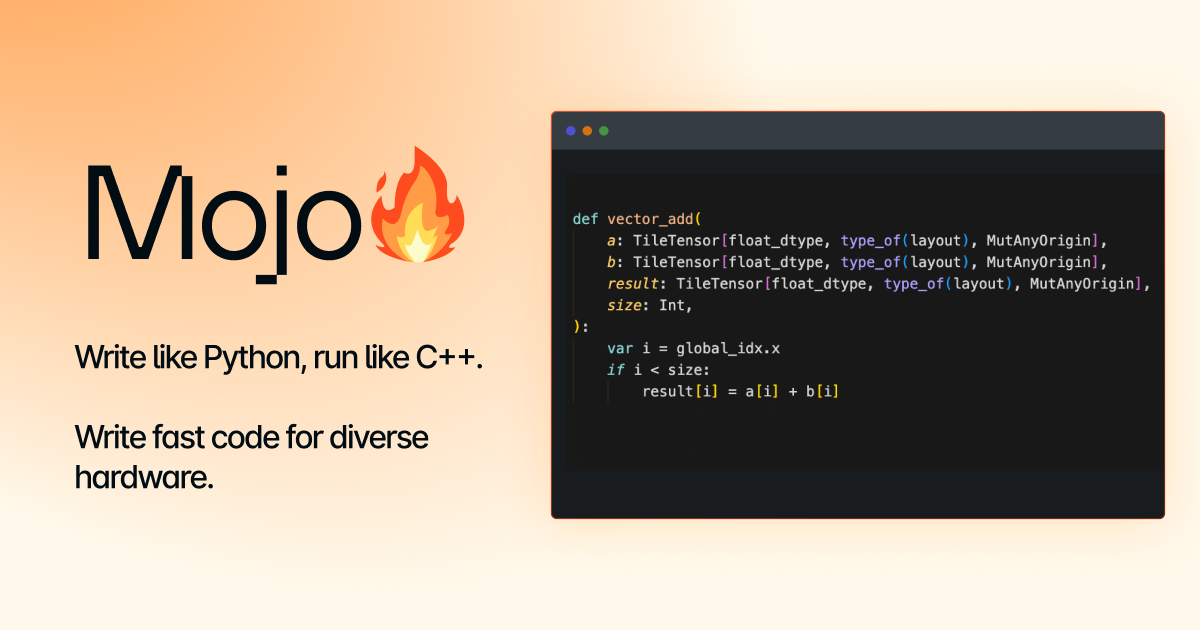
Mojo 1.0 Beta
2026-05-08The Mojo programming language has officially reached its 1.0 Beta milestone, advancing its mission to combine Python's ease of use with C-level performance for artificial intelligence. This release delivers increased stability and new capabilities to help developers efficiently build and deploy complex machine learning models. The update signals that Mojo is rapidly maturing and preparing for widespread adoption in the competitive AI landscape.
CommentsA recent project hosts a website entirely from the RAM of a Raspberry Pi Zero by offloading computationally heavy TLS termination to an external cloud provider. However, community discussions question the necessity of the complex proxy setup and note that modern operating systems already cache web pages in RAM by default, diminishing the technical impressiveness of the project.
Comments
Amazon Web Services has resolved a data center outage in Northern Virginia that was caused by an overheating issue. The cloud provider successfully mitigated the problem and restored normal operations to the affected region.
CommentsA local privilege escalation vulnerability has been identified in the Linux kernel's io_uring subsystem, specifically within the zero-copy receive freelist. The flaw involves a mishandling of a 32-bit unsigned integer that allows an attacker to exploit the memory management structure and gain full root access to the system.
CommentsGoogle has introduced Google Cloud Fraud Defense as the next evolution of reCAPTCHA, featuring a new QR code scanning challenge for user verification. Despite the updated branding, the new tool is essentially just a repackaged version of the existing WEI technology.
Comments
New details have emerged on how the Claude Mythos Preview is being used to harden the Firefox browser through advanced agentic harnesses. These AI agents can now autonomously identify and reproduce genuine software bugs while successfully dismissing false positives.
CommentsA new interactive web page demonstrates the extensive amount of data browsers automatically share with websites by default. It instantly reveals this hidden information to users without requiring any input or permissions, highlighting significant privacy and tracking vulnerabilities.
CommentsRecent analysis of the XZ Utils backdoor suggests that the GNU IFUNC mechanism was the fundamental enabler of the exploit, transforming a standard supply chain compromise into a deeply hidden system-level threat. By weaponizing indirect function resolution, the attacker successfully concealed malicious code within the liblzma library, highlighting a critical need to reevaluate the security implications of IFUNC features in modern build systems.
CommentsPrompted by a developer's report of an unexpected UUIDv4 collision, the tech community emphasizes that such failures are surprisingly common due to flawed or poorly understood entropy sources. To prevent this, experts advise against using UUIDv4 in high-reliability systems, recommending instead the aggregation of multiple diverse, non-deterministic data points. Furthermore, modern cryptographic techniques can extract true randomness from these imperfect sources by blending them into a single, unpredictable seed.
CommentsClojureScript Gets Async/Await
2026-05-08ClojureScript has officially integrated native async/await support into its core compiler, overcoming previous community skepticism regarding implementation complexity. Spearheaded by developer borkdude after prototyping the feature in his Squint project, this update provides a modern alternative to the older core.async library. The release has also sparked broader discussions within the community regarding asynchronous error handling and the shift toward minimal JavaScript frontends using server-sent events.
CommentsReader discussions surrounding a recent article highlight ongoing developer frustrations with command-line tools that mishandle stdout, stderr, and exit codes instead of simply fixing underlying problems. While POSIX conventions dictate keeping stdout clean for data piping and using stderr for logging, many tools and brittle system environments continue to violate these expectations. Participants emphasize that adhering to these foundational CLI practices is essential for reliable scripting and automation.
Comments2026-05-07
Dirty Frag: Universal Linux LPE
2026-05-07A newly disclosed Universal Linux Local Privilege Escalation vulnerability named Dirty Frag shares the same root cause in the kernel IPsec module as the previously discovered Copy Fail bug. The overlapping flaws have sparked a debate among security researchers about whether relying heavily on AI for vulnerability discovery hinders the manual code exploration needed to uncover related issues.
Comments
Reliable AI agents handling complex tasks require deterministic control flow encoded directly in software rather than relying on increasingly elaborate prompt chains. Shifting the focus from complex prompting to structured software design will ultimately result in more stable and predictable agent performance.
CommentsSQLite has been designated as a recommended storage format by the Library of Congress, affirming its reliability despite some corporate bans driven by file-based security and tracking concerns. Although enterprise teams sometimes restrict the lightweight database in favor of traditional servers, advocates argue it is a far superior and safer alternative to the widespread misuse of Excel as a shadow database.
CommentsA new local inference engine for DeepSeek 4 Flash and PRO models has been introduced via the antirez/ds4 project. It allows users to run these advanced AI models locally across multiple hardware platforms by providing native support for Apple's Metal, Nvidia's CUDA, and AMD's ROCm.
CommentsGoogle has removed a privacy statement from the Chrome browser assuring users that its on-device AI features do not send data to company servers. This retraction has prompted immediate privacy concerns regarding how local AI interactions might still be transmitting user information to the cloud.
CommentsPermacomputing Principles
2026-05-07The Permacomputing movement advocates for the sustainable and ecological use of technology, drawing parallels to agricultural permaculture. However, its explicit alignment with anti-capitalist and progressive political ideologies has sparked debate, with some critics arguing this broad framing alienates potential supporters. Proponents counter that addressing systemic societal and environmental challenges is an inherently political act that is fundamental to the practice.
Comments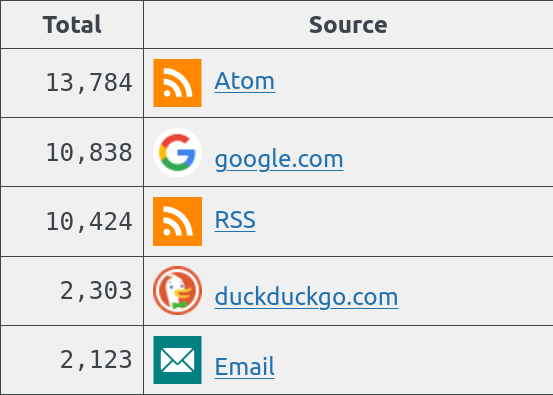
After analyzing their website traffic, a blogger discovered that RSS feeds generate more visitors than Google search. The author attributes this trend to focusing on semantic HTML and metadata rather than pursuing aggressive search engine optimization.
CommentsA new open-source project named TRUST has been shared on Hacker News for its unique approach to coding in Rust like it is 1989. Developers interested in this unconventional programming style can explore the code and contribute to the repository on GitHub.
Comments
The author shares their experience and key takeaways from developing OurCar, a custom utility app designed specifically for their family. This personal project highlights the unique challenges and rewards of building a tailored software solution for everyday household needs from scratch.
CommentsA new community-driven firmware project has been launched for the Xteink X3 and X4 e-paper readers. The open-source software, named crosspoint-reader, is now available on GitHub. Users and developers can create an account to contribute to the project and help enhance the functionality of these devices.
Comments
RaTeX is a pure Rust LaTeX rendering engine that ensures KaTeX-compatible math layout across multiple platforms. It offers ready-to-use packages for Web, iOS, Android, Flutter, and React Native to deliver a consistent display list for cross-platform development.
CommentsAn author has published a guide detailing how to set up a diskless Linux boot using ZFS, iSCSI, and PXE to create a dedicated environment for testing AI models. This network-booted setup keeps local NVMe drives free for gaming and prevents Windows updates from breaking dual-boot configurations. Although remote booting introduces minor performance overhead, it provides a clean, isolated Linux workspace without the hassle of managing local partitions or easily lost USB drives.
Comments