Regulation Tech News
2026-06-18

The Swiss parliament has lifted its ban on the construction of new nuclear power plants. This major policy shift is one of numerous critical issues being addressed during the ongoing summer session of the Federal Parliament in Bern.
Comments
Despite championing digital sovereignty and open-source software, European public institutions have recently migrated their social media accounts to W Social. This decision contradicts their stated goals, as W Social is a private, for-profit network owned by Swedish entrepreneurs that has quietly transitioned to a closed-source model. The move highlights a growing contradiction in the region's push for technological independence.
Comments

The Norwegian Data Protection Authority has fined electronics retailer Elkjop €1.8 million for enforcing unlawful forced consent practices within its loyalty club. The penalty arrives five years after a privacy advocate explicitly warned the company's data protection officer that the practice was illegal.
Comments2026-06-17
Although the US has temporarily delayed blacklisting DeepSeek while flagging over 100 other firms as security risks, developers continue to praise the AI model for its unmatched cost-effectiveness for everyday coding tasks. In community discussions, users express apathy toward data privacy concerns and heavily debate the model's capabilities against other frontier systems. Many developers note that while DeepSeek excels at routine programming, a temporarily available model named Fable significantly outperformed both DeepSeek and Claude Opus in complex software engineering and reasoning tasks.
Comments
U.S. science is in chaos
2026-06-17This report investigates the compounding political, funding, and structural challenges that have destabilized the United States scientific enterprise. It traces the historical and policy decisions that led to the current crisis. Ultimately, the piece warns that this ongoing turmoil threatens the nation's future global leadership in research and technological innovation.
Comments
Despite gathering 1.3 million signatures, the Stop Killing Games campaign has failed to secure new European Union legislation. The EU has declined to mandate that publishers keep discontinued digital titles playable, dealing a major setback for digital game preservation advocates.
Comments2026-06-16

Researchers clarified that the federal government's recent panic over a Fable 5 security research paper was based on a fundamental misunderstanding. Officials initially believed the paper detailed a system jailbreak, prompting widespread concern. However, a closer review revealed the study was actually focused on routine code fixes rather than bypassing security measures.
Comments2026-06-13
The US government has issued an export control directive to suspend all access to Fable 5 and Mythos 5. This mandate applies to any foreign national, regardless of whether they are currently located inside or outside the United States.
Comments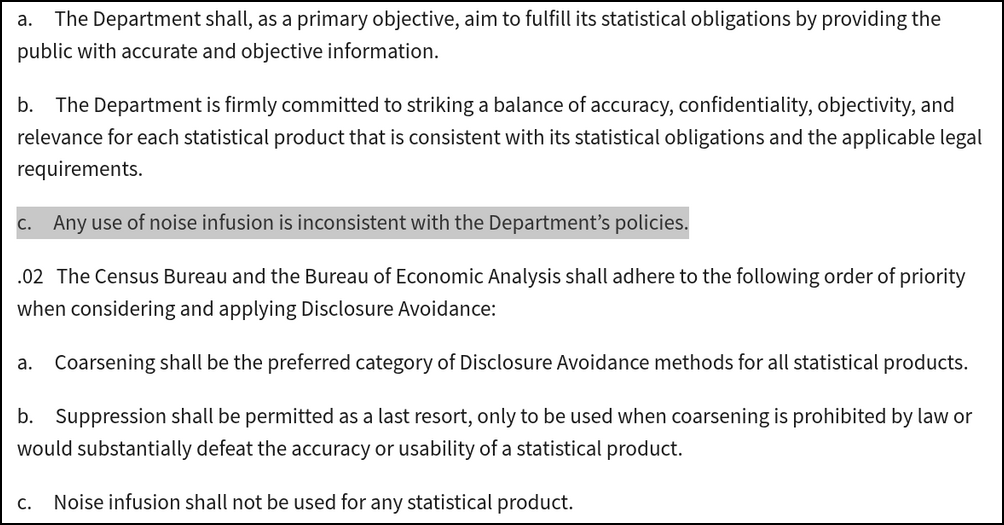
The Census Bureau has banned the use of noise infusion, a differential privacy technique, in its official statistical products. However, experts warn that removing this disclosure avoidance tool does not resolve the fundamental trade-offs between data accuracy and respondent confidentiality.
CommentsFollowing discussions between Amazon's CEO and U.S. officials, the White House has launched a regulatory crackdown on Anthropic's advanced Mythos AI models over national security concerns regarding their cybersecurity capabilities. While critics argue the intervention is arbitrary given the known vulnerabilities of all large language models, the administration maintains these specific models surpass previous safety thresholds and require mandatory government review. Tech industry observers are heavily criticizing this sudden, opaque regulatory approach as chaotic and detrimental to long-term market investments.
Comments2026-06-12

The House of Representatives passed H.R. 6028, officially framed as a minor technical reorganization of government agencies. Despite its modest presentation, the legislation would enact fundamental structural changes to the U.S. Copyright Office. This overhaul could significantly impact intellectual property administration and the broader technology sector.
Comments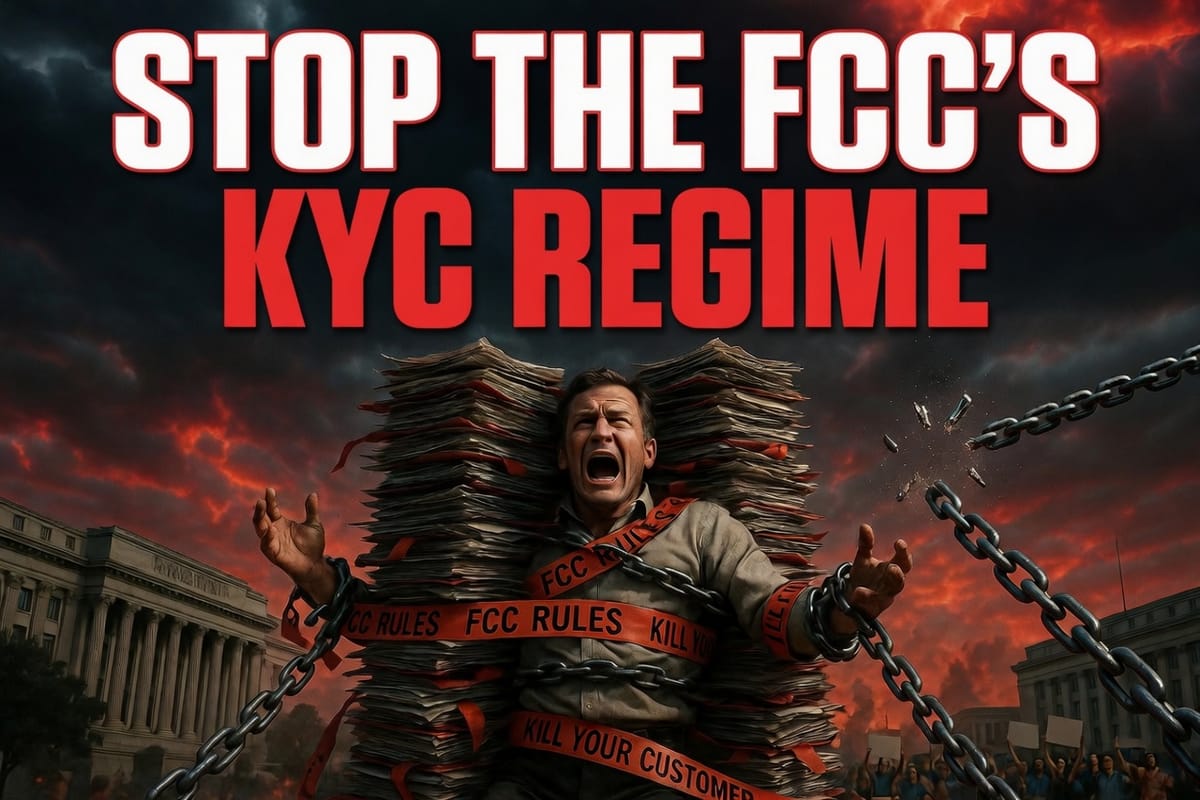
The Federal Communications Commission is proposing a mandate requiring KYC verification for all mobile phone users. Privacy advocates are urging the public to take immediate action to oppose the policy. They warn that implementing such strict identification requirements would lead to a severe erosion of personal privacy.
Comments2026-06-11
Petition to Withdraw Canada's Bill C-22
2026-06-11A petition is urging the Canadian government to withdraw Bill C-22 and the upcoming Bill C-34, legislation that critics warn will severely compromise digital privacy through encryption backdoors and bulk metadata retention. Meanwhile, industry observers are debating whether these strict surveillance measures will further stifle Canada's domestic tech sector or if the ecosystem's struggles stem primarily from local investment and capital market deficiencies.
Comments2026-06-09

Recent laboratory tests by foodwatch have detected residues of EU-banned pesticides in everyday foods, including rice, tea, and spices. These findings reveal that unapproved agrochemicals continue to enter the European market, highlighting significant vulnerabilities in current import monitoring systems.
Comments
The FCC is proposing a new mandate requiring telecom companies to collect government-issued identification and physical addresses from all new and renewing customers. The agency aims to use this data to eliminate the use of anonymous burner phones. However, the rule has sparked severe backlash over privacy concerns, with critics warning it could dangerously expose vulnerable groups like domestic abuse survivors who rely on untraceable communication.
CommentsLet's Encrypt updated its subscriber agreement to prohibit SSL certificate usage in US-sanctioned territories to comply with American encryption export laws. Although the organization claims these restrictions primarily target sanctioned governments and exempt the general public, critics argue the broad language undermines internet security for ordinary citizens in those regions. Additionally, users noted that Let's Encrypt recently issued certificates to North Korean government infrastructure, highlighting inconsistencies in their compliance approach.
CommentsApple decided against rolling out Siri in the European Union after regulators denied its request for an 18-month exemption to comply with local laws. While some observers view this withdrawal as a strategic play to generate consumer sympathy by blaming the EU, others praise the strict regulatory enforcement and Apple's choice to withhold the service rather than compromise on compliance.
Comments2026-06-08
A recent statement argues that the UK's latest surveillance measures compromise user privacy under the false premise of enhancing public safety. In response, tech readers criticize the industry for historically building restrictive digital systems that inadvertently empower government overreach, emphasizing the need to critically question authority and regularly review privacy-invasive legislation.
Comments
Despite a massive increase in data breaches, organizations continue to struggle with lax security practices because they face minimal consequences for failing to protect user information. The high cost of cybersecurity combined with a lack of financial liability disincentivizes companies from prioritizing robust data defense. Consequently, commenters argue that until strict accountability is enforced at the executive level for both corporate and government entities, the frequency of these leaks will only continue to rise.
Comments
Massachusetts has passed a new privacy rights bill that bans companies and startups from selling residents' precise location data. This legislation establishes a comprehensive statewide prohibition on the commercial trade of exact geographic information.
Comments2026-06-05

Gov.uk has replaced its payment processor Stripe with the Dutch company Adyen to expand digital payment options for citizens. This transition enables residents to pay for local authority and government services using a new pay by bank feature, allowing them to bypass traditional credit cards.
Comments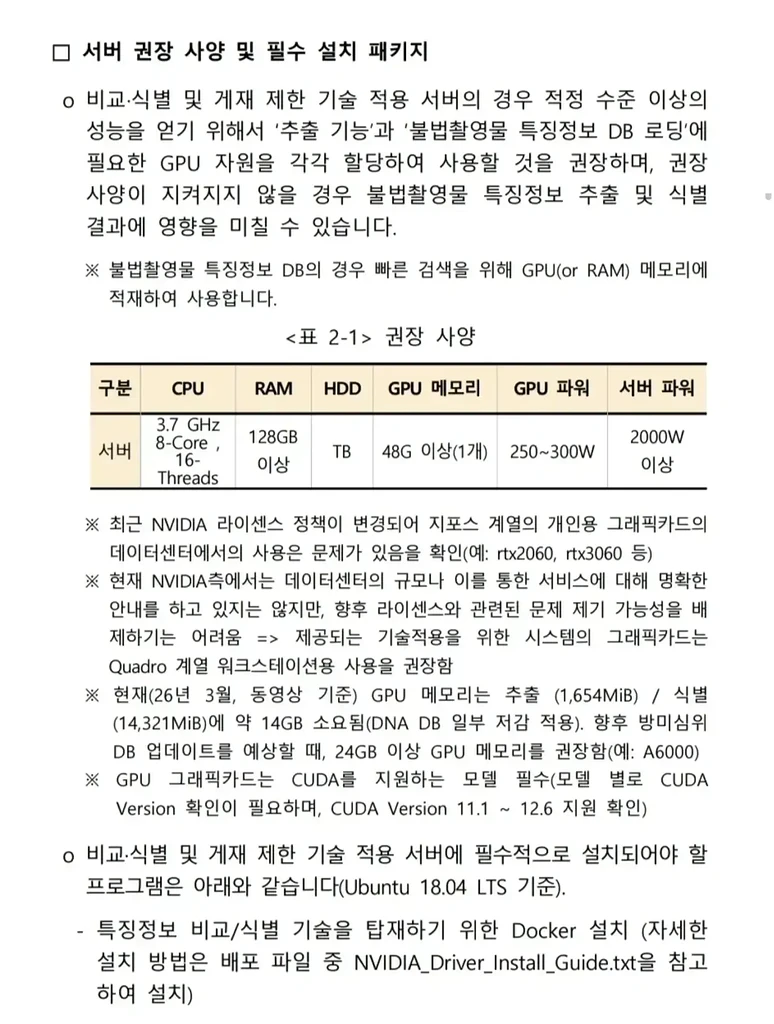
Under new telecommunications regulations, the South Korean government is requiring all online forums to scan user-uploaded images and videos using AI censorship tools. This mandate aims to enforce stricter content moderation across the country's internet communities. However, the requirement will force platform owners to invest heavily in the hardware necessary to process such a massive volume of digital media.
Comments
The Dutch government will require companies managing its DigiD digital identity platform to be European for all contracts after August 2028. The upcoming tender will be governed by the Defense and Security Procurement Act to better protect national security. This specific legislation strictly limits eligibility to European firms to minimize potential security risks.
Comments2026-06-02

Age verification requirements for social media are rapidly expanding globally under the stated goal of protecting children online. However, this push for mandatory identity checks could ultimately pave the way for complete government control and the end of a free internet.
Comments
President Trump signed a scaled-down executive order on artificial intelligence following weeks of policy reversals. This action comes after he postponed a broader, similar measure last month, resulting in a more streamlined approach to federal AI regulation.
Comments
Squillions: How money laundering won
2026-06-02Global money laundering has reached an unprecedented scale, operating as an illicit enterprise whose estimated value would make it the third-largest industry in the world behind commercial property. This staggering financial footprint underscores the critical need for advanced technological and regulatory solutions to combat sophisticated economic crimes and track illicit digital flows.
CommentsPrivacy advocates warn that Big Tech is designing a two-track privacy system by introducing built-in browser tracking features that bypass the strict consent regulations required of third-party advertisers. By enabling these proprietary tracking tools by default and hiding opt-out options in browser settings, companies aim to eliminate annoying cookie banners while seamlessly retaining their ability to collect user data.
Comments2026-05-30

The White House has proposed new Office of Management and Budget regulations that would give political appointees final approval over federal research grants. These proposed changes would render the federal research grant review process opaque.
Comments2026-05-29

The California State Assembly has passed the "Protect Our Games Act," marking a significant legislative milestone for the "Stop Killing Games" movement. This new legislation ensures that players retain the right to access and play their purchased video games even after official servers and online services are terminated.
Comments2026-05-28

The European Commission has fined Chinese online retailer Temu €200 million for failing to address the risks of illegal products on its platform. The penalty specifically cites the company's oversight in allowing the sale of unsafe items, such as hazardous baby toys and faulty chargers.
Comments