Regulation Tech News
2026-05-10
Hardware Attestation as Monopoly Enabler
2026-05-10Apple and Google are increasingly pushing third-party services to adopt hardware-based attestation to verify device integrity across mobile apps and the web through similar frameworks like their respective Integrity APIs. This coordinated expansion of hardware verification standards could ultimately serve as a powerful tool to further entrench the tech giants' market dominance.
Comments
Maryland citizens are facing a $2 billion power grid upgrade bill driven by the massive energy demands of out-of-state AI data centers. This situation has sparked controversy, raising questions about why local consumers are bearing the cost instead of the AI hyperscalers that require the expanded infrastructure.
Comments
2026-05-09
The hypocrisy of cyberlibertarianism
2026-05-09The author critiques the hypocrisy of cyberlibertarianism by reflecting on their firsthand experience with the pre-internet era to highlight the contradictions of advocating for a completely unregulated digital space. The piece contrasts the utopian ideals of early internet culture with the complex technological and societal realities of the modern web.
Comments
The European Parliamentary Research Service has identified VPNs as a loophole that allows users to bypass online age-verification systems. The organization is urging policymakers to close this gap to ensure stricter enforcement of digital age restrictions.
Comments
For decades, Georgia's dominant carpet manufacturing industry relied heavily on PFAS, commonly known as forever chemicals, leaving a devastating environmental legacy across the American South. This extensive use of persistent synthetic compounds has resulted in severe ecological degradation and widespread drinking water contamination that continues to impact local communities today.
Comments2026-05-07
Two Home Affairs officials have been suspended after fabricated information, known as AI "hallucinations," was discovered in their work. This incident highlights the ongoing risks and accuracy challenges associated with relying on artificial intelligence for government administration.
Comments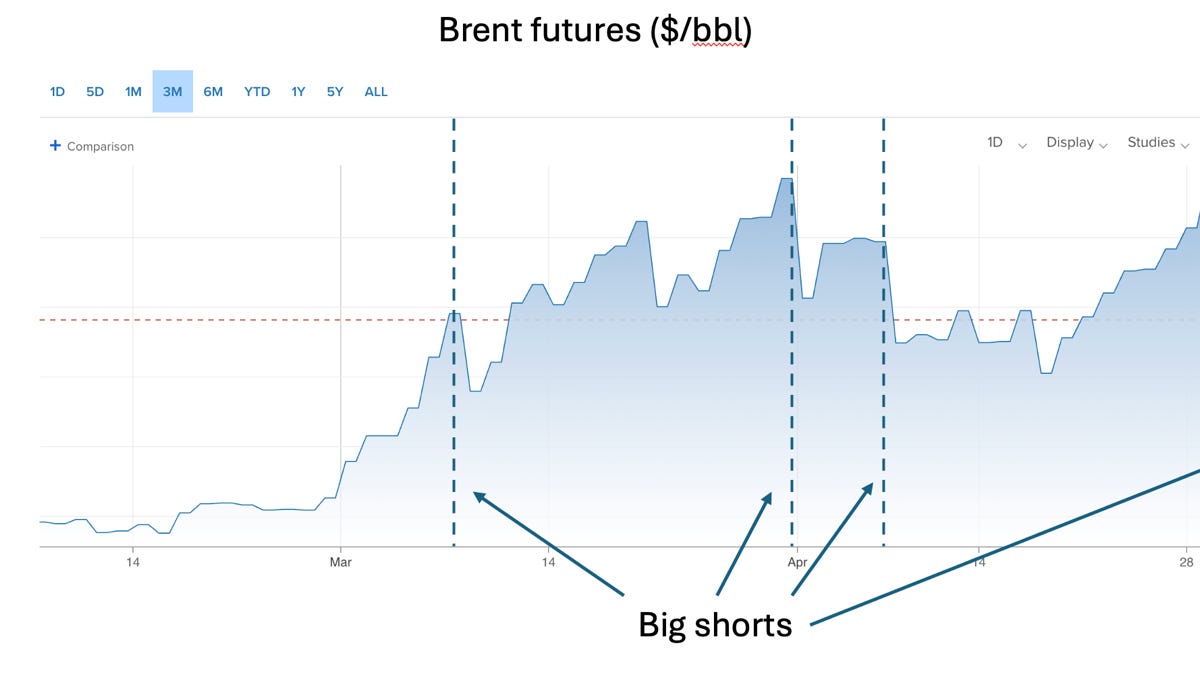
A recent report highlights how insider traders are continuously exploiting the oil futures market to generate massive profits at the direct expense of everyday consumers. These ongoing manipulative practices undermine market integrity and inflict severe financial harm, prompting urgent calls for stricter regulatory oversight to protect retail investors.
Comments2026-05-04

A Bloomberg investigation revealed that health insurance marketplaces in Virginia and Washington, D.C., were sharing sensitive user data, including race and citizenship status, with advertising technology firms. In response to the findings, both jurisdictions have paused their data collection and sharing practices.
Comments
Marie Potel-Saville argues that major tech companies use predatory design to exploit users' cognitive biases and force them into unwanted behaviors. She warns that these manipulative practices not only harm individuals but also undermine fair market competition and restrict genuine consumer choice.
Comments
Beginning in 2027, a new European Union regulation will require all smartphones sold in the region to feature removable batteries. This mandate represents a major shift in modern device design for manufacturers. For users, the change means they will once again easily be able to swap out their own power cells to extend the life of their devices.
Comments2026-05-03
Mercedes-Benz is set to reintroduce physical buttons in its vehicles, a move readers suspect is driven by upcoming Chinese regulatory mandates rather than a genuine leap in user experience. This decision underscores ongoing criticisms of German automakers and their historical struggles with in-house software development and consumer-facing interface design.
CommentsMaryland is set to ban grocery stores from using artificial intelligence to implement dynamic price increases on food items. The legislation aims to protect consumers from algorithmic surge pricing on everyday essentials.
Comments2026-05-02

California will begin issuing traffic tickets directly to the manufacturers of autonomous vehicles when their self-driving cars violate traffic laws. Under the new regulations, police will hold the automakers financially responsible for the infractions rather than the passengers inside the vehicle. This policy shift places the ultimate burden of safety and compliance squarely on the companies developing autonomous technology.
Comments
A new arXiv study provides empirical evidence that AI algorithms used in hiring processes exhibit a self-preferencing bias, potentially skewing candidate evaluations to favor content generated by similar machine learning models. These findings highlight a critical vulnerability in automated recruitment systems and underscore the urgent need to mitigate such biases to ensure equitable candidate assessments.
Comments2026-05-01

An open letter addressed to NHS England technical leadership is urging the health service to embrace open-source software. The authors argue that any code paid for with public funds should be made freely accessible to the public by default.
Comments2026-04-30

Spain's parliament has approved an initiative to reform the Digital Services Act and curb LaLiga's broad IP blockages. The measure aims to prevent anti-piracy court rulings from inadvertently taking down third-party websites. Additionally, the PP is advancing further amendments to the legislation.
Comments2026-04-29

The debate over online age verification has emerged as a critical, non-negotiable battleground that will serve as foundational infrastructure for all future digital regulations. Because of its sweeping implications, tech stakeholders and everyday users are urged to recognize that this is a pivotal policy fight they cannot afford to ignore.
Comments
A new open-source code platform has been soft-launched for government organizations. This initiative enables these public sector bodies to collaboratively develop and independently publish software.
Comments
Maryland has become the first state to ban surveillance pricing in grocery stores, prohibiting retailers from dynamically adjusting product costs based on consumer data. However, critics argue that the new legislation is weakened by numerous carveouts that could limit its overall effectiveness.
Comments2026-04-28
Your phone is about to stop being yours
2026-04-28Starting in 2027, Google will block all Android apps from developers who have not registered with the company. This sweeping policy change will severely restrict the software users can install, significantly reducing their personal control over their own devices.
Comments
The popular period tracking app Flo has been found sharing sensitive user data with Meta, exposing the vulnerabilities in digital health monitoring. This revelation highlights the risks of vague data collection policies and raises critical concerns about the privacy of self-monitoring biological markers.
Comments2026-04-27
The U.S. Food and Drug Administration has approved Otarmeni, the first-ever dual adeno-associated virus (AAV) vector-based gene therapy, to treat genetic hearing loss. This landmark decision marks a significant breakthrough in utilizing advanced viral vector technology to address hereditary medical conditions.
Comments
China has officially blocked Meta's $2 billion acquisition of Manus, a Singaporean AI startup with Chinese roots. The regulatory decision halts the tech giant's purchase of the artificial intelligence firm.
CommentsAs the US Supreme Court reviews law enforcement's use of geofence warrants for cell location data, Google has stopped complying by shifting location storage from its servers to users' local devices. This change was largely driven by public pressure over concerns that hoarded cloud data could be used to prosecute abortion seekers or cause wrongful arrests. However, critics note that while this protects user data from these specific warrants, it does not alter the company's fundamental surveillance-based advertising business model.
Comments2026-04-26
Online discussions regarding the EU's age verification mandates clarify that the policy is an explicit stepping stone toward a comprehensive cross-border digital identity system rather than a hidden trojan horse. While some readers defend the utility of mobile ID wallets for international authentication, many emphasize the critical need for privacy-preserving technologies to prevent corporate data harvesting. Ultimately, the debate underscores concerns that widespread digital identity checks could lead to severe privacy violations if businesses are permitted to store unnecessary personal information.
Comments2026-04-24

Norway plans to ban social media access for children under 16 to protect them from potential online harms. This move makes Norway the latest country to implement age restrictions on digital platforms amid growing global concerns over youth internet safety.
Comments
South Korean police arrested a man for posting a fake AI-generated image of an escaped wolf that went viral. The misleading digital photo disrupted the ongoing investigation by forcing authorities to unnecessarily redirect their physical search operation for the real animal.
Comments2026-04-20

Starting in 2027, all smartphones and tablets sold in the European Union must feature user-replaceable batteries. This new mandate is part of a broader sustainability initiative aimed at slashing electronic waste and extending device lifespans. Consequently, tech manufacturers will need to adapt their hardware designs to comply with the upcoming environmental regulations.
Comments
The European Commission recently launched a new age verification app, claiming the technology was fully prepared for deployment, but cybersecurity experts quickly identified critical flaws. Hackers successfully breached the application in just two minutes, exposing significant security vulnerabilities in the EU digital initiative.
CommentsThe NSA is adopting Anthropic's Mythos AI model, reversing a previous Pentagon decision to blacklist the company as a supply chain risk. This integration marks a major shift in government procurement after officials initially attempted to penalize the firm.
Comments