Programming Tech News
Submit2026-11-13

Jonathan Blow and Wolf Tivy discuss the explosion of complexity in software and why today’s AI cannot produce better code than people. They also explore what the world would look like if AI actually solved coding.
Comments
The Haskell Foundation’s technical leadership committee has been successfully bootstrapped and is now fully operational after several weeks of discussing its vision and strategy. It is now moving forward with a technical vision for the Haskell ecosystem.
Comments
FM-1 Workbench
2026-11-13The FM-1 is attracting attention as a cheap synth toy with a fast-moving custom-firmware scene, including generative and groovebox-style firmwares, many of which can be tried in browser emulators. Readers say it’s fun for casual experimentation and that beginners shouldn’t be deterred by a lack of music theory, though some still find a DAW easier for learning to make music. The community’s firmware hacking and the manufacturer’s embrace of it are seen as a bright spot in music tech.
CommentsSwitcher (2004)
2026-11-13A retrospective on Switcher, the 1984 Mac utility that let users switch between applications, prompted discussion about how much original engineering insight could go into tiny programs and how a $50,000 figure from that era would be worth over $320,000 today. Readers also compared it with early IBM PC TSR utilities like Memory Shift and Borland Sidekick, while trading anecdotes about old-school debugging and the humbling craft of early software.
CommentsLonewolf 0.3 has been released, a standalone XMPP server written in Rust. Hosted on GitHub under lonewolf-im/lonewolf, the project is pitched as “XMPP with teeth.”
Comments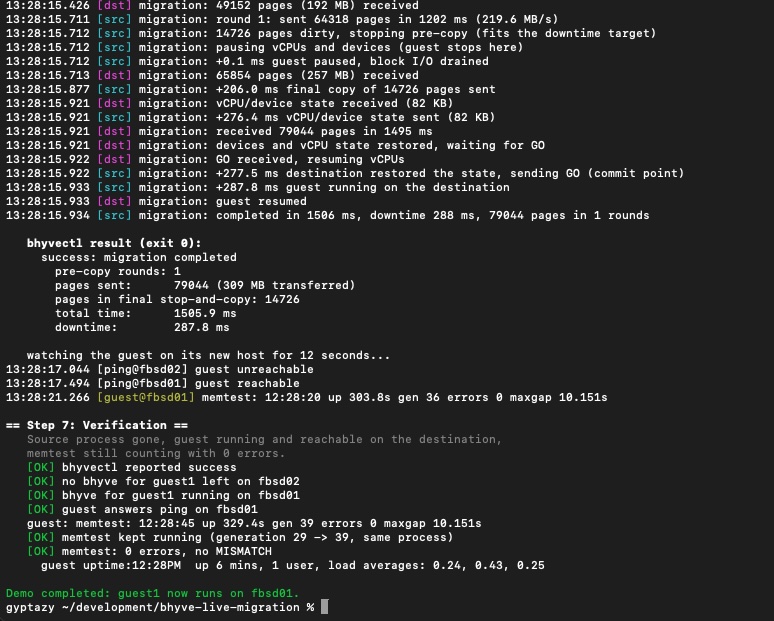
FreeBSD is adding live VM migration support for bhyve, with FreeBSD 15.1 work exploring pre-copy memory transfer and dirty-page tracking. The effort includes migration testing, though current limitations remain. It promises more flexible VM management on FreeBSD.
Comments
MotherDuck CEO Jordan Tigani explores how AI agents are taking over traditional data-team work and what that means for the future of the field. The piece introduces the emerging role of the “data intelligence engineer” as teams look beyond automation to higher-value work.
Comments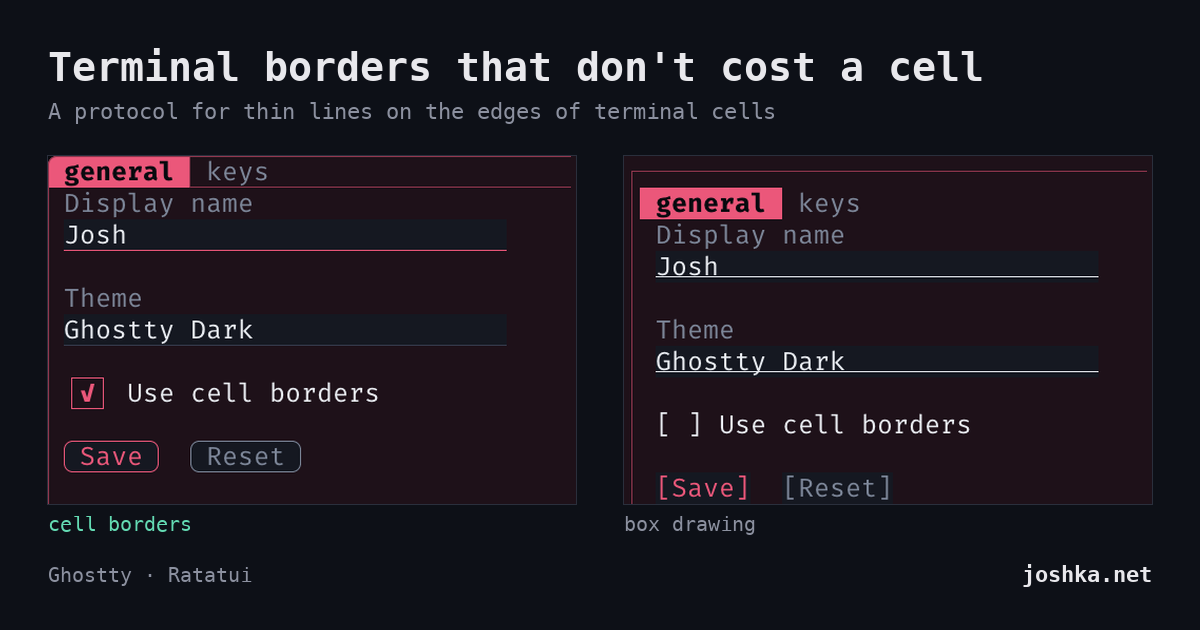
Terminal borders that don't cost a cell
2026-11-13A new terminal protocol lets applications draw thin borders, rounded corners, and gridlines on cell edges without consuming rows or columns. It is already working in Ghostty, with Ratatui demos available.
Comments
Before Pixels: Speed-Minder
2026-11-13A new Before Pixels post, “Speed-Minder,” examines software craft and quality. It makes the case for prioritizing solid engineering and performance before visual polish.
CommentsSift is a new tool from jjba23 that bundles LSP support, linting, and formatting for Lisp, Scheme, and Emacs Lisp. It aims to provide a unified toolchain for editor integration and code quality across these Lisp dialects.
Comments
Concurrent Shell Command Queues
2026-11-13The piece explains how to queue shell commands so they run in parallel while enforcing a maximum concurrency limit. It offers a practical way to speed up command execution without overwhelming system resources.
Comments
Announcement: Conductor Is Back
2026-11-13The Conductor project is back after its developers decided to continue development despite earlier reports of its demise. Regularly scheduled updates will resume next week.
CommentsRealtimeVAD is a new Show HN project offering faster speech-off detection for speculative-generation voice pipelines. It aims to signal end-of-speech about 110 ms earlier by trading off more false positives. The tool is from KoljaB/RealtimeVAD.
CommentsA new Show HN project called Reflota offers open-source data recovery for NTFS and FAT disks. It features phased copying, aimed at recovering data from damaged or failing drives. The tool is hosted on GitHub for community contributions.
CommentsPharmA2A is a new open protocol for direct ordering between pharmacies and their suppliers on A2A. It aims to standardize pharmacy-to-supplier order workflows using agent-to-agent communication.
CommentsWhy Zig over C for Systems Programming
2026-11-13A new article examines why Zig might be preferable to C for systems programming, noting that both languages are small, garbage-collector-free, and close to the machine, but Zig addresses parts of C that cost developers time. It follows an earlier Zig-vs-Rust comparison and uses code compiled with Zig 0.17 and clang on macOS.
Comments2026-11-12
Humble Bundle’s apparent “vibe coding” revamp has users reporting broken security and login flows, including delayed email verification codes and repeated code requests at every login. Readers also cite frustrating access problems for purchased downloads and ebooks, apparent one-click payment concerns, and say the issues are pushing long-time subscribers to cancel.
Comments
Foundation Models framework
2026-11-12The Foundation Models framework offers a native Swift API for integrating any large language model into an app. It gives Swift developers a standardized way to add LLM capabilities directly into their applications.
CommentsJane Street: Socratic Tutor
2026-11-12Jane Street has added a Socratic Tutor skill to its agent_skills GitHub repository. The repo is described as a collection of agent skills and is open for community contributions.
CommentsFable52.games offers 30+ browser games built autonomously by Claude Fable 5.2, many shipped as single self-contained HTML files. Visitors can play the games, read the exact prompts, inspect the source, and download or remix them.
CommentsRelax is a new live compiler and JIT runtime for Rust, itself written in Rust, that runs a Cargo package directly from source without invoking rustc, LLVM, or a linker. It aims to cut Rust build times by removing those traditional compilation steps from the loop.
Comments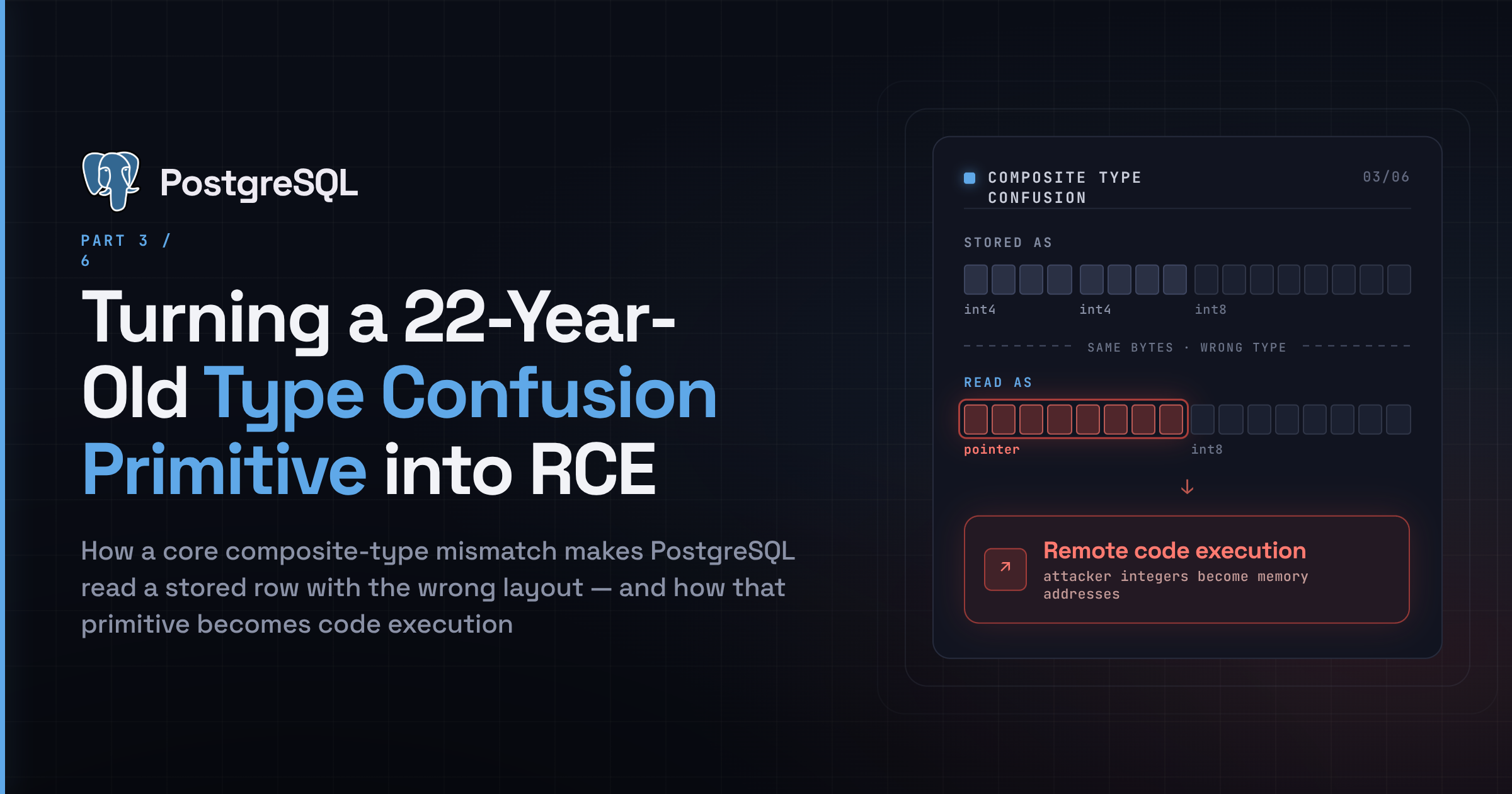
A researcher discovered a 22-year-old zero-day in PostgreSQL core and turned it into a remote code execution exploit. The finding emerged from an investigation into using managed PostgreSQL, highlighting a long-standing security risk in the database.
Comments
Bad ideas that aren't bad anymore
2026-11-12Devon C. Estes explores once-dismissed tech ideas that have become viable again as technology and market conditions change. The piece argues that labeling an idea “bad” is often premature, since shifting constraints can turn past failures into practical opportunities.
CommentsAgentRun is a new open-source platform that adds self-improvement, durable execution, and a control plane on top of existing agent harnesses. It aims to make agents smarter and more fault-tolerant while using fewer tokens with each run.
CommentsExcalidrawZ brings Excalidraw to macOS and iOS as a local native app built entirely in SwiftUI. The open-source project is hosted on GitHub under chocoford/ExcalidrawZ and is open to contributions.
Comments
Rust 1.100
2026-11-12The Rust project has released Rust 1.100, the latest update to the language and toolchain. The release continues Rust’s mission of empowering everyone to build reliable and efficient software.
Comments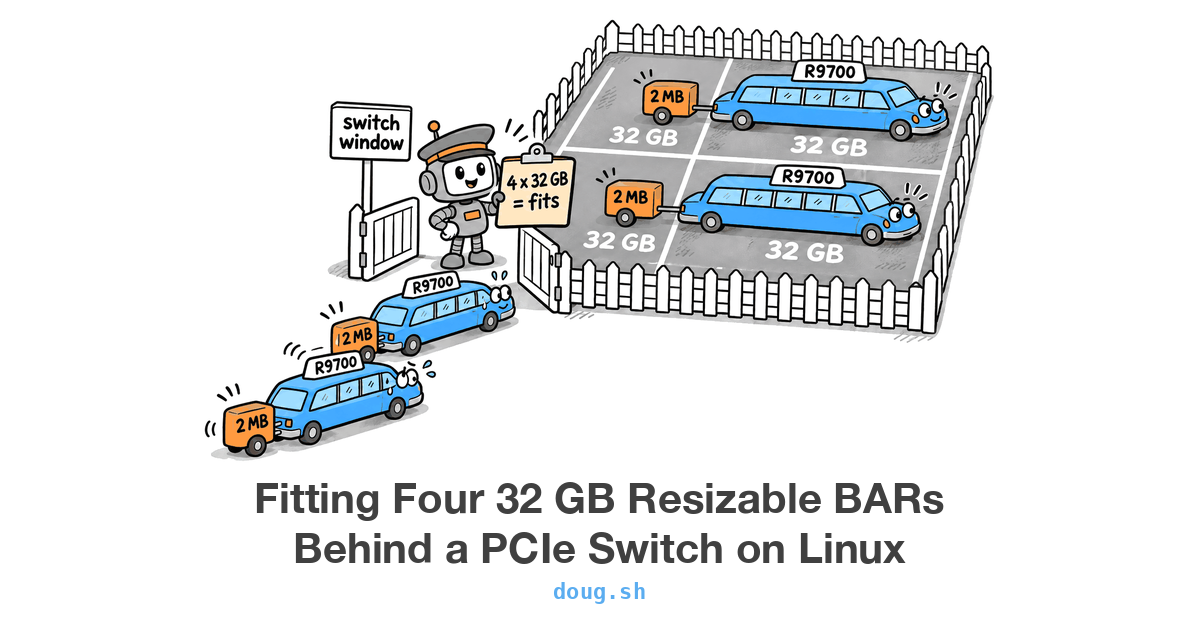
Linux 7.0 sized a PCIe switch’s bridge window too small to assign four 32 GB GPU BARs, leaving no space. A kernel module that pads the BARs fixes the issue.
Comments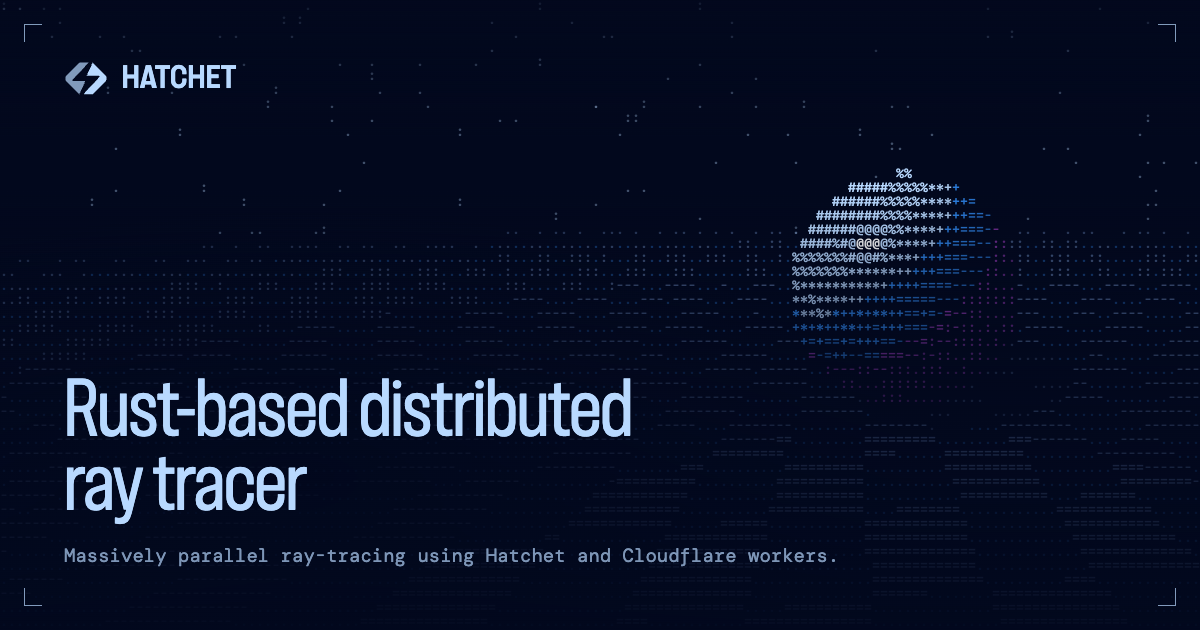
Distributed Ray Tracer
2026-11-12A new Rust-based distributed ray tracer lets users describe a scene and have every tile rendered in parallel on Cloudflare Workers. The work is orchestrated by Hatchet, highlighting a serverless approach to distributed rendering.
CommentsA developer is building a free and open-source Linux pinball simulation engine based on the Pascal Tiny.Sim library, with tables designed in CAD, imported as 3D meshes, and scripted in TypeScript. The engine will let users play, edit, and share custom tables, and the initial source release is planned with three tables and a creation guide; the developer is also seeking artists to help with table artwork.
Comments
Why Writing Correct Software Is Hard
2026-11-12The piece examines why writing correct software is inherently difficult, exploring the relationship between programs and correctness through computability and complexity theory. It argues that programs and the complete understanding needed to ensure correctness are fundamentally at odds.
Comments