Programming Tech News
2026-10-24
A newly disclosed remote code execution vulnerability dubbed http2shell affects the Brotli decoder across Node, Python, and .NET environments, sparking debate over its actual server-side impact. While some developers argue the threat is overblown because the vulnerable decoder is not enabled by default, others warn that hidden dependencies in popular libraries could leave many systems unexpectedly exposed. Commenters advise checking dependency trees and applying patches, despite frustrations over the sensationalized naming of the underlying memory bug.
CommentsA new interactive project called Impossible Machines allows users to declaratively program physical interactions within a simulated environment. By simply defining a starting cause and a desired effect, the system automatically generates the missing mechanical components required to bridge the two.
Comments
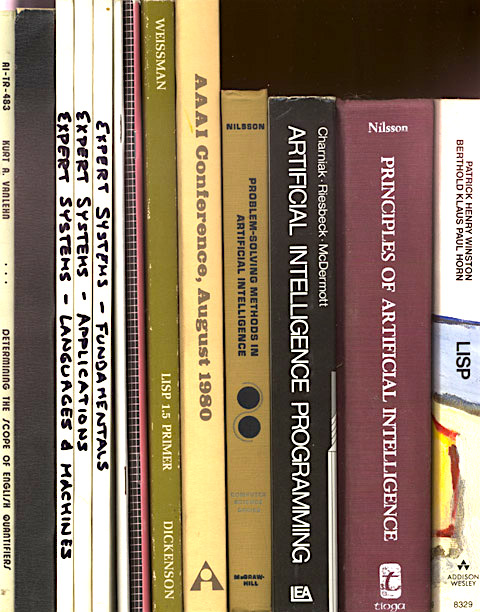
LISP Comes of Age (1980)
2026-10-24This historical Byte magazine report from 1980 covers the Stanford LISP conference, which convened immediately following the AAAI Artificial Intelligence Conference. The article highlights the maturation of the LISP programming language and its growing importance in the early days of artificial intelligence research.
Comments
Bringing uv and ty together
2026-10-24An experimental integration between uv and ty introduces first-class support for Python scripts across the command line and code editors. This update also features a unified uv check command to streamline developer workflows.
CommentsCorgi is a new multiplexer tool designed to manage both terminal sessions and AI agents from a single unified interface. It acts as a centralized helper to streamline developer workflows involving concurrent automated tasks. By combining terminal and agent management, the project aims to significantly reduce the overhead of running multiple background processes.
CommentsAnimations for System Builders
2026-10-24A recent article highlights the effective use of animations in system builder user interfaces to intuitively guide user attention to critical elements. Readers praised the design for purposefully highlighting important UI components without being distracting. However, some in the community questioned why the animations were implemented as videos instead of native HTML and discussed alternative tools like Motion Canvas.
Comments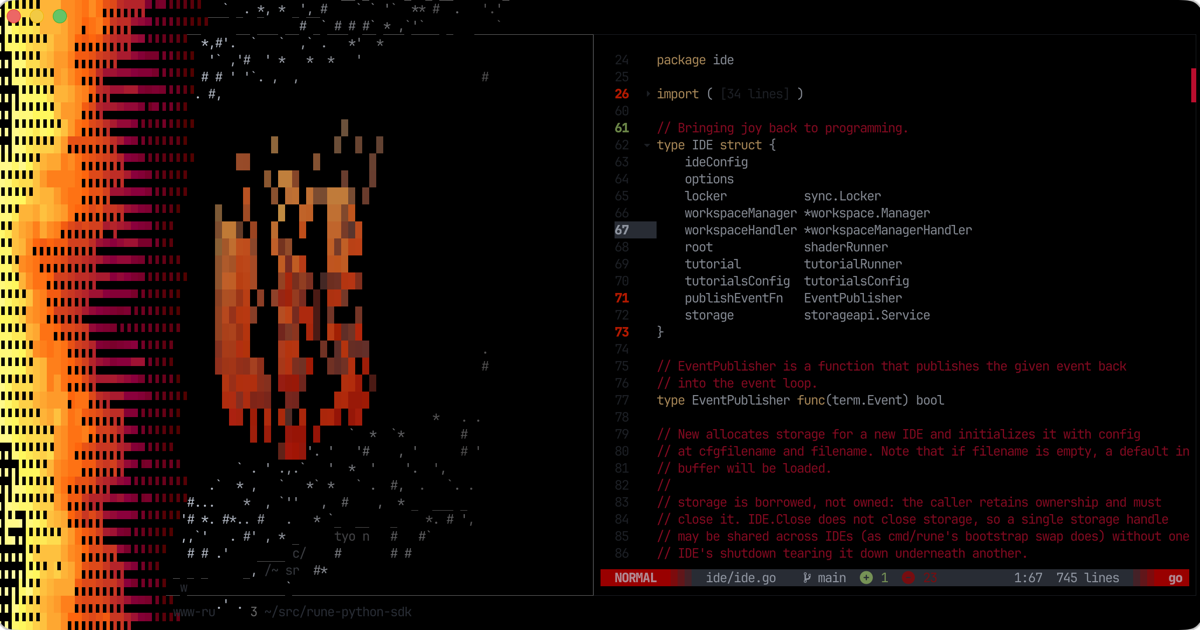
Rune 1.3 introduces TypeScript support, Helix editor integration, and Kitty graphics to enhance the platform. The update also adds a new browser package, animated activity tabs, and full workspace restoration including Agent conversations. This milestone marks the first release to feature community contributions.
CommentsNo Source Code? No Problem
2026-10-24A recent discussion highlights how AI-driven agentic coding is enabling developers to successfully recreate legacy software without access to the original source code, a feat recently demonstrated by reviving the classic game No One Lives Forever. While this capability is celebrated for preserving retro projects and challenging corporate monopolies, critics warn it could stifle open-source innovation and force companies to adopt restrictive, online-only business models to protect their intellectual property.
CommentsA new 2025 guide explores systemd-nspawn, a lightweight containerization tool that creates virtual machine-like environments on Linux without requiring a traditional hypervisor. The article provides a practical walkthrough for setting up and configuring these efficient containers. It highlights how this technology offers developers a streamlined and resource-friendly approach to modern system management.
CommentsDNS: A Replacement for Finger
2026-10-24A recent proposal suggests using the DNS protocol to replace the legacy Finger protocol for sharing personal status updates. Readers note that implementing this requires delegating DNS zones to third-party providers for real-time API updates. Additionally, the community warns that storing large amounts of data in DNS TXT records could expose servers to amplification DDoS attacks.
Comments
C vs. C#: racing VLC's Gaussian blur
2026-10-24A new benchmark compares the execution speed of C and C# by porting VLC's Gaussian blur video filter line-by-line into C#. Both implementations were optimized and tested within VLC 4, ensuring byte-identical output throughout the performance race.
CommentsTwelve Years of Distributed SQLite
2026-10-24The distributed database project rqlite is celebrating its twelfth anniversary since its initial release in September 2014. By placing a Raft consensus log in front of SQLite, the tool replicates writes across a cluster to ensure high availability and prevent data loss if a node fails.
Comments2026-10-23
A security researcher apologized for prematurely disclosing a PHP remote code execution vulnerability after unknowingly breaking a coordinated disclosure embargo. The incident sparked a debate within the tech community about whether third parties who are not explicitly informed of an embargo are still ethically bound by responsible disclosure practices. Commenters analyzed the complexities of information asymmetry and the game theory behind coordinated security announcements to determine accountability.
CommentsA new GitHub project called hackios-xnu-kernel is working to port Apple's XNU kernel to Android hardware. This open-source initiative aims to allow users to run the full iOS 16.5 firmware natively on non-Apple smartphones. Developers interested in the project can now create an account and contribute to the repository's ongoing development.
Comments
Developers have released earstrip, a new C++ and WebAssembly triangulation library designed to outperform the popular earcut algorithm. By rebuilding the ear clipping process from scratch, the library can triangulate 3.7 million real-world map polygons in just 489 milliseconds.
CommentsDocker is weird
2026-10-23Docker's creator joined a community discussion to clarify the platform's technical evolution from OpenVZ to LXC and eventually to an in-house Go implementation. The conversation also highlighted Docker's historical struggles with monetization and enterprise adoption, noting that the company's heavy open-source focus and initial neglect of enterprise needs allowed alternatives like Podman to gain traction.
Comments
Large language models are making formal software verification scalable by automating the proof of security properties in compiled code. For example, Claude successfully verified 123 open-source libraries and uncovered hidden bugs that had evaded detection for years.
CommentsA developer has published Hedra, a 3D open-world game they built entirely from scratch while in high school. The impressive project features a massive codebase of over 100,000 lines of code. The full source code is now publicly available on GitHub for the tech community to explore.
Comments
A new visual tool breaks down the procedural dungeon generation algorithms used to create the Gnomish Mines in the classic roguelike game NetHack. The project maps out the underlying mechanics to show exactly how these complex subterranean layouts are constructed. This visual guide offers valuable insights for developers and enthusiasts interested in retro procedural generation techniques.
CommentsA new project named Uberblok transforms the complex internals of the OpenZFS file system into an interactive, room-by-room virtual museum. The tool visually maps each core architectural concept directly to its underlying source code. This provides developers with a highly engaging and intuitive way to explore the mechanics of ZFS storage architecture.
CommentsRevisiting a 1978 critique of natural language programming, a recent discussion debates whether AI models function as modern compilers or simply replace human software developers. Critics argue that unlike traditional compilers that precisely preserve formal semantics, AI translation of natural language is inherently ambiguous and can yield multiple interpretations. Ultimately, the thread highlights that both human engineers and AI require highly detailed, iterative communication to accurately transform vague specifications into functional code.
Comments
Imprint's engineering team has significantly increased its code merge velocity using a new approach called small-change, with average engineers merging four times more pull requests than two years ago. Remarkably, this surge in productivity has not compromised code quality, as the company reports a 42% decrease in overall incidents and a 78% drop in critical ones. This success effectively challenges the traditional belief that there is a strict tradeoff between development speed and software quality.
Comments
Jank is a native dialect of the Clojure programming language that features seamless interoperability with C++. This integration allows developers to easily combine the expressive syntax of Clojure with the performance and existing libraries of C++. It provides a powerful tool for programmers seeking to bridge functional programming with native C++ ecosystems.
Comments2026-10-22

PHP developers have issued a critical security release to patch recently discovered vulnerabilities, detailing the story behind how these flaws were identified and resolved. The announcement also outlines new initiatives being implemented to strengthen the project's overall security practices moving forward.
Comments
A compromised release of LiteLLM 1.107.0 was discovered on PyPI, deploying a credential stealer and a persistent backdoor. These malicious implants execute automatically on every Python startup to silently harvest sensitive data from affected systems. Security researchers are investigating the supply chain attack and have released indicators of compromise to help developers detect the infection.
Comments
DuckDB 2.0.0 LTS “Cinnamon Teal”
2026-10-22The DuckDB team has released version 2.0.0 LTS, codenamed Cinnamon Teal, marking their largest feature update to date. Built from nearly 20,000 commits, this major release introduces significant enhancements including asynchronous I/O, a first-class VARIANT type, and agent mode. The update also adds triggers and an extensible SQL parser to further expand the database capabilities.
Commentsmitmproxy adds --emudhra option
2026-10-22The open-source intercepting HTTP proxy mitmproxy has introduced a new --emudhra command-line option in its latest update. This addition enhances the tool's capabilities for penetration testers and software developers working with TLS interception. The update reflects the project's ongoing commitment to expanding its utility for security professionals.
CommentsA recently hyped PHP vulnerability has sparked widespread panic across the tech community. However, security experts emphasize that there is currently no easy or straightforward exploit available for the flaw. Despite the mass hysteria, developers are advised to remain calm and apply standard security practices while awaiting official patches.
CommentsThe rapid deployment of AI coding agents is uncovering decades of hidden software vulnerabilities, sparking debate over whether AI companies are exacerbating the security crisis to profit from selling automated patching tools. While critics argue this creates a conflict of interest, others emphasize that the technology is merely exposing existing technical debt at an unprecedented scale. Consequently, the tech industry must adapt to this accelerated discovery cycle and coordinate globally to address the massive surge of newly exposed flaws.
CommentsRust Style Guide
2026-10-22Google has published an official Rust style guide to standardize coding practices across its open-source projects. This new documentation outlines comprehensive formatting rules and best practices for developers contributing to Google-originated Rust repositories.
Comments