Programming Tech News
2026-10-12
Total Annihilation has been rebuilt for modern computers using Nanolathe, an open-source 2.5D real-time strategy engine. Players can experience the original demo directly in their web browser or install the native beta for online multiplayer. The open-source nature of the project also allows the community to explore the underlying code and create new modifications.
CommentsA growing divide among software developers over large language models pits those who embrace rapid, unreviewed AI-generated code against those who insist on strict human oversight. While the speed-focused camp accepts occasional AI mistakes for massive productivity gains, cautious engineers warn that skipping code review leads to hidden bugs, skill atrophy, and severe long-term maintenance issues that could ultimately negate those early benefits.
Comments

Vectorized CLZ and CTZ
2026-10-12A developer has created a novel vectorizable polyfill for the CTZ instruction by leveraging floating-point arithmetic tricks originally developed for an FPU emulator. This technique, which also includes a CLZ implementation for completeness, provides a faster alternative to native CPU instructions that can sometimes suffer from high latency.
Comments
A new free Mac app uses local indexing to help AI agents locate code more efficiently, significantly reducing tool calls and token usage. The tool enables semantic and exact-word searching across local files, git repositories, and AI coding sessions by leveraging MCP context.
CommentsCalculus with Julia
2026-10-12A newly published tutorial introduces the Julia programming language through the practical application of calculus. Readers highly recommend the well-paced guide as an excellent starting point for university students learning to code.
CommentsDoory – Open-Source Canva
2026-10-12Doory is a newly released open-source alternative to the popular graphic design platform Canva. The project is currently hosted on GitHub for public access. Developers are actively encouraged to contribute to the tool's ongoing development and feature expansion.
Comments
A developer recently spent 500 billion AI tokens to decompile and accurately recreate a popular first-person shooter game. The ambitious project aimed to produce a stable, feature-complete version of the title rather than a simple proof of concept. However, the developer was forced to remove the specific game details and related blog posts following corporate intervention.
Comments
A recent technical finding reveals that the tilde character in the PATH environment variable does not always resolve to the user's home directory outside of standard shell contexts. When processed by certain sandboxing utilities, the tilde is treated as a literal string rather than expanding to the actual home path. This discrepancy can trigger unexpected security warnings and highlights the importance of using fully resolved absolute paths in environment configurations.
CommentsSafe SIMD in Rust, even on the inside
2026-10-12A new approach to Rust's SIMD abstractions resolves previous safety concerns for developers writing performance-critical code. It eliminates the need for unsafe blocks by providing robust guarantees for low-level hardware optimizations. This improvement ensures that SIMD operations are now completely safe to use both at the API level and within internal implementations.
CommentsHashiCorp has archived the open-source repository for Boundary, its identity-based access management tool for dynamic infrastructure. This move effectively halts public community development and future updates for the project on GitHub.
Comments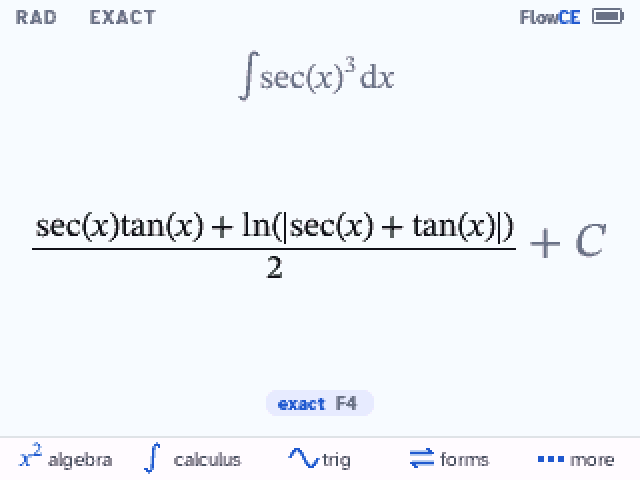
FlowCE: Calculus on your TI-84 Plus CE
2026-10-12FlowCE is a new free computer algebra system designed specifically for the TI-84 Plus CE calculator to assist students with Calculus 1 and 2 coursework. The application provides natural math input, exact textbook-style answers, graphing capabilities, and customizable light and dark themes.
Commentsapsw: Another Python SQLite Wrapper
2026-10-12APSW, which stands for Another Python SQLite Wrapper, is an open-source project that provides a specialized interface for integrating SQLite databases within Python applications. Developers can explore the codebase and contribute to its ongoing development directly through its GitHub repository.
CommentsA developer reverse engineered a commercial spatial audio processor by measuring its output and extracting stereo impulse responses. The proprietary effect was successfully rebuilt and implemented as a convolution filter for Linux systems.
CommentsThe newly released ClickHouse C is a minimalist, header-only library designed to bring database connectivity to embedded systems. It enables developers in resource-constrained environments to communicate directly with ClickHouse using its native binary protocol.
Comments2026-10-11
Build your own decision model
2026-10-11A new technical guide explores how to build System one decision models that infer and respond with calibrated probabilities for every allowed answer. It demonstrates how developers can use Structured Output to constrain everyday language models into generating guaranteed valid JSON in a single pass.
CommentsA developer spent 500 billion AI tokens to decompile and accurately recreate a popular first-person shooter game. Despite achieving a stable and feature-complete version, the project and its related blog posts were removed following legal intervention from the game's corporate publisher.
Comments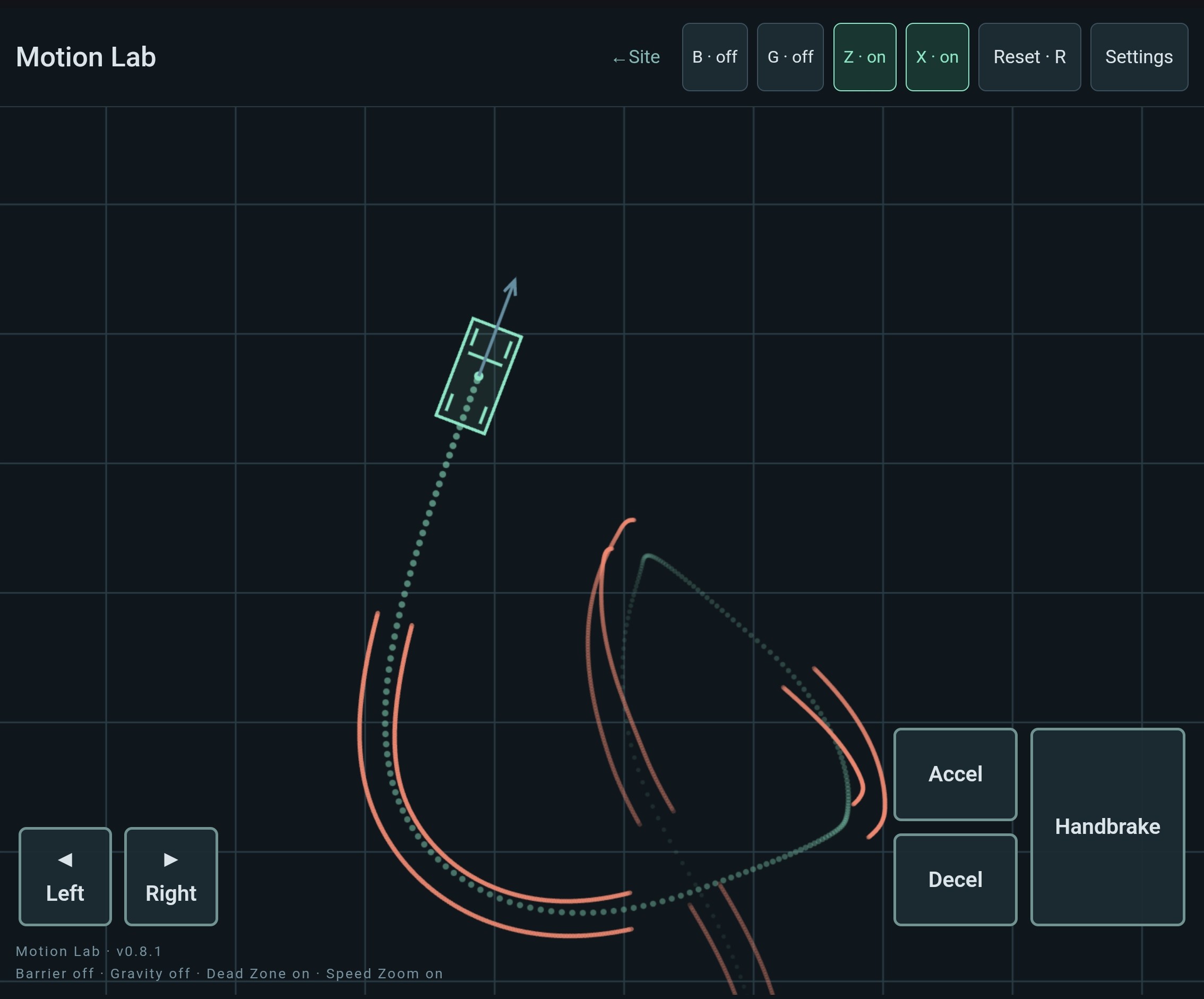
2D Vehicles
2026-10-11This tech retrospective explores the history of a 2D vehicle physics prototype originally developed in 1996. The article details the project's evolution over the years, culminating in its modern remaster released as Motion Lab.
CommentsDevelopers have launched Veda, billed as the first agentic-native hobby operating system designed to integrate AI agents directly into the core computing experience. The open-source project is now live on GitHub, inviting the community to contribute to its ongoing development.
CommentsNix wrote half of my debugger
2026-10-11A developer details their experience using Rewind VM, a deterministic virtual machine that treats Nix builds as pure functions to effortlessly isolate and resolve race conditions. The tool has practically built its own advanced debugger features, rapidly expanding to include thread lanes, stack frames, and enhanced GDB support. Despite its powerful capabilities, the author questions why this deterministic approach to debugging complex build environments remains largely underutilized.
Comments
A developer has released a recurrent neural network designed to generate Korean handwriting strokes in celebration of Hangul Day 2026. The project adapts Alex Graves' architecture and features a newly published dataset compiled from 4,500 lines of smartpen handwriting.
Comments
Knuth reward check
2026-10-11The author reflects on receiving a famous hexadecimal reward check from computer science pioneer Donald Knuth twenty years ago. Knuth traditionally issues these checks to individuals who discover bugs in his foundational programming books or software.
Comments
Why DuckDB 2.0 is faster
2026-10-11DuckDB 2.0 alpha introduces significant performance upgrades over version 1.5.5, achieving up to a 90x speedup for recursive CTEs, 6x faster VARIANT processing, and improved S3 async I/O. The update explores the specific architectural changes responsible for these gains and provides practical advice on data modeling to help developers fully leverage the enhanced speed.
Comments
Cockroach Labs developed MOLT Sinai, an AI coding teaching hospital that treats software bugs like patients and manages coding agents as a medical team. After five months of refining this clinical framework, the company successfully shipped IBM Db2 migration support in under two days.
Comments
Unikernels were hard. key word: were
2026-10-11Former MirageOS developer Justin Cormack explains that unikernels are experiencing a resurgence because the historical friction that made them difficult to use has disappeared. With traditional operating systems now viewed as design debt, unikernels offer a compelling and highly secure alternative for modern software deployment.
Comments
Researchers have introduced byteification, a novel method that retrofits existing subword-based large language models to operate directly on raw byte encoding with minimal extra training. This approach overcomes previous performance limitations, enabling byte-level models to match traditional systems while excelling at the fine-grained character-level reasoning required for complex scientific data like computer code and biological sequences.
Comments
OpenSCAD is highly regarded for allowing programmers to create parametric 3D models using plain, version-controllable text, but its code-based workflow makes iterative design and complex operations like filleting frustrating. While it remains an excellent niche tool for highly parametric tasks and AI code generation, users caution against using it for general-purpose modeling and instead recommend interactive, kernel-based alternatives like FreeCAD for broader CAD workflows.
CommentsDiffle is a new keyboard-first diff viewer designed to help developers navigate code changes efficiently without relying on a mouse. The tool features Language Server Protocol support for enhanced code intelligence and includes direct GitHub integration for seamless version control workflows.
Comments
Rampart is a new open-source project that enables browser-native, on-device redaction of personally identifiable information. It operates entirely locally and is recognized as one of the smallest and most effective personal information filters capable of running in a web browser.
Comments
C for Rust programmers
2026-10-11A new guide explores the unexpected details and nuanced differences Rust developers encounter when learning the C programming language. It highlights key challenges to help programmers transition more smoothly between the two systems languages.
Comments
Early results from the InnovationEval assessment indicate that current AI models are struggling to replicate a recent human algorithmic innovation. The findings highlight a persistent gap in artificial intelligence, demonstrating that these systems cannot yet match human-level algorithmic breakthroughs.
Comments