Programming Tech News
2026-09-08

TALA Is Open-Source
2026-09-08The TALA layout tool has officially been released as open-source, accompanied by extensive visual documentation to showcase its capabilities. The release features seven real-world layout comparisons and eleven original diagrams, specifically highlighting advanced functionalities like selective TALA positioning.
Comments
A newly published arXiv paper demonstrates how a classic Trusting-Trust compiler attack can be scaled to compromise an entire Linux distribution through binary manipulation. The research highlights a critical software supply chain vulnerability where malicious code can be hidden within pre-compiled binaries, completely bypassing traditional source code audits. These findings underscore the persistent risks of relying on unverified binary packages in modern computing environments.
Comments
A new interactive tool called NYC MapTap helps users learn New York City neighborhoods and subway routes. Shared on Hacker News, the project has been well received by the tech community, inspiring developers to build similar educational maps for other cities like Chicago.
CommentsShow HN: Jigsaw Haiku
2026-09-08Jigsaw Haiku is a new browser-based word puzzle game where players assemble haikus using interlocking jigsaw tiles. Community feedback highlighted frustrations with borders obscuring text edges, restrictive piece placement, and choppy dragging performance across different devices. In response, the developer has already fixed the visual clipping issues and is exploring options for free-form piece placement and smoother rendering.
CommentsA mathematical error in the widely used textbook Dummit and Foote's Abstract Algebra has been discovered using Rocq, an interactive formal proof assistant. The theorem prover identified the flaw by formally verifying the text's proofs, catching a mistake that had previously gone unnoticed by mathematicians. This achievement highlights the growing capability of automated verification tools to validate and correct complex mathematical literature.
CommentsEmacs Bedrock 2.0
2026-09-08The Emacs Bedrock 2.0 release marks a significant update to the foundational configuration kit for the Emacs text editor. This major version bump delivers an improved, modernized baseline setup for users looking to customize their editing environment.
CommentsCatching Crumbs from the Table (2000)
2026-09-08Hacker News readers are discussing Ted Chiang's 2000 essay Catching Crumbs from the Table and its implications for the future of human mathematicians in an AI-driven world. Commenters suggest that humans will increasingly act as interpreters, using hermeneutics to explore and explain AI-generated mathematical discoveries to one another. To achieve this effectively, commenters note that academia will need to adapt its core values and preserve mathematical culture.
CommentsSimple Is Not Small
2026-09-08A new tech article challenges the assumption that small software programs are inherently simple, arguing that compact codebases often conceal complex dependencies. Developers are urged to recognize that hidden coupling can exist in small projects and to focus on true architectural simplicity rather than just minimizing file size.
CommentsKeep Our Servers Running
2026-09-08The Internet Archive's Open Library is actively recruiting experienced technical volunteers to help optimize database performance, redesign the frontend, and migrate the backend to FastAPI. In the accompanying discussion, community members also debated the organization's controversial practices, weighing the legal risks of hosting pirated content and the pandemic-era Emergency Library against its broader archival mission.
Comments
Methods for Random Gradients (2024)
2026-09-08A newly updated 2024 guide explores various techniques and methods for generating random gradient images. The author provides a detailed overview of their personal workflows for creating these procedural graphics. This resource offers practical insights for developers looking to implement dynamic, algorithmic backgrounds in their projects.
CommentsThe Dataflow Model Revisited
2026-09-08Industry veterans note that stream processing and dataflow models have failed to achieve mainstream adoption due to high operational complexity and a general lack of demand for ultra-low latency analytics. With modern data warehouses now offering sufficiently low-latency ingest, experts argue that standalone streaming systems are largely unnecessary for most companies. Instead of replacing traditional SQL databases, these powerful paradigms are better suited to serve as underlying execution architectures for distributed systems.
Comments2026-09-07
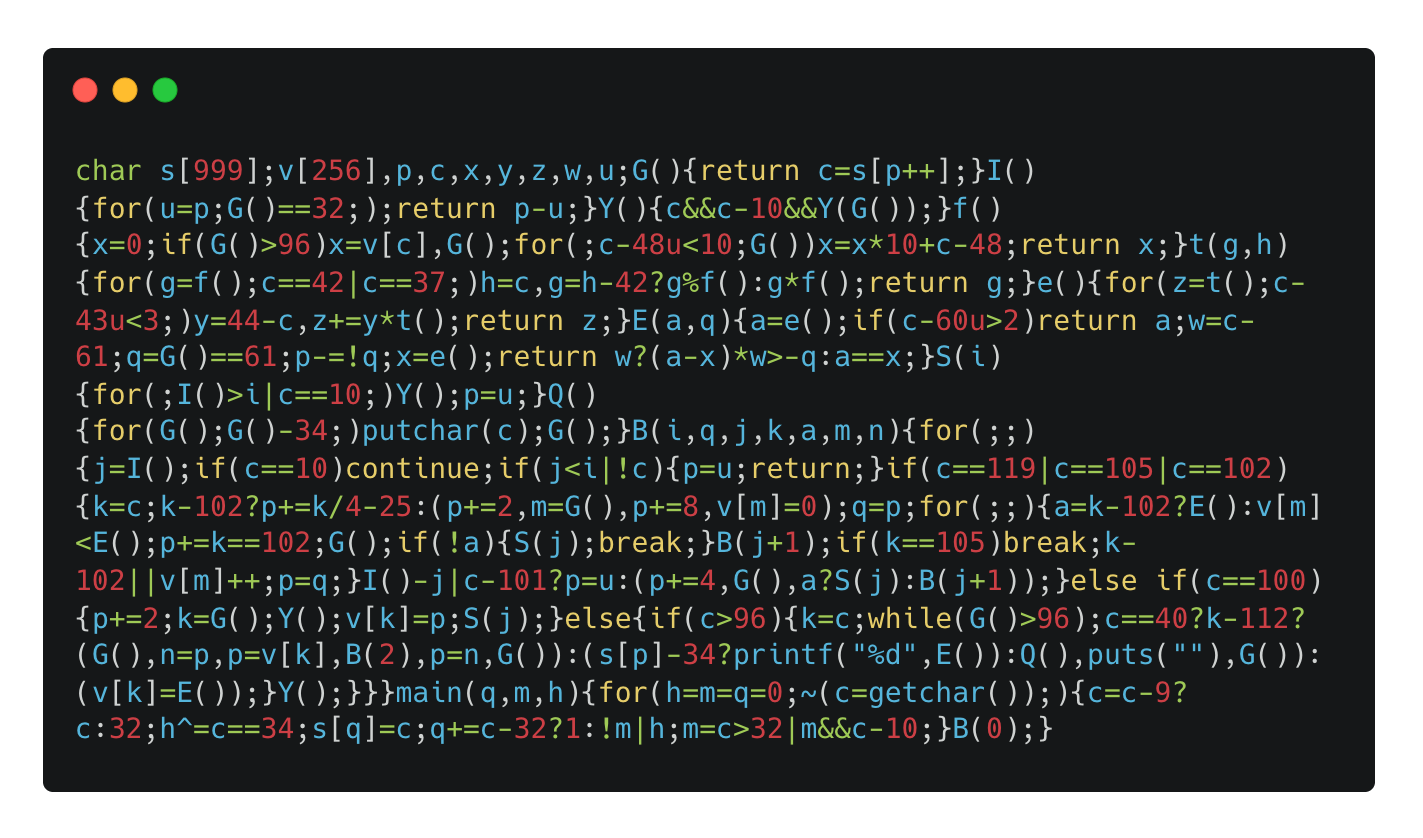
A developer challenged themselves to write a minimal Python interpreter in C that fits within a strict 1024-byte size limit. The resulting program executes a tiny subset of Python, demonstrating impressive code optimization and low-level programming skills.
Comments
The NX bit is not just about security
2026-09-07A developer recently shared a detailed debugging saga involving a random system lockup encountered while building a bare-metal ARM64 hypervisor for postmarketOS. The issue, which was triggered by enabling the CTR_EL0 intercept, ultimately led to surprising discoveries about the NX bit and its functionality beyond standard security applications.
Comments
After a year of overcoming technical hurdles and partially rewriting the project in Rust, the next version of Anubis will ship with WebAssembly-based proof of work checks. Administrators will be able to enable these new checks within their thresholds or bot rules to better manage system traffic.
CommentsMador is a new lightweight open-source tool that enables developers to make any DOM reactive using a minimal 80-line Proxy state tuple. Recently shared on Hacker News, the project offers a simple way to add reactivity to web interfaces without relying on heavy frameworks. The source code is available for review and contribution on GitHub.
CommentsStaatsgeheim has introduced MathKernel, an evidence-aware multi-engine mathematics runtime and MCP server designed to enhance computational accuracy in large language models. By supporting exact, symbolic, formal, and numeric computations with typed MathIR and trust labels, the platform ensures full provenance and highly reliable mathematical reasoning for AI applications.
CommentsNetBSD 9.5 released and EOL for NetBSD-9
2026-09-07NetBSD 9.5 has been officially released, marking the end of life for the NetBSD-9 branch and prompting community discussions about maintaining legacy hardware. However, the majority of the reader discussion pivots to a heated debate over the quality, acceptance, and code review standards of AI-generated contributions in open-source projects.
CommentsAsk HN: How do you manage skills files?
2026-09-07In a recent discussion on managing AI agent skill files, developers shared strategies for centralizing and distributing custom prompts to improve coding workflows. While participants debated whether advancing AI models will eventually make general-purpose skills obsolete, there is consensus that context-specific skills remain vital for efficient task execution. Consequently, developers are adopting various organizational methods, including personal repositories, dotfile managers, and shared team directories, to keep their skill collections streamlined and accessible.
CommentsA new social network called GET Together allows users to share updates using only HTTP GET requests instead of traditional POST requests. The developer-focused project playfully subverts standard web protocols to create a unique platform for posting messages.
CommentsSigning TLS handshakes inside a TPM
2026-09-07This article details how to securely sign TLS handshakes by keeping a client certificate's private key inside a Trusted Platform Module. It explains the specific requirements of Go's crypto/tls package and provides the necessary implementation for both client and server endpoints. Additionally, the piece evaluates the performance overhead and computational costs associated with each handshake.
Comments
A recent Glazer Technologies blog post details the technical process of reverse engineering the storage format for an undocumented database. This deep dive highlights how investigators can extract and analyze hidden data structures to uncover mission-critical intelligence for cybercrime cases and due-diligence workflows.
CommentsResearch carried out using NetBSD
2026-09-07A recent research initiative by Microsoft highlights the use of NetBSD to support a new processor, underscoring the operating system's extensive hardware portability and permissive licensing. In the accompanying community discussion, developers praise NetBSD's versatility while debating the practicality of using various BSD distributions as secure daily desktop drivers. Participants also explore how AI agents might assist in maintaining and updating these systems in the future.
CommentsVidact is a new compiler that transforms React components into direct DOM operations. By eliminating the need for both the Virtual DOM and the React runtime, it allows developers to write standard React code while executing direct DOM manipulation.
Comments2026-09-06
The new open-source project Cloud in a Bottle aims to make personal cloud self-hosting accessible to everyone by offering containerized apps and unified authentication. By prioritizing a streamlined user experience, the platform allows users to manage their own web applications as intuitively as using a smartphone, eliminating the need for complex sysadmin skills.
CommentsThe revolt of the reader
2026-09-06In his essay The revolt of the reader, author Bryan critiques the proliferation of AI-generated content and the flawed detection tools policing it. Sparked by an LLM-written guest post from the Rust Foundation, the piece argues that these technologies threaten both the decentralized nature of internet infrastructure and the human provenance of writing.
CommentsLearn Programming with OCaml
2026-09-06A discussion surrounding a book on learning OCaml highlights the ongoing debate over whether functional ML languages should be taught as a first programming language. While commenters note that adapting to OCaml's strict functional paradigm can be initially painful for beginners, many agree the experience ultimately creates better programmers by instilling strong habits in abstraction and immutability.
CommentsRecurseCenter.return()
2026-09-06Readers are expressing strong enthusiasm following news of the Recurse Center's return and its associated hub. The positive discussion highlights the tech community's ongoing appreciation for the initiative and its collaborative spaces.
Comments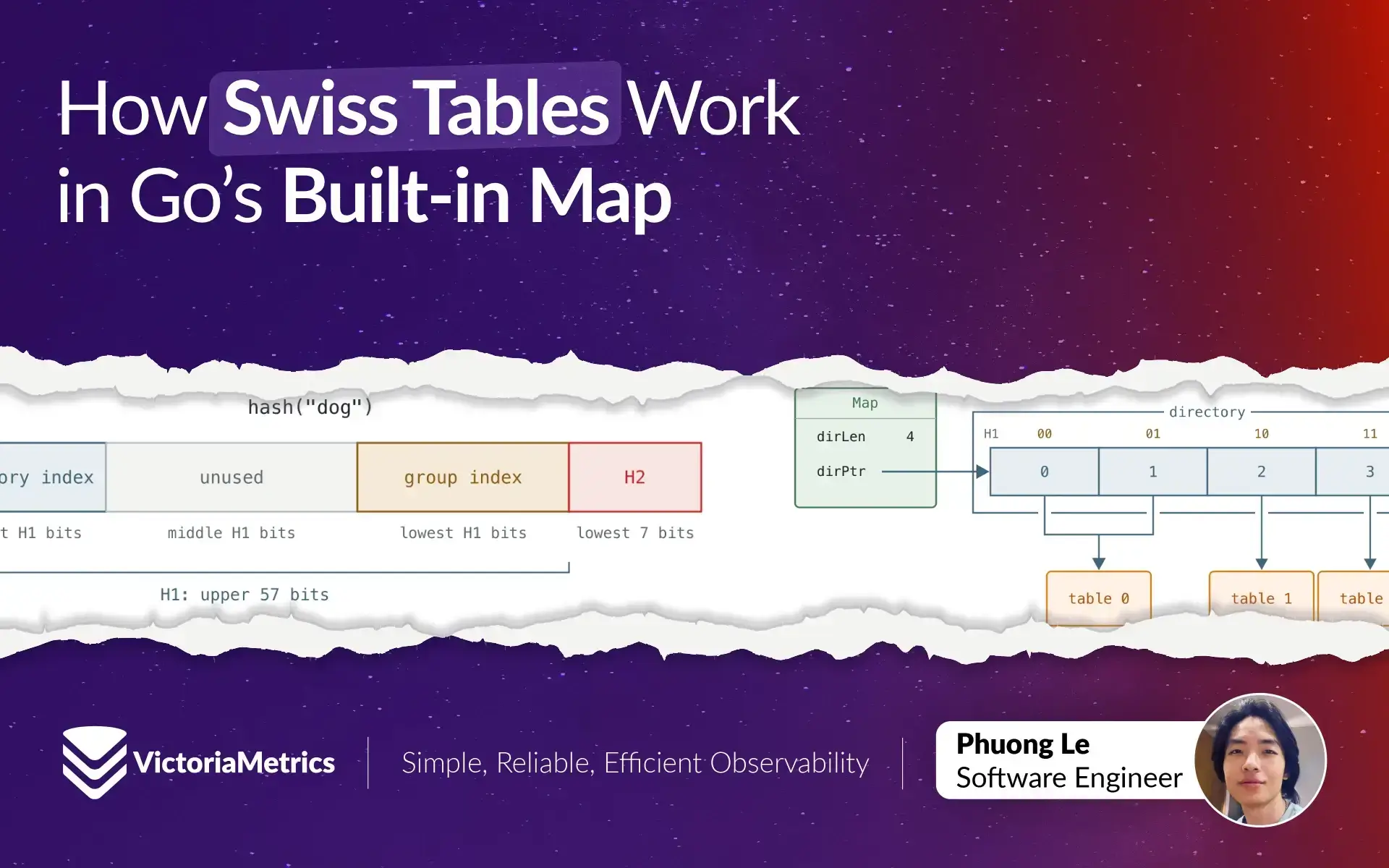
How Swiss tables work in Go built-in map
2026-09-06Go 1.24 upgrades its built-in map implementation by replacing the traditional bucket-based runtime with the highly efficient Swiss Tables algorithm. A new technical deep dive explores this architectural shift, breaking down core concepts like control bytes, hashing, probing, and table growth.
Comments
This technical deep dive visualizes how Rust's dynamic trait dispatch and virtual tables operate in memory. Through a series of hands-on coding experiments, the author explores the language's unique memory management peculiarities. Written from a C++ developer's perspective, the guide helps programmers understand the underlying mechanics of the dyn Trait syntax.
CommentsDespite recent takedowns, the alternative Twitter front-end Nitter currently has more working instances than it did prior to the crackdown. This resilient growth is supported by ongoing community efforts on GitHub, including new forks like shitter that maintain the project's accessibility.
Comments