Programming Tech News
2026-09-03

Muse Spark 1.3
2026-09-03Muse Spark 1.3 has been released with specialized training for autonomous agentic workflows and complex task execution. The latest version also introduces targeted optimizations to significantly improve its competitive coding performance.
Comments
A newly published guide explores how to reverse engineer unknown file formats using the ImHex hex editor. The tutorial uses the save file format of the game FEZ as a practical example to introduce readers to both file structures and the tool's capabilities.
Comments
Fable 5.1 World Modeling
2026-09-03PhiloLabs has released Fable 5.1, a world modeling update that enables the generation of virtual environments via code. The fable51-worlds project is now available on GitHub, where developers are encouraged to contribute to its ongoing development.
CommentsA new technical deep dive explores the engineering optimizations that make Wasmi 2.0 one of the fastest WebAssembly interpreters available today. The breakdown details the specific techniques used to achieve this high performance and compares execution speeds directly against competing solutions like Wasm3 and Stitch.
Comments
Y Combinator W23 startup Nango is expanding its team by hiring for engineering, product, and go-to-market roles in San Francisco and remotely. The company focuses on solving complex technical challenges related to developer experience, high-scale infrastructure, and API fragmentation.
Comments
Embedded Rust RTOS vs. C RTOS
2026-09-03A new technical blog post compares the Embassy async Rust framework against the traditional C-based FreeRTOS. The evaluation is conducted on an STM32F446 microcontroller to assess the viability and performance of Rust for embedded real-time operating systems.
CommentsThe 1975 source code for the Altair BASIC interpreter reveals the early development of Microsoft's foundational software. Although Bill Gates and Paul Allen drew inspiration from DEC's BASIC, they built a completely different implementation that tokenized code at runtime. The highly detailed assembly code highlights the team's remarkable productivity in creating a fully functional interpreter with floating point support in just two months.
CommentsPoisson Disk Sampling
2026-09-03The latest update features Poisson Disk Sampling alongside the introduction of Stripe Across, which is described as a grog. The developers concluded the announcement by stating they hope the audience will enjoy it.
Comments
Cloudflare engineers have prototyped a new caching compression technique using Zstandard and Pingora to maximize existing hardware efficiency. By implementing this compression directly within their cache, the company estimates it could save petabytes of storage space without requiring additional physical servers.
CommentsMLC AI has introduced WebLLM, a high-performance inference engine that enables large language models to run directly inside web browsers. This open-source project allows developers to deploy advanced AI applications client-side, eliminating the need for backend server processing.
Comments2026-09-02
The creator of Jujutsu has joined ERSC
2026-09-02The creator of Jujutsu has joined ERSC as the company's new Chief Technology Officer. This executive move follows a 15-year tenure at Google. The appointment brings extensive technical leadership and industry experience to the organization.
Comments
This article outlines strategies for building autonomous goal loops that enable AI coding agents to successfully tackle complex feature development. It explains how to equip these agents with real-world demands, protected metrics, and sufficient memory to ensure reliable and effective code improvements.
Comments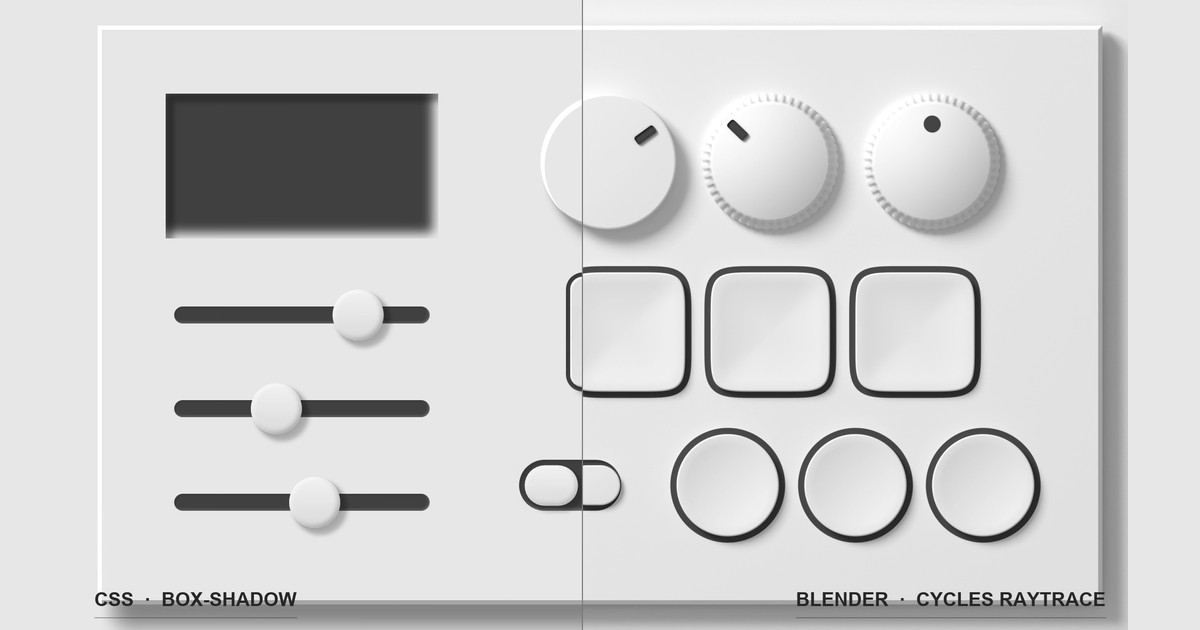
Ambient CSS v3 – Blender meets CSS
2026-09-02Ambient CSS v3 brings advanced 3D lighting to web design by allowing developers to define a single light source that automatically generates realistic shadows, highlights, and gradients. Calibrated against Blender raytraces, the tool achieves these complex visual effects using only standard CSS box-shadow properties.
CommentsAsk HN: Who is hiring? (September 2026)
2026-09-02The September 2026 Hacker News hiring thread highlights strong industry demand for engineers specializing in AI infrastructure, government automation, and autonomous robotics. Startups like Statecraft and Source are building AI workforces for the US government and local-first data layers for AI agents, while companies such as Greenzie and Monumental are deploying autonomous machines for commercial mowing and construction. Meanwhile, edge cloud provider Fastly is expanding its global engineering teams with a continued focus on open standards and WebAssembly technologies.
CommentsQuill (YC W20) Is Hiring a Fullstack SWE
2026-09-02Quill, a startup from the Y Combinator Winter 2020 batch, is expanding its engineering team. The company is currently seeking to hire a fullstack software engineer to support its ongoing technical development.
CommentsA recent Hacker News hiring thread for September 2026 highlights a diverse pool of senior software engineers, systems architects, and AI specialists actively seeking new employment. Global candidates are showcasing deep expertise in modern technology stacks, including Rust, Zig, AI security, and distributed systems, primarily targeting remote or hybrid roles.
Comments2026-09-01
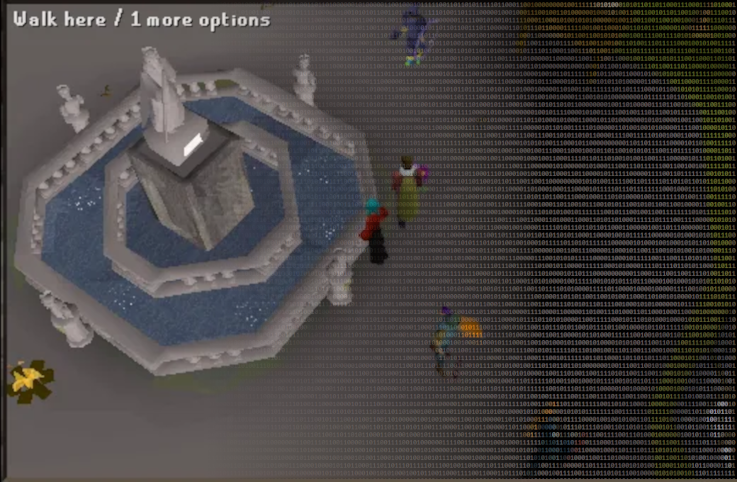
This article provides a technical breakdown of how the 2004 version of RuneScape successfully delivered a 3D multiplayer RPG experience over incredibly slow 56k dial-up connections. It explores the specific data optimization techniques that allowed the browser-based game to run smoothly for thousands of players using just five kilobytes per second.
Comments
A developer has created a fully walkable ASCII art cyberpunk city contained entirely within a single HTML file. The interactive prototype brings the retro text-based aesthetic to life by generating an immersive, living digital metropolis. Users can explore the playable environment and view a video demonstration of the project online.
CommentsReader discussions surrounding an article on developing cross-platform tools with Tcl/Tk reveal a mix of nostalgia and practical appreciation for the classic toolkit. While some developers find its traditional design patterns outdated compared to modern reactive frameworks, others praise its simplicity and reliable cross-platform performance. Additionally, commenters highlighted the toolkit's broad language interoperability, noting it can easily integrate with languages like Python, Scheme, and COBOL via sockets or native bindings.
CommentsAutonomous (YC F25) is hiring engineers
2026-09-01Y Combinator-backed startup Autonomous is actively recruiting software engineers to expand its technical team. As a participant in the YC F25 batch, the company is seeking engineering talent to support its ongoing product development and growth.
Comments
A new technical investigation explores how to programmatically generate stippling drawings from any image using optimal transport algorithms. The project analyzes particle spacing and mathematical properties to determine the best distribution of elements. Ultimately, it demonstrates how code can successfully transform standard digital pictures into optimally placed collections of dots.
Comments
Visualizing Combos in Judo in R
2026-09-01A new data science project uses the R programming language to visualize Judo attack combinations as complex networks ahead of the Judo World Championship in Budapest. By applying advanced statistical modeling to martial arts, the analysis reveals the underlying dynamics and strategic connections of the sport's techniques.
CommentsYC S26 startup Hebbian Robotics has launched hflow, an SDK designed to help robotics teams build scalable data pipelines for AI model training. The platform enables developers to easily verify and maintain the high quality of the datasets used to train their robotic systems.
Comments2026-08-31

“I just chose words carefully”
2026-08-31This blog post explores the principles of software craftsmanship and code quality by emphasizing the importance of precise communication in development. The author argues that carefully choosing words and naming conventions is just as critical to writing clean, maintainable software as the underlying logic. The piece highlights how thoughtful terminology directly impacts overall project clarity and long-term success.
CommentsCobaltC – The Successor to C?
2026-08-31The official 1.0 specification for CobaltC has been released, introducing a new programming language billed as a potential successor to C. This foundational document outlines the core design, syntax, and features of the language for the developer community. Programmers can now review the specification to evaluate its capabilities and potential impact on systems development.
CommentsA new project features a battery-free PCB business card that harvests NFC energy from a smartphone to power an onboard microcontroller. When tapped, the card draws enough radio frequency power to illuminate 21 animated LEDs without requiring an internal battery.
CommentsA community discussion on losing passion for software development reveals that the influx of AI-generated code is shifting the focus from craftsmanship to mass production, leaving maintainers burned out by a tsunami of low-quality pull requests. Commenters argue that AI disrupts the gradual learning curve of coding and advise developers to ruthlessly protect their time from poor submissions while focusing on rediscovering a love for the actual programming process.
CommentsSort branches by last commit date
2026-08-31A recent community discussion highlights various methods for sorting Git branches by their last commit date to streamline developer workflows, including custom terminal aliases, fuzzy finder integrations, and dedicated terminal user interfaces. Additionally, configuring Git globally to sort by committer date is highly praised for automatically prioritizing recently rebased or actively worked-on branches.
CommentsHow to build a diffusion language model
2026-08-31A newly released guide provides a comprehensive introduction to diffusion language models and the research advances driving them. Adapted from major machine learning conferences, the resource details the core building blocks of modern open-source implementations. It covers essential techniques including masking diffusion, iterative refinement, post-training, and variable-length generation.
Comments