Programming Tech News
2026-08-06
Zed DeltaDB
2026-08-06Zed has opened early access sign-ups for DeltaDB, a new platform designed to facilitate continuous source control and review. The upcoming tool aims to streamline how development teams track, manage, and evaluate changes within their projects.
Comments
Muse Code and Muse Spark 1.2
2026-08-06Muse has launched Muse Code, a terminal coding agent powered by the newly released Muse Spark 1.2 model. The tool features persistent background agents, repository-scale execution, and built-in verification to streamline developer workflows.
Comments
Hobbyist programmers are rejecting LLM usage because they value the intrinsic joy of coding, similar to how athletes reject automated performance aids. This pushback is further fueled by recent controversies where developers allegedly used LLMs to obfuscate and rewrite code derived from open-source projects to bypass licensing restrictions. Consequently, the community is actively debating the legal and ethical implications of using AI to generate derivative works under the guise of clean room design.
Comments
Prime Agent: A self-improving RLM agent
2026-08-06Prime Agent is an open-source, self-improving coding harness built on Recursive Language Model and Continual Harness abstractions. Powered by Opus 5, the system achieved a 95.5% score on the ARC-AGI-3 benchmark, successfully surpassing the previously reported human expert baseline.
Comments
A new blog post explores how developers can achieve a fourfold performance increase in Rust by applying branchless programming techniques. By removing an if statement from a filter function, the author demonstrates how to optimize execution speed and avoid costly CPU branch mispredictions.
CommentsDeno has introduced Celld, a new open-source project that allows developers to self-host distributed Durable Objects. This tool enables teams to build stateful, distributed applications on their own infrastructure instead of relying on proprietary cloud providers. The project is currently available for public use and contribution on GitHub.
Comments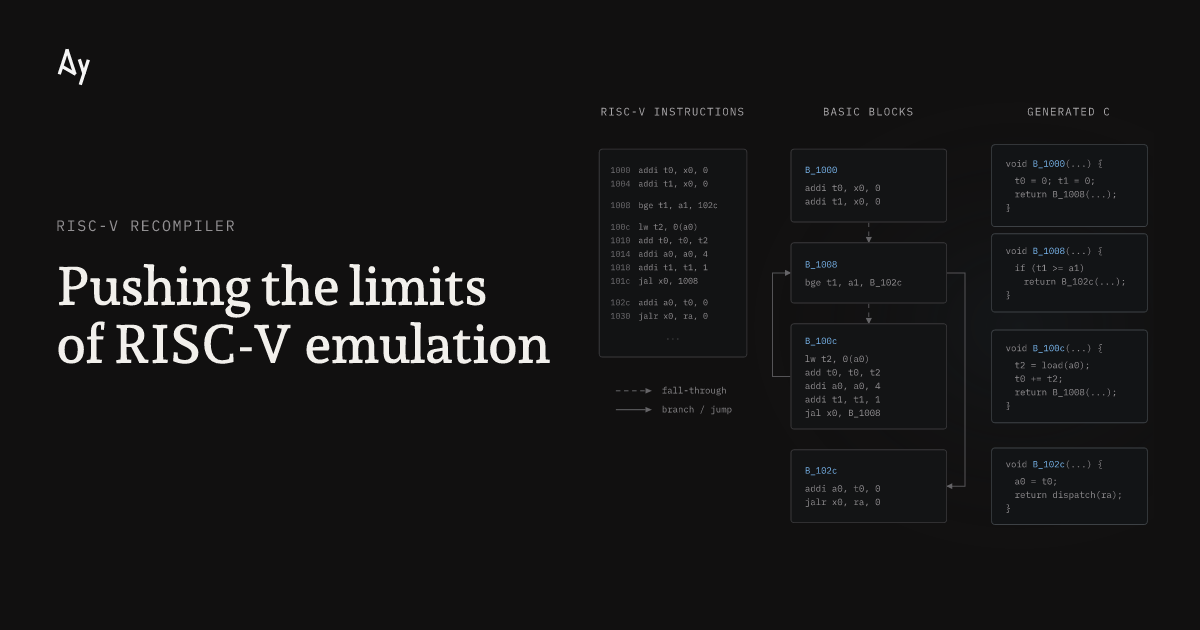
Pushing the limits of RISC-V emulation
2026-08-06A recent technical deep dive explores the complex optimizations required to achieve near-native execution speeds when emulating RISC-V code on alternative processor architectures. By overcoming significant performance bottlenecks, these advancements in emulation technology pave the way for more efficient cross-platform software development. Ultimately, this progress supports the broader adoption and practical deployment of the open-source instruction set across diverse hardware environments.
CommentsPosition: LLMs Can't Jump
2026-08-06A recent discussion highlights the limitations of large language models, arguing that AI is inherently constrained because human language is a fundamentally lossy encoding of the human experience. While LLMs excel at low-ambiguity tasks like coding, they lack physical qualia and true contextual understanding. Consequently, the actual significance of their outputs ultimately relies on the human receiver to bridge the semantic gaps.
CommentsA new open-source library called delaunay32 has been released to provide fast, parallel 2D Delaunay triangulation specifically optimized for 32-bit integer coordinates. By utilizing exact integer predicates, the tool ensures high precision and robust performance for developers working on computational geometry applications.
CommentsHyperProbe, a YC S26 startup, offers a read-only production debugging tool that uses hypothesis-driven conditional probing to catch silent logic failures missed by traditional exception trackers. Instead of aggregating massive static trace data, it dynamically captures full variable states at specific execution lines while employing in-process rule engines to sanitize sensitive customer data.
Comments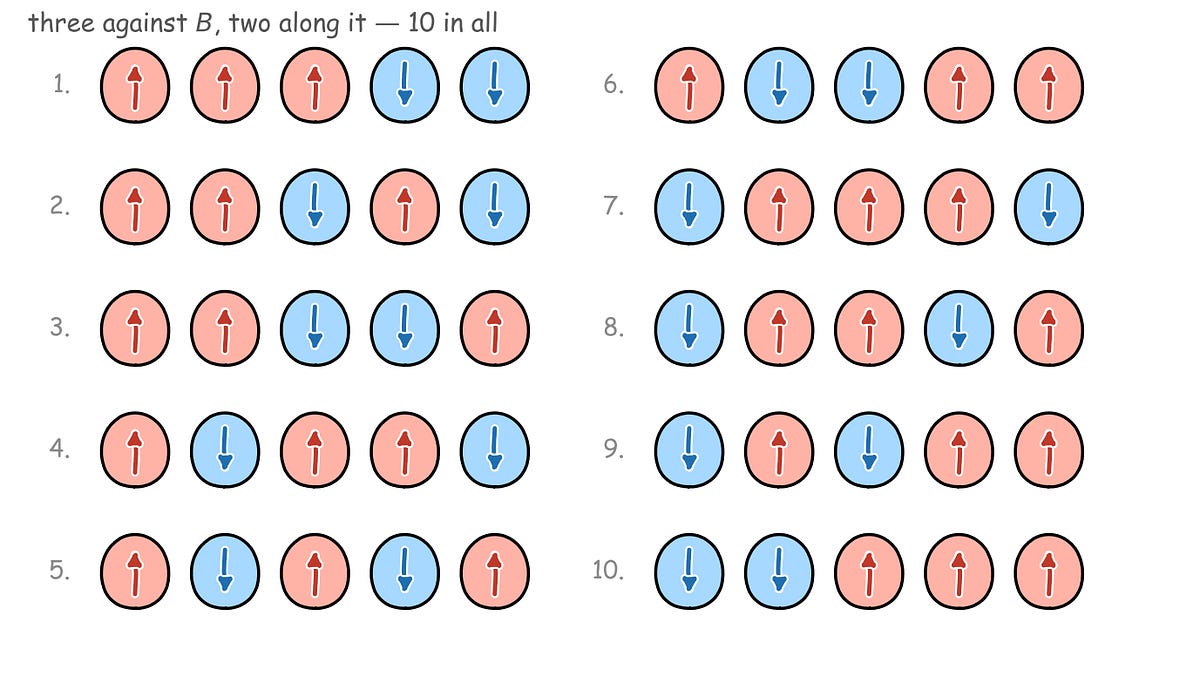
The Entropy of a Markov Chain
2026-08-06A newly released technical article explores the mathematical concept of Markov chain entropy by walking readers through a highly detailed, explicit example. This guide is designed to help data scientists and developers demystify complex information theory calculations through practical, step-by-step breakdowns.
Comments
The Valley of Webhooks
2026-08-06After repeatedly building custom webhook consumers from scratch at different companies, a developer highlights the inefficiencies of current webhook implementations. The article advocates for the creation of a better, standardized foundational primitive to eliminate redundant engineering efforts and streamline event-driven integrations.
Comments2026-08-05
Through its Open Source Sabbatical program, the City of Munich is providing up to six months of funding for the development of the open-source XML parsing library libexpat. The initiative allows professional developers, including the project's maintainer Sebastian, to dedicate time to improving critical software infrastructure. While supporters praise the move as a positive continuation of the city's historical commitment to open-source software, critics argue that municipal funds should be reserved for traditional public services.
CommentsA recent article examining myths in software engineering and generative AI has sparked debate over the fallacy of delaying current work in anticipation of future, fully autonomous AI models. Commenters emphasize that human cognition and creative reasoning remain essential for complex tasks, while also questioning whether the abductive reasoning behind historical scientific breakthroughs will eventually be replicated by large language models.
Comments
Pi's Minimalism Is Its Advantage
2026-08-05Pi's minimalist harness design is significantly improving the cost and performance of modern coding agents. By focusing strictly on essential functionality, the streamlined approach eliminates unnecessary overhead. Real-world applications from Databricks and Shopify's pi-autoresearch extension demonstrate the practical advantages of this highly efficient system.
CommentsDuckDB, a high-performance data science database designed to run locally on your laptop, is now available in Clojure. This update enables Clojure developers to leverage the fast analytical engine for their local data processing workflows.
Comments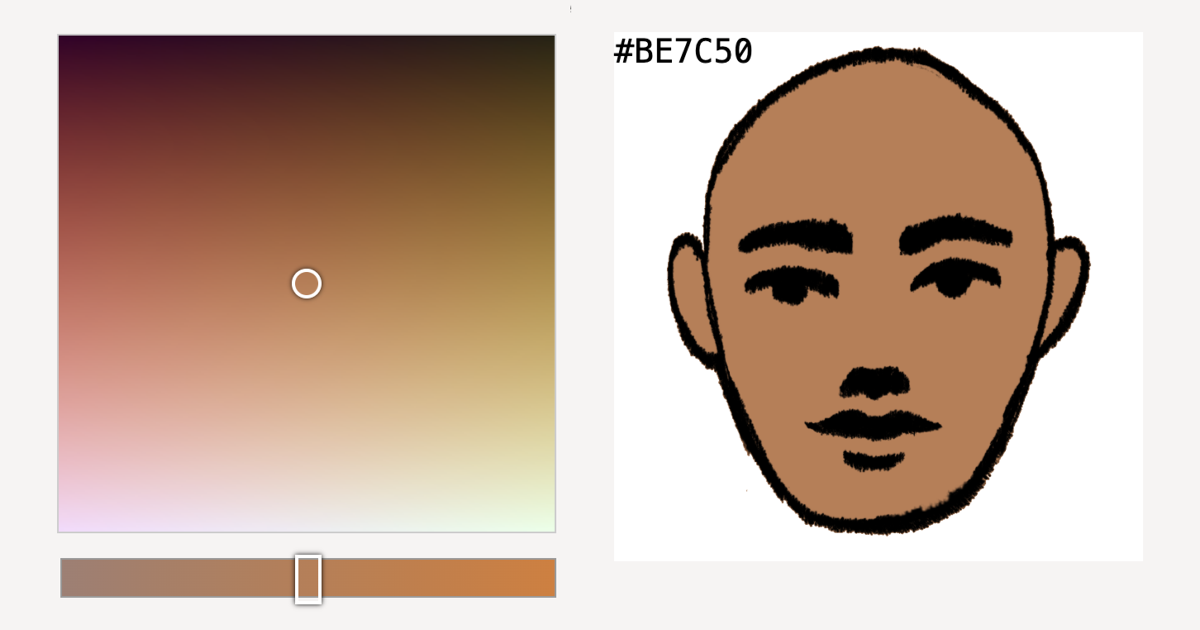
A new tool introduces a simple algorithm and custom color space designed to help digital artists and game developers generate diverse skin tones. It features an intuitive color picker that uses basic equations to make selecting inclusive and varied skin tones easier for creative projects.
Comments
Web developers have long joked about the difficulty of centering a div, but new browser sidebars are introducing a fresh layout complication. Instead of simply centering content within the traditional webview, developers must now center the page within the entire browser window to maintain proper alignment. This ongoing shift in browser user interfaces continues to challenge standard web design practices.
CommentsThe Video2NAND project demonstrates how the VP8 video codec can be theoretically abused to construct NAND logic gates by exploiting its maximum resolution and minimum block size parameters. While some commenters speculate this technique could eventually be scaled to build a small CPU, others argue the project's title overstates its current computational capabilities. The discussion highlights the creative potential of repurposing media formats for unconventional computing, even if achieving true Turing completeness in practice remains a challenge.
Comments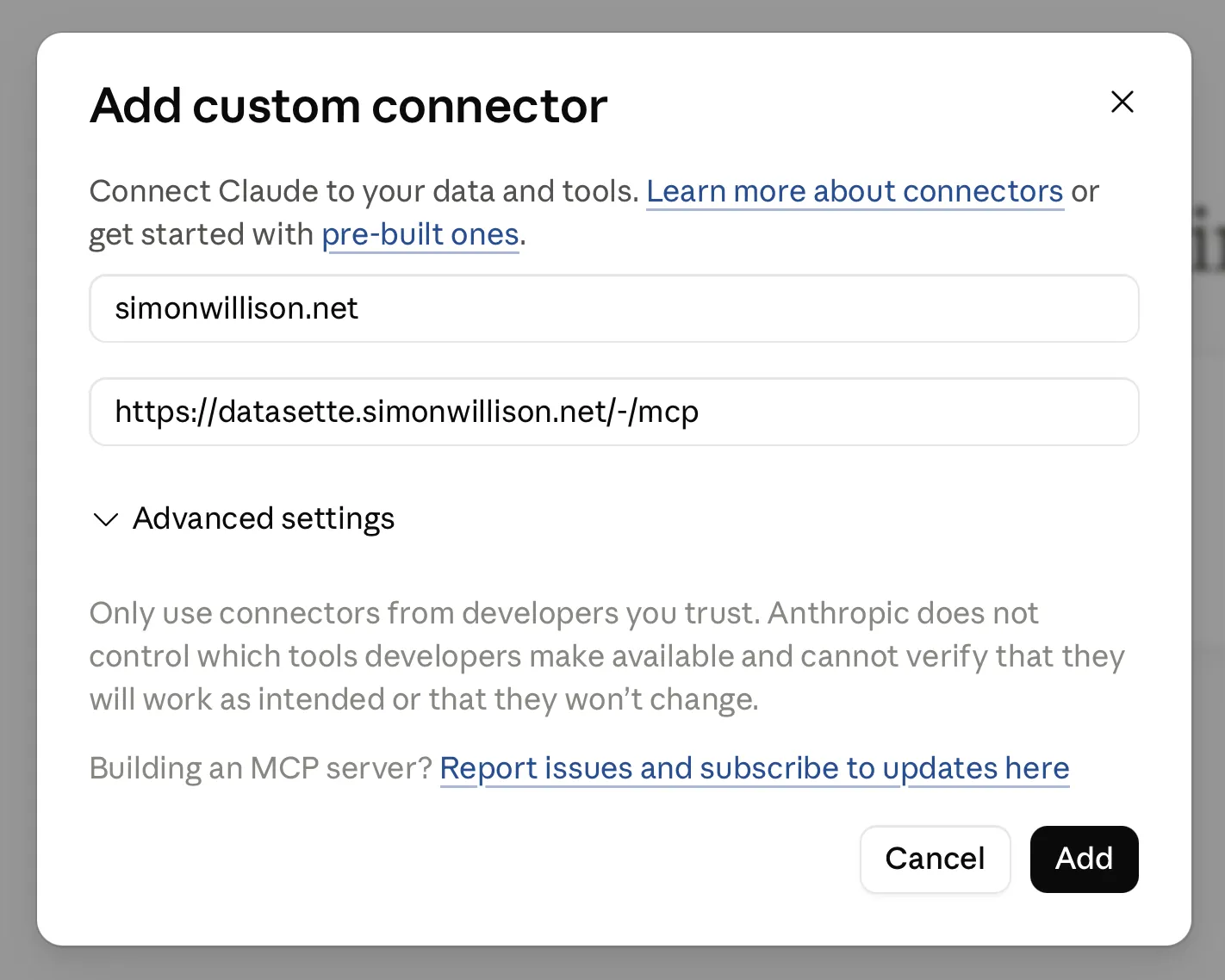
Stateless MCP has recaptured my interest
2026-08-05The Model Context Protocol 2.0 specification was officially released this Tuesday, introducing a highly significant shift to a stateless architecture. This major update has successfully recaptured developer interest in the protocol and marks a pivotal moment for its future development.
CommentsShow HN: SIMD Viterbi Decoder in Rust
2026-08-05A developer has shared a new open-source Rust crate that implements a SIMD-optimized Viterbi decoder for forward error correction. The project offers high-performance error correction capabilities and is now available for community contribution on GitHub.
Comments
The Keyv npm package and eight related dependencies were compromised in an active supply chain attack on August 4, 2026. An attacker injected Mini Shai-Hulud malware into the packages after gaining unauthorized access to the maintainer's GitHub account.
Comments
GitHub has dramatically improved its code search performance by case-folding source code at memory speed using branch-free loops and byte-space arithmetic. This technique allows the platform to process every byte of code at rates exceeding 45 GiB/s on just a single core.
Comments2026-08-04

LLMs reward expertise
2026-08-04Recent reader discussions highlight that large language models heavily favor users with existing technical expertise, as novices often lack the specific vocabulary needed to prompt effective code generation. While programming experts can build simple applications in a single prompt, non-technical users frequently get trapped in endless brainstorming loops or struggle with basic developer interfaces. This reveals a significant gap between the promised democratization of software creation and the reality of using AI tools without foundational domain knowledge.
CommentsAlthough the original article highlights ten recent advances in mathematics and theoretical computer science, reader discussions primarily focus on the societal and political implications of exponential technological growth driven by large language models. Commenters express concern over the unprecedented ability of AI to scalably manipulate individuals through highly personalized, real-time conversational engagement. The debate also explores how these computational breakthroughs will impact experimental fields like biology and potentially exacerbate political polarization through advanced digital manipulation.
CommentsA new open-source project called Swiftlet enables users to run massive large language models on Apple devices with remarkably low memory requirements. The tool successfully demonstrates running an 80-billion parameter Qwen model using just 4.3 GB of RAM on a Mac, alongside a 35-billion parameter model on an iPhone. This advancement significantly lowers the hardware barrier for running powerful local AI inference on everyday consumer devices.
Comments
Devtools must be open source
2026-08-04The article argues that developer tools must remain open source to support the industry's rapid shift toward highly personalized software. Open-source devtools provide the necessary flexibility and community-driven innovation required to build these customized applications. Ultimately, keeping these tools open is essential for developers to thrive in this new era of personalized technology.
Comments
A developer reflects on their unsuccessful 2015 Microsoft internship interview, which they pursued during their computer science degree after gaining confidence from open-source contributions. The author recalls targeting the tech giant specifically because of its impressive work on TypeScript and the open-source rewrite of the C# compiler.
CommentsThe August 2026 Hacker News hiring thread features numerous software engineers and infrastructure specialists showcasing their technical expertise to potential employers. Candidates highlight extensive backgrounds in AI infrastructure, distributed computing, and full-stack development using languages like Rust, Go, and TypeScript. While the majority of applicants are seeking remote opportunities, several remain open to relocation for the right roles.
Comments
ComfyUI now features day-zero support for MiniMax H3, an open-weights omni-modal video model that generates 2K resolution video with native stereo audio. Thanks to significant optimizations, this powerful model can be run locally on accessible consumer hardware like a 3060.
Comments