Programming Tech News
2026-06-07

A software engineer with a decade of experience has shared a candid reflection on how Large Language Models are devaluing their technical skills and causing them to question their future in the industry. This personal account highlights the growing anxiety among veteran tech professionals regarding the rapid automation of traditional software development tasks by generative AI.
CommentsThe winners of the 29th International Obfuscated C Code Contest for 2025 have been announced, showcasing the world's most creatively unreadable C programming. This annual competition challenges developers to write clever, heavily obfuscated code that compiles and runs while remaining completely incomprehensible to human readers.
Comments

After serving time in a maximum-security juvenile prison and battling severe addiction that resulted in a felony conviction, the author rebuilt their life through software development and open-source contributions. Their condensed narrative details this difficult journey from incarceration to a successful career in technology. The story is intended to offer hope and inspiration to anyone who feels they have no future.
CommentsLathe is an open-source tool that leverages large language models to generate customized, multi-part technical tutorials on demand. Rather than allowing AI to write code and bypass the learning process, it requires users to work through the hands-on lessons by hand to genuinely master new domains.
Comments
A recent technical breakdown reveals that Linear achieves its lightning-fast performance through a local-first sync architecture, instant first loads, and MobX observables. These architectural choices, combined with a keyboard-first design, create a highly responsive and seamless user experience.
Comments
Harness engineering is exploring how to leverage Codex to adapt its software development practices for an agent-first world. By integrating autonomous coding agents into daily workflows, the technical staff aims to significantly enhance overall engineering efficiency and embrace AI-driven development.
Comments
Researchers have published a new study analyzing the computational costs of AI coding agents by quantifying exactly where language model tokens are consumed during agentic software engineering tasks. The paper breaks down token usage across various developmental phases to identify major cost drivers and help developers optimize the efficiency of automated programming systems.
Comments
Symbolica 2.0 introduces programmable symbols and high-performance computer algebra capabilities for Python and Rust ecosystems. This latest release provides advanced tools for symbolic computation and numerical methods to optimize complex mathematical workflows.
CommentsWin16 Memory Management
2026-06-07A reader discussion on Win16 memory management highlights how the operating system's bi-modal design forced developers to navigate complex segmented addressing to maintain compatibility with older processors. Compared to OS/2 and Classic Mac OS, Windows introduced unique hurdles like globally shared DLL data and manual code segmenting to conserve limited RAM. Despite the tedium of managing these strict hardware limitations, developers recall that the overall system was much simpler to comprehend than today's complex cloud environments.
Comments
My Software North Star
2026-06-07In a recent blog post, Loris Cro shares his guiding philosophy and core principles for software development, which he calls his software north star. The article details how these foundational beliefs influence his approach to building tools, contributing to the open-source community, and shaping the future of programming.
Comments
Podman 6 will introduce significant usability improvements to its machine function to address existing architectural limitations. These updates are designed to streamline the setup and management of container environments for developers.
CommentsMy automated doubt development process
2026-06-07A new article details an automated doubt process that restores developer trust in AI-assisted coding by front-loading rigorous scrutiny through multi-agent validation. By proactively verifying AI-generated outputs with multiple validation agents, this methodology shifts the workflow from blind reliance to systematic error prevention.
CommentsA new open-source project called office-open-xml-viewer allows users to view Office Open XML documents directly within their web browser. The tool processes these files and renders the output directly to an HTML Canvas element for seamless display.
Comments2026-06-06
How LLMs work
2026-06-06This guide provides a comprehensive, ground-up walkthrough of the underlying mechanics behind modern Large Language Models. It breaks down the complex architecture step-by-step, starting with basic tokenization and exploring the inner workings of transformer blocks. The piece concludes by explaining the continuous next-token prediction loop that ultimately drives text generation.
CommentsMoving beyond fork() + exec()
2026-06-06The traditional fork() and exec() system calls have been the foundation of Unix process creation for decades, but their legacy design is increasingly inefficient for modern computing environments. A recent analysis explores these limitations and highlights the alternative mechanisms and newer APIs developers are adopting to streamline process instantiation and improve overall system performance.
CommentsAchieving frame rates up to 100,000 FPS, a community has successfully compiled Pokemon Emerald directly to WebAssembly using a community-driven decompilation rather than a traditional GBA emulator. The web port supports essential features like saving and speed adjustments, though users have reported minor menu crashes and requested customizable keyboard controls.
CommentsReader discussions surrounding the announcement of Zeroserve quickly pivoted to debating the sunsetting of the Techempower web server benchmarks and the launch of a new competitor, http-arena. Much of the conversation focused on criticizing the new leaderboard user interface, with users complaining that its color palette and overall design look heavily AI-generated. In response, the developer acknowledged the rough design and implemented changes like zebra-striped tables to improve readability.
CommentsAsk HN: Why is the HN crowd so anti-AI?
2026-06-06Hacker News users debate the perception that the community is anti-AI, concluding that the platform simply reflects broader societal divisions regarding the technology. While many developers appreciate the productivity benefits of generative AI, experienced engineers caution against the trend of vibe coding by emphasizing that generating raw code is not a substitute for proper software architecture. Ultimately, the discussion highlights a nuanced perspective where practitioners recognize the strengths of large language models but remain highly critical of their current limitations in handling complex, production-level projects.
CommentsA new infinite canvas note-taking app utilizes a non-Euclidean Poincaré disk to organize exponentially growing knowledge trees in hyperbolic space. Users praise the interface's intuitive spatial navigation for visualizing complex data and mapping knowledge effectively. The community also discussed potential enhancements, suggesting geometric text distortion, grid overlays, and offline stylus support to improve the overall experience.
CommentsA recent blog post from a Clojure developer examines the severe performance drawbacks of using standard UUIDs as primary keys in SQLite databases. Because these identifiers are randomly generated, they cause significant index fragmentation and page splits within SQLite index structures. Consequently, developers experience degraded write performance and increased disk operations, highlighting the need for monotonically increasing identifiers.
CommentsSem is a new code analysis tool that maps code dependencies as graph entities on top of Git using the tree-sitter parser. While developers praise its ability to quickly identify transitively affected files and tests, its setup process sparked community debate over user-friendliness and the creator's response to uninstall complaints.
Comments
A viral tech joke highlighting the notoriously steep learning curve of C++ has gained traction online after a user joked about abandoning the language's definitive book after just looking at the back cover. The punchline about skipping the required reading perfectly captures the intimidation many developers feel toward the language. This humorous observation continues to resonate with programmers who frequently struggle with the dense syntax and complex documentation of C++.
Comments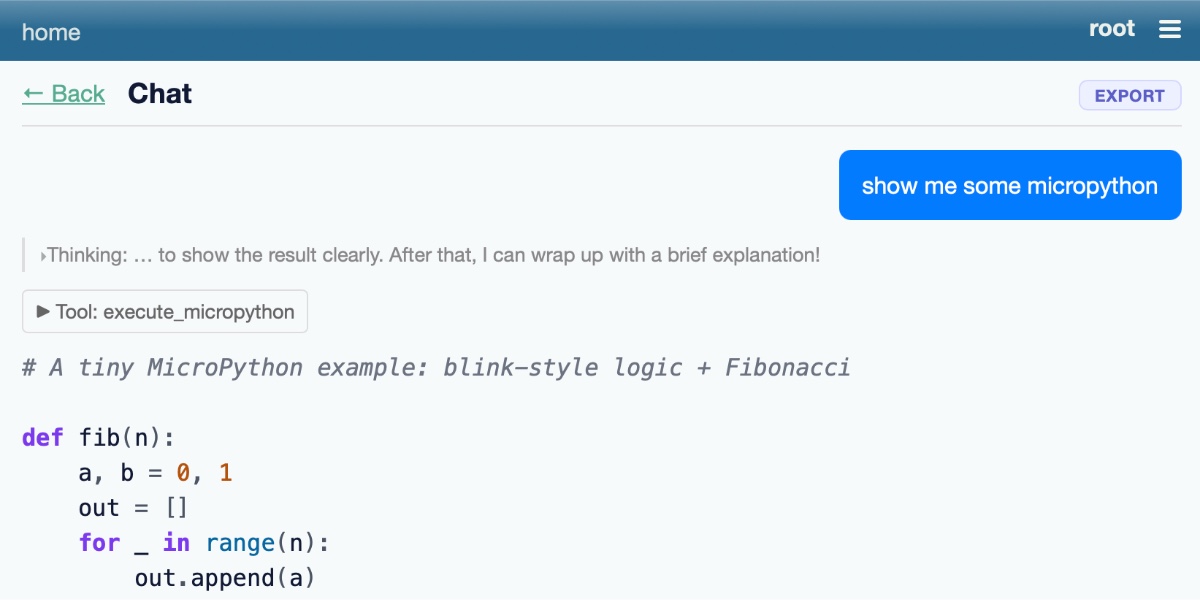
A developer has combined MicroPython and WebAssembly to create a robust sandbox environment for securely executing Python code. After years of experimenting with various isolation methods, this latest approach is believed to finally provide the ideal characteristics for safe and efficient script execution.
CommentsA reader discussion on building Rust procedural macros emphasizes the importance of choosing declarative macros to avoid significantly slowing down compilation times. While procedural macros remain necessary for complex tasks like parsing types and annotating structs, developers hope that upcoming improvements to the declarative macro system will reduce this reliance. Ultimately, the debate mirrors long-standing programming language design discussions about balancing metaprogramming power with compilation speed and code maintainability.
Comments
"Maybe later" was a feature
2026-06-06A newly shared developer insight highlights the importance of software minimalism, suggesting that the most valuable code is often the code a team chooses not to write. By deferring unnecessary features and avoiding codebase bloat, engineers can maintain cleaner repositories and focus on delivering true user value. This approach champions simplicity and restraint over constant feature expansion in modern software development.
Comments2026-06-05
Mouseless is a new cross-platform tool for macOS, Linux, and Windows that allows users to navigate and control their operating systems using only the keyboard. Readers are eager to try it as an alternative to apps like Shortcat and Homerow, hoping it resolves the speed and accessibility issues present in current software. However, some users caution that its dynamic hotkeys might hinder muscle memory and point out that its common name makes the app difficult to search for online.
CommentsMicrosoft has open-sourced pg_durable, a new project that enables in-database durable execution for PostgreSQL. The repository is now available on GitHub, inviting developers to explore the codebase and contribute to its ongoing development.
CommentsDid Claude increase bugs in rsync?
2026-06-05The rsync project maintainer faced severe community backlash after a release containing Claude AI-assisted commits introduced breaking changes and regressions. Although critics blamed the AI for disrupting workflows, the developer defended the update as a deliberate choice to prioritize critical security fixes, highlighting ongoing tensions over the use of generative AI in open-source development.
Comments
Changing how we develop Ladybird
2026-06-05The team behind the Ladybird web browser is overhauling its code contribution process to streamline development. This shift in workflow is a crucial step as the project prepares to officially release the browser for everyday public use.
Comments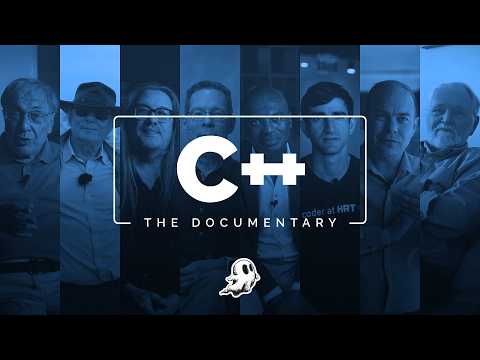
C++: The Documentary
2026-06-05A new documentary exploring the history of the C++ programming language has premiered on YouTube. The release featured a live chat with C++ creator Bjarne Stroustrup and other key figures involved in its development. The film celebrates the collaborative efforts of the hundreds of developers who have advanced the language over the years.
Comments