Legal Tech News
2026-10-06

OpenAI's ChatGPT is generating AI-generated cartoons in the style of The New Yorker that falsely feature the signatures of real cartoonists. This issue highlights growing concerns over AI models improperly attributing artwork to actual artists without their consent.
Comments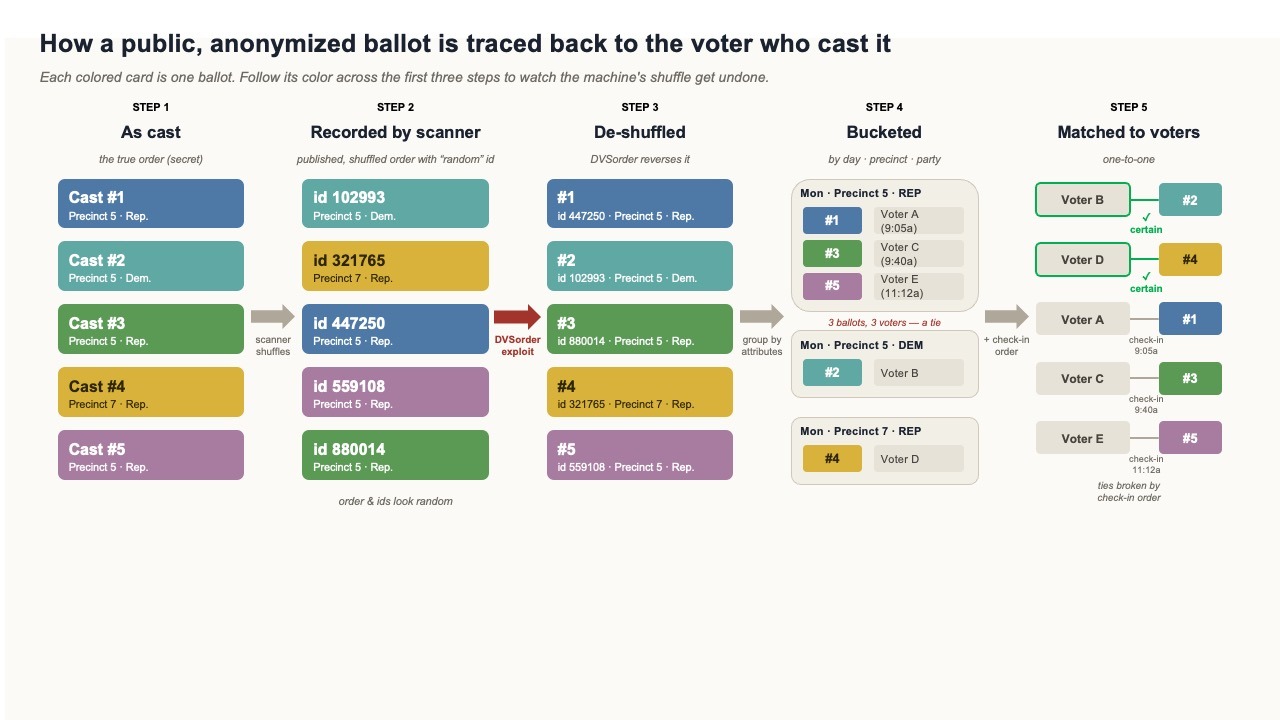
An algorithmic failure in Georgia and several other states is actively threatening the privacy of the secret ballot. While public records normally only reveal whether a citizen participated in an election, this technological flaw risks exposing their actual candidate choices. This breach compromises a foundational element of democracy by potentially unmasking individual voting preferences.
Comments

A Florida woman faces felony charges after AI company Anthropic reported a threatening diary entry she made to local police. Carli Michelle Heller allegedly wrote about attacking a sheriff's office, prompting the tech company to alert authorities and raising concerns about user privacy.
CommentsThe open-source DEDA toolkit, now available on GitHub, allows users to extract, decode, and anonymize hidden printer tracking dots. These identification codes are typically embedded in printed documents by manufacturers to trace the origin of the pages. Developers interested in privacy-enhancing technologies can contribute to the project's ongoing development through its public repository.
CommentsThe creator of the popular web-based photo editor Photopea has publicly accused the developers behind the new Photosuite project of directly copying his work. He expressed frustration that the team is replicating features from his software, which he has been developing since 2012, rather than building an original application.
Comments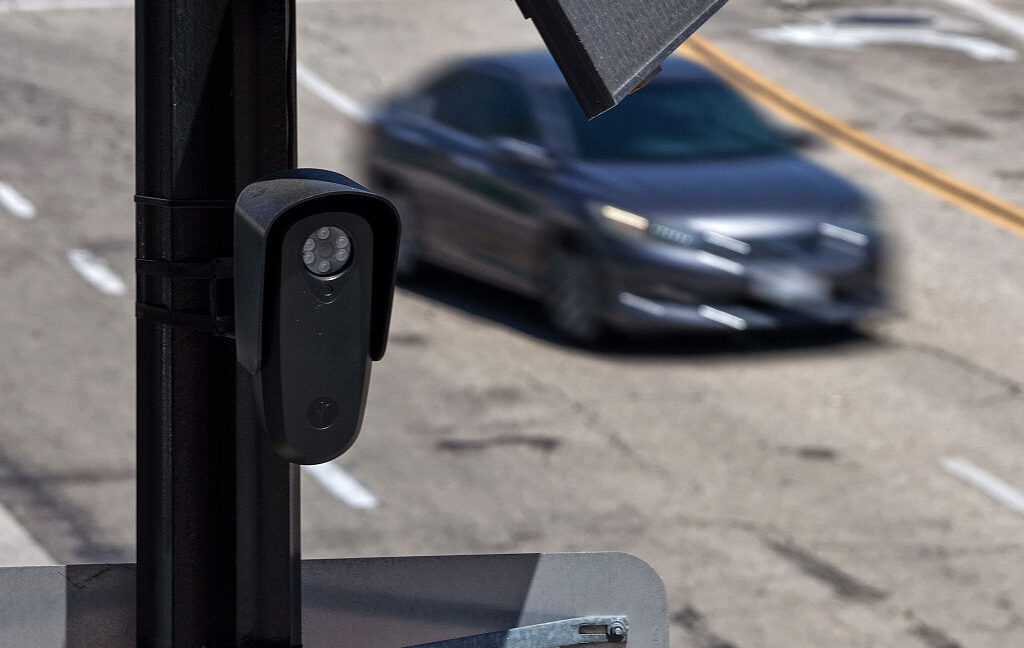
A Texas city is demanding $2 million to release public records detailing police use of Flock surveillance technology. This exorbitant fee highlights a growing trend of municipalities inflating the cost of accessing law enforcement tracking data amid swelling public backlash.
CommentsQualcomm is licensing Huawei's LogicFolding chip technology, marking a significant shift as the Chinese company transitions from a technology buyer to a provider for Western firms. The innovative multi-layer wafer design reduces signal resistance and heat, effectively leveraging a 7nm manufacturing process to achieve 1.4nm scale performance. This agreement highlights Huawei's growing influence and rapid advancement in domestic semiconductor innovation.
Comments2026-10-05

An improper redaction in a mandatory annual report has accidentally exposed the water and electricity usage of Google's data centers in Nebraska. While state statutes typically shield this resource consumption data from the public, the error provides a rare glimpse into the environmental footprint of the tech giant's facilities.
Comments2026-10-04

A recent court verdict involving the Rodin Museum has sparked controversy over the intellectual property rights of 3D scanned public domain artifacts. The ruling highlights a confusing intersection of digital replication and copyright law, demonstrating how strict legal interpretations can sometimes undermine the intended spirit of the law.
Comments
A federal judge ruled that a sheriff's deputy violated a woman's Fourth Amendment rights by using Flock's license plate tracking technology to locate her vehicle without a warrant. Condemning the automated system as indiscriminate mass surveillance, the decision marks a significant legal pushback against law enforcement's use of such tracking tools.
Comments
Apple's commitment to minimalist design has led to the concealment of fire extinguishers in its facilities to maintain a sleek aesthetic. However, this approach violates OSHA and NFPA regulations that mandate clear identification and easy access to emergency equipment. Ultimately, the controversy highlights the dangers of prioritizing polished design over basic safety compliance.
Comments2026-10-03

A federal judge has issued a preliminary injunction blocking Utah’s SB 73, an age verification law that attempted to restrict the use of virtual private networks. The decision follows arguments from the Electronic Frontier Foundation that the legislation demands a technical impossibility by forcing platforms to detect and block privacy-preserving tools, marking a significant victory for digital rights advocates.
Comments
Updates to Full Disk Access in macOS
2026-10-03Apple is tightening its Full Disk Access permissions in macOS after discovering that some developers are abusing the feature to expose sensitive user data. To protect privacy against current misuse and future risks from autonomous AI agents, the company will require explicit user action before granting this extensive system access.
Comments2026-10-02
The Linux kernel's practice of assigning CVE identifiers to nearly every bugfix has sparked debate over whether the sheer volume of reported vulnerabilities is inflating security metrics and causing CVE fatigue. Critics argue this overly cautious approach conditions users to ignore critical updates, suggesting that better triaging is needed to distinguish actual security risks from standard bug fixes.
CommentsA recent data-privacy study highlights growing concerns over the extensive telemetry collected by modern connected vehicles, which is often difficult or impossible for drivers to opt out of. In response to these privacy intrusions and potential insurance penalties, many consumers are seeking older models without internet connectivity or resorting to physically disabling cellular modems to protect their driving data.
Comments2026-10-01

California has officially banned child marriage, a practice that remains legal in 32 other US states. Governor Gavin Newsom signed the legislation, calling it a long-overdue measure to protect young Californians.
Comments
The federal government has amassed a massive surveillance database by requiring local cities to funnel license plate reader data into an anti-drug trafficking program. This initiative effectively transforms localized traffic monitoring into a widespread federal tracking network.
Comments
Following the discontinuation of its original manufacturing, the CHOMPI portable sampler instrument has been released as fully open-source for both its hardware and software. Although the trademarked name restricts third-party marketing, enthusiasts can now build their own devices from the official specifications or purchase used units. The community has praised the decision, anticipating a wave of DIY builds and third-party clones to make the highly sought-after instrument more accessible.
Comments
A single unchecked login token left Microsoft's internal analytics service vulnerable to unauthorized access. This critical security flaw potentially exposed up to 17 trillion rows of internal records.
Comments2026-09-30
United States postal inspectors have shut down a website selling counterfeit postage labels, disrupting a growing scam where third-party e-commerce sellers use fake postage to artificially boost profit margins. When the counterfeit labels are detected and seized by the postal service, these sellers simply re-ship the items to maintain high customer feedback ratings on platforms like eBay and Amazon. This widespread fraud has been exacerbated by rising shipping costs, the continued validity of older Forever stamps, and a lack of robust anti-counterfeiting enforcement within the USPS network.
Comments
Twelve years after launching Universal SSL, Cloudflare is applying to become a certificate authority. This move aims to expand the company's web security infrastructure by building a certificate authority for the entire internet.
Comments2026-09-29

Pirating the Pirates
2026-09-29In an ironic twist on copyright enforcement, underground film preservationists are utilizing pirated movie copies to save rare and out-of-print cinematic history. This grassroots movement leverages illicit file-sharing networks and digital archiving tools to preserve films that official studios have neglected or lost entirely.
Comments2026-09-28
Owed a billion dollars in Nvidia stock
2026-09-28A former employee recently discovered a vesting discrepancy in a 1993 Nvidia stock option grant that theoretically entitled them to a billion dollars. Despite the astronomical figure, the decades-old dispute was ultimately resolved in the company's favor due to the statute of limitations. This first-person account offers a fascinating glimpse into early tech equity and the complex legal hurdles of claiming forgotten stock.
CommentsAs AI increases efficiency in the legal sector, clients are demanding lower prices instead of allowing firms to retain the savings from automated work. Meanwhile, reader discussions contrast this with the healthcare industry, where AI is frequently being used to upcode billing and charge patients extra out-of-pocket fees, raising concerns that technological advancements will simply create new ways for professionals to increase profit margins rather than reduce consumer costs.
Comments2026-09-27

The legal case Kansas versus Snap explores the unusual scenario of a private internet service being classified as a government actor. If the court determines Snap is a state actor, the company would be required to comply with Constitutional restrictions and extend free speech protections to its users.
Comments
Sousveillance
2026-09-27Readers are debating the necessity of the term sousveillance, arguing that individuals monitoring corporations is simply a form of surveillance or stalking rather than a distinct concept. Many critics find the word confusing and overly complex, noting it requires constant explanation to avoid being misunderstood. The discussion also highlights broader privacy concerns, with readers expressing strong opposition to constant public monitoring through security cameras and wearable devices like Meta glasses.
Comments2026-09-26
A New Mexico jury has found Facebook liable for deceiving users about a data breach linked to the Cambridge Analytica scandal. The two-week trial focused on accusations that the company failed to adequately protect user data and inform affected individuals about the unauthorized access.
Comments
An innocent woman was wrongfully jailed for 13 days after police relied on flawed Flock camera data to identify her as a suspect. Officers ignored obvious discrepancies, such as her vehicle being the wrong color and undamaged, choosing to trust the automated surveillance system instead. This incident highlights the significant risks of law enforcement's growing dependence on automated license plate reader networks.
Comments
A federal appeals court has upheld the Department of Defense's decision to blacklist Anthropic as a supply chain risk in a 2-1 ruling. This affirmation of the Pentagon's designation could significantly impact the technology company's ability to secure future government contracts.
CommentsThe article examines society's growing complacency toward the normalization of surveillance technologies on college campuses. In response, reader discussions quickly pivoted to broader concerns about government overreach and the suppression of intelligence leaks. Commenters reflected on the legacy of whistleblowers like Edward Snowden, expressing deep frustration over political corruption and a perceived lack of true patriotism among modern leaders.
Comments