Legal Tech News
Submit2026-05-14
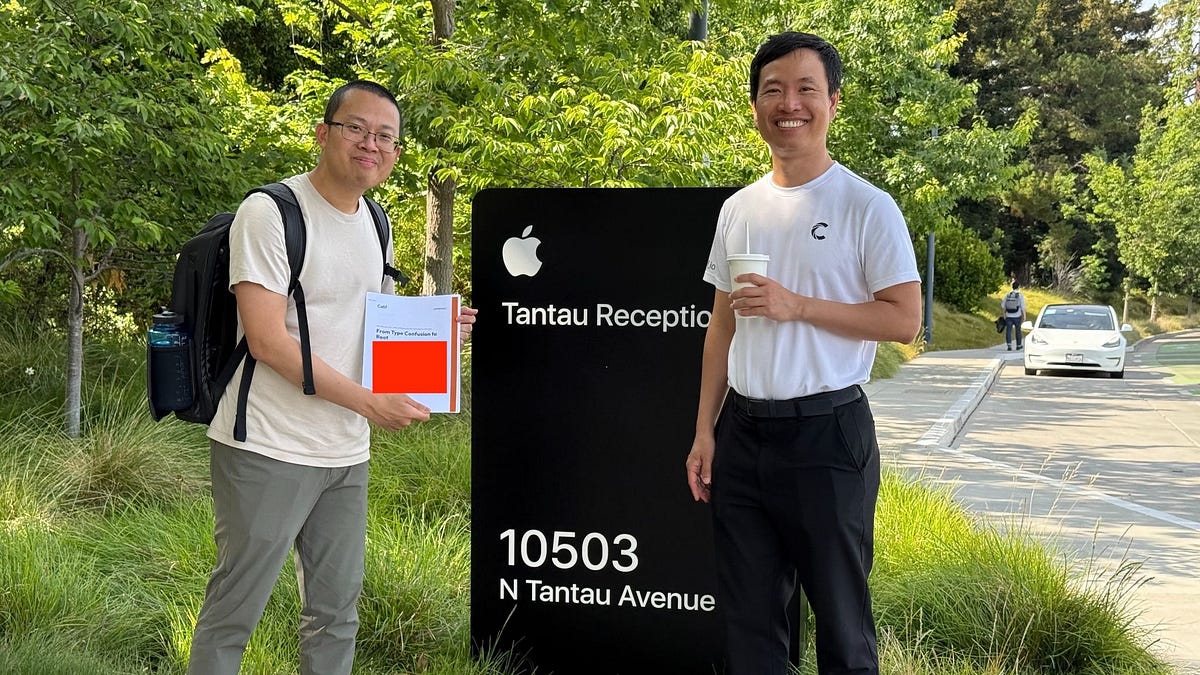
Despite Apple spending five years fortifying its systems against memory corruption, security researchers have developed the first public macOS kernel exploit for the new M5 chip. Working alongside Mythos Preview, an engineering team successfully built a functional exploit in just five days.
CommentsScorched Earth 2000 – Web
2026-05-14Readers reminisce about bypassing early shareware DRM and payment enforcement in classic games like Scorched Earth and Escape Velocity by editing game files or altering system clocks. The discussion highlights the forgiving attitudes of early software creators toward piracy and local cheating. Additionally, the thread mourns the passing of Escape Velocity co-creator Peter Cartwright, noting that his Kickstarter to remaster the game was successfully funded after his death.
Comments

Twin brothers wiped 96 government databases just minutes after being terminated from their jobs. This retaliatory data destruction highlights the critical need for organizations to revoke employee system credentials before conducting staff dismissals.
Comments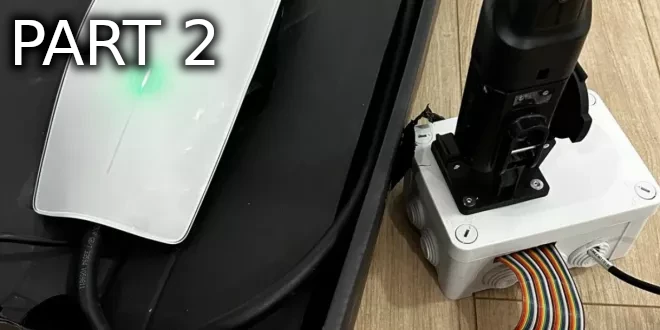
A newly discovered vulnerability in Tesla Wall Connectors allows attackers to bypass firmware downgrade protections by exploiting the bootloader through the physical charge port connector. This flaw could enable malicious actors to install older, potentially insecure firmware versions on the electric vehicle charging stations.
CommentsClaude for Legal
2026-05-14Anthropic has released an open-source GitHub repository called Claude for Legal, providing a suite of plugins tailored specifically to streamline legal workflows. Developers are encouraged to contribute to the project's ongoing development to help integrate the company's AI capabilities into specialized legal processes.
Comments
A newly discovered zero-day exploit named YellowKey is currently targeting Microsoft BitLocker encryption. Additionally, security teams are tracking a second zero-day vulnerability called GreenPlasma that enables local privilege escalation.
Comments2026-05-13

Princeton University has ended its 133-year tradition of unproctored in-person exams by mandating universal proctoring to combat AI-assisted cheating. Effective July 1, the new policy requires faculty to act as witnesses during tests while preserving the existing student-run Honor Committee system.
Comments
Major publishers including the New York Times and USA Today have blocked the Internet Archive from automatically saving their content by updating their web crawler directives, prompting a petition to urge them to reverse the decision. Readers expressed frustration that the Internet Archive strictly respects these rules while AI companies routinely ignore them without facing legal consequences. The discussion also highlighted broader debates regarding copyright enforcement, the financial sustainability of digital journalism, and the distinction between automated web crawling and direct content redistribution.
Comments
Kickstarter has updated its content guidelines to prohibit various forms of adult and NSFW content from its platform. Reports indicate this sudden policy change was forced by pressure from payment processors, specifically Stripe.
Comments2026-05-12
The author of a prominent tech critique has reiterated their refusal to recommend Bambu Lab 3D printers following the company's aggressive push to make its always-connected cloud solution the default. To reclaim control over their existing P1S hardware, the creator has completely disconnected the printer from the internet and disabled automatic firmware updates. Additionally, they have abandoned the company's native software in favor of third-party slicing applications.
Comments
The European Union is investigating social media platforms like TikTok and Instagram over their addictive design features that target children. EU Commission President Ursula von der Leyen announced the crackdown to address how these apps allow minors to go down rabbit holes of harmful content.
Comments
The Canadian government has introduced Bill C-22, a new surveillance proposal also known as the Lawful Access Act. This legislation is a repackaged version of last year's Bill C-2, which was abandoned after facing intense backlash from the privacy community for threatening digital rights under the pretext of border security.
Comments
Education technology company Instructure paid a ransom to hackers after its Canvas learning management system was breached twice. In exchange, the cybercriminals returned the compromised personal data of 275 million users across more than 8,800 institutions. Instructure assured its users that no customers will face further extortion from this incident.
Comments2026-05-11
A new guitar tuner application uses a smartphone's accelerometer to detect physical vibrations and determine musical pitch. However, readers warn that this technique poses significant privacy and security risks, as the sensor could potentially be exploited to eavesdrop on surrounding sounds or capture keystrokes without requiring explicit microphone permissions.
CommentsAI meeting note-takers are raising legal concerns by potentially voiding attorney-client privilege and turning casual conversations into discoverable permanent records. Beyond these privacy risks, users report that the tools frequently produce highly inaccurate transcripts when handling poor audio quality. This inaccuracy stems from the underlying language models confidently hallucinating missed words based on context rather than acknowledging audio uncertainties.
Comments2026-05-10
Hardware Attestation as Monopoly Enabler
2026-05-10Apple and Google are increasingly pushing third-party services to adopt hardware-based attestation to verify device integrity across mobile apps and the web through similar frameworks like their respective Integrity APIs. This coordinated expansion of hardware verification standards could ultimately serve as a powerful tool to further entrench the tech giants' market dominance.
Comments
The One Dollar Counterfeiter
2026-05-10The article explores the case of Mister 880, a petty criminal who spent a decade passing fake one-dollar bills and inadvertently triggered the most expensive investigation in Secret Service history. Reader discussions question the disproportionate government manhunt for such a low-stakes crime while explaining the agency's original mandate to protect the nation's currency. The thread also highlights humorous personal anecdotes involving foolish fraud attempts and pedantic debates over the exact definition of counterfeiting.
Comments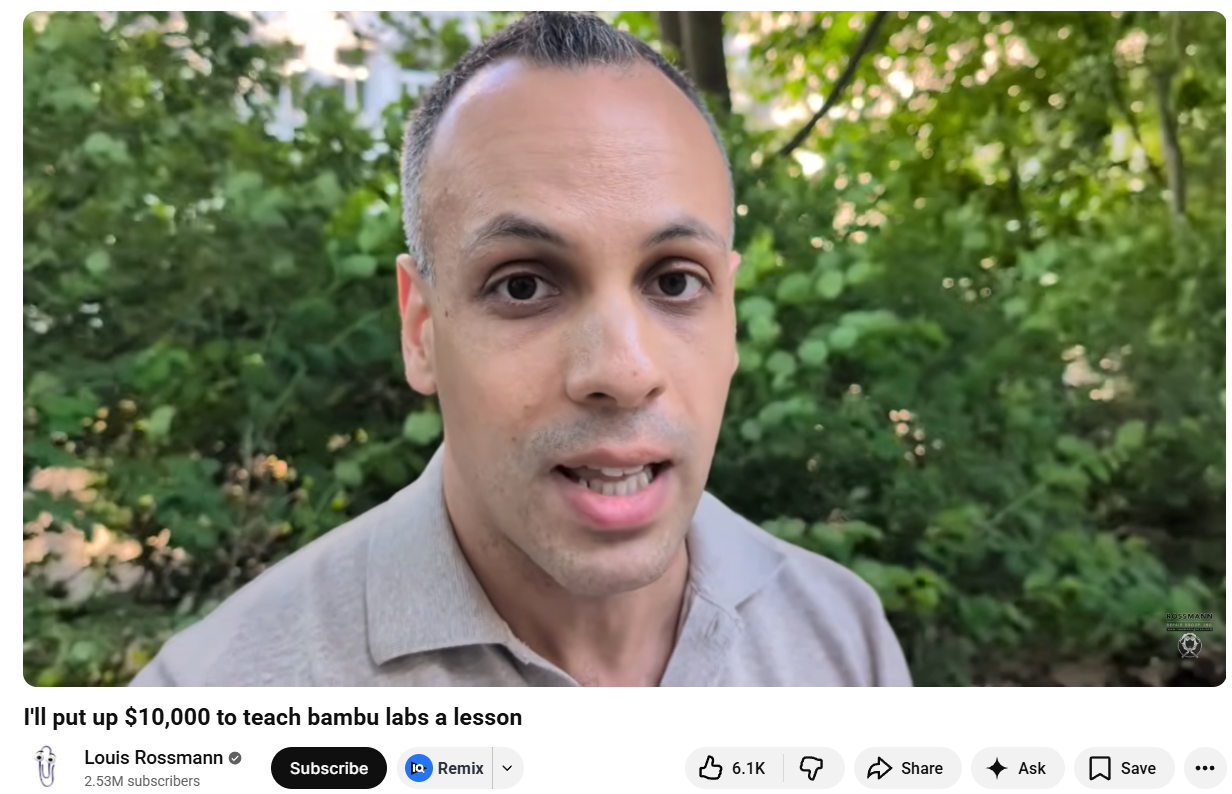
Right-to-repair advocate Louis Rossmann has offered to cover the legal fees of an OrcaSlicer developer facing legal threats amidst an escalating controversy with Bambu Labs. This financial support aims to protect open-source contributors as tensions rise between the 3D printing community and hardware manufacturers over software licensing disputes.
CommentsDebian must ship reproducible packages
2026-05-10Debian's push to mandate reproducible packages has sparked community debate over whether the achievement is worth the increased contribution burden. Supporters praise the move as a vital security measure to protect build infrastructure from malicious compromises, while skeptics argue it offers little defense against compromised upstream source dependencies. However, proponents point out that recent supply chain incidents like the xz utils backdoor demonstrate that securing the build pipeline itself remains essential.
Comments2026-05-09
Internet Archive Switzerland
2026-05-09Readers suggest the Internet Archive should transition to a decentralized network of independent organizations that mirror data without sharing DMCA takedown notices. By leveraging distributed peer-to-peer protocols, the archive could better protect its massive repository from centralized legal attacks and ensure long-term preservation.
CommentsThe hypocrisy of cyberlibertarianism
2026-05-09The author critiques the hypocrisy of cyberlibertarianism by reflecting on their firsthand experience with the pre-internet era to highlight the contradictions of advocating for a completely unregulated digital space. The piece contrasts the utopian ideals of early internet culture with the complex technological and societal realities of the modern web.
Comments
The European Parliamentary Research Service has identified VPNs as a loophole that allows users to bypass online age-verification systems. The organization is urging policymakers to close this gap to ensure stricter enforcement of digital age restrictions.
CommentsLocal privilege escalation via execve()
2026-05-09A local privilege escalation vulnerability in the execve() system call was traced to a subtle pointer arithmetic bug caused by implicit operator precedence. The incident has sparked widespread developer discussion regarding the necessity of using explicit parentheses and extracting variables in critical kernel code to eliminate ambiguous math operations and prevent future security exploits.
Comments
Meta is shutting down end-to-end encryption for Instagram direct messages due to low user adoption. The company revealed that very few people were actually opting in to use the secure messaging feature.
Comments
GrapheneOS has released an update to patch an Android VPN bypass flaw capable of leaking a user's real IP address. This fix addresses a vulnerability that Google previously declined to patch, ensuring users of the privacy-focused operating system are now protected.
Comments2026-05-08

Google's reCAPTCHA system now requires users to run the company's proprietary software to prove they are human. Consequently, privacy-focused individuals using de-googled versions of Android are being incorrectly flagged as bots and blocked from accessing websites.
Comments
Instructure's Canvas learning management platform has been restored online following a disruption caused by a confirmed data breach. The ShinyHunters hacking group claimed responsibility for the incident and is threatening to leak sensitive school data if ransom demands are not met.
CommentsUsers are advised to pause installing new software and system updates for the time being. This precautionary measure follows the discovery of several new vulnerabilities in the Linux kernel that require immediate attention from developers.
Comments
Artificial intelligence is disrupting traditional software vulnerability disclosure and patching cultures within the cybersecurity industry. Although researchers still follow standard procedures like rapidly and openly fixing flaws such as the recent Copy Fail vulnerability in Linux, AI is fundamentally altering how these security issues are discovered and managed.
CommentsA local privilege escalation vulnerability has been identified in the Linux kernel's io_uring subsystem, specifically within the zero-copy receive freelist. The flaw involves a mishandling of a 32-bit unsigned integer that allows an attacker to exploit the memory management structure and gain full root access to the system.
Comments