Hardware Tech News
Submit2026-11-03

Revolut moves to self-hosted GLM
2026-11-03Revolut has moved roughly 2,000 engineers onto self-hosted GLM for coding, making Claude Code and Codex exceptions rather than defaults. According to AI ops lead David Abitbol, the setup uses 56 Nvidia B200s at a blended 30 cents per million tokens—about a tenth of what Revolut previously paid Anthropic and OpenAI.
Comments
Fujifilm plans to increase its magnetic tape production fivefold to meet growing archiving demand driven by AI. Magnetic tape remains attractive for archival storage because it is low-cost and offers offline security.
Comments

A car owner jailbroke their vehicle’s navigation system just to change the clock, highlighting how locked-down infotainment software can block basic settings. They note that the workaround shouldn’t be necessary but found the process enjoyable.
Comments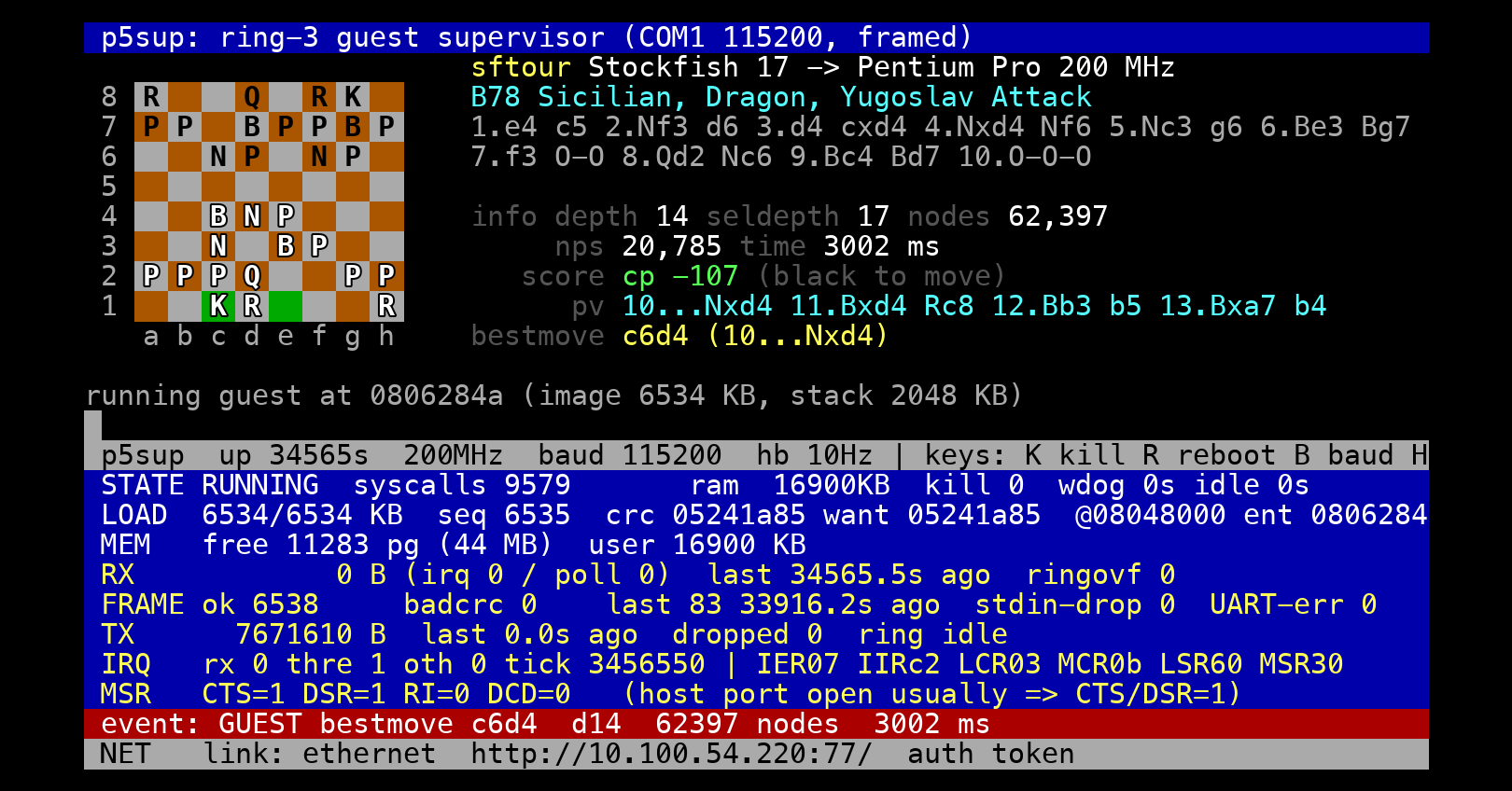
A fun experiment back-ports 30 years of chess engine improvements to run on a 1996 Pentium Pro, testing whether modern techniques on period hardware could have defeated Kasparov in 1996. It explores what might have been possible if researchers had today’s engine knowledge at the time.
CommentsStringman is an $800 open-source room-scale gripper robot whose concept intrigued commenters, though some said they’d wait for a full-body humanoid version. The discussion quickly turned darkly humorous, with readers joking about the robot strangling or stabbing users and comparing it to Futurama and Douglas Adams-style absurdity. No technical details were available because the article itself couldn’t be fetched.
Comments
Mac at Any Scale
2026-11-03Running Macs in a datacenter requires custom MacBook racks, virtualizing macOS using Apple’s Virtualization framework, and managing large VM images across the fleet. The piece details the infrastructure and operational work needed to scale Mac capacity at datacenter scale.
Comments
Intel’s stock slide deepened Monday, with weakness spreading to memory and storage chip stocks as a broader $3.5 trillion semiconductor rout intensified. Most of Wall Street otherwise moved past last week’s tech sell-off.
CommentsAntimony, a code-based CAD tool rooted in Lisp-machine ideas rather than drafting-table workflows, has seen maintenance taper since around 2016, though a more actively maintained fork called Stibium is now available. Discussion around the piece highlights renewed momentum in code CAD and AI-driven CAD projects, citing OpenSCAD’s long-awaited release candidate, PythonSCAD, CADquery, Build123D, and Halfspace. Commenters debated the practicality of code-based parametric CAD while noting desired features like SolveSpace-style 2D sketching and fillets/bevels.
Comments
ByteDance has developed USDB, a new storage system aimed at scaling the infrastructure needed for next-generation recommender systems. The arXiv paper outlines the design and motivation for handling the growing storage demands of advanced recommendation workloads at the company.
CommentsThe article examines how infinite loops in GPU shaders can hang the GPU, even though shaders are meant to be fast, small, and finite. It notes that SPIR-V does not prevent describing a shader with an infinite loop, so such loops should be enforced at shader compilation time. Reader discussion welcomes the piece and stresses the need for safeguards against pathological shader code.
CommentsV100 SXM2 pinout and NVLink reference
2026-11-03A new reference release offers curated V100 SXM2 pin maps, two- and four-GPU NVLink connection plans, and connector-only KiCad resources. It aims to support development of an open-source carrier board for V100 SXM2 GPUs.
Comments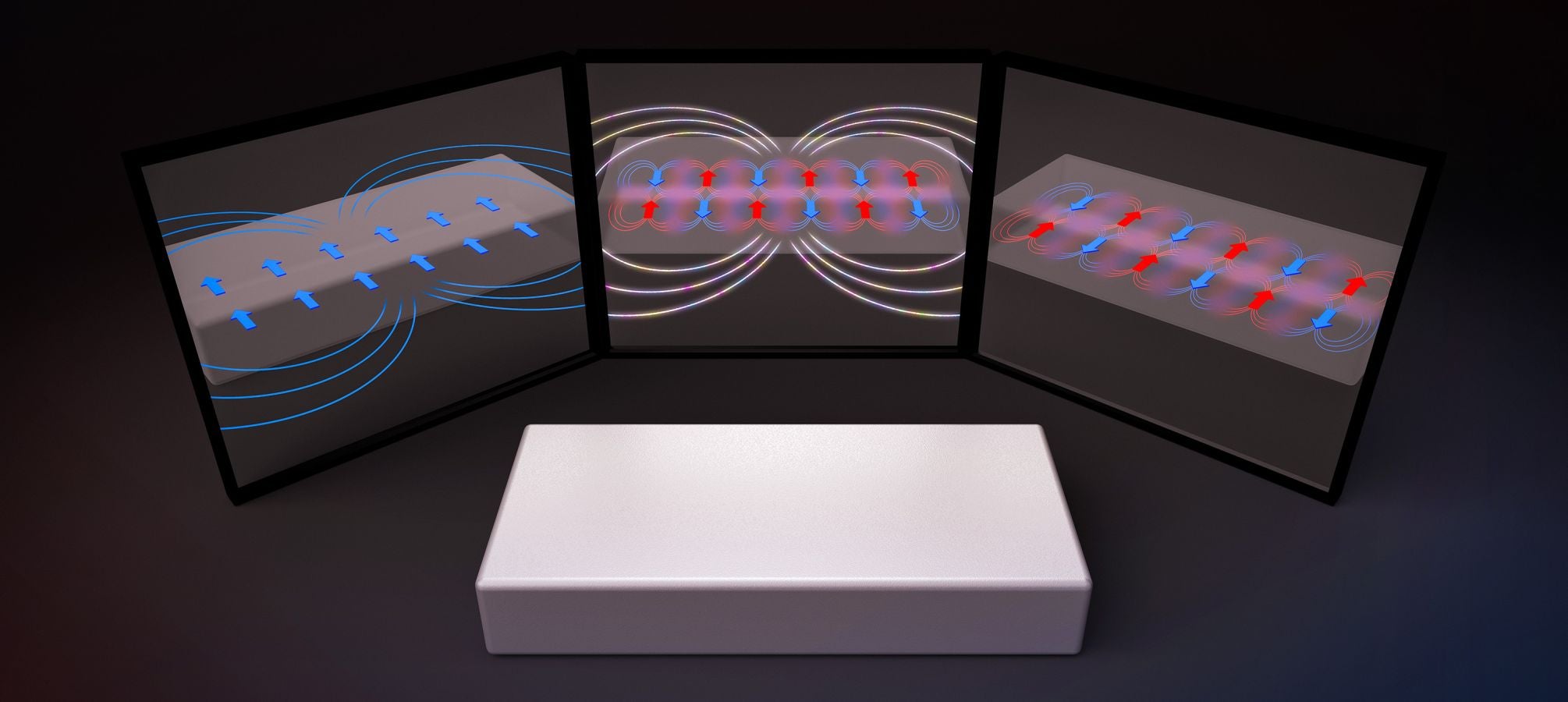
SLAC researchers have directly observed a distinctive property in an altermagnetic candidate material, providing key evidence for altermagnetism as a new magnetic phase. The finding marks the first direct proof of this magnetic behavior and could open new directions for magnetic materials research.
CommentsTiny Basic for Arduino
2026-11-03A new Tiny Basic interpreter is now available for Arduino, targeting mid-range boards and microcontrollers. It offers a lightweight way to run BASIC programs on MCU-based projects.
CommentsA CC1101 radio module connected to an FT232H board with six jumper wires and driven by a Python script turns a laptop into a 433 MHz scanner. The setup offers spectrum sweeps and a listen mode that decodes fixed-code remotes, with no microcontroller or soldering required and receive-only operation.
Comments
Flipper One is an open Linux computer powered by an ARM processor with an offline AI NPU, Wi-Fi 6E, and Gigabit Ethernet. It supports M.2 expansion for 5G modems, SDR radios, and more, as the company prepares a Kickstarter and opens pre-orders.
CommentsA new arXiv paper examines open-source 5G RAN platforms through a dual lens of performance and capabilities. It aims to compare platform performance with feature support, offering perspective on trade-offs for open-source 5G radio access networks.
Comments
PsiQuantum has unveiled Optical Circuit Switching technology built on its low-loss silicon photonics platform. The company says the approach can help address major scaling challenges facing AI infrastructure.
Comments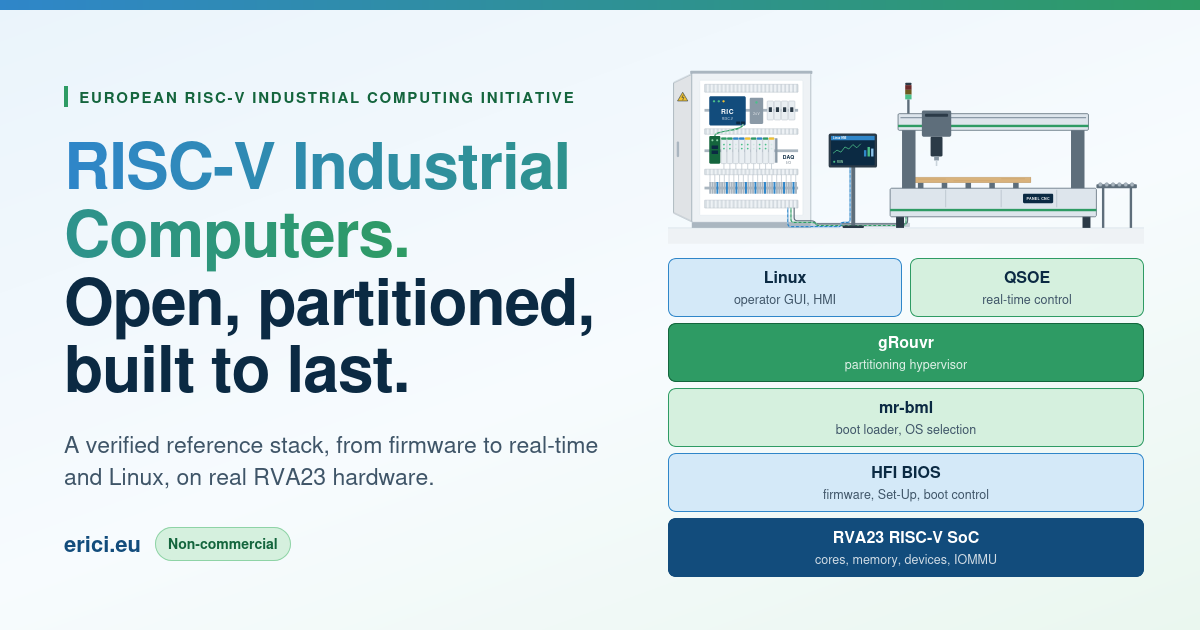
ERICI has launched as a non-commercial initiative focused on RISC-V Industrial Computers for factory-floor use. It offers a tested reference stack for partitioned RVA23 systems, aiming to support industrial computing adoption.
CommentsDiscImageStudio is a GitHub project that lets users burn visible artwork onto CDs, DVDs, and Blu-ray discs. Developers can contribute to its development by creating a GitHub account.
CommentsGUI64 is a graphical interface for the Commodore 64 that runs on top of the system’s built-in ROM. The project offers a GUI experience without replacing the C64’s native ROM.
Comments2026-11-02
Subvocal is a pair of smart glasses that lets users silently “talk” to their computer, with decoding handled by a companion app/cloud and end-to-end latency usually under 500ms. The team plans key-triggered input rather than a wake word at launch, with later low-power RF sensing to detect speech-like movement, and says it will keep adjustable nose pads for comfort. Readers also discussed accessibility, privacy and trigger tradeoffs, and a possible low-latency voice-change demo.
CommentsMy Favourite Laptop
2026-11-02Readers discuss the enduring appeal of Apple Silicon MacBooks, especially M1 models, praising their performance, battery life, comfort, and longevity. The conversation also weighs that against concerns about repairability, cost, and consumerism, with some favoring older ThinkPads or Framework laptops for customization and sustainability.
Comments
Polyend has released the source code for its Tracker firmware, following a growing trend of synth makers open-sourcing firmware after Erika Synths did the same for the LXR-02. Users are excited about custom firmware and new projects, while Polyend notes that custom firmware risks aren’t covered by warranty but offers paid out-of-warranty repairs. Commenters see the move as part of a broader shift toward open sourcing in the synth landscape, despite concerns about proprietary components and commercial implications.
Comments
A new collection mines computer magazines from 1984 to 2004 for fourteen glimpses of how the digital future was imagined, including online parties, pet robots, and dinner waiting. It offers a nostalgic look at the era’s optimistic and sometimes quirky visions of how computers would change daily life.
Comments
LongCat-2.5 is a 1.6-trillion-parameter model designed for agentic tasks with native multimodality. Its training was completed entirely on domestic Chinese chips.
CommentsA reader reports using pre-terminated “invisible” fiber, as thin as 0.6 mm, to retrofit connectivity without drilling because it fits through doorways and tight bends; bidirectional transceivers let one cable serve each endpoint. Apartment complexes have used it to run AT&T and Verizon fiber along baseboards and door jambs, where it is nearly invisible up close. The discussion also notes that slow Cat6 links often come from damaged or poorly crimped connectors, so recrimping is a sensible first step.
Comments
A new Show HN project called VHS Camera lets users run their camera or existing videos through a simulated VHS signal, adding tracking lines, color bleed, and a date stamp for an authentic camcorder look. The tool is free, runs entirely in the browser, and uploads nothing.
Comments2026-11-01
Lenovo’s “encrypted” fingerprint USB drive is reportedly just an unencrypted SD card in a case, offering no real security despite encryption marketing. Commenters say the product risks damaging Lenovo’s reputation and debate whether hardware or software encryption is the better approach.
CommentsSeoul Viosys has begun production of WICOP 3, a rare-earth-free white light emitter. The component is targeted at AR glasses and AI datacom applications.
CommentsA Hacker News discussion on privacy-friendly TVs concluded that mainstream TV brands are broadly invasive, with readers recommending either buying commercial LG/Samsung displays or keeping a consumer TV offline and using an Apple TV over HDMI-CEC. Commenters noted commercial displays cost more and may lack features or picture quality, while practical fixes like jailbreaking aren’t accessible to most users—leaving regulation as the broader solution.
Comments