Hardware Tech News
Submit2026-05-11

A recent experiment explores the performance of running local AI models on a standard MacBook equipped with an M4 chip and 24GB of memory. The study aims to determine if this accessible hardware configuration can consistently produce practical and usable outputs for everyday tasks.
Comments
Ratty is a newly introduced terminal emulator that utilizes GPU rendering to support inline 3D graphics. This innovation allows developers to view and interact with complex 3D visuals directly within their standard command-line environment.
Comments

A new technical guide demonstrates how to optimize large language model training in Swift by drastically accelerating matrix multiplication. By exploring ten handwritten implementations ranging from plain C and Swift to Apple's Metal API, the tutorial shows how developers can push performance from gigaflops per second up to teraflops per second.
CommentsNvidia has introduced cuda-oxide, an official compiler that enables developers to write and compile GPU device code directly in Rust. Rather than replacing host-side libraries like cudarc, the new tool complements them by generating embedded PTX code from Rust source files for execution via existing CUDA APIs. Additionally, cuda-oxide leverages Rust's strict memory and type safety models to provide robust guardrails against common undefined behaviors in GPU kernel programming.
CommentsI hate soldering
2026-05-11While the original article expresses a disdain for soldering, the accompanying reader discussion centers on a passionate debate over the cost and necessity of soldering equipment. Enthusiasts are divided between advocating for high-end tools like stereo microscopes and premium stations for microscopic components, and championing budget-friendly alternatives for hobbyists and beginners. Meanwhile, professionals argue that investing in quality gear is ultimately a worthwhile expense that saves time and prevents costly board revisions.
CommentsA new guitar tuner application uses a smartphone's accelerometer to detect physical vibrations and determine musical pitch. However, readers warn that this technique poses significant privacy and security risks, as the sensor could potentially be exploited to eavesdrop on surrounding sounds or capture keystrokes without requiring explicit microphone permissions.
Comments2026-05-10
Hardware Attestation as Monopoly Enabler
2026-05-10Apple and Google are increasingly pushing third-party services to adopt hardware-based attestation to verify device integrity across mobile apps and the web through similar frameworks like their respective Integrity APIs. This coordinated expansion of hardware verification standards could ultimately serve as a powerful tool to further entrench the tech giants' market dominance.
CommentsThe Casio S100X Japanese Lacquer Edition is a premium calculator captivating tech enthusiasts with its exquisite typography and meticulous aesthetic details. Readers note that the device's stunning design could easily trigger a deep passion for collecting high-end calculators, sparking broader discussions about the allure of premium tech accessories and the slippery slope of design obsession.
Comments
Right-to-repair advocate Louis Rossmann has offered to cover the legal fees of an OrcaSlicer developer facing legal threats amidst an escalating controversy with Bambu Labs. This financial support aims to protect open-source contributors as tensions rise between the 3D printing community and hardware manufacturers over software licensing disputes.
Comments
Eight More '8-Bit Era' Microprocessors
2026-05-10This latest tech retrospective highlights eight additional microprocessors from the 8-bit era that were omitted from a previous hardware roundup. The piece explores the history and technical specifications of these overlooked chips to further celebrate the innovations of early computing.
Comments
While the Apple I and Altair 8800 are commonly cited as the first microcomputers, the actual pioneer was the transfluxor-powered Arma Micro Computer built in 1962. This obscure device predates the widely recognized founders of the personal computing industry by more than a decade.
Comments2026-05-09
A discussion regarding the frustrations of distributing Mac software has sparked debate over Apple's strict security features like Gatekeeper and System Integrity Protection. While some readers defend these restrictive defaults as necessary safeguards for average consumers, critics argue that the all-or-nothing approach creates false dichotomies that strip power users of fine-grained control. The thread highlights the ongoing tension between Apple's walled-garden security model and user autonomy, with some suggesting that frustrated developers should simply switch to Linux for better flexibility.
CommentsAn article detailing the evolution of Wi-Fi standards from Wi-Fi 4 through Wi-Fi 8 has sparked reader debates over the technology's fundamental limitations as a shared radio medium. Commenters argue about whether newer protocols like OFDMA truly solve single-transmitter constraints by dynamically subdividing channels for simultaneous data transmissions. Despite these technical disagreements, the discussion highlights the ongoing engineering efforts to make Wi-Fi increasingly efficient and reliable, much like modern cellular networks.
Comments
Researchers at the University of Colorado Boulder have developed a new 3D printable material embedded with living bioluminescent algae. The material is capable of producing sustained light without the need for electricity. This breakthrough paves the way for innovative, eco-friendly lighting solutions and novel biological devices.
CommentsHow LEDs are made (2014)
2026-05-09A retrospective discussion on a 2014 article about LED manufacturing highlights the complex physics and thermal management required to maximize semiconductor brightness. Commenters share anecdotal memories of early blue and white LED innovations, including makeshift liquid nitrogen experiments to overcome heat dissipation limits. The conversation also expresses awe at the grueling physical assembly process, noting the intense precision required for workers to manually align tens of thousands of microscopic LED dies every day.
Comments
PipeDream on the Acorn Archimedes
2026-05-09This tech feature examines PipeDream, an unconventional productivity suite built for the obscure Acorn Archimedes operating system. The software willfully rejects traditional interface designs to offer a highly unique user experience. Additionally, the piece highlights the machine's pioneering processor, which was remarkably advanced thirty years ahead of its time.
Comments2026-05-08
An Introduction to Meshtastic
2026-05-08Meshtastic is an open-source project that enables long-range, off-grid communication without relying on traditional cellular networks. By utilizing LoRa radios, this community-driven initiative allows users to build decentralized messaging networks for remote exploration and emergency preparedness.
CommentsA recent project hosts a website entirely from the RAM of a Raspberry Pi Zero by offloading computationally heavy TLS termination to an external cloud provider. However, community discussions question the necessity of the complex proxy setup and note that modern operating systems already cache web pages in RAM by default, diminishing the technical impressiveness of the project.
CommentsPC Engine CPU
2026-05-08Community discussions highlight the historically underrated processing power of the PC Engine's 8-bit CPU, noting that its high clock speed and specialized memory transfer capabilities enabled impressive arcade ports that rivaled 16-bit competitors. Enthusiasts also explored the theoretical performance limits of modern 6502-based architectures while praising the system's compact physical design and highly optimized console adaptations of classic Capcom games.
Comments2026-05-07
A new local inference engine for DeepSeek 4 Flash and PRO models has been introduced via the antirez/ds4 project. It allows users to run these advanced AI models locally across multiple hardware platforms by providing native support for Apple's Metal, Nvidia's CUDA, and AMD's ROCm.
CommentsPermacomputing Principles
2026-05-07The Permacomputing movement advocates for the sustainable and ecological use of technology, drawing parallels to agricultural permaculture. However, its explicit alignment with anti-capitalist and progressive political ideologies has sparked debate, with some critics arguing this broad framing alienates potential supporters. Proponents counter that addressing systemic societal and environmental challenges is an inherently political act that is fundamental to the practice.
CommentsA discussion surrounding a 2004 tutorial on TI-83 Plus Basic programming has prompted readers to share how secretly coding on graphing calculators during math classes launched their tech careers. Many current software developers credit their early experiences writing games, chat programs, and math solvers on devices like the TI-83 and TI-85 as the foundational spark for their professional journeys in computer science and engineering.
CommentsA new community-driven firmware project has been launched for the Xteink X3 and X4 e-paper readers. The open-source software, named crosspoint-reader, is now available on GitHub. Users and developers can create an account to contribute to the project and help enhance the functionality of these devices.
CommentsAn author has published a guide detailing how to set up a diskless Linux boot using ZFS, iSCSI, and PXE to create a dedicated environment for testing AI models. This network-booted setup keeps local NVMe drives free for gaming and prevents Windows updates from breaking dual-boot configurations. Although remote booting introduces minor performance overhead, it provides a clean, isolated Linux workspace without the hassle of managing local partitions or easily lost USB drives.
Comments
Chevrolet Performance has introduced a new eCrate package allowing enthusiasts to convert their project cars into electric vehicles. Featuring a 400-volt motor with 200 horsepower and a 66 kWh battery, the system provides a reliable and high-performance electrification solution for custom builds.
Comments
Researchers have developed SoundOff, a novel smart home sensing system that utilizes low-cost, passive ultrasound tags for environmental monitoring. This technology enables non-invasive and non-intrusive tracking without relying on traditional cameras or active wearables. By leveraging ultrasound, the system provides an affordable and privacy-preserving solution for everyday home automation.
Comments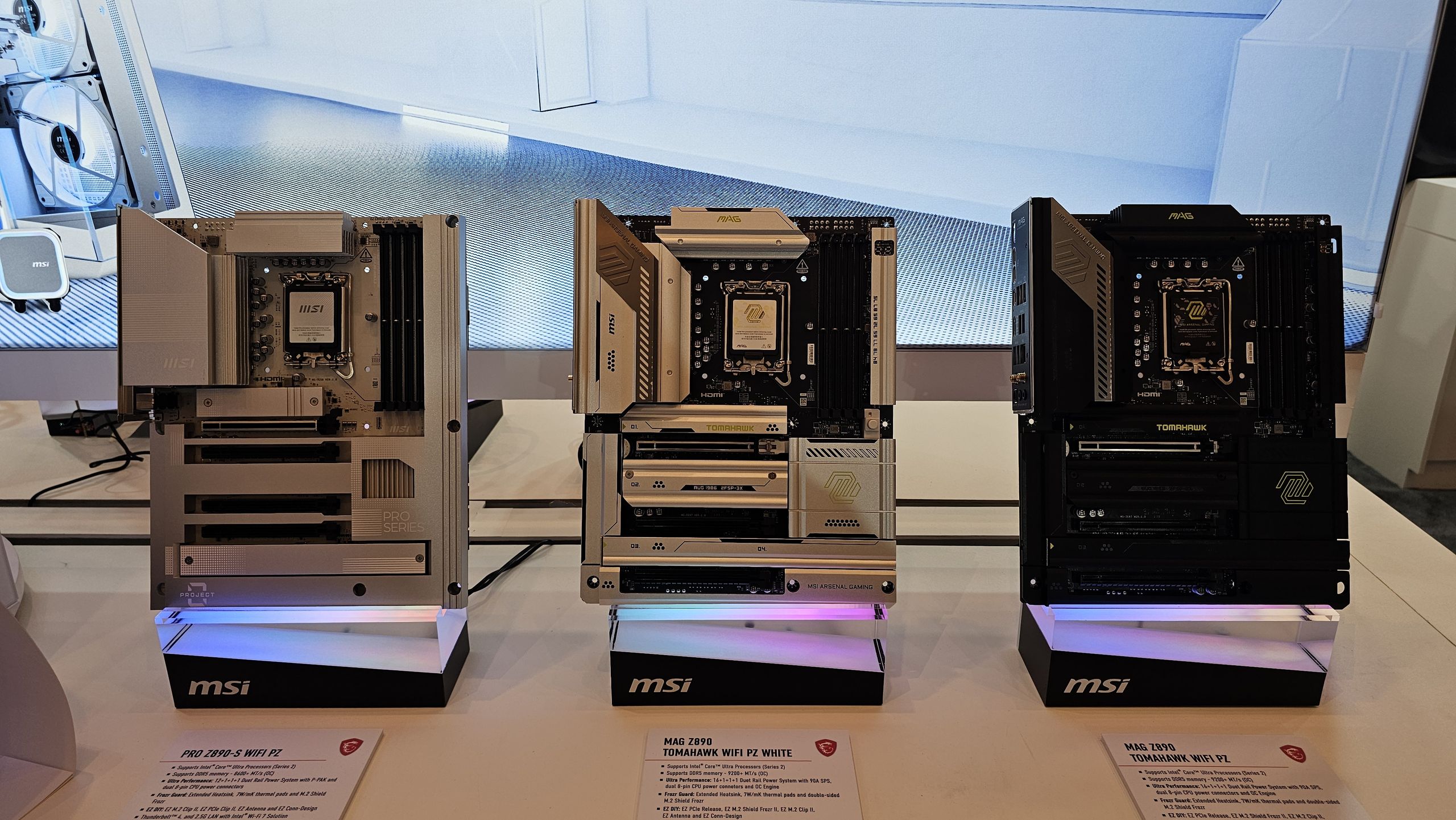
Surging demand for artificial intelligence infrastructure has triggered unprecedented component shortages, leading to a severe collapse in consumer motherboard sales. Consequently, fewer people are buying individual PC parts or building new custom computers from scratch.
Comments2026-05-06

Valve has released the complete CAD files for the Steam Controller under a Creative Commons license. This move empowers the modding community to freely design, customize, and share hardware modifications for the gaming peripheral.
Comments
StarFighter 16-Inch
2026-05-06The StarFighter 16-inch is a new high-performance Linux laptop designed with a strong emphasis on user security and privacy. It is powered by either Intel Core Ultra or AMD Ryzen processors and features a 4K 120Hz display option. To further protect user data, the device utilizes coreboot firmware alongside hardware-backed disk encryption and physical privacy controls.
Comments
CARA 2.0 – “I Built a Better Robot Dog”
2026-05-06CARA 2.0 is a cost-effective robot dog project that leverages repurposed drone motors and 3D printed components to achieve a 12-motor build for under $1000. While standing still causes the motors to stall and generate problematic heat, makers are mitigating these thermal issues through custom motor windings, mechanical backstops, and temperature monitoring.
Comments