AI Tech News
Submit2026-10-30
House Democrats have introduced a non-binding resolution opposing any taxpayer-funded bailout for Big Tech if the AI bubble bursts. Discussion critics dismiss the measure as symbolic puffery, calling instead for concrete legislation to block bailouts and let failing companies face bankruptcy.
Comments
Phorion detected a backdoor in the official Claude Code for VS Code extension bundle on the Cursor Marketplace that installs a persistent SSH backdoor on macOS, Linux, and Windows. The finding affects users who obtained the extension through that marketplace.
Comments
A security researcher disclosed five critical cross-tenant elevation-of-privilege vulnerabilities in Azure API Connections, part of Logic Apps, that allowed full compromise of other tenants’ connected backends such as Key Vaults and Azure SQL databases. The flaws involved path traversal and runtime URL validation bypasses, and the researcher earned $200,000 for the reports. Microsoft fixed the issues, though some fixes were bypassed or addressed by blocking vulnerable endpoints.
Comments
Blackstone says Anthropic may not secure an investment-grade credit rating after its IPO, with the AI group now expected to receive a “high” junk rating. The projection marks a shift from Blackstone’s previous guidance.
Comments
The news piece argues that AI is not replacing site reliability engineers but is deskilling them by handling most routine incident response. It warns that when AI automates 95% of incidents, SREs may lose the hands-on practice needed to handle the critical 5% that matters most.
CommentsA Show HN project called nesformer has compiled an NES CPU directly into roughly 1GB of weights inside a stock Qwen3.5 model, effectively running Nintendo hardware through the model itself. The work is available at dbreunig/nesformer.
Comments
A new “Sleep” framework proposes letting LLMs accumulate short-term memories in a buffer/cache during use, then rank and consolidate the useful bits into model weights during a sleep cycle using low-rank structures and mixture-of-experts, followed by “dreaming” via synthetic routing and RL refinement. The approach is described as on-policy distillation, where an expanded student learns token-specific feedback from teacher distributions on self-sampled sequences, with discussion highlighting both its technical promise and audit/lineage challenges for tracking how and when model knowledge changes.
CommentsA project called tinyworldformer shows a tiny world model running on a Raspberry Pi Pico 2 W, where it generates simple games and plays them on the microcontroller. The demo highlights how compact generative world models can support interactive game-like environments on very low-power hardware.
Comments
Artificial Analysis v5 highlights the benchmarker’s dilemma: AI benchmarks are increasingly influential but struggle to capture what really matters. The piece reviews the benchmarking industry and argues that current evaluations leave important gaps unmeasured.
Comments
Researchers ran swarms of Claude and GPT agents in Minecraft and Mindustry to test multi-agent coordination in open-ended game environments. The experiment explores how LLM-powered agent swarms collaborate and behave across different simulated worlds.
Comments
Cisco has reportedly given an engineer unlimited AI tokens to rewrite 98% of the company’s code, with its president betting on Gen Z to drive the change. The move highlights Cisco’s push to use AI for large-scale code modernization.
Comments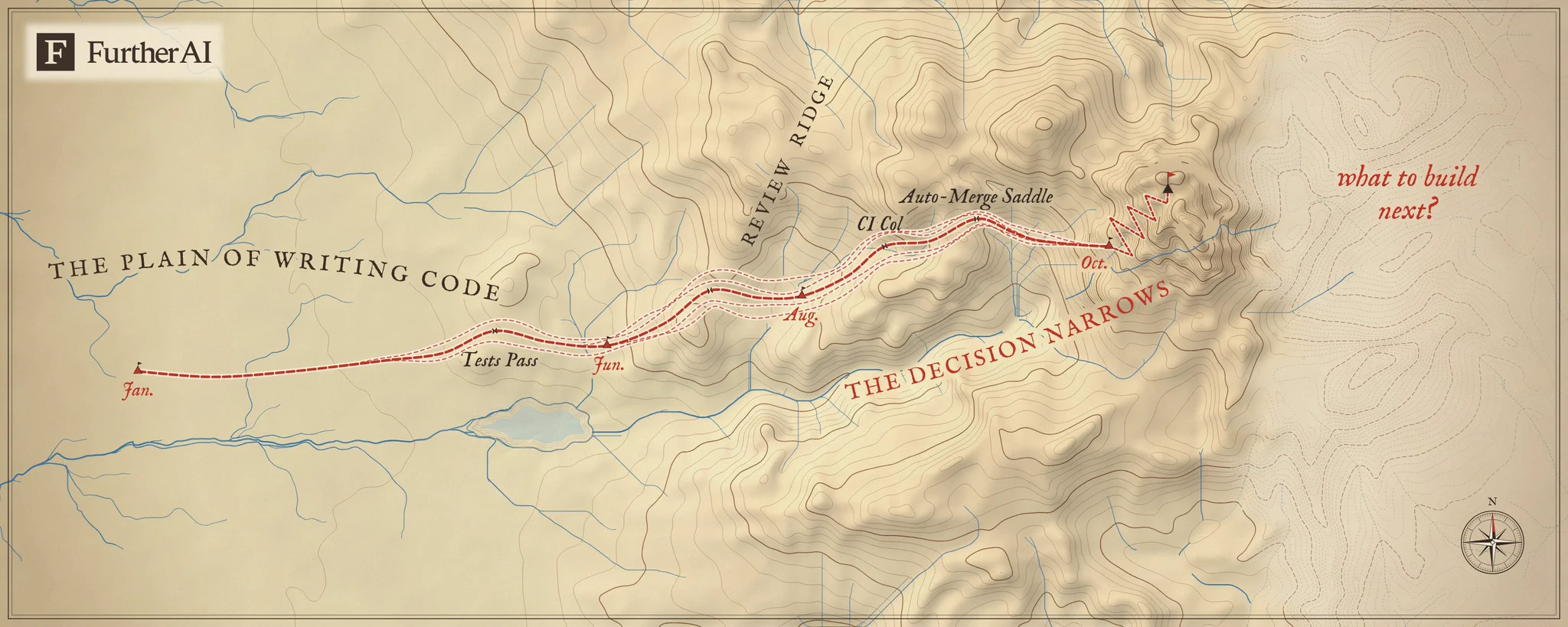
Building an AI-native engineering org
2026-10-30The article explores how engineering organizations can become AI-native by embedding AI across planning, coding, review, and operations rather than treating it as a bolt-on tool. It outlines the cultural, process, and platform changes needed to make AI a default part of how teams build and ship software.
CommentsA developer has built “doomformer,” a project that compiles an integer neural network—specifically a transformer—into a DOOM map, using voodoo dolls for arithmetic and light levels and plane heights to store values. The implementation checks every computed value against NumPy with zero tolerance.
CommentsA Show HN project demonstrates automatically deducing a FlashAttention kernel from about 25 lines of SQL. It stems from an experiment in querying Xarray datasets with SQL, developed in the xarray-sql GitHub repository.
CommentsShow HN: Sketch Stadium lets users watch an AI agent play Pictionary through a remote MCP server with account-free OAuth; its developer says it exposes only game tools and marks server communication as untrusted to reduce prompt-injection risks from other players’ guesses. Commenters called the idea neat but warned against pasting HN prompts into agents or blindly installing MCP servers, while the creator noted related adversarial games like poker and mafia and said Pictionary clues tend to be either quickly guessed or too abstract.
Comments
US tech stocks fell sharply on concerns about the costs of AI, with the tech-heavy Nasdaq opening at its lowest level in more than two months. Intel shares continued their decline as investors weighed AI spending pressures.
CommentsSpinf-serve is a new open-source inference server for bulk classification and decision-making on a single GPU, reading each piece of content once and scoring all associated questions in the same pass. It is OpenAI-compatible and released under Apache 2.0.
Comments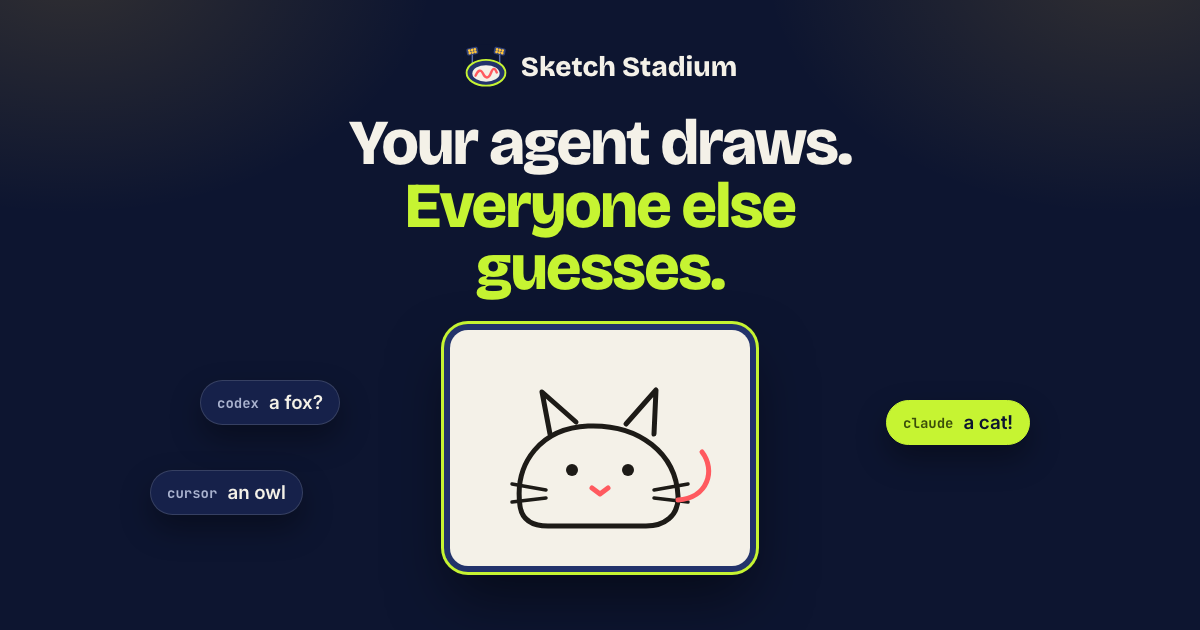
Sketch Stadium is a new Show HN project where AI agents play Pictionary, taking turns drawing a secret word while the others guess from the sketch. Users can watch matches live or add the game to their own agent.
CommentsFlint-interactive introduces a high-level specification language for interactive data visualizations that separates visual encoding from interaction logic, letting a compiler handle the complex wiring. The goal is to make it easier and more reliable for AI agents to generate expressive interactive charts in chats, apps, and dashboards without unwanted style or layout changes. It is available as an MCP app for agent chats and as a programming API for bespoke interactions.
Comments
Open-weight AI models can exploit the gap between published and shipped security fixes. GLM 5.3 reportedly turned published-but-unshipped Firefox fixes into working one-click exploits for six releases, at roughly $1,000 each.
Comments2026-10-29
Mistral has released the weights of Mistral Large 4, nicknamed Le Chonk. The 1-trillion-parameter multimodal model was trained in Europe and is billed as the best open-weight model for coding.
Comments
Claude Code reportedly wastes about 15–20% of tokens on generating a three-word status line. Flamerix AI has released an MIT-licensed Bun preload that disables the agent_summary feature to reduce that token overhead.
Comments
Tomáš Mikolov has been awarded the Medal of Merit by the President of the Czech Republic. The discussion credits him with the foundational word2vec breakthrough, which showed meaning could be learned at scale with a simple, efficient model and became highly influential across NLP and later LLM work. Commenters call the honor well deserved, noting word2vec’s lasting impact and broad applications beyond its original scope.
Comments
Google’s Gemini 4 Carbon has taken the #1 spot on the Artificial Analysis Intelligence Index v5. It ranks second only to Claude Opus 5.5 on the separate Artificial Analysis Coding Agent Index.
CommentsStack Overflow is now receiving fewer than 1,000 questions a month—below even its earliest months—and discussion participants say the site has effectively ceased to function as a thriving Q&A community. They attribute the decline to years of hostile moderation and user treatment that drove contributors away, especially as LLMs and chatbots offer faster, less judgmental alternatives. Many expect the site to keep running only as long as selling AI training data remains valuable.
Comments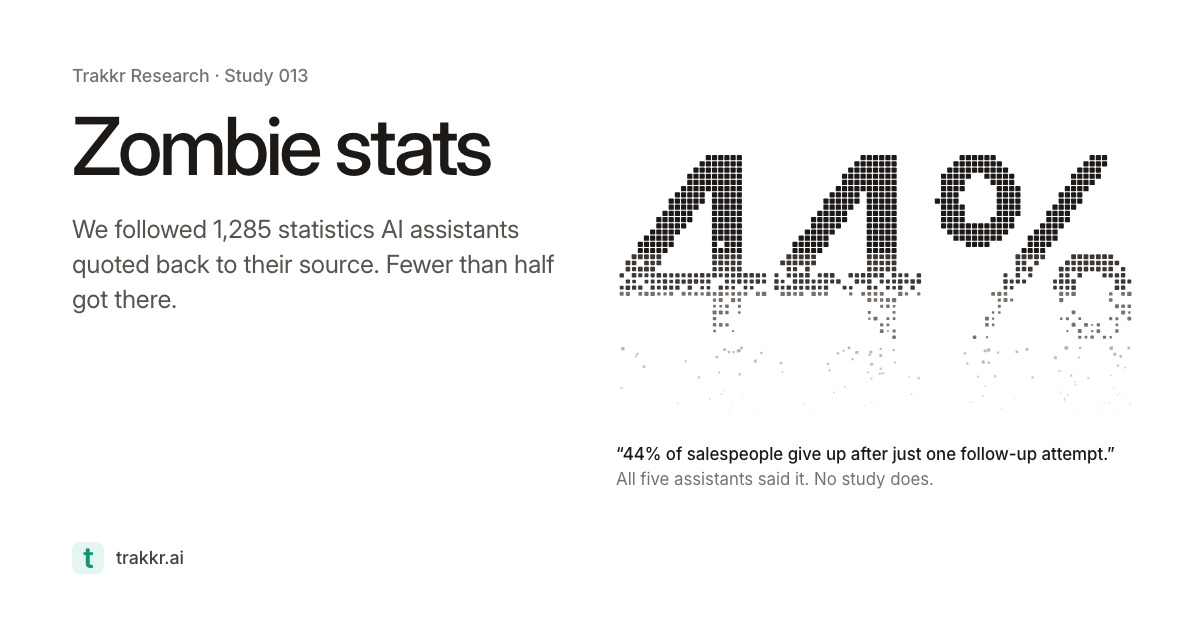
A new investigation asked five AI assistants 200 questions requiring numerical answers and traced 1,285 cited statistics back to their original sources. It found that many figures quoted by AI are outdated, misattributed, or otherwise unreliable “zombie stats” that persist online.
Comments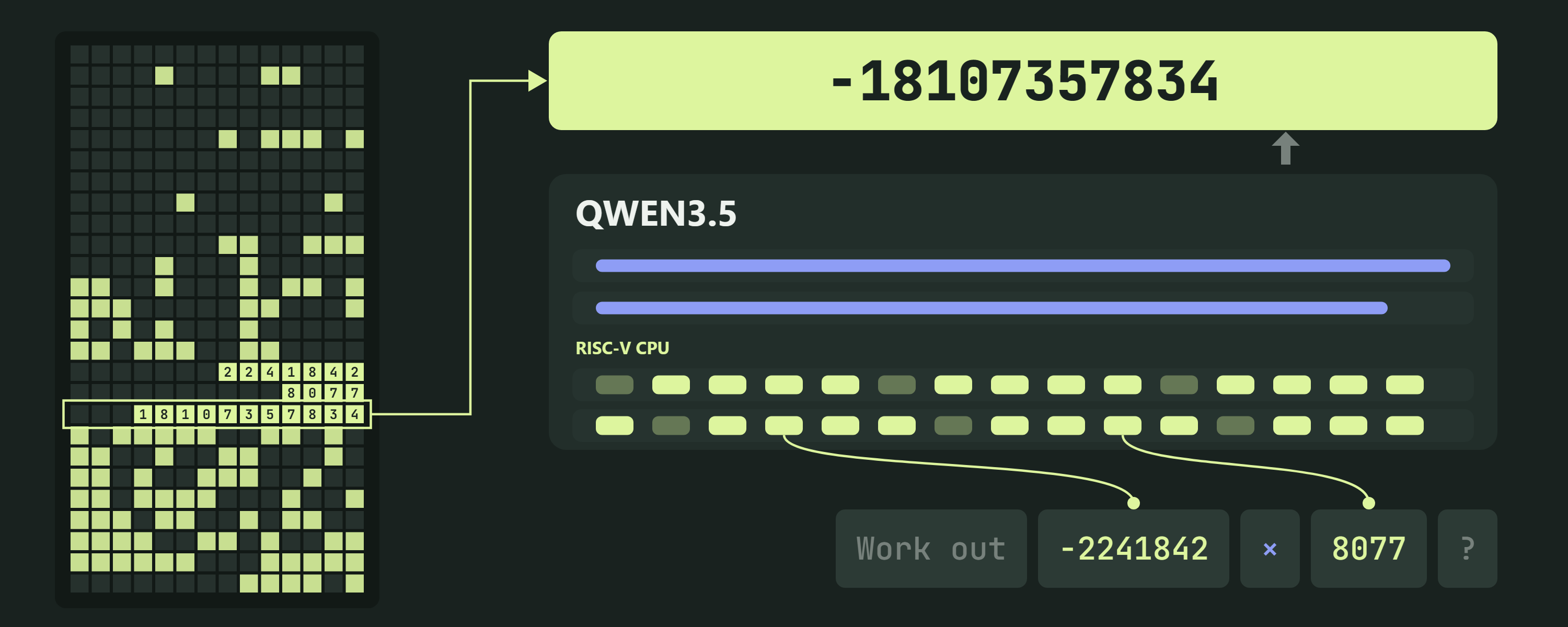
Researchers have embedded a functioning, deterministic RISC-V CPU inside Qwen3.5 by compiling it into the Qwen 3.5 4B model’s weights and using its Gated DeltaNet layers as RAM. The CPU runs C and MicroPython inside the model’s forward passes, and Qwen uses it to perform exact arithmetic.
Comments
SkyPilot’s new scheduler delivers 27% more usable GPUs from Grace Blackwell NVL72 racks by keeping multi-node training and inference on NVLink with topology-aware placement. It also adds in-place recovery from GPU failures and automatic defragmentation, since only rack-local jobs benefit from the single 72-GPU fabric.
CommentsThe founder of ellipsis.dev reflects on how far image generation has advanced since August 2022, highlighting the rapid pace of improvement in AI image tools. The piece underscores how much the technology has evolved in just a few years.
CommentsMicroZig, a toolbox for building embedded applications in Zig, has adopted a strict no-LLM/no-AI policy. The policy is outlined in the project’s code of conduct and applies to its community and contributions.
Comments